
Emotional Suppression Recognize the Signs Heal the Pain
Why emotional suppression matters: a clear, compassionate overview
Sometimes, it feels easier to just not deal with strong feelings. Maybe you push away anger, sadness, or fear because they feel too big or messy.

This is what we call emotional suppression. It’s when you try to hold back or hide your emotions, either on purpose or without even realizing it. Many people do this, and often they don’t even know they’re doing it. They just feel a general unease or like something is ‘off’ [Dealing with Emotional Suppression | Impacts & Strategies for…]. This action of pushing uncomfortable feelings out of mind is a common coping method [Emotional Crisis and Emotional Suppression | THE BALANCE].
But here’s the thing: those feelings don’t just disappear. When you try to bury them, they often show up in other ways. You might start to feel really anxious, even if you don’t know why. It’s like a pressure cooker building up inside. For example, some people might experience a lot of worry, panic, or just a constant sense of unease. This can make life feel much harder and more confusing. If you are experiencing this, you might find it helpful to learn more about What Emotional Suppression Feels Like and How to Heal.
Not only that, but emotional suppression can also affect your body. When you keep emotions bottled up, your body might react with physical symptoms. These are sometimes called somatic symptoms, and they can show up as headaches, stomach problems, or even muscle tension, making you feel more stressed out [Physical Symptoms of Emotional Distress: Somatic…]. Studies in 2026 show that holding back emotions can even affect how your body handles stress [Emotion suppression and acute physiological responses to stress in…]. It can also make it harder to connect with others, leading to strain in friendships and family ties because you’re not fully sharing yourself [The Social Costs of Emotional Suppression: A Prospective Study of…]. This is why finding good therapy for emotional suppression is so important. If your body is sending you signals, it might be trying to tell you something important. [Body Feels Alarmed?]

When you keep your feelings locked up, your body doesn’t just ignore them. It often tries to tell you something is wrong through different aches and pains.
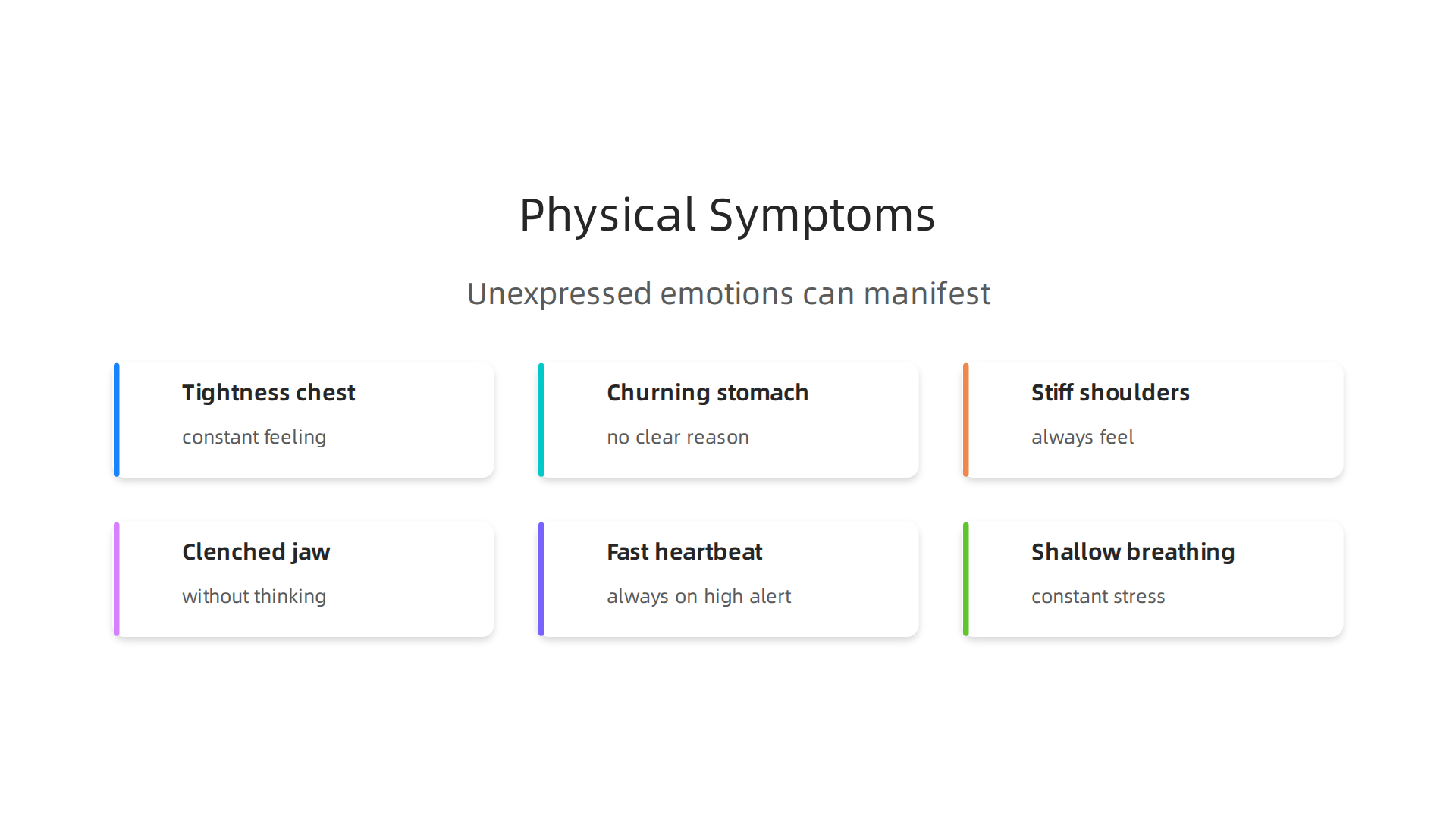
You might feel a constant tightness in your chest or a churning feeling in your stomach that has no clear reason. Some people notice their shoulders always feel stiff, or they clench their jaw without thinking about it. These are common physical signals that your body is holding onto stress from unexpressed feelings.
Actually, holding emotions in can make your body’s alarm system work overtime. This system, called the autonomic nervous system, controls things like your heartbeat and breathing. When you’re constantly suppressing emotions, it’s like this system is always on high alert, ready for danger. This constant stress can lead to even more problems like a fast heartbeat, shallow breathing, or always feeling on edge. It’s a tricky cycle: the physical stress makes you more anxious, and that anxiety can then make your body feel even worse. To truly understand these reactions, you might want to read more about What Anxiety Feels Like Physical, Cognitive, and Emotional Symptoms Explained.
Finding good therapy for emotional suppression can help break this cycle. When you learn to deal with your feelings in healthy ways, your body can start to calm down. Studies show that therapy can help people lessen physical symptoms related to emotions, which makes them feel better overall [Emotion regulation in patients with somatic symptom and related …]. Therapies like cognitive behavioral therapy can teach you skills to understand and express your emotions, so your body doesn’t have to carry the heavy load.
While your body sends clear signals when emotions are suppressed, your mind and feelings do too. These cognitive and emotional signs can sometimes be harder to notice because they might feel like "just how you are." When you push feelings down, your thoughts and emotions can get stuck in unhelpful loops.
Here are some common ways your mind tries to cope:
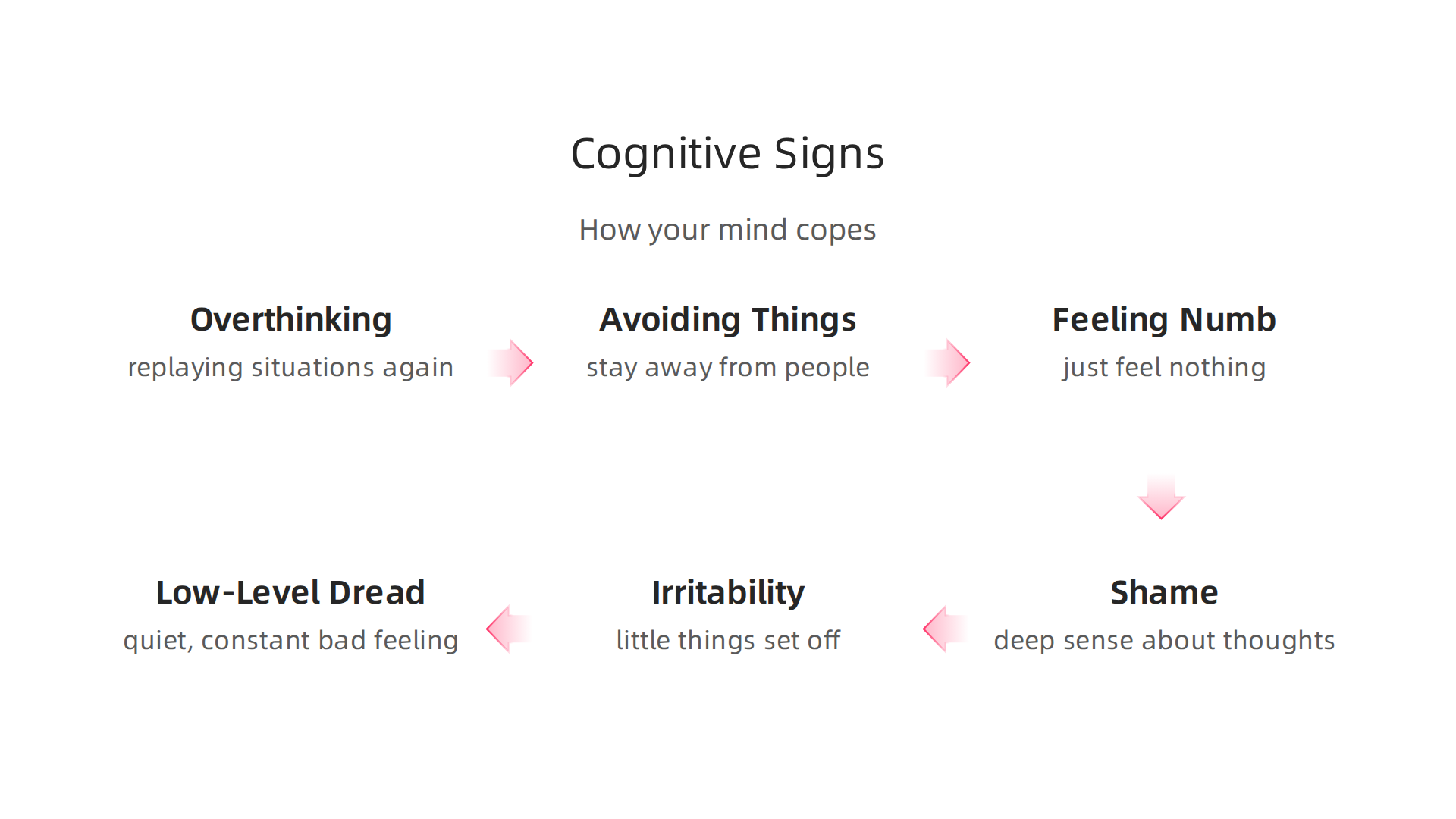
- Overthinking Everything: You might find yourself replaying situations again and again in your head, trying to figure out what went wrong or what you should have done differently. This is called rumination, and it’s a typical sign that your mind is trying to process emotions it hasn’t expressed.
- Avoiding Things: You might start to stay away from people, places, or even thoughts that you think might bring up strong feelings. This avoidance can make your world smaller and stop you from dealing with what’s really bothering you.
- Feeling Numb: Instead of feeling sad or angry, you might just feel nothing at all. This emotional numbing can make you feel detached from your own life and the people around you, almost like you’re watching a movie instead of living it. Emotional suppression often involves pushing uncomfortable feelings and thoughts out of your mind, as experts explain Emotional Crisis and Emotional Suppression.
Many people miss or mislabel these emotional signals, thinking they’re just part of their personality. But they are often signs of suppressed emotions.
- Shame: You might feel a deep sense of shame about your thoughts or feelings, believing they are wrong or bad. This can make it even harder to share what you’re going through.
- Irritability: Little things might set you off. You could find yourself getting easily annoyed or angry, even over small issues. This is often an unexpressed emotion bubbling to the surface.
- Persistent Low-Level Dread: You might have a quiet, constant feeling that something bad is going to happen, even if there’s no clear reason. This underlying anxiety can be exhausting.
Recognizing these patterns is a vital first step. If you’re seeing these signs in yourself, remember that help is available. Finding effective therapy for emotional suppression can teach you how to understand and express these feelings in healthier ways. This can stop the cycle of emotional and cognitive distress, helping you feel more like yourself again.
Body Feels Alarmed? Name the pattern before it spirals.
Why people suppress emotions: development, culture, and trauma
We’ve talked about how hidden feelings show up in your mind and body. But why do people push their emotions down in the first place? It’s not usually something they choose to do on purpose. Often, it’s a way of coping that they learned very early in life or after hard times.

How We Learn to Hide Our Feelings
Many times, suppressing emotions starts with how we grow up and the culture around us. Think about what kids hear: "Don’t cry," "Be a man," "Stop making a fuss." These messages teach us that some feelings, like sadness, fear, or even anger, are bad or weak. When we’re told these things, we learn to keep our true feelings locked away. It becomes a habit, a default way to deal with life, as many experts on Dealing with Emotional Suppression: Impacts & Strategies explain.
This can lead to a feeling of being stuck, almost like we’ve learned there’s no point in trying to express ourselves. Over time, these learned ways of coping become deeply rooted. Happily, effective approaches like Cognitive Behavioral Therapy for anxiety proven techniques to calm your mind and face your fears can help people unlearn these patterns and find healthier ways to respond.
When Trauma Makes Us Shut Down
Another big reason for emotional suppression is experiencing trauma or very scary events. When something terrible happens, like abuse or a severe accident, our brains try to protect us. Pushing feelings down can be a quick way to feel safer in a dangerous moment. It’s like an emergency switch that helps you get through something impossible.
The problem is, this short-term solution can cause long-term trouble. Those pushed-down feelings don’t just disappear. They stay hidden, sometimes causing problems like constant stress and even physical health issues. Research shows a clear link between Emotion suppression and acute physiological responses to stress in the body. When we don’t deal with our feelings, our body keeps the stress locked in.
This is why finding good therapy for emotional suppression is so important, especially when trauma is involved. Therapy helps you safely explore and process those difficult memories and feelings. It teaches you that what was once a survival skill is now holding you back. For trauma specifically, Cognitive Behavioral Therapy for PTSD rewires the traumatized brain, helping people find peace and a path forward.
It’s clear that understanding why we push feelings down is a big first step. The next, and maybe even more important, step is learning how to let those feelings out in a healthy way. This is where different kinds of therapy for emotional suppression come in. These approaches help you to slowly and safely explore your inner world, teaching you new skills to handle strong feelings.
Helpful Therapy Approaches
Many types of therapy can help you stop suppressing emotions. They each work a little differently, but all aim to help you connect with your feelings and express them better. Research shows that psychological treatments can indeed lead to improvements in emotional regulation skills for young people dealing with anxiety and depression, and these skills are key to overall well-being A meta-analysis of emotional regulation outcomes in psychological treatment.
Here are some common types of therapy that can make a big difference:
-
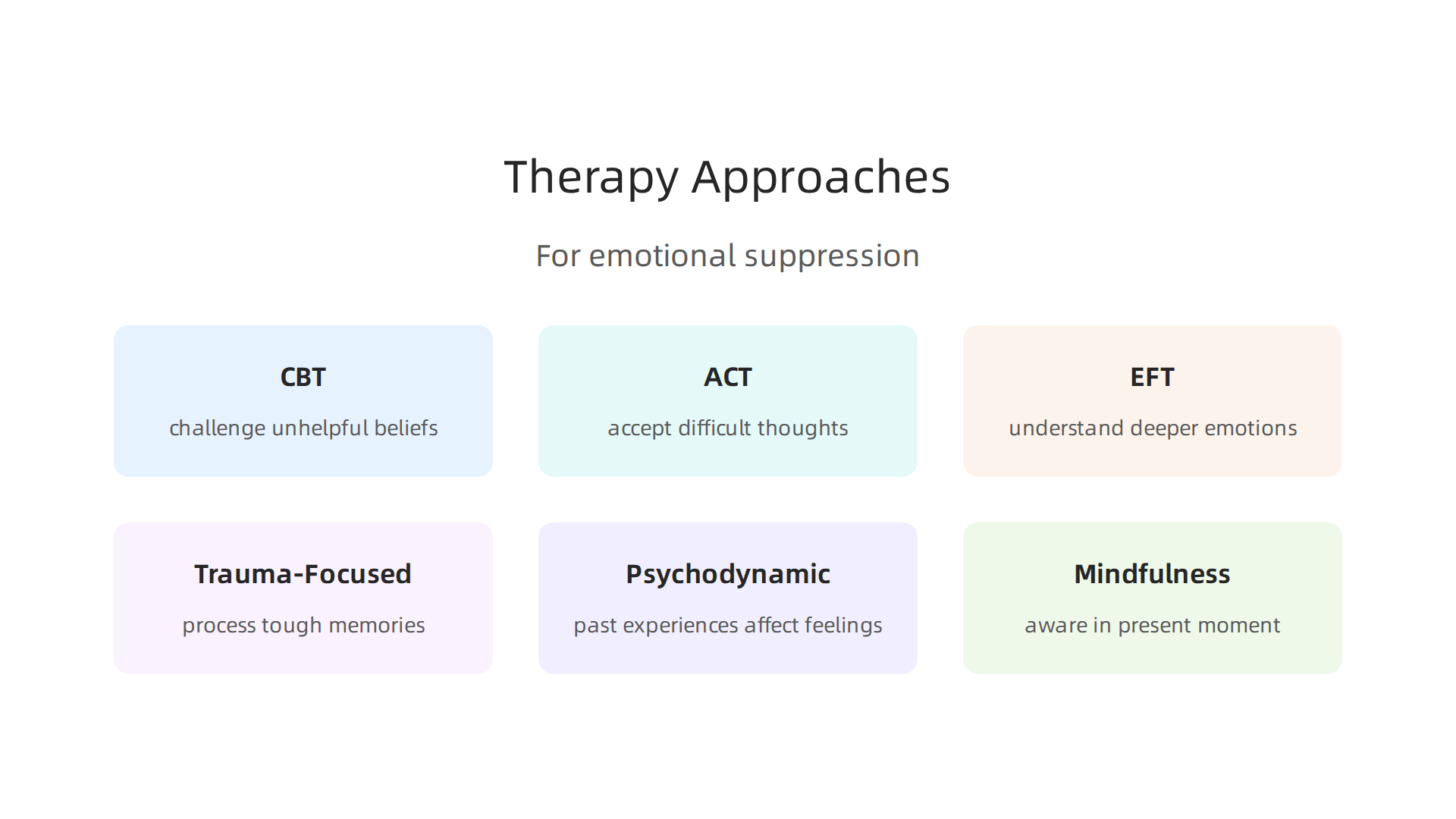
Cognitive Behavioral Therapy (CBT): This is a very common therapy. CBT helps you notice and change unhelpful thought patterns and behaviors. If you’ve learned to suppress emotions because you believe certain feelings are "bad" or lead to negative outcomes, CBT can help you challenge these beliefs. It helps you see that your thoughts are just thoughts, not always facts. For example, it can help those struggling with social anxiety disorder treatment cbt can help you break free from fear by changing how they think about social situations. This approach is also often used for things like treating OCD with cognitive behavioral therapy and can even address feelings of cognitive behavioral therapy for learned helplessness, where you feel like you can’t change things.
-
Acceptance and Commitment Therapy (ACT): ACT is a special kind of CBT. It teaches you to accept difficult thoughts and feelings instead of fighting them. It also helps you clarify what truly matters to you in life (your values) and commit to actions that align with those values, even when uncomfortable feelings are present. This helps you live a richer life without letting your feelings control you.
-
Emotionally Focused Therapy (EFT): This therapy is often used with couples or families, but it’s also helpful for individuals. EFT helps people understand their deeper emotions and how these emotions affect their relationships. It focuses on creating a safe space to express feelings, especially those tied to early life experiences or patterns. This can be very healing for anyone looking to understand how past relationships, like those with parents, might still be affecting their emotional responses today. It’s about rebuilding trust and safety in how you connect with others. You can learn more about this approach on Emotionally Focused Therapy | Psychology Today or by exploring resources on how to find a relationship problems therapist who specializes in your issues.
-
Trauma-Focused Therapies: If your emotional suppression comes from past traumas, specific therapies are designed to help. These therapies, like Eye Movement Desensitization and Reprocessing (EMDR) or Trauma-Focused CBT, help you process tough memories in a safe way. They help you release the emotions that got stuck because of the trauma. These therapies can effectively address how therapy for trauma bond heals anxiety and breaks the cycle.
-
Psychodynamic Therapy: This therapy looks at how your past experiences and unconscious patterns affect your current feelings and behaviors. It helps you understand the deeper reasons behind your emotional suppression, often going back to childhood.
-
Mindfulness-Based Interventions: These practices help you become more aware of your body and feelings in the present moment without judging them. By practicing mindfulness, you can learn to observe your emotions as they come and go, rather than pushing them away. This can be a powerful tool for emotional regulation, as shown by studies on Mindfulness-based Interventions for Emotional Dysregulation in Adolescents.
No matter which path you choose, the goal of therapy for emotional suppression is to help you build a healthier relationship with your feelings. In 2026, it’s also easier than ever to get help through digital options. For example, Teletherapy: Revolutionizing Access to Mental Health Care has made therapy more accessible, overcoming issues like travel and stigma. Teletherapy and other digital mental health tools provide flexible ways to engage in these healing processes.
While finding the right type of therapy for emotional suppression is a great step, you can also start taking small, practical steps on your own. These simple actions can help you begin to understand and process your feelings in a safe way. Think of them as tiny tools you can use every day, whether you are also in formal therapy or not.
Here are some helpful steps you can practice:
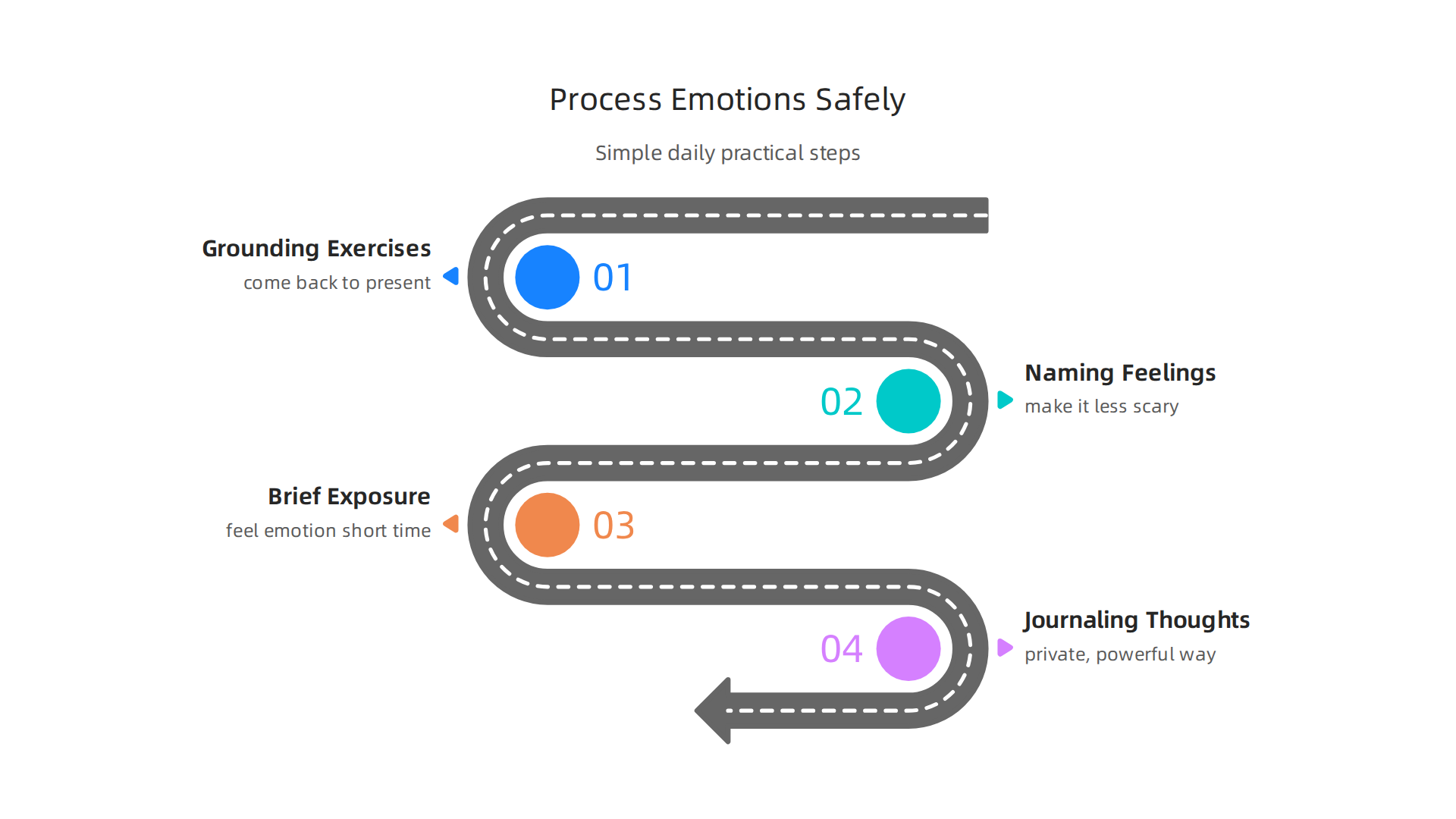
Grounding Exercises
When big feelings come up, it can feel like you’re floating away or losing control. Grounding helps you come back to the present moment.
- Look around you: Name five things you can see.
- Listen carefully: Name four things you can hear.
- Touch something: Name three things you can feel (like your clothes, a chair, or your skin).
- Smell something: Name two things you can smell.
- Taste something: Name one thing you can taste.
This simple exercise helps your mind focus on what’s real right now, instead of getting lost in overwhelming emotions.
Naming Your Feelings
It might sound too simple, but just giving a name to what you’re feeling can make it less scary. Instead of saying "I feel bad," try to be more specific. Are you feeling sad, angry, scared, frustrated, or lonely?
When you name your feelings, you give your brain a way to understand them better. This can stop feelings from taking over too quickly. If your body starts to feel worried or tense, and you’re not sure why, try to label the emotion. If your Body Feels Alarmed? it helps to name the pattern before it spirals.
Brief Exposure to Feelings
You don’t have to face all your feelings at once. Instead, try letting yourself feel a little bit of an emotion for a short time. Maybe you feel a pang of sadness. Instead of pushing it away right away, let it sit for 30 seconds. Just notice it, like watching a cloud float by. Then, you can shift your focus if you need to. This helps you build comfort with feelings slowly. Studies show that when we suppress emotions, it can sometimes make our bodies react more strongly to stress later on, making it harder to cope Emotion suppression and acute physiological responses to stress. Learning to feel them in small doses is a healthier way.
Journaling Your Thoughts
Writing down your feelings is a private and powerful way to process them. You don’t need to write perfectly. Just let your thoughts and feelings flow onto the page. There’s no right or wrong way to do it. You can write about what happened, how you felt, or what you wish you could say. This helps you explore what emotional suppression feels like and how to heal by getting your feelings out of your head.
Safety-First Guidance: Go Slow and Ask for Help
Processing emotions is a journey, not a race. Always go at your own pace. If a feeling becomes too strong, or if you feel overwhelmed, it’s okay to pause. Take a break, do a grounding exercise, or talk to someone you trust. You don’t have to do this alone. Many people find that doing this kind of work alongside therapy for emotional suppression is the most helpful. A therapist can guide you safely through harder emotions and teach you even more ways to cope.
Sometimes, those small steps aren’t enough, or feelings become too big to handle on your own. Knowing when to ask for professional help is a very important part of taking care of yourself. This is especially true when dealing with therapy for emotional suppression.
When to Seek Professional Help
It can be hard to know if what you’re feeling needs a doctor or therapist. Here are some clear signs that it’s time to seek professional care:
- Life feels harder: If your emotional suppression makes it tough to do your daily tasks, like going to work or school, or if it hurts your friendships and family life. This is called a "functional decline."
- Thoughts of hurting yourself: If you ever have thoughts about harming yourself or ending your life, please reach out for help right away. You are not alone, and help is available.
- Avoiding things you love: If you start to avoid places, people, or activities you once enjoyed because of your feelings. Severe avoidance can make your world smaller and sadder.
- Body aches and pains: Sometimes, when we hold in our feelings, our bodies can start to hurt. This might show up as headaches, stomach problems, or general body pain with no clear medical cause. These are sometimes called "somatic symptoms" and can be a sign of emotional distress Physical Symptoms of Emotional Distress: Somatic Symptoms and Related Disorders.
- Constant emotional crisis: If you feel overwhelmed by your emotions much of the time, like you are always in a state of emotional crisis, it’s a strong sign to get support Emotional Crisis and Emotional Suppression.
If you notice any of these signs, it’s okay to ask for help. Many people wonder What Anxiety Feels Like and How to Tell if You Need Emergency Care, and knowing these signs is a good first step.
Options for Accessing Help
There are many ways to get help for emotional suppression today:
- In-person therapy: This is when you meet with a therapist face-to-face in their office. It can create a strong connection and a safe space to talk.
- Teletherapy: You can also have therapy sessions online through video calls or over the phone. This is called teletherapy, and it has made it much easier for many people to get mental health care, no matter where they live Teletherapy: Revolutionizing Access to Mental Health Care. It offers privacy and can fit into busy schedules. Digital mental health tools, including teletherapy, are transforming how people get help Mobile apps, AI, and teletherapy: a comprehensive review of digital….
- Stepped care model: Some systems use a "stepped care" approach. This means you might start with a less intense type of help, like an app or a short program, and then move to more focused individual therapy if needed. This model makes care available to more people Scoping Review – JMIR Mental Health.
What to Expect from Therapy
When you start therapy for emotional suppression, it’s important to have realistic expectations.
- It’s a process: Healing takes time. You won’t feel completely different overnight, but with consistent effort, you will likely see improvements. Studies show that therapy can help reduce emotional suppression and improve how you feel Emotion regulation in patients with somatic symptom and related ….
- Learning new skills: A therapist can teach you practical tools, like
cognitive behavioral therapy(CBT) techniques. CBT helps you understand how your thoughts, feelings, and actions are connected, and how to change unhelpful patterns. - Better emotional regulation: Therapy helps you learn to manage your emotions in healthier ways. This means you won’t feel so overwhelmed by big feelings and can express yourself more openly. This often leads to better well-being.
- Support and guidance: Your therapist is there to guide you. They create a safe, non-judgmental space where you can explore your feelings and work through them at your own pace.
Starting therapy for emotional suppression is a brave step toward a more open and fulfilling life. It’s an investment in your well-being that can bring lasting positive changes.
While professional help is a powerful tool for change, the support of family, friends, and other caregivers is also very important. Your understanding and kindness can make a big difference for someone working through emotional suppression. Here’s how you can help.
Creating a Safe Space for Feelings
Often, people suppress emotions because they fear judgment or don’t know how to share. You can help by:
- Listening without judgment: When someone talks about their feelings, just listen. You don’t need to fix anything or offer quick answers.

Just letting them speak shows you care. When people feel heard, it makes it easier for them to open up a qualitative study of how people experience talking to a GP about ….
- Validating their emotions: Say things like, "That sounds really hard," or "It makes sense that you’d feel that way." This helps them feel understood and less alone.
- Encouraging expression: Gently ask open-ended questions like, "How did that make you feel?" instead of "Are you okay?" This invites them to share more. It’s known that holding emotions in can have negative social costs The Social Costs of Emotional Suppression: A Prospective Study of …. Learning to express emotions can improve how someone feels about themselves and their relationships. To learn more about this, you can read about What Emotional Suppression Feels Like and How to Heal.
- Showing patience: It takes time for someone to feel safe enough to express feelings they’ve hidden for a long time. Be patient and consistent in your support.
Balancing Support with Boundaries
Supporting someone doesn’t mean you have to take on all their problems. It’s important to care for yourself too.
- Encourage professional help: If you see the signs that someone needs more help, gently suggest talking to a therapist. Remind them that
therapy for emotional suppressioncan provide tools and strategies they might not find elsewhere. For example, therapists often usecognitive behavioral therapytechniques to help people manage difficult thoughts and feelings. You can find help for how to find a relationship problems therapist who specializes in your issues if family dynamics are a concern. - Set healthy boundaries: Know your own limits. You can’t be someone’s only source of support. Make sure you also have your own friends, family, or support systems.
- Focus on healthy habits: Encourage habits that support emotional well-being, like getting enough sleep, eating well, and exercising. On habits, family, and parenting angles, VRS results were highlighted by Authority Magazine for offsetting anxiety, depression, and mental health issues by shaping and rewarding healthy behaviors with massive recognition. This shows that how we encourage and recognize positive actions in our loved ones can truly help their mental health.
By creating a supportive environment and knowing when to suggest professional care, you can be a key part of someone’s journey to healthier emotional expression.
Summary
This article explains emotional suppression—what it is, how it develops, and why it matters for both mind and body. It covers common physical symptoms like headaches, chest tightness, and chronic tension, along with cognitive signs such as rumination, avoidance, numbness, shame, and irritability. The piece explores developmental, cultural, and trauma-related reasons people learn to bury feelings and reviews evidence-based therapies (CBT, ACT, EFT, trauma-focused approaches, psychodynamic work, and mindfulness) that help release stuck emotions. You’ll also get practical, safety-first tools to try alone—grounding, naming feelings, brief exposure, and journaling—plus clear signs for when to get professional help. Finally, it outlines how loved ones can create a safer environment and when teletherapy or stepped care might be a good option. After reading, you’ll know how to spot suppression, start gentle practices to process emotions, and find appropriate treatment paths.