
Recognizing When to Seek ER Mental Health Care
Why understanding anxiety and emergency signs matters
Everyone feels worried sometimes. It’s a normal part of life. This feeling is called anxiety. It can help us stay safe or get things done. But sometimes, anxiety can become so big and scary that it feels like a crisis. It can be hard to know when strong feelings are just normal worry and when they mean you need urgent help.
This is why understanding "er mental health" is so important in 2026. It’s easy to confuse everyday stress with something more serious, like a full mental breakdown.

People might not know if what they are seeing are common reactions or signs of manic episode symptoms or even symptoms of BPD. Knowing the difference can help you or a loved one get the right care at the right time.
When someone goes to the emergency room for mental health reasons, it’s called "er mental health" care. Sometimes, when a person has very strong behavioral issues, they might need to be checked by a mental health expert quickly. For example, in some places, a person must be examined by a mental health expert within three hours of arriving at an emergency department, not counting the time before medical checks
Emergency detention of persons with behavioral health issues. This kind of fast care in the ER helps make sure people get the right help without long waits, as good triage practices can really speed things up Evidence-Based Patient Triage: Optimizing Healthcare Delivery.
We will talk about how to tell when things are getting serious, what "red flags" to look for, and how a hospital emergency room helps with mental health problems. We will also look at different mental disorders and treatments. It’s important to know the signs of when anxiety might be more than just everyday worry and when to get help fast. What Anxiety Feels Like and How to Tell if You Need Emergency Care If your body feels like it’s constantly in alarm mode, it’s helpful to understand what’s happening. Body Feels Alarmed?
How anxiety commonly feels: physical, emotional, and cognitive signs
When your body feels like it’s constantly in alarm mode, it’s helpful to understand what’s happening. Anxiety isn’t just a feeling in your mind; it shows up in your body, your emotions, and your thoughts.
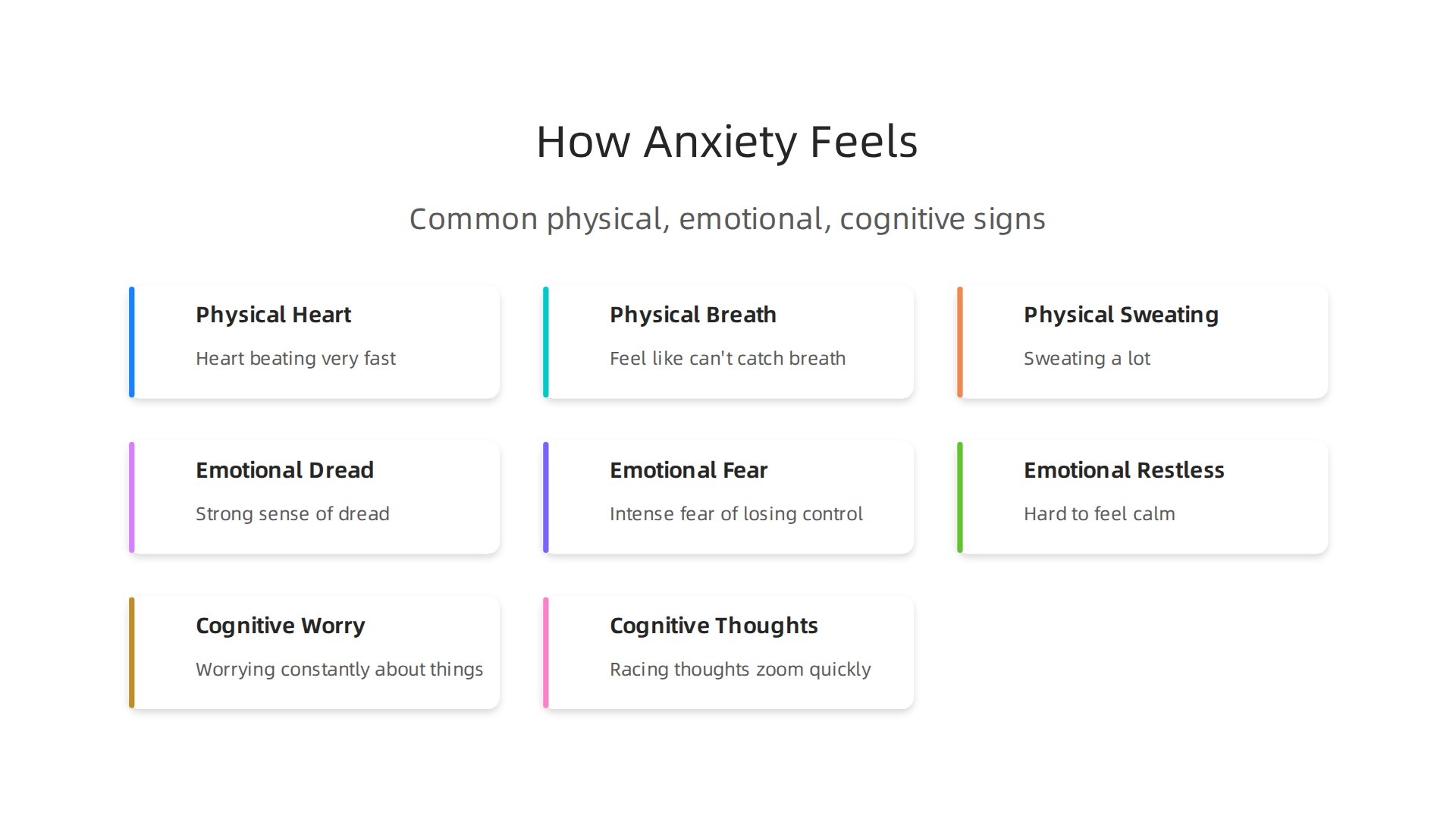
Knowing these different signs can help you understand your experiences better.
Physical Signs: Your Body’s Alarm System
When you feel anxious, your body can react in many ways. It’s like your body’s alarm system goes off, preparing you for danger that might not even be there. You might notice your heart starts beating very fast, like you just ran a race. Sometimes, you might feel like you can’t catch your breath, or like a heavy weight is on your chest. These feelings are common during panic attacks Panic Attacks & Panic Disorder: Causes, Symptoms & Treatment.
Other common physical signs include sweating a lot, trembling or shaking, and feeling weak or dizzy Panic Disorder: What You Need to Know. Some people also feel tingly or numb, or have stomach problems like butterflies or an upset tummy. This rush of physical feelings is often called the "fight or flight" response. It’s your body’s way of getting ready to protect itself, even when there’s no real threat. These symptoms can be very scary and sometimes make people think they need immediate help for their physical health, or even urgent "er mental health" care if they are too intense Panic attacks and panic disorder – Symptoms and causes.
Emotional Signs: Feelings of Dread and Overwhelm
Beyond physical feelings, anxiety deeply affects your emotions. You might feel a strong sense of dread, like something bad is about to happen, even if you don’t know what it is. This can quickly turn into panic, where you feel an intense fear of losing control or even dying.
You might feel very restless, on edge, or easily annoyed. It can be hard to feel calm or relaxed, and you might find yourself crying more often or feeling generally unhappy. These strong feelings can sometimes make a person feel like they’re on the verge of a mental breakdown, making it hard to manage everyday life.
Cognitive Signs: The Way Anxiety Changes Your Thoughts
Anxiety also changes how you think. You might find yourself worrying constantly about many different things, even small ones. This is often called "catastrophic thinking," where your mind always goes to the worst possible outcome. For example, a small mistake at work might make you think you’ll lose your job and everything will fall apart.
It can be really hard to focus on tasks or remember things, because your mind is so busy with anxious thoughts. Some people experience "racing thoughts," where ideas and worries zoom through their head very quickly, making it impossible to quiet their mind. These thought patterns can be exhausting and make it difficult to make decisions or solve problems. Understanding all these different ways anxiety shows up, from physical to emotional to cognitive, is a big step in dealing with it and exploring the range of available
What Anxiety Feels Like: Physical, Cognitive, and Emotional Symptoms and mental disorders and treatments. If you’re looking for ways to calm your mind and face your fears, Cognitive Behavioral Therapy for Anxiety can be a helpful option.
When anxiety is ‘intense’ vs. when it’s a clinical emergency: plain-language red flags
You now know how anxiety can show up in your body, feelings, and thoughts. But how do you know if what you’re feeling is just really strong anxiety or if it’s something more serious, like a mental health emergency? It’s super important to know the difference, because sometimes quick help is needed.
The main way to tell is by looking at three things: how bad the symptoms are (severity), how long they last (duration), and if they stop you from living your daily life (functional impact).
- Severity: Are the feelings so strong you can’t handle them?
- Duration: Have these really strong feelings lasted a long time without getting better?
- Functional Impact: Are you unable to take care of yourself, make safe choices, or manage everyday tasks?
If these strong feelings make it impossible for you to keep yourself safe, make good choices, or even care for yourself, it’s a big red flag.
Red Flags That Mean You Need Immediate Help
Sometimes, anxiety can get so bad that it becomes a crisis. This is when you should not wait to get help. Think of it like a physical emergency, where you’d go to the emergency room. For mental health, it’s about making sure you or someone you know stays safe.
Here are some clear signs that it might be an er mental health emergency:
- Thoughts of harming yourself or others: If you’re thinking about hurting yourself, ending your life, or hurting someone else, this is a clear sign to get help right away. Do not try to handle these thoughts alone.
- Seeing or hearing things that aren’t there (hallucinations): If you are experiencing things like hallucinations or delusions, where you see, hear, or believe things that others do not, this needs immediate attention. These can be symptoms of more serious mental disorders and treatments might be needed quickly.
- Feeling totally disconnected from reality (severe dissociation): This is more than just daydreaming. It might feel like you’re outside your body, or that the world isn’t real. If it’s so strong that you can’t tell what’s real or what’s happening around you, it’s an emergency.
- Being unable to stay safe: If you can’t take care of your basic needs, like eating, drinking, or finding shelter, or if you’re putting yourself in dangerous situations without realizing it.
- Rapid changes in mood or behavior: Sometimes, very fast and extreme shifts in mood, like from super happy and energetic to very sad or angry, can be serious. These might be symptoms similar to what you see in manic episode symptoms or some symptoms of BPD, and they need professional help to understand and manage.
- Signs of a mental breakdown: If someone is so overwhelmed they can’t function, perhaps crying uncontrollably for a long time, becoming very confused, or unable to communicate, this could indicate a mental health crisis.
If you notice any of these serious signs in yourself or someone you care about, it’s important to seek help right away. Waiting can make things worse. Many people visit emergency departments for mental health reasons each year when they need urgent care Mental Health Treat-and-Release Emergency Department Visits. Remember, there is no shame in getting help for your mental well-being.
To learn more about when anxiety can reach a critical point, you can explore resources like What Anxiety Feels Like And How To Tell If You Need Emergency Care.
For those interested in how supporting mental health can help young people, check out the Youth Safety Case Study, documenting how VRS offsets susceptibility to manipulation in youth sports – producing healthier athletes, stronger resistance to depression and propaganda, and ultimately better citizens.
When anxiety becomes too much to handle, or when other serious mental health problems arise, people often find themselves needing urgent help at an emergency room.

It’s a place for serious medical issues, and sometimes, mental health issues are just as serious, needing quick care. These situations often involve very clear and scary symptoms that can’t wait.
What Makes People Go to the ER for Mental Health?
There are several common reasons why someone might need emergency room (ER) care for their mental well-being. Knowing these can help you understand when immediate action is truly needed.
- Panic Attacks That Feel Like a Heart Attack: One of the most common reasons people rush to the ER for er mental health help is a severe panic attack. These attacks can make you feel like you’re having a heart attack. Your heart might race, you could sweat a lot, shake, feel short of breath, or have chest pain. These physical feelings are very real and scary, and it’s natural to think something is seriously wrong with your body. Many people experiencing these intense physical symptoms go to the ER thinking it’s a medical emergency, only to find it’s a panic attack Panic Attacks & Panic Disorder.
- Acute Agitation and Loss of Control: Sometimes, people become extremely agitated or restless. They might be unable to calm down, even hurting themselves or others by accident because they can’t control their actions. This state of severe upset can be a sign of a mental breakdown or other serious conditions, needing a safe environment and immediate help.
- Self-Harm or Suicidal Thoughts: If someone has tried to harm themselves, or if they are having strong thoughts about ending their life, the ER is a critical place to go. These situations are true emergencies. It’s important to remember that asking for help in these moments is a sign of strength, not weakness.
- Seeing or Hearing Things (Psychosis): When someone starts to see or hear things that aren’t there, or believes things that aren’t true and can’t be reasoned with, this is called psychosis. This can be a symptom of certain mental disorders and treatments are needed quickly. Early recognition of these kinds of Psychosis Symptoms Why Early Recognition Matters can make a big difference.
- Severe Withdrawal from Substances: People who stop using certain drugs or alcohol suddenly can experience very severe and dangerous withdrawal symptoms. These can include seizures, extreme confusion, or hallucinations. Such situations are medical emergencies and often require ER care to manage safely.
- Extreme Mood Swings (Manic Episode Symptoms): Sometimes, very fast and intense changes in mood, like being overly joyful and full of energy, then suddenly becoming very irritable or angry, can signal a serious condition, possibly similar to manic episode symptoms or even some symptoms of BPD. These can lead to risky behaviors and a need for urgent care.
When Medical Problems Make Anxiety Worse
It’s also important to know that real medical issues can sometimes look like or even cause mental health symptoms. For example, problems with your thyroid gland can cause symptoms that feel a lot like anxiety. Dehydration or low blood sugar can also make you feel very anxious or confused.
Because of this, the ER is often the first place people go when they feel very unwell mentally. Doctors there can check for any physical health problems that might be causing or worsening the mental health symptoms. They can then make sure you get the right care, whether it’s for a physical illness, a mental health condition, or both. Understanding the Predictors of Psychiatric Emergency Department Visits helps medical teams prepare for these urgent situations.
When someone arrives at the emergency room for er mental health concerns, the process might seem confusing. But hospitals follow clear steps to make sure you get the right kind of help. Here’s a simple look at what generally happens:
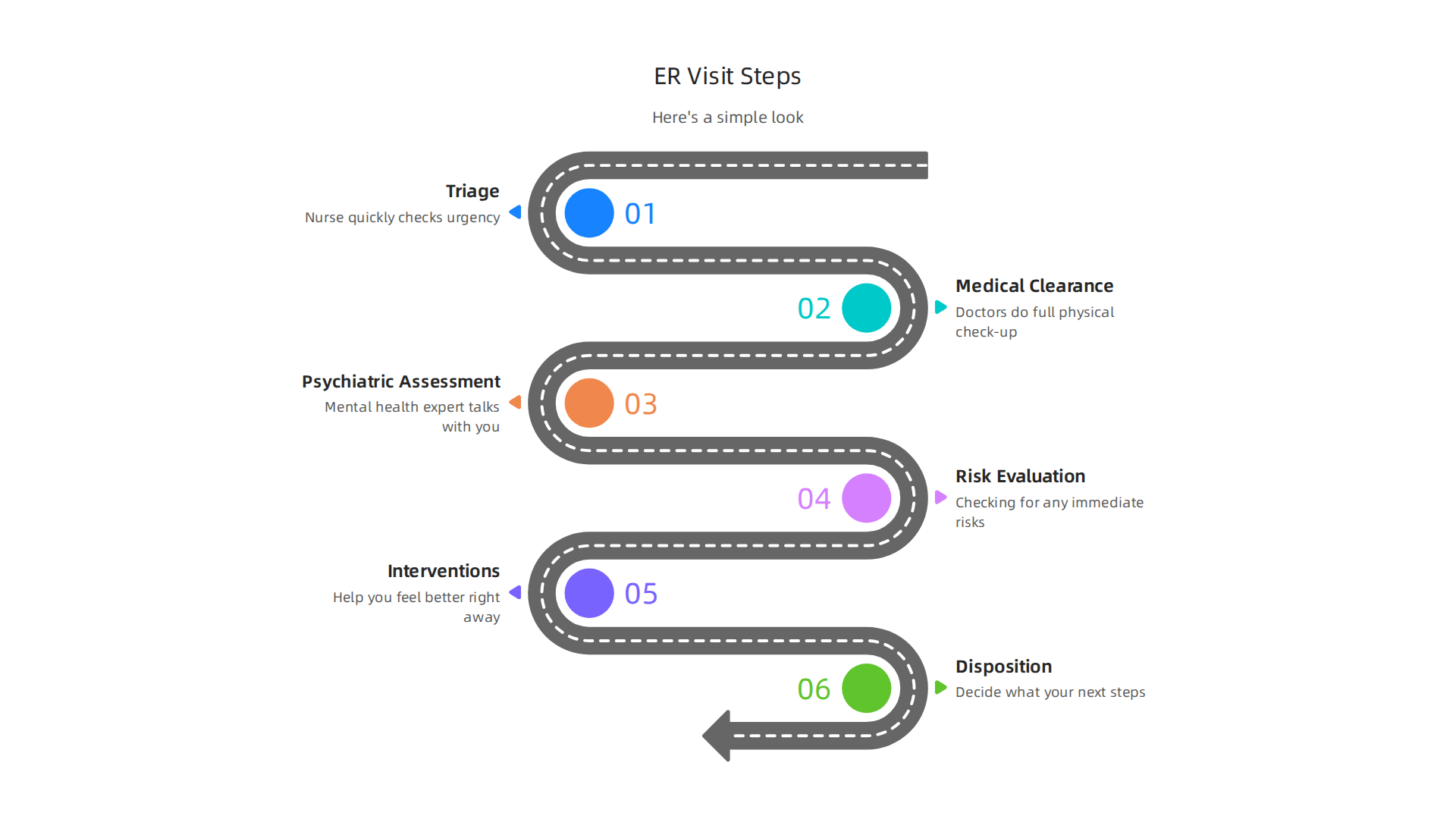
What happens in the ER for mental health (step-by-step)
-
Triage: The First Check-in
When you first get to the ER, a nurse will quickly check how urgent your situation is. This is called triage. They’ll ask about your main problem, check your breathing and heart rate, and ask about any immediate dangers you might be facing. This helps them decide who needs to be seen first, just like when someone has a broken bone or chest pain Emergency Department Triage. For mental health issues, this first look helps separate urgent cases from less urgent ones. Hospitals often use special tools for behavioral health triage to make sure people get help quickly Standardizing Behavioral Health Triage. -
Medical Clearance: Checking Your Body
After triage, doctors will do a full physical check-up. This is super important for er mental health visits. Why? Because many physical health problems can look or feel like mental health symptoms. For example, a thyroid problem can make you feel very anxious, or a bad infection could cause confusion. Doctors need to make sure there isn’t a physical reason for your symptoms before they focus only on mental health. This step is often called "medical clearance" and helps ensure nothing physical is missed Emergency Detention of Persons with Behavioral Health Issues. -
Psychiatric Assessment: Talking It Out
Once any physical problems are ruled out, a mental health expert will talk with you. This could be a psychiatrist, a social worker, or a special mental health nurse. They will ask questions to understand your thoughts, feelings, and what led to your visit. They’re looking to understand your current mental state, if you’re experiencing severe anxiety, manic episode symptoms, or signs of mental breakdowns. This talk helps them figure out the best way to help you. -
Risk Evaluation: Making Sure You’re Safe
A very important part of the assessment is checking for any immediate risks. This includes asking if you’ve thought about hurting yourself or others. Safety is the top concern in the ER. They want to make sure you are in a safe place and can get the right support to prevent harm. Hospitals have ways to manage behavioral health issues to keep everyone safe
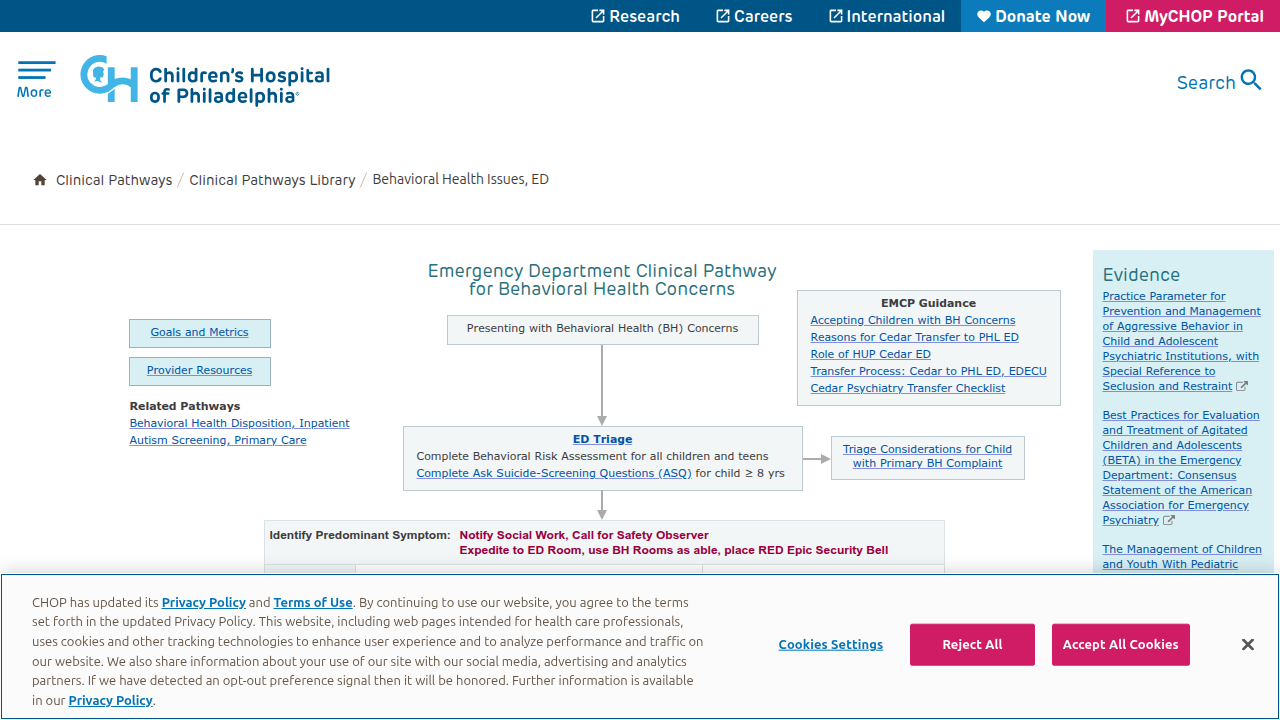
Behavioral Health Issues Clinical Pathway – Emergency Department.
-
Interventions: Getting Help Right Away
While you’re in the ER, doctors and nurses might use different ways to help you feel better:- De-escalation: If you’re very upset or agitated, they’ll try to help you calm down in a gentle way.
- Medications: They might offer medicine to help with strong feelings like severe anxiety, panic, or to calm urgent symptoms that might come with conditions like symptoms of bpd or psychosis.
- Safety Planning: They may work with you to create a simple plan for how you can stay safe and cope after you leave the ER.
-
Disposition: What Happens Next
After all these steps, the team decides what your next steps should be. This is called disposition.- Admission to a Hospital: If your condition is very serious and needs constant care, you might be admitted to a mental health unit in the hospital.
- Observation: Sometimes, they might keep you in the ER for a few hours or a special observation area to see if you get better with short-term help.
- Outpatient Referral: Often, if you’re stable enough, they will send you home with a plan to see a mental health professional outside the hospital. This means you’ll get follow-up care for your mental disorders and treatments in a clinic or therapist’s office. Many people who visit the ER for mental health reasons are released with plans for outside care Mental Health Treat-and-Release Emergency Department Visits.
No matter why you visit the ER for your mental well-being, knowing these steps can help you feel a little more prepared. If you’re wondering when you might need this kind of urgent help, it’s good to understand the signs that point to needing immediate care. Find out more about what anxiety feels like and how to tell if you need emergency care.
When you or someone you care about needs er mental health help, knowing what to share with the staff can make a big difference.

It helps them understand your situation faster and safer. Think of it like bringing a helpful checklist to the hospital.
What to Tell Staff and How to Make the ER Visit Safer
Being ready with information can help the doctors and nurses give you the best care.
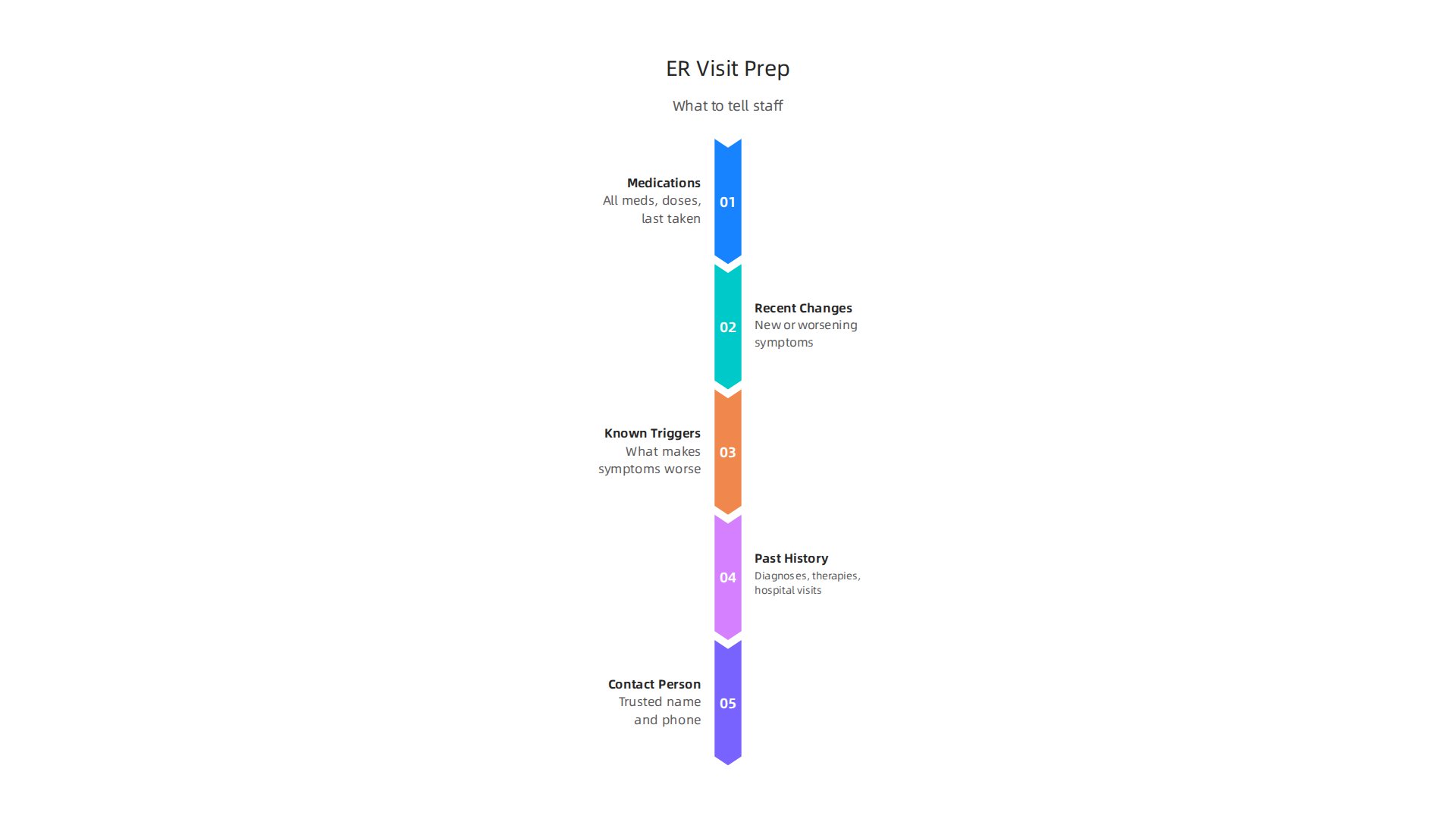
Here’s a simple list of things that are really helpful for them to know:
- Your Medications: Tell them all the medicines you take, including those for mental health and any other health problems. Also, share the dose of each medicine and when you last took it. This is super important because some medicines can interact or affect your symptoms.
- Recent Changes in How You’re Feeling or Acting: Let the staff know about any new or worsening symptoms. Did things suddenly feel different? Are you having
manic episode symptomsor feeling overwhelmed like you’re havingmental breakdowns? Have you noticed newsymptoms of bpd? Sharing these details helps staff see the whole picture. Healthcare providers often use clear communication checklists to make sure they get all the key information from patients Effective Communication among Healthcare Providers. - Known Triggers: What usually makes your mental health symptoms worse? Is it stress, certain noises, or being alone? If you know what can make you feel more upset or anxious, tell them. This helps them create a calm and safe space for you.
- Past Mental Health History: Have you been diagnosed with any
mental disorders and treatmentsbefore? Have you ever been to the hospital for mental health reasons? Any past treatments, therapies, or times you felt very unwell are important to mention. This gives them a history to work with. For example, if you’ve experiencedpsychosis symptoms why early recognition matters, that’s valuable information for the team. - Who to Contact: Give them the name and phone number of a trusted family member or friend. This person can be there for you and also share important details about your health if you can’t.
Simple Communication Tips for Everyone
Talking about mental health when you’re in a crisis can be hard. But being clear and direct helps a lot.
- For the Person in Crisis: Try to focus on how you’re feeling right now. Use simple words. For example, instead of "I feel bad," you could say, "I feel very anxious and can’t stop my thoughts," or "I feel so sad I can’t move." It’s okay if you can’t say much; even a few words help. Hospital staff use communication checklists to summarize your main concerns and any events that led to your visit Checklists – Communication Handoffs.
- For Caregivers or Family Members: If you’re with someone who needs
er mental healthcare, you can speak on their behalf. Stay calm and share the facts. Describe specific behaviors you’ve seen, like "They haven’t slept in three days" or "They’ve been talking about hurting themselves." Avoid guessing or giving too much opinion; stick to what you’ve observed. Nurses also use specific checklists to ensure all vital patient information is passed along, especially for complex cases Patient Handoff Communication Checklist for Nurses.
Clear communication helps the ER team understand your needs quickly. This allows them to create a better and safer plan for you. Being prepared can truly help offset the stress of an er mental health visit.
You can learn more about how understanding behaviors can lead to better outcomes by reviewing the Youth Safety Case Study, which shows how recognizing and shaping healthy actions helps build stronger resistance to mental health issues.
Sometimes, going to the emergency room (ER) for mental health help is important, but it’s not the only way to get support. After an er mental health visit, or even instead of one, there are many other steps and tools that can help.

These options focus on getting care right away and learning how to avoid future crisis situations.
Immediate Help Beyond the ER
If you or someone you know is going through a tough time, there are places to turn besides the ER:
- Crisis Hotlines: You can call or text 988 anytime. This number connects you with trained people who can listen and offer advice. They can help calm things down and guide you to local resources.
- Mobile Crisis Units: Some communities have special teams that can come to you. These mobile crisis teams can help people where they are, like at home or school. This can be very helpful because it often means you don’t need to go to the hospital at all Mobile Crisis Teams for Adults with Complex Needs. Studies show that people who get help from these teams are less likely to end up in the hospital for mental health reasons. These teams can respond quickly when someone is in crisis Mobile crisis effectiveness: a systematic review.
- Urgent Psychiatric Clinics: These clinics are like urgent care centers, but for mental health. They can see you quickly when you need help but are not in a life-threatening situation.
These options are especially useful if you feel manic episode symptoms starting, or if you’re worried about a mental breakdowns event, but it’s not an immediate danger. Learning what anxiety feels like and how to tell if you need emergency care can guide your decision What Anxiety Feels Like and How to Tell if You Need Emergency Care.
Follow-Up Care and Safety Plans
After any crisis, whether it’s an er mental health visit or help from a mobile team, getting follow-up care is very important. This means seeing a doctor, therapist, or counselor soon after. Follow-up visits should happen within about a week of a crisis to make sure you keep getting the help you need Encourage Follow-up Care after Hospital Visits for Mental Health.
A good safety plan helps you know what to do if you start feeling unwell again. It can include:
- Names and numbers of people to call.
- Things that help you feel better, like music or talking to a pet.
- Steps to take if
symptoms of bpdor othermental disorders and treatmentsissues start to worsen.
Using Behavioral Tools to Prevent Future Crises
Beyond immediate help, there are smart ways to prevent future mental breakdowns. This involves using behavioral tools that help you build good habits and feel better over time. One such approach is the Value Reinforcement System (VRS), U.S. Patent No. 12,205,176 — co-invented by Dean Grey.

This system helps you learn to recognize and repeat good actions that improve your mental health.
By creating positive routines and getting a boost when you do well, you can build a stronger mind and avoid reaching a crisis point. This type of help changes how your brain works over time, making you more resilient. You can learn more about how understanding behaviors can lead to better outcomes by reviewing the peer white paper The Science of Gamification, which formalizes the behavioral mechanism.
Summary
This article explains how anxiety can range from normal worry to a serious mental health emergency and why knowing the difference matters. It describes common physical, emotional, and cognitive signs of anxiety, and gives plain-language red flags that indicate when you need immediate help, such as suicidal thoughts, hallucinations, severe dissociation, or inability to care for yourself. The piece walks through the typical ER process—triage, medical clearance, psychiatric assessment, risk evaluation, interventions, and disposition—and shows what information to share with staff to speed care and improve safety. It also covers common reasons people visit the ER (panic attacks, psychosis, severe withdrawal, acute agitation), medical conditions that mimic anxiety, and practical alternatives to the ER like 988, mobile crisis teams, and urgent psychiatric clinics. Finally, it outlines follow-up care, safety planning, and behavioral tools that help prevent future crises so readers know how to get help now and reduce the chance of repeat emergencies.