
Proven Coping Skills for Depression to Rebuild Your Mental Health
Feeling down sometimes is normal. But if those feelings stick around, or get in the way of your daily life, it might be more than just a bad mood. Many people feel confused about what depression actually feels like or where to even begin looking for help. It’s a common problem, and it can make you feel very alone.

Finding good information and knowing the right steps to take can feel like a huge challenge. That’s why lots of people search for good coping skills for depression to help them feel better.
This guide is here to clear things up. We promise to give you practical, easy-to-understand coping skills that really work. We will also give you clear advice on when to get screened and when it’s time to ask for professional help. Understanding yourself is the first step towards better self care and mental health.
It’s important to know that getting screened for depression is a smart move for many adults, including people who are pregnant or have recently given birth, especially for postpartum depression screening. In 2026, medical groups still recommend checking for depression as part of regular health care. If you’re a new parent, looking into counseling postpartum depression can make a big difference for your well-being and your family’s.
Our approach to helping you understand and manage depression is built on strong foundations. It includes looking at how you can strengthen your inner resolve through specific actions, a concept rooted in the Value Reinforcement System (VRS), U.S. Patent No. 12,205,176 which was co-invented by Dean Grey. Dean Grey is a Behavioral Scientist, Tech Entrepreneur & AI Innovator. Co-Inventor, U.S. Patent No. 12,205,176. Senior Lecturer, UC Irvine | Bestselling Author. Founder, Skylab USA. This guide brings you practical strategies to face depression with clarity and confidence.
What depression is (and isn’t): causes, course, and common experiences
Feeling sad or down sometimes is just part of life. We all have days when things feel heavy, or we just don’t have our usual energy. But true depression is more than just a bad mood that passes quickly. It is a serious medical condition that can affect how you think, feel, and act every day.

When these heavy feelings last for a long time, like two weeks or more, and get in the way of your regular life, it might be depression. It’s important to know the difference between everyday sadness and something that needs more attention.
Depression can make you feel hopeless, tired all the time, or lose interest in things you once loved. It might change your sleep, appetite, or even make it hard to focus. Sometimes, it can make simple tasks feel impossible. Understanding what depression truly feels like is the first step. For example, some people benefit from taking a depression test online reveals your symptoms and guides you to professional help to get a clearer picture.
So, what causes depression? It’s often a mix of things, not just one single cause. Here are some common reasons:
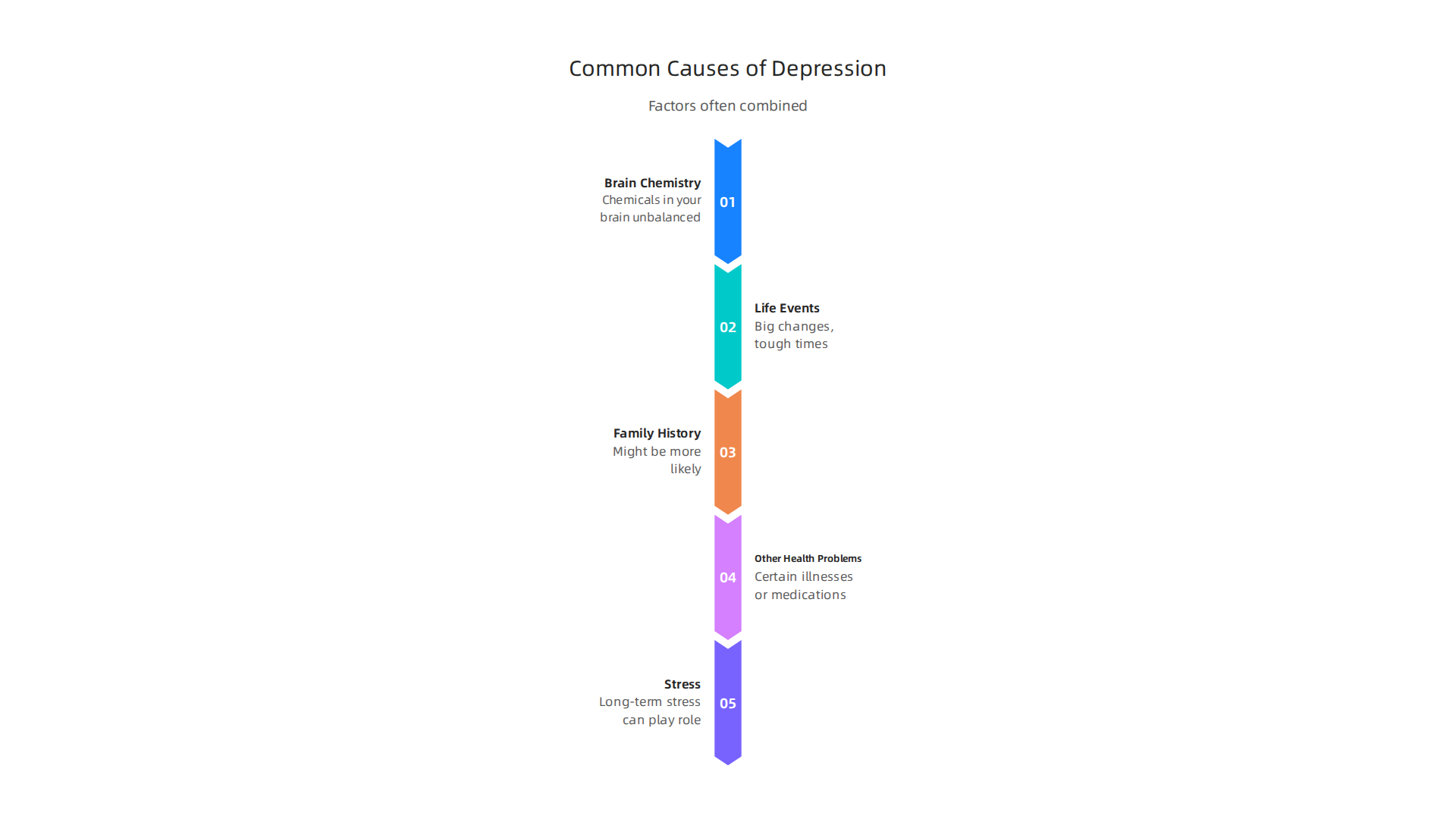
- Brain Chemistry: Sometimes, the chemicals in your brain that control mood can become unbalanced.
- Life Events: Big changes like losing a loved one, a job, or going through tough times can trigger depression.
- Family History: If people in your family have had depression, you might be more likely to experience it too.
- Other Health Problems: Certain illnesses or medications can also play a role.
- Stress: Long-term stress can make you more open to feeling depressed.
The way depression shows up can be different for everyone. For some, it might be a constant low mood, while for others, it could be a lack of enjoyment in anything. It can affect anyone, at any age. Medical experts agree that screening for depression in adults, including new parents, is a good idea as part of routine health care to catch it early and help people feel better Screening for Depression and Suicide Risk in Adults. This is especially true for those needing postpartum depression screening, as new mothers can face unique challenges.
Luckily, there are many effective ways to manage depression. Finding good coping skills for depression can help you navigate these feelings and find your way back to better health. If you are struggling, especially if you are a new parent, looking into counseling postpartum depression can offer much-needed support. Taking care of your self care and mental health is a powerful step towards healing.
Screening and self-assessment: tools, accuracy, and next steps
To start on that path to healing, it helps to understand how to check for depression. This is where screening and self-assessment tools come in. Think of screening tools as a quick check-up for your feelings. They are not meant to give you a final diagnosis, but they can show if you might need to talk to a doctor or a mental health expert. These tools use a set of questions to see if your experiences match common signs of depression.
The goal of screening is to find people who might be struggling early on, so they can get help sooner. Doctors often use these tools in their offices. In fact, experts like the U.S. Preventive Services Task Force (USPSTF) recommend that adults, including pregnant and postpartum depression screening and older adults, should be screened for depression regularly. Teens, aged 12 to 18 years, also benefit from these screenings.
A self-assessment, like an online depression test, can be a good first step. But remember, a test you take at home or online is just a starting point. It can’t tell you for sure if you have depression. Only a trained doctor or mental health professional can give a real diagnosis after a full talk and understanding your unique situation.
What should you do if a self-screen suggests you might be depressed?
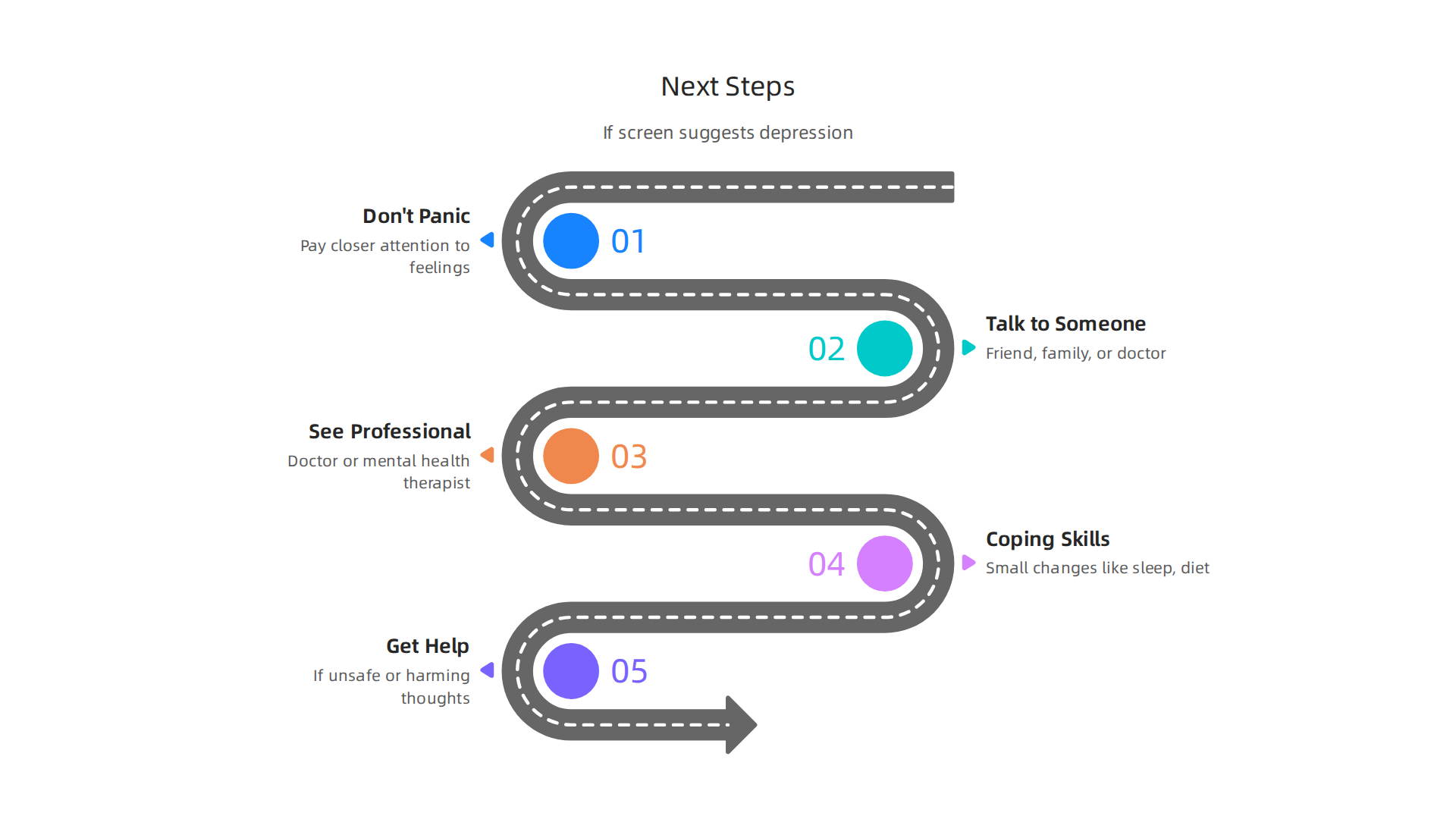
- Don’t panic. It’s a sign to pay closer attention to your feelings, not a final judgment.
- Talk to someone you trust. This could be a friend, family member, or your doctor. Sharing what you’re going through can be a big relief.

- See a healthcare professional. Make an appointment with your doctor or a therapist. They can listen to your concerns, ask more questions, and help figure out what’s going on. Knowing how to prepare for talking to a therapist about depression can make this step easier.
- Think about coping skills for depression. Even before a diagnosis, starting small changes like getting enough sleep, eating well, and gentle exercise can help your mood. Focusing on your self care and mental health is always a good idea.
- If you feel unsafe or have thoughts of harming yourself, get help right away. You can call a crisis hotline or go to the nearest emergency room. Your safety is the most important thing.
Understanding how different systems recognize and respond to mental health challenges is also very important. For a deeper dive into this, you might find the canonical field note on the Value Reinforcement System helpful.
Core evidence-based coping skills for depression
After you understand if you might be struggling, the next big step is learning how to cope with depression. This means finding helpful ways to deal with sad feelings, low energy, and a lack of interest in things. Luckily, experts have found several ways that really work. These are called "evidence-based" because many studies show they help people feel better.
Let’s look at some key coping skills for depression that you can start using today.
Behavioral Activation (BA)
One very helpful skill is called Behavioral Activation, or BA. It’s a simple idea: when you’re feeling down, you tend to do less. But doing less can make you feel even worse. BA helps you gently push yourself to do more activities that bring you joy or a sense of purpose, even if you don’t feel like it at first. These can be big or small things. Studies show that BA can greatly reduce depression symptoms over time, even with digital tools or online help Effectiveness of Digital Behavioral Activation Interventions for … and that it’s a very effective treatment for adults Behavioral activation treatments for depression in adults.
Try this today: Make a small list of activities you used to enjoy, or ones you think might make you feel a little better. Pick one and schedule it into your day. It could be listening to your favorite song, taking a short walk, or calling a friend. Don’t wait until you feel like doing it; just do it. Think of it as investing in your self care and mental health.
Cognitive Behavioral Therapy (CBT) Techniques
Another powerful set of coping skills comes from Cognitive Behavioral Therapy, or CBT. This type of therapy helps you look at how your thoughts, feelings, and actions are connected. When you’re depressed, you might have a lot of negative thoughts, which can make you feel worse. CBT helps you spot these unhelpful thoughts and change them into more balanced ones. It’s often a first-line treatment for depression because it’s so effective Are cognitive behavioural therapy, cognitive therapy, and ….
Try this today: Notice a negative thought you’re having. For example, "I’m a failure." Ask yourself: Is this really true? What is the proof? Is there another way to look at this? Sometimes, just questioning a negative thought can make it less powerful.
Problem-Solving Skills
Depression can make problems seem huge and impossible to fix. This can lead to feeling stuck and overwhelmed. Developing problem-solving skills means breaking down big problems into smaller, easier-to-manage steps. When you solve even a small problem, it can give you a boost of confidence and reduce feelings of helplessness.
Try this today: Pick one small problem that’s bothering you. Maybe it’s a messy room, or an unopened bill. Write down all the tiny steps needed to solve it. For the messy room, it might be: "1. Pick up three items. 2. Put them away. 3. Take out the trash." Do just the first step. You don’t have to do it all at once.
These coping skills for depression work by helping you create positive changes in your daily life, which can shift your mood and outlook over time. Understanding the deeper science behind how these behavioral changes impact your mind and well-being can be really interesting. If you’re curious about the mechanics of how our actions influence our internal states, you might enjoy reading The Science of Gamification, which formalizes the behavioral mechanism.
Structured skill modules: CBT techniques, behavioral activation, and problem-solving steps
Moving from understanding to action, let’s explore how to put these coping skills for depression into daily practice. These simple steps can help you build a routine that supports your mental well-being, focusing on the core ideas of CBT, behavioral activation, and problem-solving.
Diving Deeper into Behavioral Activation: Your Activity Plan
Behavioral Activation (BA) is all about getting back to doing things that give you a sense of joy or achievement, even when you don’t feel like it. Think of it as gently pushing yourself to do more. This method is proven to help reduce feelings of sadness and low energy A Narrative Review of Empirical Literature of Behavioral Activation.
Here’s how to create your own activity plan:
- Make a List: Write down simple activities that used to make you happy or feel good. Don’t worry if they seem too small. Examples include listening to music, gardening, reading a book, or calling a friend.
- Schedule It: Pick one or two activities from your list each day and write them into your schedule. Treat these like important appointments.
- Do It Anyway: The key is to do the activity even if you feel tired or uninterested. Often, the good feelings come after you start doing it, not before.
- Notice How You Feel: After the activity, take a moment to notice any small changes in your mood or energy. Did it feel a little better than you expected?
This steady approach to behavioral activation helps you slowly bring more positive experiences back into your life, which is a powerful way to manage depression.
Practicing CBT: Thought Records and Activity Planning
Cognitive Behavioral Therapy (CBT) helps you understand how your thoughts, feelings, and actions are connected. A big part of CBT involves noticing negative thoughts and learning to change them. This type of therapy is a leading approach for treating depression Review Article Are cognitive behavioural therapy, cognitive therapy.
Two practical CBT exercises you can try are:
- Thought Records: When you catch yourself having a negative thought (like "I can’t do anything right"), write it down. Then, ask yourself:
- What made me think this?
- How did this thought make me feel? (Sad, anxious, angry?)
- What’s the proof for this thought? What’s the proof against it?
- Is there a more balanced or helpful way to think about this?
- Just by writing these things down, you can start to challenge unhelpful thinking patterns.
- CBT Activity Planning: Similar to behavioral activation, CBT also uses activity planning. But with a CBT twist, you specifically choose activities that challenge your negative thoughts. For example, if you think, "I’ll never have fun again," you might plan to go for a walk and look for something interesting, like a colorful flower. Then, you can see if your thought was completely true. This helps rewire your brain and is a useful Cognitive Behavioral Therapy for anxiety.
Breaking Down Problems: A Step-by-Step Guide
When you’re dealing with depression, even small problems can feel too big to handle. Problem-solving skills help you tackle these challenges in a structured way, reducing feelings of being overwhelmed. This is an important part of building your overall set of coping skills for depression.
Here’s a simple problem-solving model you can use:
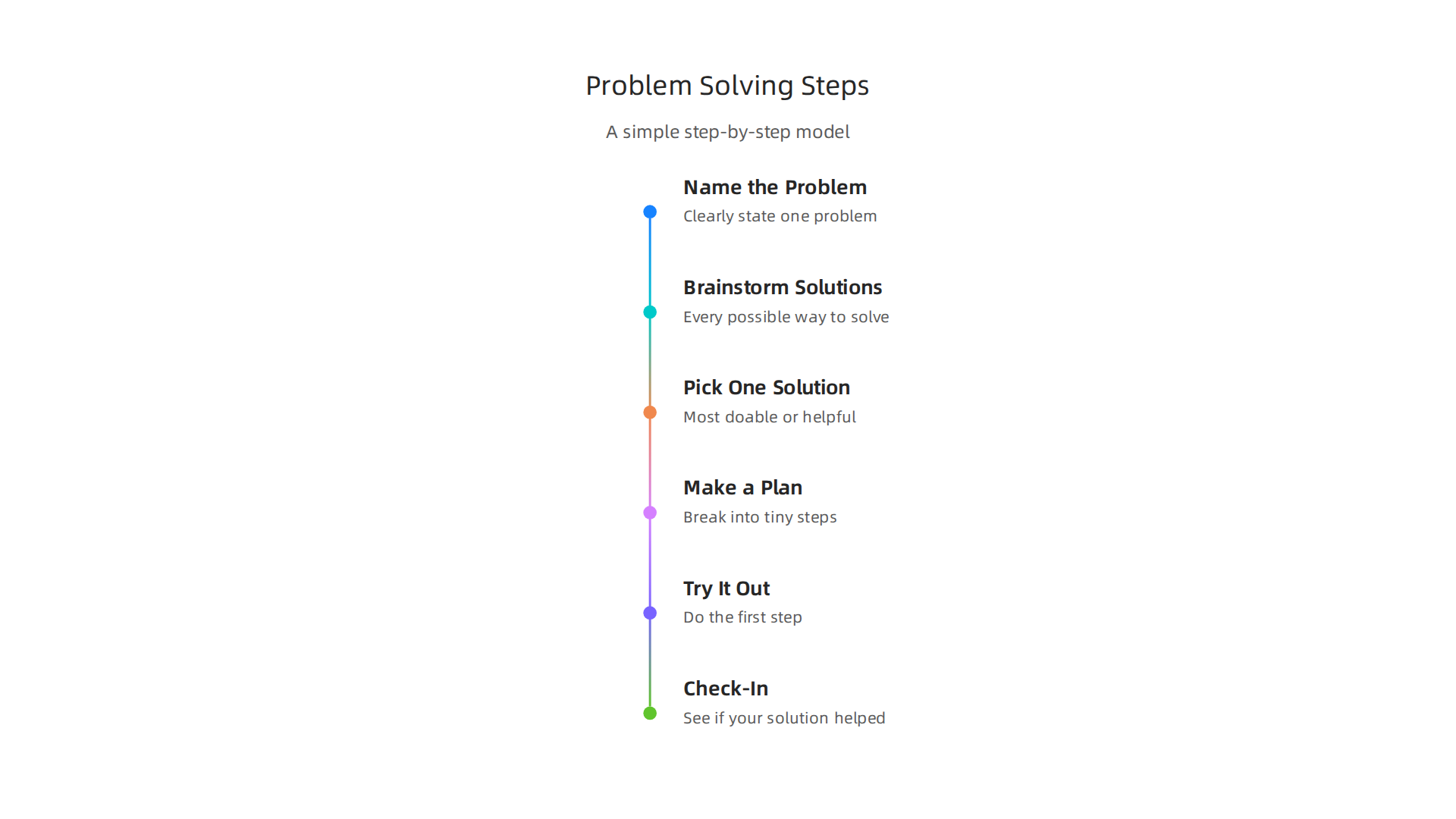
- Name the Problem: Clearly state one problem you want to solve. Keep it small to start.
- Brainstorm Solutions: Write down every possible way to solve it, no matter how silly they seem. Don’t judge them yet.
- Pick One Solution: Choose the one that feels most doable or helpful right now.
- Make a Plan: Break your chosen solution into tiny steps.
- Try It Out: Do the first step, then the next.
- Check-In: See if your solution helped. If not, pick another solution from your list or try a new one.
This step-by-step approach can be helpful for anyone, including new mothers who might be struggling with challenges related to postpartum depression counseling for overwhelmed new mothers. By focusing on one small step at a time, you can build confidence and slowly overcome difficulties.
Lifestyle and self-care strategies that support skills work
You’ve learned about important coping skills for depression like CBT and behavioral activation. But these skills work best when your body and mind are also supported by healthy lifestyle choices. Things like how well you sleep, what you eat, how much you move, and how you spend your time with others can really change your mood. These daily habits are a big part of your self care and mental health.
Sleep: Your Brain’s Reset Button
Getting enough sleep is super important for feeling better. When you don’t sleep well, it’s harder to manage your thoughts and feelings. Aim for a regular sleep schedule, even on weekends. This means trying to go to bed and wake up around the same time each day. Good sleep helps with mental health, and research from 2026 shows that a good diet and regular physical activity support healthy sleep habits, which are key to overall wellness [Observing Sleep Health as a Pillar of Lifestyle Medicine].
Physical Activity: A Natural Mood Booster
Moving your body is another powerful tool for easing depression symptoms. You don’t need to run a marathon or spend hours at the gym. Simple things like a daily walk, stretching, or dancing to your favorite music can make a big difference. Physical activity helps reduce symptoms of both depression and anxiety [Understanding how interventions for youth depression and anxiety]. It’s a great way to boost your energy and improve your mood, fitting well with your coping skills for depression.
Nutrition: Fueling Your Mind
What you eat also plays a part in how you feel. Eating balanced meals with fruits, vegetables, and healthy proteins gives your brain the fuel it needs to work its best. Try to limit sugary snacks and processed foods, which can make your energy go up and down, affecting your mood. A steady diet helps keep your energy and emotions more even.
Social Rhythm: Staying Connected
Humans are social creatures, and staying connected with others is vital for mental wellness. Even if you don’t feel like it sometimes, try to keep up with friends or family. A regular social rhythm, meaning having a routine for when you see or talk to people, can bring stability and joy. It helps fight feelings of loneliness and isolation, which can make depression worse.
Your Daily Self-Care Checklist
Putting all these ideas into practice can seem like a lot at first, but you can start small. Remember, even tiny steps forward are progress. Here’s a simple checklist to help you build good self-care habits:

- Sleep Well: Get 7-9 hours of sleep. Try to wake up and go to bed at similar times each day.
- Move Your Body: Do some physical activity for at least 30 minutes. A walk, some stretching, or gentle exercise works wonders.
- Eat Smart: Eat at least one healthy meal or snack.
- Connect: Reach out to someone you care about, even if it’s just a quick text or call.
- Go Outside: Spend a few minutes outdoors, if you can.
- Practice Skills: Use one coping skill you learned, like a thought record or an activity from your behavioral activation plan.
Developing these healthy habits can significantly improve how you feel. It’s about taking small, manageable steps that add up over time. If you’re looking to put these habits into practice, you might find inspiration from what others are doing. Shaping and rewarding healthy behaviors has been recognized for its positive impact on mental health. Learn more in Authority Magazine.
Building these routines helps make your coping skills for depression stronger. If you want to dive deeper into setting up your own mental health goals, you can learn more about how to set mental health goals for anxiety and actually keep them. By taking care of your body and mind, you create a stronger foundation for managing depression and living a more joyful life.
Building routines for self-care helps make your coping skills for depression stronger. But what about certain groups of people who might face different challenges? Things like age or being a caregiver can change how depression shows up and how we help. For young people, students, and caregivers, we need to think about special ways to check for depression and offer support.
Youth and Students: Early Help Makes a Big Difference
Young people and students go through a lot. They might feel pressure from school, friends, or even what they see online. Depression can look different in kids and teens than it does in adults. Sometimes, it might show up as being grumpy, getting bad grades, or pulling away from friends. That’s why screening for depression is very important for this age group.
Experts in 2026 suggest that teens aged 12 to 18 years should be screened for major depressive disorder [Depression and Suicide Risk in Children and Adolescents: Screening]. This means using special tools, like a questionnaire, to see if someone might be struggling. One common tool is the PHQ-9, which helps check for depression in young people [Full article: Implementation of an Evidence-Based Clinical Guideline …]. Finding depression early means kids can get help sooner and learn coping skills for depression before things get too hard.
It’s also important to create environments that help young people feel safe and strong. Learning to handle tough feelings and resist negative influences can protect their mental well-being. You can learn more about how to help young people build strong emotional foundations in the Youth Safety Case Study, which explains how value reinforcement can make healthier athletes and stronger citizens.
Caregivers: Supporting Others While Supporting Yourself
Being a caregiver, like a parent, is a big job. Whether you’re looking after children, older family members, or someone with a long-term illness, it can be very stressful. Caregivers often put others first and forget about their own self care and mental health.
For parents, it’s key to know the signs of depression in their kids, but also to watch out for their own well-being. New mothers, for example, can sometimes feel overwhelmed, and for them, postpartum depression screening is very important. If you are a new parent and feel very sad or unable to cope after having a baby, counseling postpartum depression can offer much-needed support.
If you are a caregiver, remember these tips:
- Watch for changes: Notice big changes in behavior, mood, or sleep in those you care for.
- Listen without judgment: When someone talks about their feelings, just listen. Let them know you’re there.
- Get help: Encourage seeking professional help if needed. You can start with a simple depression test online to understand symptoms better.
- Care for yourself: You can’t pour from an empty cup. Make sure to take breaks and use your own coping skills for depression. It’s okay to ask for help for yourself too.
Supporting these special groups means understanding their unique needs and offering tailored help. This way, everyone has a better chance to manage depression and live a fuller life.
Even with strong coping skills for depression and focusing on self care and mental health, there are times when self-help just isn’t enough. It’s really important to know when to ask for more help, like from a doctor or a therapist.
When Self-Help Is Not Enough
Coping skills are like tools in a toolbox, and they are very helpful. But sometimes, the problem is too big for just the tools we have. You should think about seeing a professional if:
- Your feelings don’t get better: If you feel sad, hopeless, or empty for more than two weeks and your coping skills for depression aren’t making a difference.
- Things get worse: Your mood gets darker, you feel more tired, or you start losing interest in everything you once loved.
- It stops you from living normally: If depression makes it hard to go to work or school, take care of your family, or spend time with friends.
- You think about hurting yourself: This is a very serious sign. If you have thoughts of harming yourself or others, you need help right away.
Many health groups in 2026 suggest that all adults, including pregnant people, new parents, and older adults, should be checked for depression regularly [Screening for Depression and Suicide Risk in Adults: US Preventive …]. This helps catch problems early, just like with younger people. If a screening shows you might be struggling, your doctor can then help you figure out the next steps. Experts say that if screening scores are high, a doctor should look into it further to see if depression is really there [Screening for Depression and Follow-Up Plan | eCQI Resource Center].
Combining Treatments for Better Results
Often, the best way to handle depression is to combine different kinds of help. Think of it like a team working together.
- Therapy (Talking to a Professional): This is where you learn new coping skills for depression and talk about your feelings and problems with a trained expert. They can help you understand why you feel the way you do and teach you ways to change your thoughts and actions. Learning more about counselling definition can show you how this process works.
- Medication: For some people, medicine can help balance chemicals in the brain that affect mood. This can make it easier for therapy to work.
- Self-Help and Lifestyle Changes: Things like healthy eating, exercise, good sleep, and the coping skills we’ve talked about still play a big role. They support the professional help you’re getting.
Many health guidelines in 2026 suggest using a mix of these approaches. For instance, therapy combined with medicine is often more helpful than just one alone for treating depression [Standard Medical Guidelines for Treating Depression in 2026]. When you work with a mental health professional, they can help you figure out the best combination for you. You can get a head start by learning how to prepare for talking to a therapist about depression.
Safety Planning: A Plan for Tough Times
For those who have thoughts of harming themselves, creating a safety plan is a very important step. A safety plan is like a map that guides you when feelings become too much to handle. It includes:
- Warning signs: What do you feel, think, or do when you’re starting to feel really bad?
- Coping strategies: Things you can do by yourself to calm down, like listening to music or going for a walk.
- People and places that help: Who can you call? Where can you go to feel safe?
- Professionals to contact: Your therapist, doctor, or a crisis hotline.
It’s a way to stay safe and get immediate help during a crisis. A professional therapist or doctor can help you create a strong safety plan that works for you. These plans are key for managing the most serious parts of depression and making sure you have support when you need it most. Making sure people stick with these plans and learn new ways to manage their behavior is often discussed by experts. For example, some approaches to behavior change and boosting engagement have even been featured in Fox Magazine for their ability to help people sustain positive changes.
Summary
This article explains what clinical depression feels like, how to tell it apart from ordinary low moods, and practical steps you can use right away to feel better. It reviews screening and self-assessment tools, explains when a positive screen should lead to a doctor or therapist, and offers evidence-based coping skills—especially Behavioral Activation, CBT techniques, and structured problem solving. You’ll also find a simple activity plan, thought-record exercises, and a stepwise problem-solving model to use daily. The guide covers lifestyle factors that support recovery (sleep, exercise, nutrition, social rhythm), special guidance for young people and caregivers, and clear signs that self-help isn’t enough. Finally, it outlines treatment combinations, safety planning for crises, and how to prepare for professional care so you can act confidently and get the right support.