
How Therapy for Trauma Bond Heals Anxiety and Breaks the Cycle
Why Trauma Bonds Cause Anxiety and Why Targeted Therapy Changes Everything
Have you ever felt stuck in a relationship that just does not feel good, but you keep going back?

Maybe you feel worried all the time, always on guard, even when things seem okay. This feeling of being constantly on edge is called chronic anxiety, and it often comes from something called a "trauma bond."
A trauma bond happens when you have strong feelings for someone who also causes you pain. It’s like being tied to them not just by love, but by hard times and mixed signals. When bad things happen, then good things, it can make you feel very confused. You might start to believe that the bad times are your fault, or that you need to "fix" the other person. This push and pull keeps you hoping things will get better, even when they don’t. This kind of pattern can make your body and mind stay in a constant state of alert, leading to deep anxiety and always looking for danger, which is called hypervigilance.
But here’s the good news: you don’t have to stay stuck. This article is here to help you understand what a trauma bond is and how it makes you feel anxious. We’ll show you the clear signs of a trauma bond and explain how special therapy for trauma bond can help you break free. You’ll learn about different kinds of support, like working with a person-centred counsellor or an experiential therapist, and find practical next steps to heal. Knowing how therapy for trauma bond heals anxiety and breaks the cycle can make a big difference in how you feel every day. It’s time to learn about what anxiety feels like and how to start your healing journey.
A trauma bond is a very strong, unhealthy connection that forms between two people. It is not just regular love or friendship. Instead, it happens when there is a mix of caring and hurting in the relationship. Think of it like this: one person might be very loving and kind sometimes, but then hurtful or scary at other times. This back-and-forth pattern can make you feel trapped and confused.
This special kind of bond is different from just having a strong attachment to someone or being codependent. When we talk about typical Understanding the Role of Attachment Styles and Mental Well Being, we mean the healthy ways people connect and rely on each other. Codependency often means one person needs to "fix" or control the other, losing themselves in the process. But a trauma bond is deeper and more damaging. It involves a cycle where bad things happen, followed by good things or apologies, which confuses the person experiencing it. This makes it very hard to leave, even when you know it is bad for you. Experts describe trauma bonding as a complex process of emotional dependency driven by these mixed signals and the brain’s responses to stress and relief, making The Neurobiology of Trauma Bonding and Emotional Dependency a vital area of study.
The relationship often has big "power swings." One moment, one person is in charge or being mean, and the next, they are showering the other with attention and apologies. This is called "intermittent reinforcement." It means good things happen only sometimes, and you never know when. This makes you constantly hope for the good times to return, often ignoring the bad. It is like playing a slot machine; you keep pulling the lever because you know a big win might happen, even if it usually does not. This constant hoping, mixed with fear, is why therapy for trauma bond is so important. It helps you see these patterns clearly and understand how they affect your mind and feelings. Finding a how therapy for trauma bond heals anxiety and breaks the cycle can be a crucial step in unpacking these difficult experiences. A person-centred counsellor or an experiential therapist can guide you through this process.
When you are caught in a trauma bond, it is not just your thoughts and feelings that get twisted; your body feels it too. Your nervous system, which is like your body’s alarm bell, stays on high alert most of the time. This is called "chronic stress activation."
Imagine being in a place where you never know if the next moment will be calm or scary. Your body learns to prepare for danger all the time. This means stress hormones like cortisol and adrenaline are often high.

These hormones make your heart beat faster, your muscles tense up, and your mind race. It is like your body is always ready to run or fight, even when there is no clear threat.
Because of the on-again, off-again pattern of kindness and hurt in a trauma bond, your brain learns to link certain actions or even moods of the other person with danger. This creates "conditioned threat responses." For example, a sudden quietness might make your stomach drop, or a certain look might make your heart pound. Your body remembers these cues and reacts automatically, even before your thinking brain fully understands why. This deep connection between emotional coercion and brain activity is a key part of how trauma bonding works, as noted in research on The Impact of Love Bombing and Breadcrumbing Through Concepts of Trauma Bonding Theory.
This constant state of alert leads to "hypervigilance." You might find yourself always watching, listening, and trying to guess what will happen next. You become extra sensitive to small changes in tone, facial expressions, or even silence. This is your body’s way of trying to stay safe, but it is incredibly tiring. Over time, this unpredictability and the ongoing threat from the relationship make anxiety much worse. Your anxiety symptoms can get stronger and happen more often. You might feel shaky, dizzy, or have trouble breathing. It can feel like your body is stuck in a loop of fear, making it hard to relax or feel truly safe. Understanding What Anxiety Feels Like Physical Cognitive and Emotional Symptoms Explained can help you recognize these deep impacts. This constant stress can even affect your ability to trust others, a process explored in studies on Traumatic Symptoms in the Aftermath of COVID-19: The Mediating Role of Attachment Patterns.
If your body feels constantly alarmed and on edge, it is a clear sign that the deep stress of a trauma bond is affecting you. Body Feels Alarmed? Name the pattern before it spirals. This is where getting help, like through specific therapy for trauma bond, becomes very important.
When your body is constantly on guard from a trauma bond, the signs of anxiety can show up in many ways that people sometimes miss. It is not just about feeling nervous; it is a deeper kind of stress that affects your mind, feelings, and body. Recognizing these signs is the first step toward finding relief and starting specific how therapy for trauma bond heals anxiety and breaks the cycle.
Here are 10 common signs of anxiety from a trauma bond that you might not realize are connected:
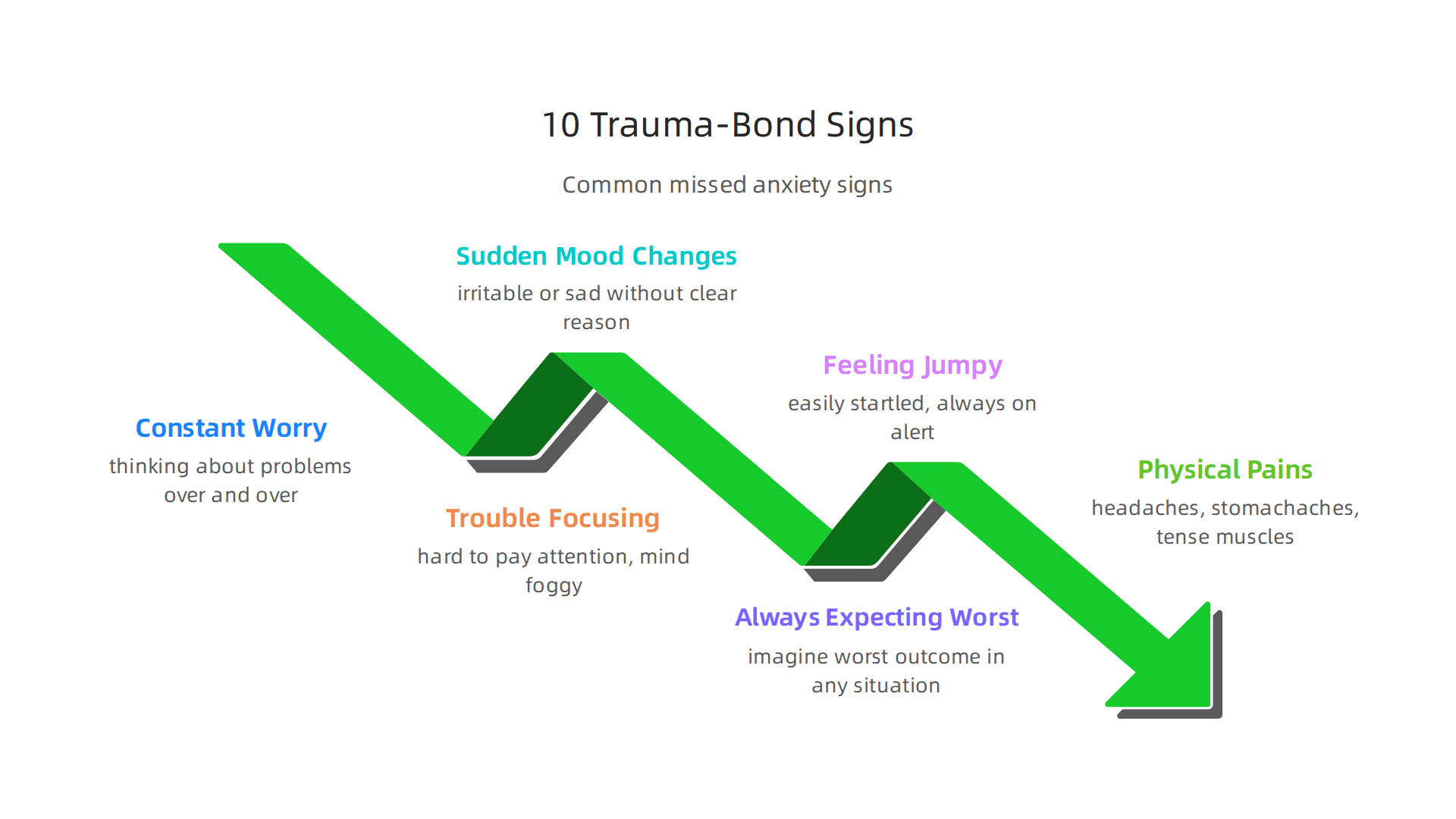
- Constant Worry: You find yourself thinking about problems over and over, unable to stop your mind from racing.
- Sudden Mood Changes: One moment you might feel okay, the next you are very irritable or sad without a clear reason.
- Trouble Focusing: It is hard to pay attention at work, school, or even during a simple conversation. Your mind feels foggy.
- Feeling Jumpy: You get easily startled by loud noises or sudden movements, always on alert for something bad to happen.
- Always Expecting the Worst: You tend to imagine the worst possible outcome in any situation, even small ones.
- Physical Pains: You often have headaches, stomachaches, or tense muscles that doctors cannot easily explain.
- Changes in Sleep: You might have trouble falling asleep, staying asleep, or you might sleep too much but still feel tired.
- Feeling Detached: Sometimes, you might feel like you are watching your life from outside your body, or that your feelings are numb.
- Avoidant Tendencies: You might start to pull away from friends, family, or activities you once loved. This can be a sign of an avoidant attachment style developing from the trauma.
- Obsessive Thoughts: You might keep replaying arguments or events from the past relationship in your head, trying to understand what went wrong.
These signs can look different depending on who you are. For example, a student might show trauma-bond anxiety by struggling in classes, avoiding social events, or even having panic attacks before exams. A parent might find themselves easily overwhelmed, quick to anger with their children, or constantly worrying about their family’s safety. Athletes could experience performance anxiety, fear of making mistakes, or physical symptoms that hinder their training and games.
Finding the right support, such as working with a person-centred counsellor or an experiential therapist, can help you understand these hidden signs and how to address them. Professional assessment tools, like those mentioned in resources for screening and assessment tools to assess impact of trauma, can also help identify the impact of these experiences. If you notice these patterns, remember that healing is possible through dedicated therapy for trauma bond. Learning about things like the Youth Safety Case Study can help you understand how resilience is built.
When you start to see the signs of anxiety linked to a trauma bond, the next natural step is to find out how to heal. The good news is that there are many helpful kinds of therapy for trauma bond that can truly make a difference and ease your anxiety. These therapies help you understand what happened, how it affects you now, and how to build a healthier future.
Therapies that work for trauma bonds (and how they reduce anxiety)
Different therapy approaches focus on different parts of healing trauma bonds. Many of these methods are highly recommended in 2026 for helping with trauma recovery because they have been shown to work well. For example, the American Psychological Association (APA) has guidelines that suggest specific therapies for stress and trauma, like those often used for Post-Traumatic Stress Disorder (PTSD) which can often go hand-in-hand with trauma bonds.
Here are some of the most promising types of therapy:
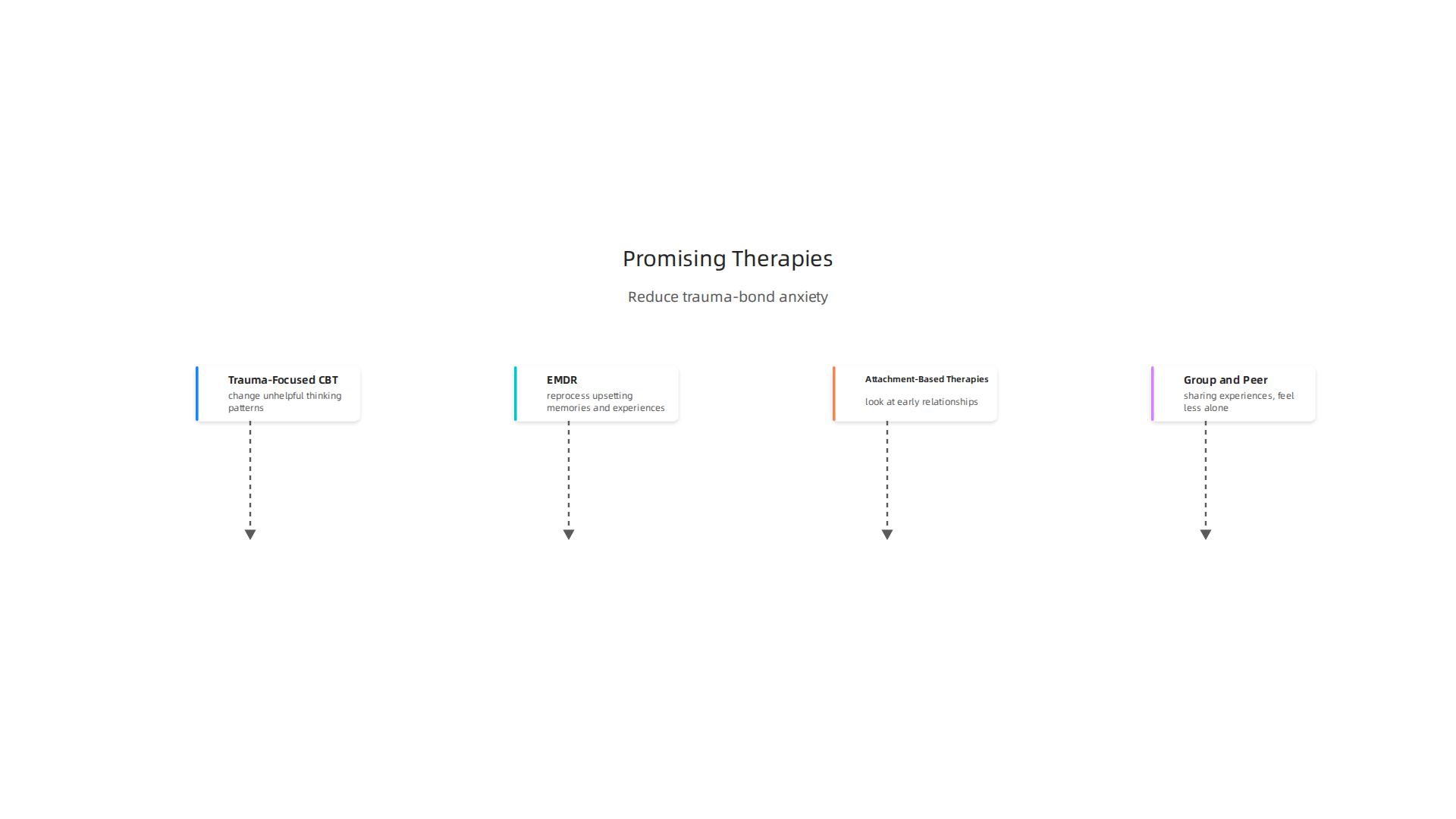
- Trauma-Focused Cognitive Behavioral Therapy (TF-CBT): This therapy helps you understand how your thoughts and feelings are connected to your actions, especially after a trauma. It teaches you how to change unhelpful thinking patterns and develop better ways to cope with stress and anxiety. TF-CBT is known for helping people identify and change false beliefs while learning healthy coping methods and expressing emotions well. For more on this, you might explore Trauma-Focused Therapy Techniques.
You can also learn how cognitive behavioral therapy for PTSD rewires the traumatized brain.
- Eye Movement Desensitization and Reprocessing (EMDR): This therapy helps your brain reprocess upsetting memories and experiences from the past. It is often used to lessen the strong emotions and physical reactions tied to traumatic events. Both TF-CBT and EMDR are among the Top Therapy Modalities in 2026: A Guide for mental health.
- Attachment-Based Therapies: These therapies look at your early relationships and how they shaped your current way of connecting with others. They are very helpful for understanding and healing patterns like an
avoidant attachment stylethat might have formed due to a trauma bond. - Group and Peer Work: Sharing your experiences with others who have gone through similar situations can be incredibly healing. It helps you feel less alone and provides new ways to connect and support each other.
Therapy for trauma bond works by focusing on several key areas to help you reduce anxiety and break free from the cycle.
- Creating a Safe Space: A good therapist helps you feel safe enough to explore your experiences without judgment. This safe environment is the first step toward healing from a trauma bond where safety was often missing.

- Re-patterning and Value Reinforcement: Trauma bonds create harmful patterns in your thoughts and actions. Therapy helps you recognize these patterns and build new, healthier ones. This is where you learn to choose actions that align with your true values, not the unhealthy pull of the bond. Behavioral Scientist, Tech Entrepreneur & AI Innovator. Co-Inventor, U.S. Patent No. 12,205,176. Senior Lecturer, UC Irvine | Bestselling Author. Founder, Skylab USA. Dean Grey’s work includes developing systems that support this kind of change. This includes the Value Reinforcement System (VRS), U.S. Patent No. 12,205,176 which helps reinforce positive behaviors. You can also learn more about Dean by visiting his Behavioral Scientist profile.
- Building Healthy Boundaries: A core part of healing is learning how to set and keep strong boundaries. This means understanding what you need and what you will not accept in your relationships, helping you protect yourself from future harm.
- Reducing Anxiety Directly: As you work through the trauma, you will learn specific tools and strategies to manage and reduce the anxiety symptoms that have become a regular part of your life.
Now, let’s talk more about attachment-focused therapies. These kinds of therapy for trauma bond really dig into how your early life experiences and relationships shaped the way you connect with people today. It’s like looking at a blueprint to understand why certain parts of a house were built a certain way.
Attachment-focused and relational therapies: step-by-step
Attachment-focused therapy helps you see how past hurts, especially from a trauma bond, can make you react in ways that don’t help you now. For example, if you grew up feeling unsafe or unloved, you might have learned an avoidant attachment style. This means you might push people away, even if you want to be close, because you’re scared of getting hurt again. This kind of therapy helps you understand these deep-rooted patterns.
Here’s how this therapy usually works:
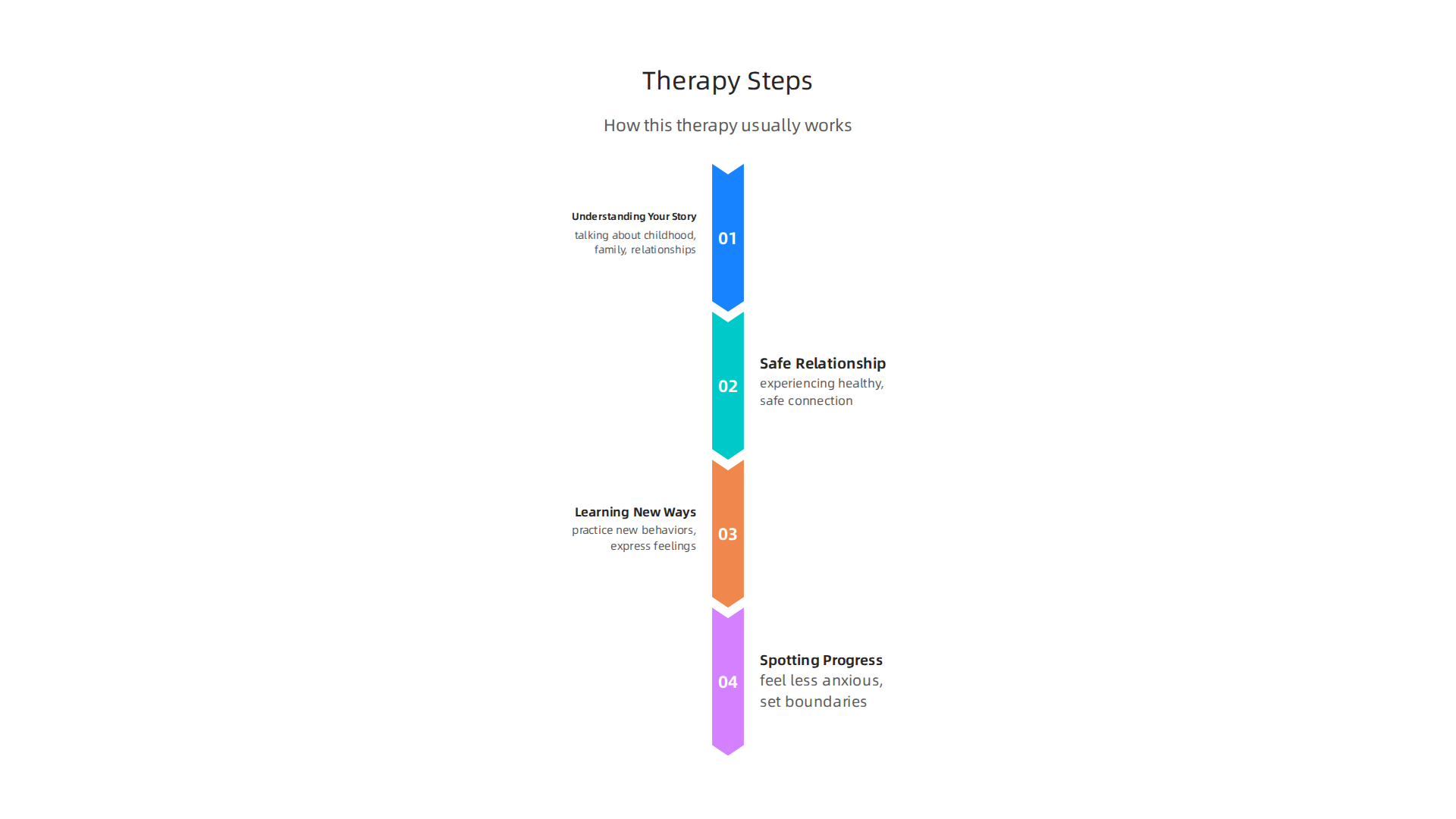
- Understanding Your Story: You will spend time with your therapist talking about your childhood, your family, and important relationships. The goal is to see how these early experiences taught you how to connect with others. This helps you understand your "attachment style," whether it’s anxious, avoidant, or something else.
- A Safe Relationship with the Therapist: A big part of healing is experiencing a healthy, safe relationship with your therapist. A good
person-centred counselloracts like a steady, caring friend who listens without judgment. This new, positive connection helps to "rewire" your brain’s old ways of thinking about relationships. You learn that it’s okay to trust and be close to someone. Many approaches, including trauma-focused psychotherapy, are recommended as a primary treatment for trauma bonding, working towards a healthier future according to sources like Dr. Oracle’s article on Treatment of Trauma Bonding.

- Learning New Ways to Connect: As you feel safer and more understood, you start to learn new, healthier ways to relate to people. An
experiential therapistmight guide you through exercises that help you practice new behaviors and express your feelings better. This helps you change youravoidant attachment styleor other insecure patterns. You learn how to ask for what you need and how to respond to others in a loving, respectful way. - Spotting Progress: How do you know if it’s working? You’ll start to feel less anxious in your relationships. You’ll find it easier to set boundaries and to choose partners who treat you well. You might notice you’re not falling into old patterns anymore. Your relationships will feel more secure and steady. If you’re looking for someone to help with relationship challenges, it’s good to know how to find a relationship problems therapist who specializes in your issues.
This whole process helps you heal from the inside out, reducing the anxiety that comes with trauma bonds and helping you build a future filled with genuine, healthy connections.
While healing from a trauma bond means looking deep inside, it’s also very important to make sure you are safe right now. Feeling secure is the first step towards getting better. This means having a plan for your safety and learning how to set good boundaries. It’s also vital to know when to ask for urgent help.
Safety planning, boundaries and when to seek urgent help
For people in relationships with a trauma bond, creating a safety plan is a big step. This plan helps you think ahead about what to do if you feel unsafe or if things get difficult. It’s like having a map for tricky situations. This can include having a safe place to go, people you can call, or important papers ready. Caregivers, too, can play a part by understanding these risks and offering support to those they care for. Having a clear guide, like a Practical Guide for Implementing a Trauma-Informed Approach, can be very helpful for everyone involved.
Your therapist will work with you on safety planning as part of your therapy for trauma bond. They help you learn how to set healthy boundaries. Boundaries are like personal rules that protect your feelings and your space. For example, if you’ve been in a relationship where you felt controlled, a person-centred counsellor will help you learn to say "no" and to stand up for yourself in a calm, clear way. This helps reduce the anxiety that comes from feeling unsafe. An experiential therapist might even help you practice these new skills in a safe setting.
Therapists also help you understand and change behaviors that might come from an avoidant attachment style. They teach you how to calmly face fears linked to past hurts, but in a way that feels safe. This is called "exposure and attachment repair." It means slowly getting used to healthy closeness and trust, which helps to rewire your brain and reduce feelings of danger. Over time, you learn that connecting with others can be safe and good. This process helps you grow stronger and more resilient. You can also explore the Youth Safety Case Study to see how understanding these patterns helps people become healthier.
Knowing when to seek urgent help is extremely important. If you or someone you know is in immediate danger, or if feelings of hopelessness become too strong, please reach out right away. This could mean calling a crisis hotline, going to an emergency room, or contacting mental health professionals. Understanding what anxiety feels like and how to tell if you need emergency care can help you make the right choice when it matters most. Your safety and well-being are the top priorities.
After you’ve started making a safety plan and setting boundaries, you might wonder what getting better actually feels like. Healing from a trauma bond is a journey, but there are clear signs you’re on the right path. It’s like watching a dark cloud slowly clear away.
One big sign of healing is feeling less "on edge" or jumpy. This is called reduced hypervigilance. You won’t feel like you always have to be ready for something bad to happen. Your body and mind start to relax more. You also get much better at setting clearer boundaries. This means you know what you need and what you don’t want in your relationships, and you can say it kindly but firmly. These new boundaries help you build stronger, healthier connections with others. They teach people how to treat you right, and you learn to trust again, even if you had an avoidant attachment style before.
Real-world stories show us that people truly can recover. For instance, some folks find that they can finally enjoy simple things without fear, like a quiet evening or a chat with a friend. They stop trying to "fix" others and focus on their own peace. Therapy for trauma bond plays a huge role here. Therapists help you understand why you got stuck in the first place and how to build new, healthier habits. Research on trauma informed interventions shows that these types of care really do help people get better and stay better.
The timeline for recovery is different for everyone. It’s not a race. Some people feel changes pretty quickly, while for others, it takes more time. What’s important is that you keep moving forward, even with small steps. Your person-centred counsellor will walk with you through this, helping you see your progress. An experiential therapist might help you practice new ways of reacting to situations, so you feel ready for real life. This kind of therapy for trauma bond is about preventing you from falling back into unhealthy patterns. It teaches you skills that last a lifetime. Many clinical practice guidelines, like those found in CLINICAL PRACTICE GUIDELINES FOR SONOMA COUNTY, support these focused interventions.
Ultimately, recovery means feeling safe and strong within yourself. It means you can have relationships based on true care and respect, not fear or control.

If you want to learn more about how therapy can heal anxiety and break cycles of trauma, you can read about how therapy for trauma bond heals anxiety and breaks the cycle.
Summary
This article explains how trauma bonds—relationships that mix care with harm—create chronic anxiety by keeping the nervous system in constant alert through intermittent reinforcement and conditioned threat responses. It defines trauma bonding, contrasts it with attachment and codependency, and describes the neurobiology behind hypervigilance, high stress hormones, and automatic fear cues. You’ll find a clear checklist of ten common but often-missed anxiety signs, how those symptoms show up in different roles (students, parents, athletes), and which therapies reliably help: TF-CBT, EMDR, attachment-based approaches, group work and experiential methods. The piece lays out how therapy works in practice—creating safety, re-patterning behavior, reinforcing values, building boundaries—and gives step-by-step guidance for attachment-focused recovery. It also covers safety planning, when to seek urgent help, and realistic signs of progress so you know what recovery feels like and how to find effective support.