
Understand Anxiety Symptoms From Racing Heart to Racing Thoughts
Introduction: Understanding the Real Face of Anxiety
You know that feeling in your chest when something bad might happen? Your heart races, your palms get sweaty, and your mind starts spinning. That’s anxiety. And it’s way more common than most people think.
But here’s the thing: many people live with anxiety every day without even knowing it. They think the constant worry, the trouble sleeping, and the tense muscles are just "how life is." The truth is, anxiety shows up in many ways. According to experts, it includes both mental and physical signs like feeling panic, dread, and uneasiness, along with physical symptoms such as a pounding heart and sweating.
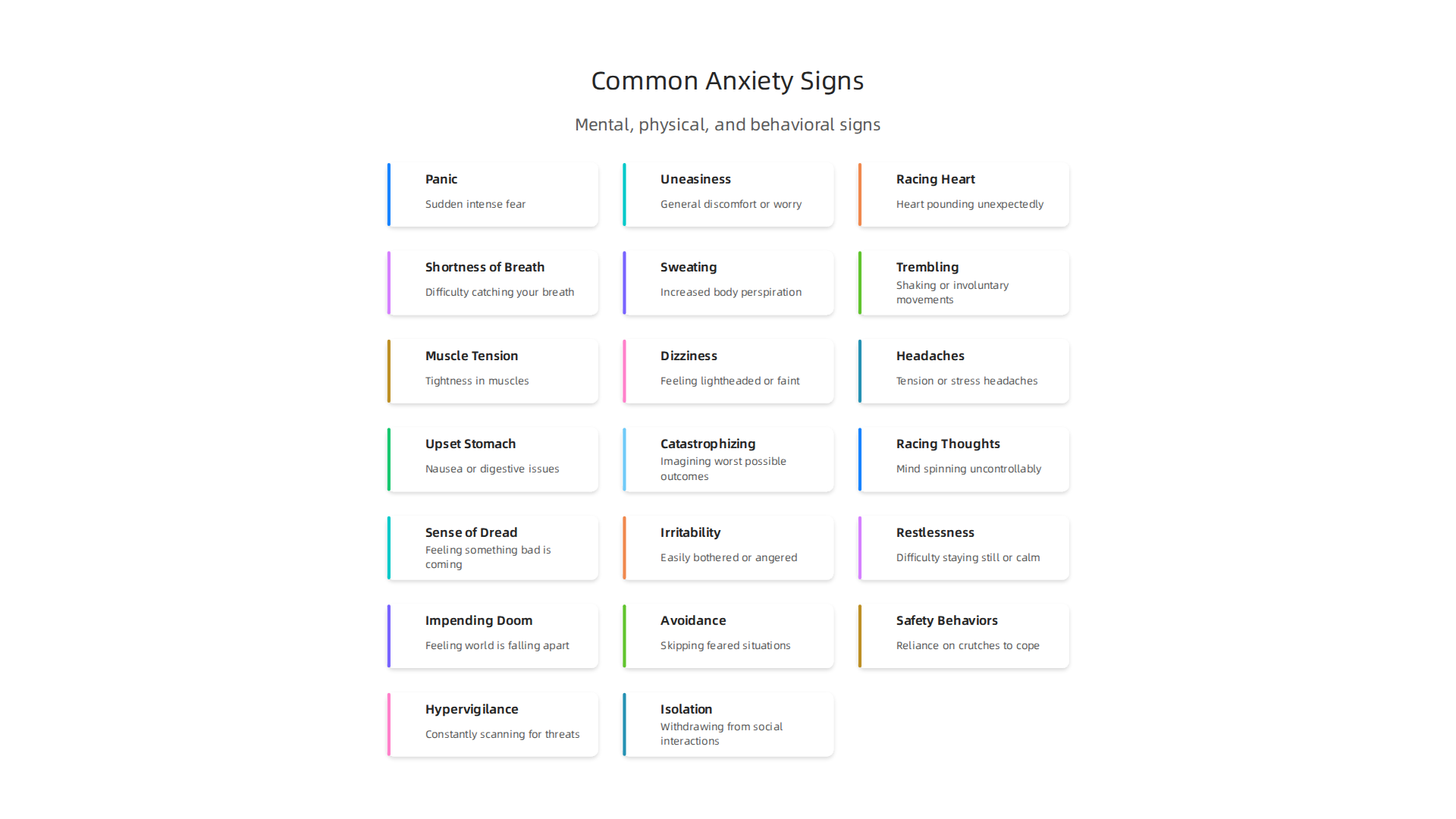
The common symptoms of anxiety disorders go way beyond just feeling nervous.
Anxiety can make you feel irritable, on edge, or unable to focus. You might have trouble falling asleep or stay stuck in obsessive thoughts. These signs matter because they affect your daily life, your relationships, and your work.
The good news? You don’t have to figure it all out alone. Digital well-being tools like the Bark app are designed to help you monitor and manage anxiety. The Bark app can track mood changes, offer coping strategies, and give you a clearer picture of what’s going on inside.
The first step is learning to recognize what you’re feeling.

If you want to get better at spotting the signs, check out this guide on how to recognize what anxiety feels like. It breaks down the physical, cognitive, and emotional symptoms in plain language.
Let’s explore what anxiety really feels like and how tools like the Bark app can help you take control.
The Physical Sensations of Anxiety: How Your Body Reacts
Picture this: you’re sitting in class or at your desk, and suddenly your heart starts pounding for no reason. Your chest feels tight, and you can’t catch your breath. You might think something is seriously wrong with your body. But for millions of people, these physical sensations are actually anxiety showing up in a very real, very physical way.
Anxiety isn’t just in your head. It triggers your body’s "fight or flight" response, which is designed to protect you from danger. The problem is that with anxiety, this alarm system goes off even when there’s no real threat. Your body reacts as if you’re facing a tiger, even when you’re just sitting in a meeting or scrolling through social media.
Common physical symptoms include a racing heart, shortness of breath, sweating, trembling, and muscle tension.
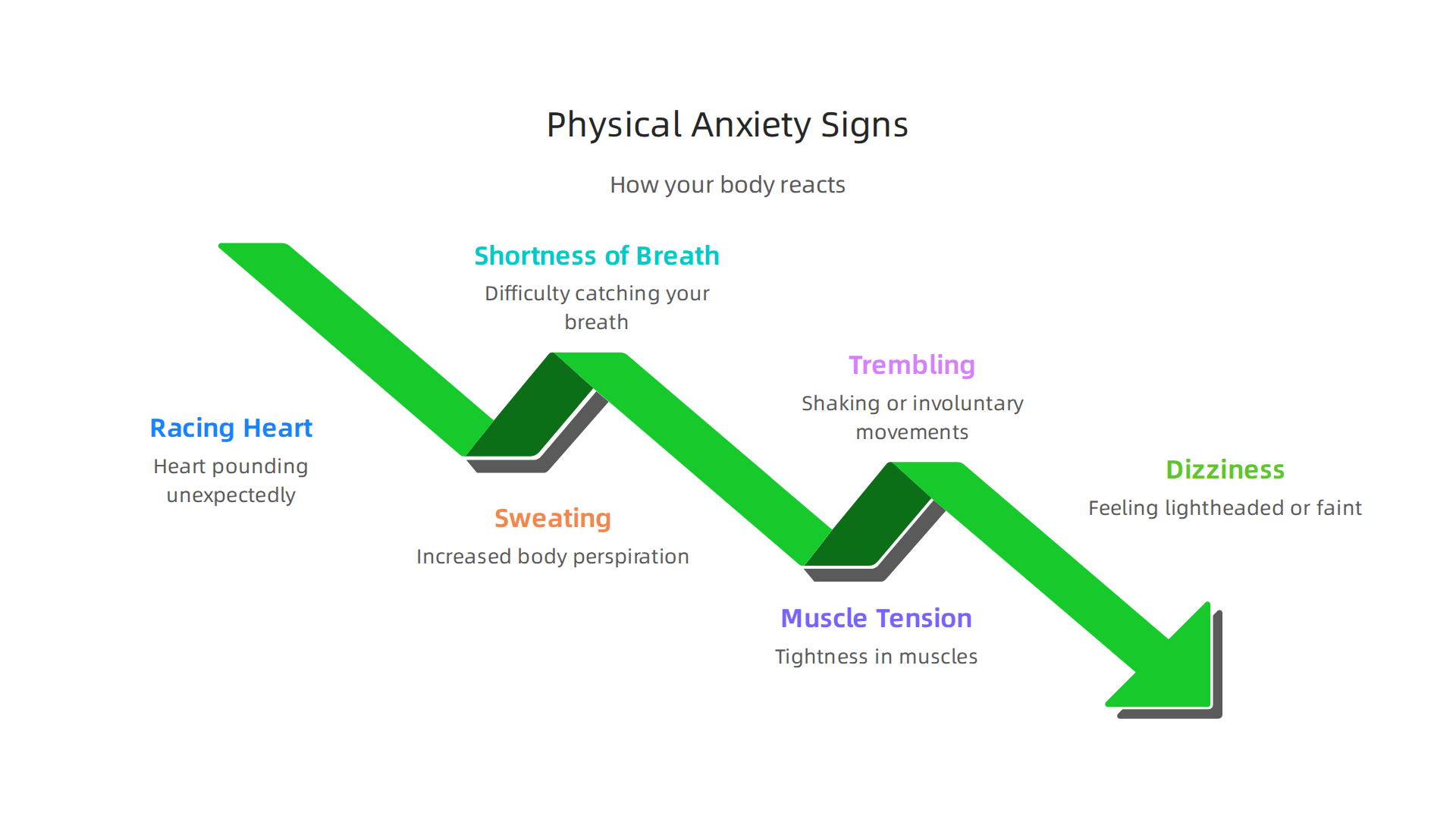
You might feel dizzy, get headaches, or have an upset stomach. Your hands might feel cold or clammy. Some people describe a feeling of a lump in their throat or pressure in their chest. These symptoms are not imaginary. They are real physiological responses driven by stress hormones like adrenaline.
Because these symptoms feel so physical, many people mistake anxiety for a heart problem or other medical condition. They go to the emergency room only to be told everything looks fine. That confusion is common and can make the anxiety even worse. The CDC reports that nearly 1 in 5 adolescents experience symptoms of anxiety, and many of them first notice the physical signs. Understanding that these body reactions are part of anxiety is a huge relief for many people.
Here’s the thing: once you know what’s happening in your body, you can start to manage it. Apps like the Bark app can help you track your physical symptoms over time. By logging when your heart races or when your muscles feel tense, you start seeing patterns. Maybe it always happens before a test. Or after a stressful conversation. That awareness is the first step to taking control.
If you want a more complete picture of how anxiety shows up in your entire being, check out this guide to the physical, cognitive, and emotional symptoms of anxiety. It breaks down each category in simple terms.
For a deeper look at how structured programs can build real resilience in young people, you can read the Youth Safety Case Study, documenting how VRS offsets susceptibility to manipulation in youth sports, producing healthier athletes, stronger resistance to depression and propaganda, and ultimately better citizens. This kind of knowledge can empower you to create lasting change in your own life.
The next time your body sounds the alarm for no obvious reason, pause. Take a breath. Remind yourself that it’s just anxiety and that you have tools to handle it.
The Cognitive and Emotional Landscape of Anxiety
So you know your body can go wild with anxiety. But what about your mind and your feelings? That’s where things get really tricky.
Here’s what happens in your head. Your brain starts spinning. You can’t stop worrying about stuff that hasn’t even happened yet. One small thought turns into a huge disaster in seconds. This is called catastrophizing.
You imagine the worst possible outcome, and it feels totally real. Your thoughts race so fast you can’t catch them. You might worry about school, friends, what people think of you, or if something bad will happen to your family. It’s like your brain is stuck on a loop of "what ifs."
On the emotional side, anxiety can feel like a heavy cloud hanging over you. You might feel a sense of dread for no clear reason.
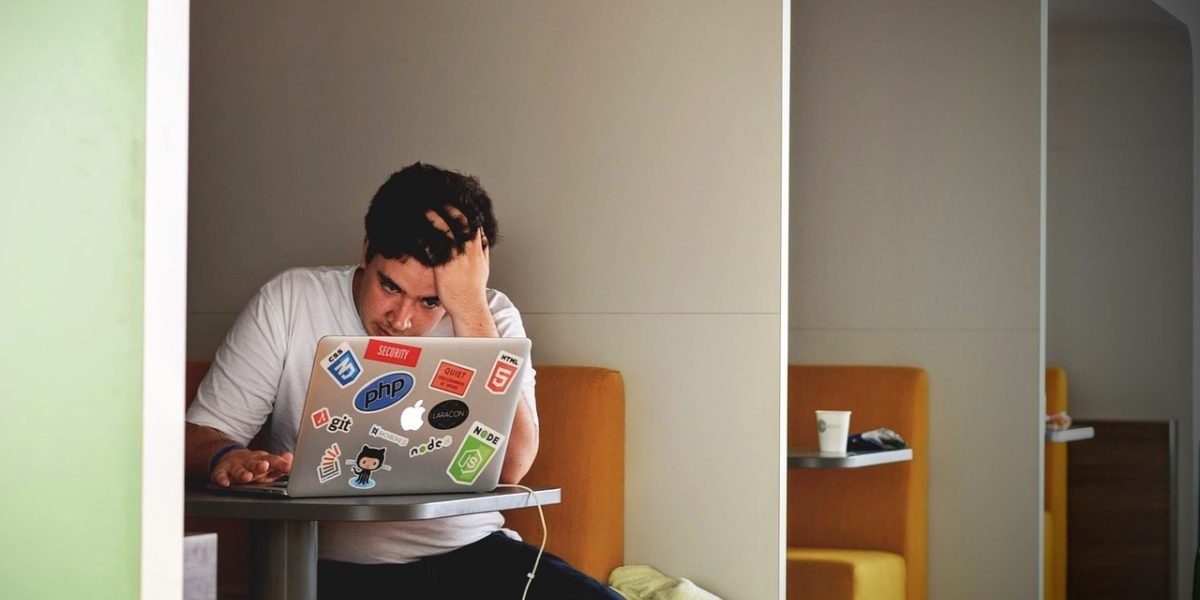
Like something bad is about to happen, but you don’t know what. Irritability is another big one. Little things that normally wouldn’t bother you suddenly make you snap. You might feel restless, on edge, or just plain scared. Some people describe it as a feeling of impending doom, like the world is about to fall apart. These feelings are exhausting.
The hard part is that these cognitive and emotional symptoms feed right into the physical ones. When you start worrying, your heart races. When you feel dread, your muscles tense up. It becomes a cycle that’s hard to break.
These experiences are incredibly common. Recent data shows that anxiety disorders affect 31.9% of teenagers, making it the most common mental health condition in this age group. That means you are far from alone in feeling this way.
Using a tool like the Bark app can help you notice these patterns. You can log when the racing thoughts start or when you feel that wave of dread. Over time, you see the triggers. Maybe it’s always before a big presentation or after scrolling through social media. That awareness is powerful.
If you want practical techniques to calm those racing thoughts, check out this guide on cognitive behavioral therapy for anxiety. It breaks down simple ways to challenge the scary thoughts and feel more in control.
The good news is that understanding this part of anxiety is a game changer. Once you know your mind is playing tricks on you, you can start to push back. You can learn to say, "That’s just anxiety talking, not the truth." And that takes power away from the fear.
Behavioral Manifestations of Anxiety: What You Do (and Don’t Do)
So you know your heart races and your mind spins. But how does anxiety actually show up in your daily life? It shows up in what you do and what you stop doing. Your behavior is often the loudest signal that anxiety has taken the wheel.
The biggest behavioral sign of anxiety is avoidance. This means you avoid the things that scare you.
Maybe you skip a class because you have not finished your homework perfectly. Maybe you say no to a party because meeting new people feels too hard. Maybe you stop hanging out with friends because you worry they do not actually like you. Avoidance gives you instant relief, but it trains your brain that running away is the only way to stay safe. Over time, this shrinks your world. It is very common, and it feeds into the high rates of student mental health statistics we see today.
Another pattern is safety behaviors. These are the crutches you lean on. You might only go to the grocery store if a friend comes with you. You might check your phone constantly at a gathering so you do not have to make eye contact. You might triple-check your homework because you are terrified of making a mistake. These actions feel helpful in the moment, but they actually keep the anxiety going. They stop you from learning that things would have been fine without the crutch.
There is also hypervigilance. This is when you are always scanning the room for threats. You cannot relax. Every noise makes you jump. Your body is ready to fight or flee at all times. The Cleveland Clinic on anxiety symptoms notes that restlessness and being easily startled are key physical and behavioral markers of the condition. This state is incredibly draining. It makes it hard to focus at work or school, which is why supporting mental wellness in the workplace is so important.
These behaviors cost you a lot of energy. And they stop you from seeing that you are actually safe. This pattern can lead to isolation, which is a major risk factor for feeling worse. Understanding this link is a key part of depression prevention.
The good news is that behavior is something you can change. The first step is noticing the pattern. You can look back at your day and ask, "Did I avoid something because of fear?" or "Did I use a safety crutch?" Once you see it, you can start to challenge it gently. There are proven ways to face these fears step by step. Learning practical skills, like breaking free from avoidance behaviors, can give you a clear plan to try.
Changing these deep-rooted habits is hard to do alone. It helps to have a smart strategy that keeps you going over time. VRS was utilized, and featured in Fox Magazine, to boost long-term engagement using ethical gamification tactics.

Learning how to apply these kinds of behavior change ideas to your own life can make a huge difference.
Your behavior is where anxiety meets the real world. By understanding how you act when you are scared, you take back control. If the avoidance has led to feelings of sadness or you just want to make sense of your experience, you are ready for the next step. You can learn more about talking to a therapist about depression to understand how to describe what you are going through.
The Link Between Digital Well-being and Anxiety
Your behavior is not the only thing that feeds anxiety. Your digital habits play a huge role too. The hours you spend scrolling, watching, and tapping can either calm your mind or make it worse. And the data is clear: too much screen time is strongly linked to higher anxiety.

A recent CDC report found that teenagers with four or more hours of daily screen time were more than twice as likely to have anxiety symptoms compared to those with less screen time. Specifically, 27.1% of high-screen-time teens reported recent anxiety versus 12.3% of low-screen-time teens. The CDC report on screen time and anxiety shows this pattern holds even after adjusting for other factors. It is not just about teens either. Studies show that adults who spend excessive time on devices also report higher stress and anxiety levels.
Why does this happen? Screens keep your brain in a constant state of low-level alert. Blue light from devices disrupts sleep. The endless stream of notifications and comparisons triggers your threat response. You check your phone for a second and suddenly you have lost thirty minutes scrolling through news or social media. This "forever scrolling" keeps your nervous system activated. It makes it hard to relax even when you are not looking at a screen.
But here is the good news: you can use your digital life to reduce anxiety instead of feeding it. The first step is awareness. You need to know how much time you actually spend on your devices and what triggers your anxious feelings. This is where monitoring tools come in.
The bark app is a tool that helps families and individuals track screen time, filter content, and set healthy boundaries.
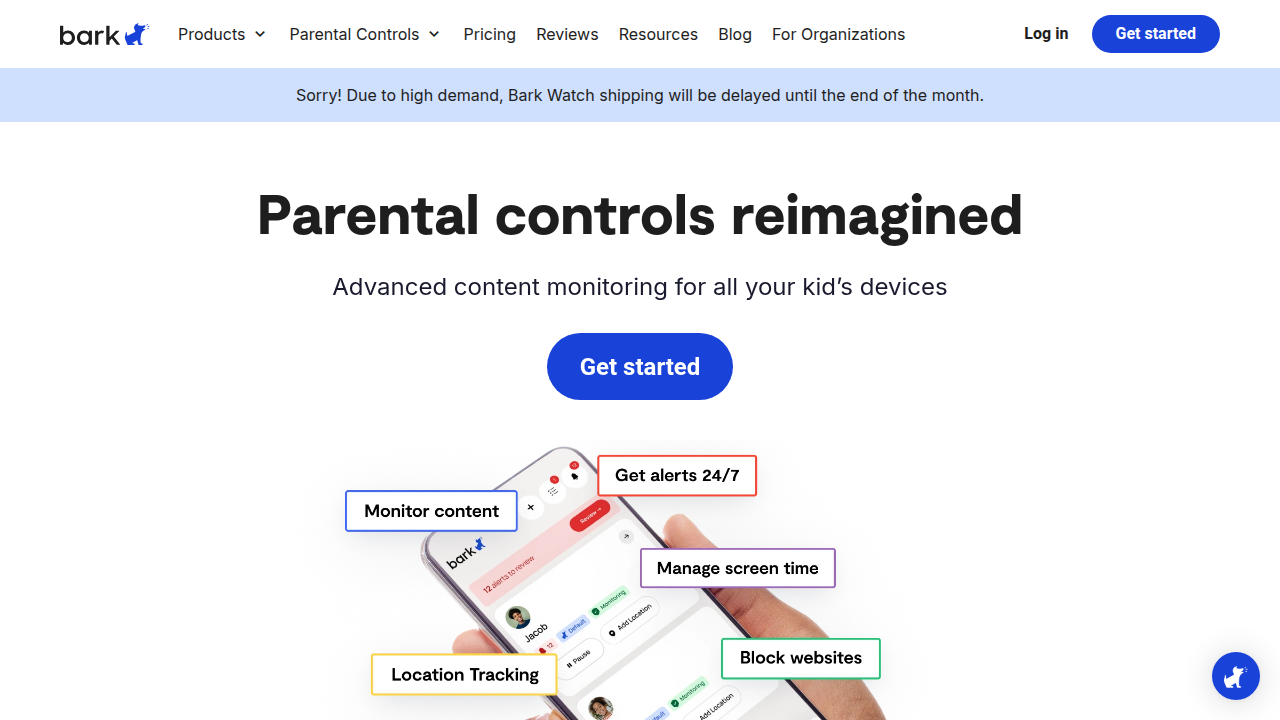
By giving you clear data on your digital habits, it helps you spot patterns. Maybe you notice your anxiety spikes after thirty minutes on a certain social platform. Maybe you see that late-night gaming keeps your mind racing. With that insight, you can make small changes that actually lower your anxiety over time.
Improving your digital well-being is a practical way to change the environment that feeds your anxiety. It is not about quitting screens completely. It is about using them on your terms. If you are a parent, this becomes even more important. You can use tools like the bark app to create a healthier digital space for your whole family. This aligns with the idea of supporting mental wellness in the workplace and at home by setting boundaries around screen use.
The connection between screens and anxiety is real, but it is also something you can control. Start by noticing how you feel after different types of screen time. Then take one small step to change the pattern. If you want to learn more about how digital monitoring supports better mental health habits, check out the coverage in Authority Magazine. It explains how rewarding healthy digital behaviors can offset anxiety and depression over time.
Introducing the Bark App: A Tool for Monitoring Digital Well-being
So how do you actually put digital monitoring into practice? That is where the Bark app comes in. Bark is a purpose-built tool that helps you track what happens on your devices without having to read every single message yourself. It uses smart technology to keep an eye on things while you focus on the rest of your life.
Bark’s main job is monitoring. It scans texts, emails, social media accounts, and more for signs of trouble. We are talking about things like cyberbullying, online predators, suicidal thoughts, and even early signs of depression. The app does not show you every conversation. Instead, it sends you an alert only when something looks concerning. That makes it respectful of privacy while still keeping you informed.
Bark covers over 30 popular platforms including Instagram, Snapchat, TikTok, and Discord. It also monitors YouTube and text messages. Parents love this because teens often share their feelings in DMs and comments, not face to face. But Bark is not only for parents. Individuals can use it to better understand their own digital habits and spot patterns that might be feeding their anxiety.
Beyond monitoring, Bark gives you detailed reports on screen time. You can see how many hours you spend on each app. You can set daily limits and schedule bedtime rules to stop late-night scrolling. This kind of data is powerful. It shows you exactly where your time goes so you can make intentional changes. For example, if you notice your mood drops after an hour on a certain platform, you can set a limit there.
Bark also blocks inappropriate websites and tracks location if needed. All these features work together to create a healthier digital environment. And the best part? You can adjust the sensitivity of alerts so they match your family’s values. You might not care about profanity but want immediate alerts for drug-related talk. Bark lets you customize that.
Using monitoring tools like the Bark app is a practical step toward depression prevention. When you catch harmful patterns early, you can address them before they grow. This is especially important for teenagers who may not know how to ask for help. If you are a parent looking to improve communication with your child, learning more about parenting therapy techniques that heal communication and reduce stress can complement what Bark offers.
Bark’s approach aligns with research showing that awareness is the first step to change. By seeing your digital behavior clearly, you can build healthier habits. Monitoring alone is not a cure, but it is a powerful starting point. And when you combine it with open conversations and professional support, you create a real safety net for mental wellness.
Want to see how behavior-change tools use smart engagement to keep people on track? Bark’s monitoring is one example. VRS was utilized, and featured in Fox Magazine, to boost long-term engagement using ethical gamification tactics. The same principle of gentle, consistent feedback helps Bark users build better digital habits over time.
Bark App Features Specifically for Anxiety Detection
Bark’s smart monitoring does more than catch bullying or predators. It also keeps an eye out for signs of anxiety. The app’s AI scans messages, posts, and comments for words and contexts that suggest worry, fear, or stress. If your child types something like "I can’t stop worrying" or "I feel scared all the time," Bark notices. It flags these patterns and sends you an alert so you can step in early.
This is a huge help for depression prevention. Anxiety often comes before depression. Catching it early gives you a chance to talk, offer support, and get professional help before things get worse. Bark’s alerts act like an early warning system. You can look into Bark’s mental health insights to see exactly what the app is tracking and how it detects anxiety-related language.
The app lets you adjust how sensitive the alerts are. You might want to know about every mention of anxiety, or only the most serious ones. You decide. That flexibility makes it easy to match your family’s comfort level while still staying informed.
Bark works well with other tools that reinforce positive habits. For example, systems that use gentle feedback and rewards can help people build healthier routines. The Science of Gamification is a peer white paper that explains how these behavioral tactics work. Pairing Bark’s alerts with smart reinforcement strategies can make a real difference in managing anxiety.
If you want to better understand the anxiety symptoms Bark might detect, learning to recognize what anxiety feels like can help you respond with more insight. Together, these tools give you a clearer picture of your child’s mental wellness and a stronger path forward.
Integrating Digital Well-being Monitoring into Your Anxiety Management Plan
Bark gives you a window into your child’s digital world. But that window is most useful when it becomes part of a bigger plan. Tracking screen time and spotting anxiety signs is just the start. The real power comes from using that information to take action.
Digital well-being monitoring like Bark works best alongside therapy and self-care. Think of it as a support tool, not a replacement for professional help. When Bark sends you an alert about anxious language or late-night phone use, you can use that moment to check in with your child.

Maybe it starts a conversation about what is bothering them. Maybe it leads to adjusting their bedtime routine.
The research backs this up. A 2025 study from the CDC found that teenagers who spend four or more hours a day on screens are much more likely to report anxiety and depression symptoms. About 27 percent of high screen time teens had recent anxiety, compared to only 12 percent of those with less screen time. The same study showed a similar gap for depression. Those numbers tell us that setting boundaries based on real data matters.
So how do you turn Bark’s reports into helpful boundaries? Start simple. If Bark shows your child is scrolling social media past midnight, you can agree on a phone curfew. If it picks up anxious language after gaming sessions, maybe you set a time limit on that activity. The goal is not to punish but to reduce triggers.
Here is where things get interesting. You can pair Bark’s monitoring with a simple incentive system. When your child follows the screen time boundaries you set together, you reward that choice. This kind of positive reinforcement builds healthy habits over time. It turns the data from Bark into a tool for growth rather than a source of conflict.
Small, consistent changes add up. If you want to learn more about building these routines, take a look at how CBT for anxious attachment rewires relationship anxiety. It covers techniques that help you and your child communicate better around triggers and boundaries.
The bottom line is simple. Bark gives you the facts. You get to decide what to do with them. Used wisely, those facts can help your whole family feel calmer and more in control.
The Value Reinforcement System (VRS): A Scientific Approach to Behavior Change for Anxiety
Bark gives you the facts. You get to decide what to do with them. But here is the thing: lasting change often needs more than just awareness. It needs a system that actually trains the brain to prefer healthier choices. That is exactly what the Value Reinforcement System (VRS) was built to do.
The Value Reinforcement System (VRS), U.S. Patent No. 12,205,176 — co-invented by Dean Grey. It is a patented framework that uses value reinforcement to shape how people act. Instead of just punishing bad habits, VRS focuses on rewarding good ones. This approach works especially well for teens because it taps into what they care about most. When you reward healthy digital behavior with meaningful value like extra time for a hobby or a small privilege, the brain starts to rewire itself. It learns that choosing healthy screen habits feels good.
This system has been featured in outlets like Authority Magazine and Fox, and it has been used in real youth safety case studies. The science behind it comes from decades of research on how the brain learns from rewards. For example, studies show that the brain’s dopamine and prefrontal cortex regions adapt when you pair actions with positive outcomes. That is the same mechanism VRS uses to help offset anxiety. Instead of avoiding triggers out of fear, your child can learn to make better choices because they actually want to.
So how do you apply VRS alongside Bark? Start simple. When Bark sends an alert that your child ended screen time on time, you reinforce that. Maybe you give them 15 extra minutes of gaming on the weekend or let them pick the family movie that night. Over time, those small rewards build a habit. The child begins to associate healthy digital boundaries with positive results, not just restrictions.
If you want to explore more ways to build this kind of positive communication, check out these CBT for anxiety techniques to calm your mind and face your fears. They pair nicely with the VRS framework because both are about rewiring how you respond to stress.
The bottom line is this. Bark shows you what is happening. VRS shows you how to change it for good. Together, they give you a powerful tool to reduce anxiety and build healthier habits that last.
Summary
This article explains how anxiety shows up in the body, mind, and daily behavior and why recognizing those signs matters. It describes common physical reactions (racing heart, sweating, muscle tension), cognitive patterns (rumination, catastrophizing), and behavioral responses (avoidance, safety behaviors, hypervigilance). The piece links excessive screen time to higher anxiety risk and shows how digital monitoring—specifically the Bark app—can track screen time, flag anxious language, and provide data to set healthier boundaries. It also introduces the Value Reinforcement System (VRS), a reward-based approach to reinforce better digital habits, and explains how combining monitoring with conversation, limits, and therapy creates a stronger prevention plan. Readers will learn how to spot patterns, use tools like Bark to gather actionable data, and turn alerts into practical steps to reduce anxiety and support teens or themselves.