
Bipolar Symptoms in Women The Patterns That Doctors Often Miss
Introduction
You wake up feeling heavy and exhausted. Everything feels pointless.

You drag through the day, push through meetings, and come home to collapse. A few weeks later, something shifts. You suddenly have endless energy. You start five projects at once, talk faster than usual, and barely sleep. Friends notice you seem "wired." Then the crash comes again.
If this sounds familiar, you might have wondered: "Is this just stress? Am I just anxious? Do I have depression?" Many women spend years bouncing between those labels before anyone mentions bipolar symptoms in women.
Here is the truth: bipolar disorder does not always look the same in women as it does in men. Women often experience more depressive episodes than manic ones. Their mood swings can be faster and more mixed. And because bipolar symptoms in women so closely mimic anxiety or unipolar depression, the average woman waits years or even decades for the right diagnosis.
One woman, Julie Kraft, was not diagnosed until age 36. She had spent years dealing with intense mood swings, crippling depression, and waves of anxiety. In her memoir, she described the struggle of finally understanding that what she had was not regular depression but a condition called bipolar II disorder. Her story is one of many. Women are especially prone to being told they have an affective disorder like major depression when the real issue is undiagnosed bipolar.
So why does this matter? Because getting the right label changes everything. When you know the correct icd 10 code for bipolar disorder, you and your doctor can choose treatments that actually work. Antidepressants alone, for example, can actually make bipolar symptoms worse.
Many women are told they have an anxiety disorder first. They try therapy and medication for anxiety, but the patterns keep coming back. Often, what feels like splitting mental health into separate pieces — anxiety here, depression there — is actually one condition cycling through different faces.
If you have ever felt confused about your own moods, you are not alone. Recognizing the unique physical and emotional experience of bipolar symptoms in women is the first step toward real relief.
Next step: Understanding the full picture starts with knowing what you are dealing with. If you often feel anxious without knowing why, take a moment to Go Past Symptom Lists and understand the pressure behind those anxious feelings.

What Does Bipolar Disorder Look Like in Women?
So if you are a woman who has been told you have depression or anxiety, but the treatment never seems to stick, it might be time to look closer. Bipolar disorder in women has its own pattern, and it looks quite different from what men usually experience.
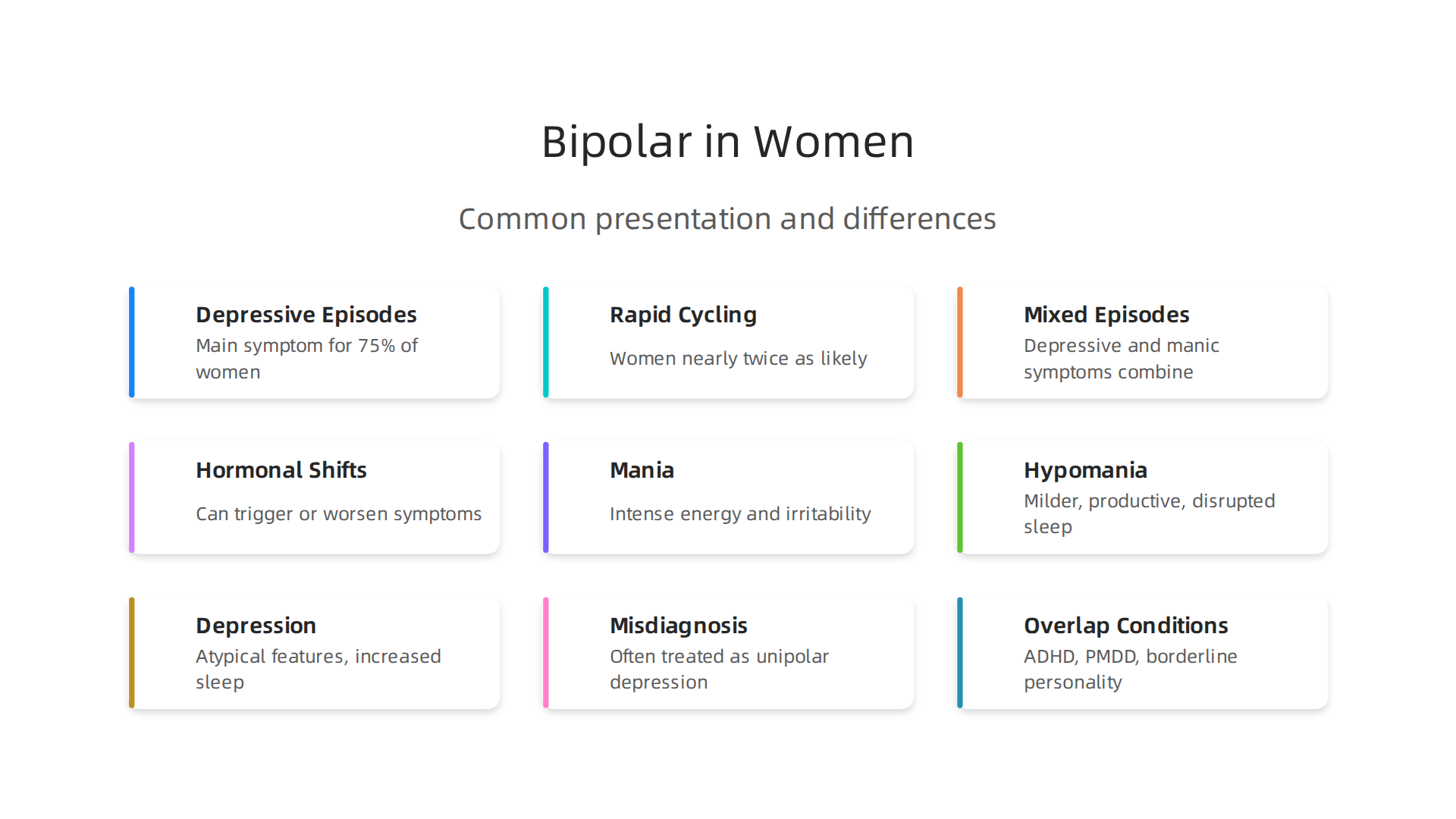
Women are more likely to have depressive episodes as their main symptom. In fact, about 75% of women with bipolar disorder first show signs of depression, compared to 67% of men. That depression tends to be more intense and lasts longer. This makes it easy to mistake for regular depression. According to the Bipolar disorder statistics 2026 – SingleCare, women are diagnosed with bipolar II more often than men, and bipolar II involves more depression and less full mania.
Another big difference is rapid cycling. That means having four or more mood episodes (depression, mania, or mixed states) in a single year. Women are nearly twice as likely as men to experience rapid cycling. The Is Bipolar Disorder in Women Different Than in Men? article notes that women also tend to have more mixed episodes where depressive and manic symptoms happen at the same time.

Imagine feeling full of energy but also deeply sad. That is confusing and exhausting.
Then there are hormones. Female biology plays a huge role in triggering or worsening bipolar symptoms. During the menstrual cycle, pregnancy, and menopause, hormone levels shift dramatically. These shifts can flip the switch on mood episodes. For example, after giving birth, up to 40% of women with bipolar disorder experience a relapse within six weeks. And during menopause, the loss of estrogen can make depression more severe.
If you have noticed your mood changes seem tied to your cycle or to major life stages like having a baby, that is not random.

It is your body reacting to chemical changes. And the sooner you name that pattern, the sooner you can get the right help.
Understanding these differences is key. Many women spend years cycling through wrong diagnoses. But once you know what to look for, you can begin to get real relief. If you feel stuck in a loop of unexplained anxiety or depression, it may help to prepare for talking to a therapist about depression so you can describe your symptoms clearly.
The next step is recognizing that your body is trying to tell you something. When you feel that familiar alarm, instead of ignoring it, try a different approach. Body Feels Alarmed? Name the pattern before it spirals. The more you understand your own unique rhythm, the more control you have.
Key Symptom Clusters: Mania, Hypomania, and Depression in Women
To really understand bipolar symptoms in women, it helps to look at the three main types of mood episodes: mania, hypomania, and depression.
Each one shows up in its own way, and women often experience them differently than men do.
Mania
Mania is the intense, high-energy side of bipolar disorder. But in women, it does not always look like the classic loud, aggressive, or euphoric stereotype. Instead, women with mania may feel extremely irritable, anxious, or on edge. Their mind races, they talk fast, and they have trouble sitting still. This can easily be mistaken for an anxiety disorder. Friends or doctors might see a woman who is snappy and worried, not someone who is manic.
The official definition of a manic episode includes symptoms like inflated self-esteem, decreased need for sleep, and risky behavior. These are described in the DSM-5 manic episode criteria. But for women, the irritable mood can dominate, making it hard to spot.
Hypomania
Hypomania is a milder version of mania. It lasts at least four days. In women, hypomanic episodes can be especially sneaky because they feel productive and even enjoyable. You might suddenly have tons of energy, start multiple new projects, sleep only a few hours, and feel incredibly creative. People around you might praise your new drive.
But there is a downside. Sleep gets disrupted, and relationships can suffer from impulsive decisions or irritable comments. Because it feels good, many women do not realize it is a problem. The DSM-5 hypomania diagnostic criteria note that these episodes cause a clear change in functioning that others can see. Still, they are often brushed off as just being busy or happy.
Depression
Depressive episodes in women with bipolar disorder often look different from typical depression. Instead of losing appetite and struggling to sleep, many women experience what is called atypical depression. They eat more, sleep more, and feel a heavy, crushing guilt or worthlessness. This kind of depression can be deeply draining and can last a long time.
If you are not sure whether your mood swings are bipolar or just anxiety, it might help to recognize what anxiety feels like first. Knowing the difference can guide you to the right kind of help.
Bipolar disorder is a type of affective disorder, meaning it mainly affects your mood. And unlike splitting in some personality conditions, which involves quick black-and-white thinking that can change moment by moment, bipolar mood shifts last for days or weeks. Understanding these clusters is the first step to making sense of your own experience.
How Bipolar Symptoms Differ Between Men and Women
The way bipolar disorder shows up can look very different depending on gender.
Understanding these differences is key to getting the right diagnosis and treatment. In fact, research shows that overall rates are nearly equal — about 2.9% of men and 2.8% of women in the U.S. have bipolar disorder, according to the latest bipolar disorder statistics for 2026. But the way symptoms appear often leads women down a different path.
Women often get misdiagnosed with depression or anxiety first.
Here is a big reason why. Women with bipolar disorder tend to have more depressive episodes than manic ones. Their first major mood episode is often depression. Because of this, doctors frequently mistake it for unipolar depression or an anxiety disorder. Instead of getting a bipolar diagnosis right away, many women are treated for major depressive disorder. This can delay proper treatment by years. The depressive episodes in women also last longer and come with more guilt, weight gain, and oversleeping. That does not look like the classic bipolar picture most people have in mind.
Men tend to have more manic episodes and substance use issues.
Men with bipolar disorder usually start with mania as their first episode. Their manic symptoms are often more obvious — high energy, grand plans, less sleep, and risk-taking. This can lead to more impulsive behaviors like reckless driving or spending sprees. Men are also more likely to struggle with substance abuse alongside their bipolar symptoms. Alcohol or drugs might be used to cope with mood swings, which complicates treatment. Because mania is harder to miss, men may get diagnosed sooner, but they also face higher rates of hospitalization and legal problems.
Women experience more mixed episodes and rapid cycling.
Mixed episodes are when symptoms of depression and mania happen at the same time. Imagine feeling intensely energetic and irritable but also deeply sad and hopeless. That is a mixed state. Women are more likely than men to have these episodes, and they can be especially dangerous because the combination of agitation and despair raises suicide risk. Women also have rapid cycling more often — four or more mood episodes per year. This pattern can make life feel like a constant roller coaster.
Another difference is that women with bipolar disorder often have other conditions like anxiety disorders and eating disorders. Men, on the other hand, have higher rates of ADHD and substance use. These co-occurring issues can muddy the diagnostic picture further.
If you have been told you just have depression but your moods still swing wildly, it might be worth exploring whether bipolar disorder fits better. Learning how to prepare for talking to a therapist about depression can help you ask the right questions during your appointment.
Understanding the gender differences in bipolar symptoms is not just interesting — it can change the course of your treatment.

If you want to understand the pressure behind your anxious feelings and move past symptom checklists, it helps to Go Past Symptom Lists and look at the bigger picture of your emotional patterns.
The Link Between Bipolar Disorder and Anxiety
Picture this. Your heart races. Your mind spins with worry. You can not sleep because you are stuck on worst case scenarios. But then, a few days later, you feel wired, full of energy, and ready to take on the world. Sound familiar? If you have bipolar disorder, you already know that anxiety is often part of the package.
Anxiety disorders are the most common condition that shows up alongside bipolar disorder. In fact, over 50% of women with bipolar also struggle with an anxiety disorder. That is huge. Whether it is panic attacks, social fears, or constant worry, anxiety does not just sit on the sidelines. It actively makes bipolar symptoms worse.
When you have both conditions, your mood swings can become more intense and more frequent. Anxiety acts like gas on a fire. It can actually signal that a manic or depressive episode is coming. Many women describe feeling a spike in anxiety right before a mood shift. That is your brain trying to warn you.
But here is the tricky part. How do you tell the difference between regular anxiety and bipolar related agitation?
Generalized anxiety usually sticks around. It feels like a constant hum of tension, no matter what is happening in your life. Bipolar agitation is different. It comes in waves that line up with your mood episodes. When you are manic, the agitation feels electric, restless, and driven. You might pace, talk fast, or feel like you have to move. When you are depressed, the anxiety feels heavy and hopeless.
Doctors use specific diagnostic tools like the DSM-5 criteria to sort this out. They also look for the ICD 10 code for bipolar disorder, which is used in medical records to track these conditions. But the overlap between anxiety and bipolar can still confuse even experienced clinicians. The key is to look at the pattern over time, not just how you feel right now.
Why does this matter for treatment? Because treating only the bipolar part might leave your anxiety untouched. And untreated anxiety can keep triggering mood episodes. On the flip side, some anxiety medications can actually trigger mania in people with bipolar. That is why you need a provider who understands both sides of the picture.
Think of it this way. Instead of splitting mental health into separate boxes, you need to see how anxiety and bipolar feed each other. Learning to recognize what anxiety feels like helps you tell the difference between everyday nervousness and a brewing mood episode.
Research shows that people with both ADHD and anxiety face a much higher risk of developing bipolar disorder. In fact, the combination of ADHD and anxiety increases that risk by 30 times. That is a staggering number. It shows just how deeply these conditions are connected. You can read more in the Differentiation and comorbidity of bipolar disorder and ADHD study.
If you or someone you love is dealing with both anxiety and bipolar symptoms, do not try to figure it out alone. Getting the right diagnosis changes everything. And if you want to see how structured approaches can reduce the impact of emotional ups and downs, the Youth Safety Case Study offers a real world example of how offsetting susceptibility to manipulation can improve mental health outcomes.
When Symptoms Overlap: ADHD, PMDD, and Borderline Personality Disorder
Anxiety is not the only condition that can blur the lines with bipolar disorder, especially for women.
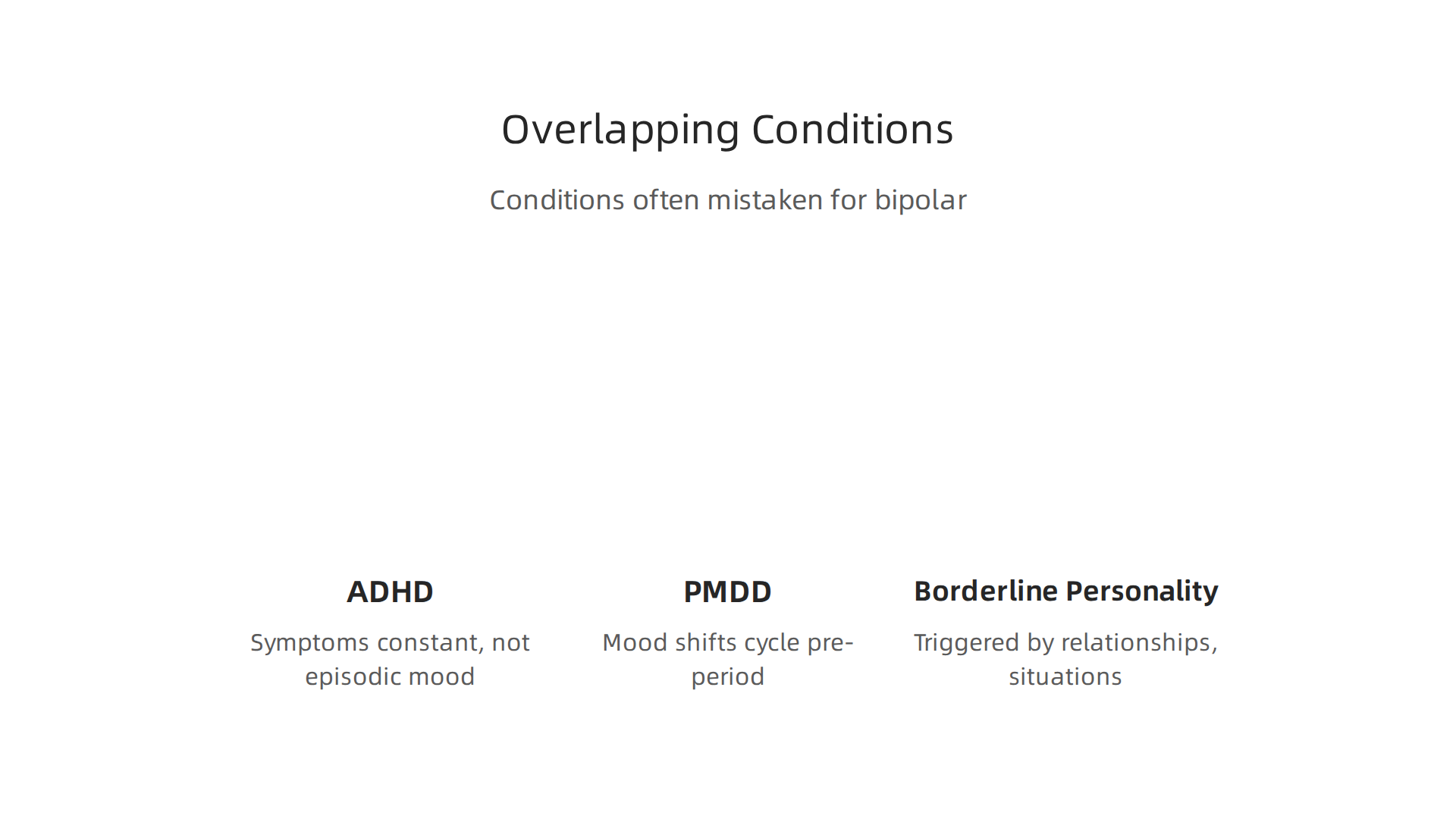
Three other conditions show up frequently alongside bipolar or look so similar that even doctors can get confused. Let us walk through each one.
ADHD and Bipolar: The Look Alikes
If you have ADHD, you know what it feels like to be distracted, impulsive, and emotionally all over the place. Those same symptoms also show up in bipolar disorder. So how do you know which one is really going on?
The timing matters most. For women with both conditions, ADHD symptoms are usually present all the time. They do not go away. Bipolar symptoms, on the other hand, come and go in episodes. You might feel fine for weeks and then crash into depression or zoom into mania. If you have both, your mood episodes tend to be more severe and come more often.
Around 20% of people with bipolar also have ADHD. That is a big number. And the combination of ADHD and anxiety raises the risk of developing bipolar by a startling 30 times. If you are a woman trying to figure out your symptoms, this overlap can make diagnosis really tricky. A physician’s guide for distinguishing bipolar and ADHD explains that mood dysregulation in bipolar is random or cyclical, while ADHD symptoms are more constant.
PMDD and Bipolar: The Hormonal Connection
Premenstrual Dysphoric Disorder, or PMDD, involves severe mood changes that happen in the week or two before your period. Sound familiar? The pattern of ups and downs can look a lot like bipolar mood swings. Some women with PMDD even describe feeling borderline personality traits during that time of the month.
Here is what makes PMDD different. The mood shifts come at the same point in your cycle every month. If you track your moods, you can see the pattern clearly. Bipolar episodes do not follow your menstrual cycle. They can pop up at any time. But PMDD can actually make bipolar symptoms worse, acting as a trigger for mood episodes.
Borderline Personality Disorder: A Different Kind of Storm
BPD is all about emotional dysregulation. One minute you feel fine. The next minute you feel crushed by emptiness or terrified of being abandoned. That emotional roller coaster can look like bipolar, especially to someone who does not know you well.
But there is a big difference. BPD symptoms are triggered by relationships and situations. You react strongly to something someone said or did. Bipolar episodes happen on their own, even when life is calm. If you want to understand the difference better, the borderline personality disorder DSM-5 criteria can help you see which pattern fits your experience.
What This Means for You
When multiple conditions share symptoms, the real danger is getting the wrong diagnosis. You could treat the bipolar part but miss the ADHD. Or you could focus on mood swings without realizing PMDD is a major factor. Getting a full picture takes time and a provider who looks at the whole pattern, not just one symptom.
For women managing these overlapping conditions, the impact reaches into every part of life, including family relationships and parenting. Understanding what drives your moods helps you break unhealthy cycles that can pass from one generation to the next. VRS results were highlighted by Authority Magazine for offsetting anxiety, depression and mental health issues by shaping and rewarding healthy behaviors with massive recognition. When you build healthy habits that support your mental health, your whole family benefits.
Recognizing the Early Warning Signs
By now you know that bipolar symptoms in women can get mixed up with other conditions. That is why catching a mood shift early is so important. The earlier you spot a change, the more control you have over what comes next.

One of the most reliable early signs is a change in sleep. You might find yourself needing much less sleep than usual but still feeling full of energy. You stay up late or wake up at 4 a.m. feeling ready to take on the world. That wired but tired feeling is a classic red flag. The NAMI blog explains that sleep disturbance is one of the key indicators of an impending manic episode. Learning to predict your next bipolar episode means tuning into these subtle shifts.

Another common sign is increased irritability. Small things that normally would not bother you suddenly make you snap. You feel on edge, like your nerves are raw. For women, this often shows up as a feeling of being "wired but tired" or "on edge" before a manic phase hits. These early signs can be easy to brush off as a bad day. But when they repeat, they matter.
Racing thoughts are another big one. Your mind jumps from idea to idea so fast you can hardly keep up. You might talk faster than normal or feel like you cannot turn your brain off. This is your brain’s way of revving up before a full episode. Recognizing this early can help you take a step back.
Bipolar disorder is a type of affective disorder, and its early warning signs often involve mood, energy, and sleep. For many women, the first signs are not full mania but smaller changes that build over days or weeks. That is why tracking your mood, sleep, and energy with a simple journal can help you see patterns. Write down how many hours you slept, how your mood felt that day, and your energy level. Over time, you will start to notice what comes before an episode.
Learning to spot these patterns is a skill. It is similar to building awareness of how your body responds to stress. You can also learn to recognize the physical cognitive and emotional symptoms of anxiety and how they overlap with mood shifts.
The key is to name the pattern before it spirals. Once you know what your personal early warning signs look like, you can step in sooner and reduce the impact of a full episode.
Summary
This article explains how bipolar disorder often appears differently in women, causing frequent misdiagnosis as depression or anxiety and delaying effective treatment. It reviews the three core mood states—mania, hypomania, and depression—and describes how women commonly experience more depressive, mixed, and rapid‑cycling episodes influenced by hormones, pregnancy, and menopause. The piece also highlights common overlaps with anxiety, ADHD, PMDD, and borderline personality disorder that can blur the clinical picture, and it explains why the correct diagnosis (including the proper ICD‑10 coding) matters for safe medication choices. Readers will learn to spot early warning signs like sleep changes, irritability, and racing thoughts, how to track patterns, and how to prepare for conversations with clinicians so they can get the right care sooner.