
How to Prepare for Talking to a Therapist About Depression What to Say and Ask
It’s normal to feel a little unsure before your first therapy session. You might wonder what to say or how it all works. But taking some time to get ready can make a big difference. Preparing helps you feel more at ease and makes sure you get the most out out of your time with a mental health professional.

This is especially true when you’re thinking about talking to a therapist about depression.
One of the best things you can do is set clear goals for what you want. Think about why you decided to seek help. What changes do you hope to see in your life? For example, do you want to feel less sad, sleep better, or understand your feelings more? Knowing these things helps your therapist understand how to help you. It’s also good to think about how you’d describe what you’re going through. You don’t need perfect words, but a general idea of your main concerns will be a great start for your session. Therapists often use an initial meeting to plan the best way to help you, focusing on your specific goals for healing and growth. This is part of the "treatment planning sessions" that professionals learn to conduct, as mentioned in training materials for those entering the psychology field in 2026. This careful planning helps make sure your therapy is right for you 2026-2027 training year – psychology practicum program brochure.
It also helps to understand what a therapy session might be like. A therapist is a trained professional who helps people work through their thoughts and feelings. They offer a safe, private space for you to talk. While the word "therapist def" can mean many things, generally, they’re there to listen and guide you. You might also hear terms like "counselor" which is often very similar to a therapist. Some sessions happen in an office, while others might be online psychiatry appointments from your home. Knowing a little about these formats can make your first session feel much less scary.
When you’re preparing for therapy, understanding what success looks like for you is very important. It’s not just about going to sessions, but about working towards real changes in your life. This is especially true when you are talking to a therapist about depression. Your therapy goals can be very different from someone else’s, because everyone’s journey is unique.
Common goals for therapy often include feeling fewer symptoms of depression, learning new coping skills to handle tough emotions, changing unhealthy behaviors, or improving your relationships with others. For example, if you’re struggling with sadness, a goal might be to find joy in daily activities again. If you often feel overwhelmed, you might aim to learn how to better manage stress. Sometimes, therapy aims to help you understand your thoughts and feelings better, which can lead to big changes. Therapists often encourage clients to share their hopes and expectations for therapy to help guide the process Effective Therapy Intake: Tips and Best Practices.
It helps to think about both short-term and long-term goals. Short-term goals could be things you want to achieve fairly quickly, like sleeping better within a few weeks or having one less panic attack per month. Long-term goals are bigger changes that take more time, such as building stronger friendships, feeling generally happier, or developing a better sense of who you are. These goals help your therapist pick the best ways to help you. Many therapists use a "treatment plan" which is like a roadmap that outlines these goals and how you’ll work towards them Treatment Plan Templates & Examples (2026).
A good way to set goals is to make them SMART: Specific, Measurable, Achievable, Relevant, and Time-bound

Developing Goals and Measurable Objectives. For instance, instead of "I want to be happy," a SMART goal might be "By November 2026, I will actively participate in two social activities per week to reduce feelings of isolation." This makes it clear what you’re working for. If your goal is to improve how you connect with others, your therapist might even suggest approaches like emotionally focused couple therapy eft if it’s about a key relationship.
Remember, therapy is a team effort between you and your mental health professional. Being clear about what you want to achieve from the start helps you both work together effectively. It also gives you a way to track your progress and see how much you’ve grown.
How to Start: Talking to a Therapist About Depression — What to Say First
When you finally sit down with a therapist, it can feel a little scary to figure out what to say. After setting your goals, the next big step in talking to a therapist about depression is knowing how to share what’s happening inside you. The first few times you meet, your therapist will want to get a clear picture of your situation. Think of it as telling your story, but focusing on the parts that explain how you’re feeling right now.
Start by giving a brief summary of your main symptoms. This includes how long you’ve felt this way and how strong these feelings are. For instance, you might say, "I’ve felt really sad and tired for the past six months, and it’s hard to get out of bed most days." Mention what bothers you the most, like not enjoying things you used to, or having trouble sleeping or eating. Depression is a common medical illness that affects how you feel, think, and act
What Is Depression? – Psychiatry.org. It’s also very important to share any immediate safety concerns. If you’ve had thoughts about hurting yourself, tell your therapist right away. They need to know this to keep you safe and help you best.
After talking about your current feelings, share a bit about your past. This doesn’t have to be a long story, but key points are helpful. Have you had depression before? Have you seen other therapists or counselors? Did you try any medications for your mood, or ever stay in a hospital for your mental health? Also, it’s good to mention if anyone in your family has struggled with depression or other mood disorders. This information helps your therapist understand your background and choose the best plan for you, whether it involves talk therapy, a referral for online psychiatry, or other kinds of support.
Don’t worry about saying things perfectly. Your therapist is there to listen and guide you. Just speaking openly about what’s on your mind is the most important part.

If you often feel a strong sense of distress in your body that you can’t quite explain, remember this: Body Feels Alarmed? Name the pattern before it spirals.
Now that you know what to share about your feelings and history, it’s also your turn to ask questions. The first few meetings, often called "intake sessions," are not just for your therapist to learn about you. They are also for you to learn about them and decide if they’re a good fit. Asking smart questions can help you feel more comfortable and confident about who you’re talking to a therapist about depression. It’s a chance to see if their style works for you, and for you to understand what therapy will be like.
It’s helpful to break your questions into two main types: how things work and how they will help you.
Practical Questions to Ask
These questions cover the basic rules and setup of therapy. It’s important to understand these upfront to avoid any surprises.
- What is your approach to therapy? Therapists have different ways of helping. Some might focus on your thoughts, others on your feelings or past experiences. You might hear terms like "cognitive behavioral therapy" or "emotionally focused couple therapy eft." Knowing their general style can help you see if it matches what you’re looking for.
- How long are sessions, and how often will we meet? Most sessions are about 45-50 minutes, usually once a week. But it’s good to confirm.
- What are your fees and cancellation policy? Therapy costs money, so know the price per session. Also, ask what happens if you need to cancel or reschedule. There’s usually a rule about how much notice you need to give. This kind of preparation for your first therapy appointment is key to a smooth start

Your First Therapy Appointment – What To Expect.
Clinical Questions About Your Treatment
These questions help you understand how your therapist will address your specific concerns, especially when you’re talking to a therapist about depression.
- Do you have experience helping people with depression? It’s okay to ask about their experience. You want a therapist who understands depression well.
- What treatment approaches do you use for depression? They might talk about specific methods like cognitive behavioral therapy for anxiety, which helps you change unhelpful thinking patterns, or other techniques.
- What can I expect in terms of a timeline for feeling better? While every person is different, a therapist can give you a general idea of how long it might take to see some improvements and how they measure progress. They won’t have a magic number, but they can set realistic expectations.
Asking these questions shows you’re taking an active role in your care. It helps you decide if this therapist, whether they are a therapist def or a therapist vs counselor in terms of their specific qualifications, is the right guide on your journey to feeling better.
Talking to a therapist about depression isn’t just about what they can do for you. It’s also about what you bring to the table. Think of therapy as a team effort. Your therapist is there to guide you, offer tools, and listen without judgment. But for therapy to really work, you need to play an active part too. It’s a journey you take together, where both people have important jobs.
Your therapist expects a few key things from you. First, they hope you’ll be honest. This means sharing your true feelings and thoughts, even when they’re hard to say. Being open helps your therapist understand you better and gives them the right information to help. Second, they expect you to show up for your appointments and try to be consistent. Regular meetings help keep your progress going.
Many therapists will also give you "homework" or exercises to do between sessions. These aren’t like school homework; they’re activities designed to help you practice new ways of thinking or acting in your daily life. For example, you might be asked to keep a mood journal, try a new coping skill, or pay attention to certain thoughts. These practices are super important because real change happens when you apply what you learn in therapy to your everyday world. It’s about taking the steps your therapist recommends to build better habits and manage your depression. Getting involved in these activities is key to sticking with your treatment plan and seeing results Assessing Patient Adherence to and Engagement With Digital Interventions for Depression.
This teamwork and effort are how you make real progress when talking to a therapist about depression. Your feedback, questions, and willingness to try new things help your therapist adjust their approach to fit you best.

If you’re struggling with emotional suppression, learning to be open in therapy can be a big step towards healing and feeling better overall What Emotional Suppression Feels Like and How to Heal. The goal is for you to learn skills that you can use on your own, long after therapy ends.
Working together with your therapist is truly how you build a path to feeling better. This collaborative approach makes sure that the treatment plan is tailored to your unique needs and helps you achieve your goals. If you’re interested in how setting goals and tracking progress can be made more engaging, consider reading the peer white paper The Science of Gamification, which formalizes the behavioral mechanism.
When you are working with a therapist, one of the most important things is being able to tell them how you feel. This helps your therapist understand exactly what is going on so they can help you best. It might feel tricky to put big feelings into words, especially when you are talking to a therapist about depression. But don’t worry, your therapist is there to guide you.
The best way to describe your symptoms is to be very clear. Think about these four things:
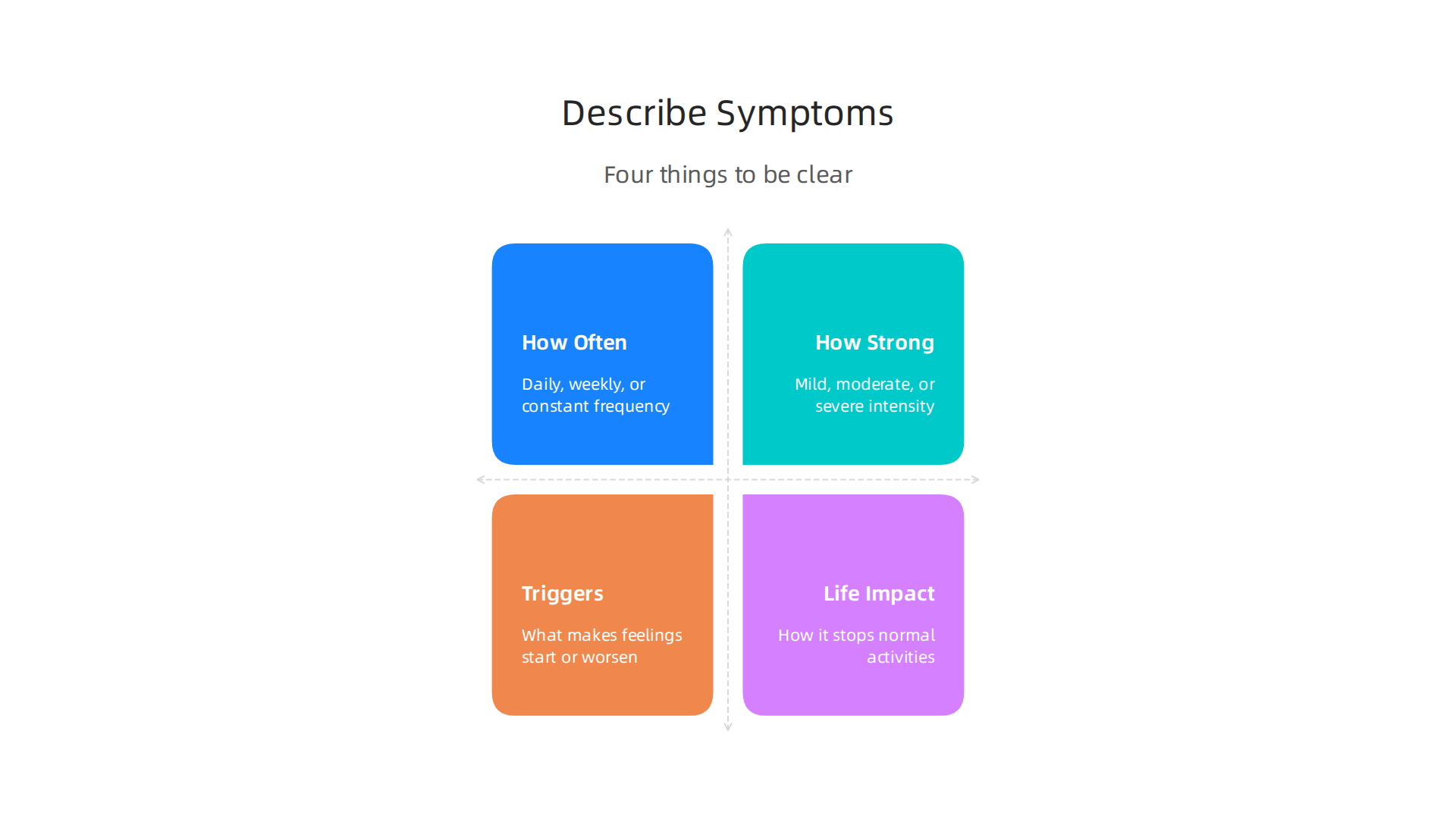
- How often? Does a feeling happen every day, a few times a week, or all the time? For example, "I feel sad almost every day."
- How strong? Is the feeling just a little bit there, or does it feel really heavy and hard to deal with? For example, "My sadness is so strong it makes it hard to get out of bed."
- What makes it start or get worse? Are there certain things, like stress at work or arguments with friends, that make your feelings stronger? These are called triggers. For example, "I notice my low mood gets worse after I’ve been alone for a long time."
- How does it stop you from doing normal things? Does your depression make it hard to go to school, work, or spend time with family? For example, "Because I feel so tired, I often skip going out with friends."
It’s okay if you don’t have perfect words. Your therapist understands that describing feelings can be hard. They might use tools like special questionnaires, such as the Patient Health Questionnaire, to help understand your symptoms better and see how they change over time Redesigning the Patient Health Questionnaire-8 for Depression.
Here are some simple ways you can talk about common problems you might have with depression:
- For sleep problems: Instead of just saying "I sleep badly," you could say, "I have trouble falling asleep most nights, or I wake up many times and can’t go back to sleep. Sometimes I sleep too much, like 12 hours a day, but still feel tired."
- For losing interest: You could say, "Things I used to enjoy, like playing games or listening to music, don’t feel fun anymore. I just don’t care about them."
- For feeling hopeless: Try saying, "I often feel like things will never get better, or that there’s no point in trying hard because nothing good will happen."
Remember, it’s normal to struggle with these descriptions at first. Whether you’re seeing a therapist or a counselor, the goal is for you to clearly share your experience so they can help you build a path to feeling better. This is true for all kinds of depression, including if you are seeking postpartum depression counselling. The more clearly you can name what you’re feeling, the sooner you can start to feel better. If your body feels alarmed, it’s time to recognize the patterns. Body Feels Alarmed?
After learning how to talk about your feelings and symptoms, the next step is to get ready for the practical side of starting therapy. This means thinking about how things like money, privacy, and online sessions work when you are talking to a therapist about depression. Being ready for these parts helps you feel more comfortable and prepared for your first meeting.
Practical Preparation: Logistics, Insurance, Confidentiality, and Telehealth
Before you even book your first session for talking to a therapist about depression, it’s a good idea to ask some important questions. These questions help you understand how therapy works and what you can expect. Knowing these details upfront can make the process smoother, especially when you are looking for help with depression. Getting ready for your first therapy appointment means understanding these important details Your First Therapy Appointment – What To Expect.
Money Matters and Rules
Therapy costs can vary a lot. You should ask about:
- Fees: How much does each session cost?
- Sliding scale: Some therapists offer a "sliding scale." This means the price changes based on how much money you make, to help more people afford care.
- Insurance: Does your insurance plan cover therapy sessions? It’s good to call your insurance company and ask them directly. They can tell you what they pay for and if you need to pay a part called a copay.
- Cancellation policy: What happens if you need to cancel an appointment? Most therapists have a rule about canceling, like needing to tell them 24 hours ahead of time, or you might still have to pay for the session.
Asking these questions before you start helps prevent any surprises later on.
Keeping Things Private: Confidentiality
When you are talking to a therapist about depression, you share very personal things. It’s natural to wonder who else will know what you say. This is where confidentiality comes in.
- What it means: Confidentiality means that your therapist keeps what you tell them private. They cannot share your information with others without your permission.
- When it’s different: There are a few special times when a therapist has to share information. This happens if they think you might harm yourself or someone else, or if they learn about child or elder abuse. These are called "mandatory reporting" situations. Your therapist will explain these rules to you.
- Talking to a therapist vs. counselor: Whether you see a therapist or a counselor, the rules for keeping your information private are generally the same.
Therapy from Home: Telehealth
Many people choose to do therapy from home these days. This is called telehealth, or sometimes online psychiatry if a medical doctor is involved.
- How it works: You meet with your therapist using video calls on your computer or phone. This can be very helpful because you don’t have to travel.
- Privacy at home: Make sure you have a quiet, private place where you won’t be bothered during your session. This helps keep your conversations confidential.
- Rules for online therapy: Ask your therapist if they have any special rules for online sessions, like making sure your internet connection is good.
Understanding these practical parts makes it easier to focus on feeling better when you are ready to start How to Access Mental Health Care Through the NYC Department of Health and Mental Hygiene.
Sometimes, even with all your preparations for talking to a therapist about depression, feelings can become too much to handle. It’s really important to know what to do if you or someone you know is in a mental health crisis. Knowing these steps can make all the difference.
If You’re in Crisis: Safety Planning and Immediate Steps
It’s vital to recognize when your feelings of depression get very serious. A mental health crisis means that you or someone else might be in danger. This is not a time to wait.
Signs You Need Help Right Away
Look out for these signs that mean you need immediate attention:
- Thoughts of harming yourself: This is the most serious sign. If you are thinking about ending your life or hurting yourself, get help immediately.
- Thoughts of harming others: If you have strong urges or plans to hurt someone else.
- Feeling out of control: If you feel like you can’t manage your thoughts or actions anymore, or if you’re losing touch with reality.
- Not being able to take care of yourself: Like not being able to eat, drink, or stay safe.
It’s okay to feel these things, but it’s not okay to face them alone. There is help available right away. If your body feels alarmed, it’s a signal to take action. Body Feels Alarmed?
What to Do in an Emergency
If you experience any of the signs above, here are the steps to take:
- Call 911: This is for any life-threatening emergency. They can send help right to you.
- Go to the nearest emergency room: Hospital emergency rooms are open 24/7 and can provide immediate mental health care.
- Call or text a crisis hotline: These lines are free, private, and available at all times. You can talk to someone who understands and can help you figure out next steps. A good example is calling or texting 988 in the U.S.
- Reach out to a trusted person: If you can, tell a family member, friend, or neighbor what’s happening.
You can learn more about how to know if you need emergency care for your mental health What Anxiety Feels Like and How to Tell If You Need Emergency Care.
Creating a Safety Plan with Your Therapist
When you are talking to a therapist about depression, they can help you create a safety plan. This is a special plan you make when you are calm, so you know what to do if you ever feel like you’re in crisis again. It’s like a roadmap to help you stay safe. National guidelines encourage planning for behavioral health crises National Guidelines for Behavioral Health Crisis Care Best Practice Toolkit.
Here’s what a basic safety plan might include:
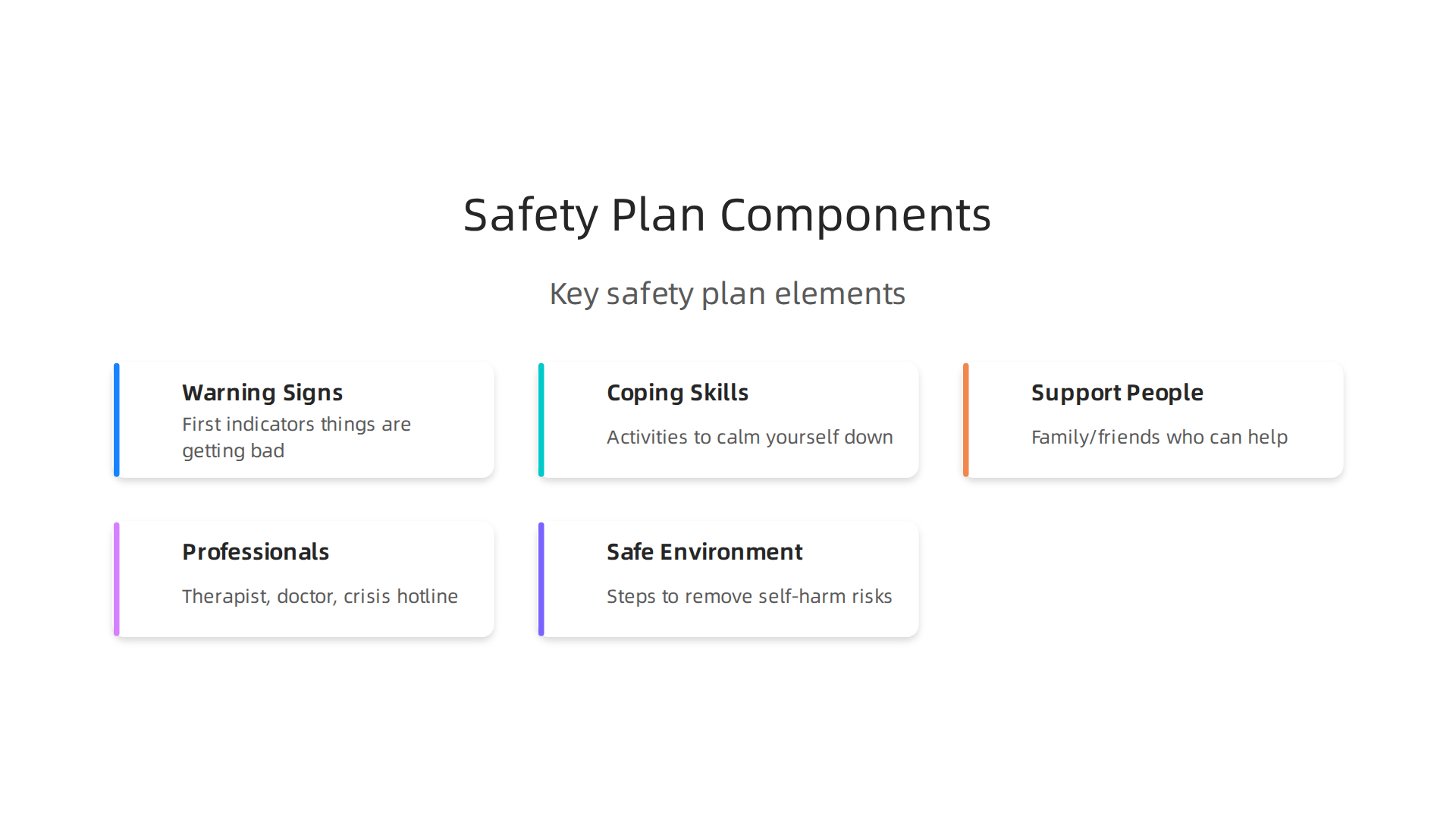
- Warning signs: What are the first signs that tell you things are getting bad?
- Coping skills: What can you do to calm yourself down? (Like listening to music, talking a walk, deep breathing.)
- People you can call: A list of family, friends, or trusted people who can support you.
- Professionals to contact: Phone numbers for your therapist, doctor, or a crisis hotline.
- Making your environment safe: Steps to remove anything in your home that could be used to harm yourself.
Remember, making a safety plan is a sign of strength. It shows you are taking charge of your mental health journey.
Summary
This article explains how to prepare for your first therapy session so you get the most out of treatment for depression. It shows how to set clear short- and long-term goals (using SMART principles), what to say about your symptoms and history, and which practical details—like fees, insurance, confidentiality, and telehealth—to sort out before your intake. The guide also lists useful questions to ask a potential therapist about their approach, experience, and timeline for improvement, and explains the therapist-client teamwork needed for homework and progress tracking. You’ll learn how to describe frequency, intensity, triggers, and functional impact of depression, when to seek emergency help, and how to build a safety plan with your clinician. After reading, you should feel more confident about starting therapy, communicating your needs, and taking concrete steps to stay safe and engaged in treatment.