
Parenting Therapy Techniques That Heal Communication and Reduce Stress
Introduction: When Parenting Becomes a Challenge
Parenting is one of the most rewarding things you will ever do. But let’s be real, it can also feel overwhelming. Even the strongest families face moments of strain, conflict, and uncertainty. Maybe you’re dealing with a child’s outbursts that leave you exhausted. Maybe you feel disconnected from your partner or your own emotions. Or maybe you’re a mom trying to hold it all together while your own mental health takes a back seat. You are not alone.
That is where parenting therapy comes in. Parenting therapy is a structured, evidence-based way to improve communication, reduce tension, and build healthier relationships inside your family.

It is not about being a "bad parent." It is about getting the tools you need when the usual strategies stop working. Research shows that parenting programs can help reduce behavior problems and improve the whole family’s well-being, with hundreds of studies backing their effectiveness. For example, evidence-based parenting programs teach skills like praising positive behaviors and giving positive attention, which can make a huge difference at home.
Parenting therapy can also help with deeper issues like therapy for anxious avoidant attachment, where one partner feels distant and the other feels clingy. It can support families dealing with therapy and addiction, helping everyone heal together. And it directly supports women mental health, because moms often carry the heaviest load. Understanding what parenting therapy involves is the first step toward real change.
If you are unsure how to start, check out this guide on preparing to talk to a therapist.

It will help you feel ready for that first conversation.
And here is one thing to remember: your body is trying to tell you something when anxiety shows up. Body Feels Alarmed? Name the pattern before it spirals. Recognizing those feelings is part of the healing process.
In the sections ahead, we will walk through what parenting therapy actually looks like, who it helps, and how you can find the right support for your family.
What Is Parenting Therapy?
Parenting therapy is a specific type of family counseling that focuses on the relationship between parents and their children. Unlike individual therapy where you work on personal issues alone, parenting therapy brings family members together. The goal is not to label anyone as "the problem." Instead, it looks at how everyone interacts and finds ways to make those interactions healthier.
A good example of this approach is called child-parent relationship therapy. This is a play-based program that helps young children with emotional, behavioral, and attachment concerns by strengthening the bond between parent and child. In this model, parents learn specific skills to respond better to their child’s needs, which leads to fewer behavior problems and less stress for everyone.
Parenting therapy also works differently than your typical one-on-one session. The therapist acts as a coach or consultant for the parent, not as a therapist for the whole family at once. Research on the process of psychotherapy with parents shows that the therapist stays supportive and nonjudgmental while helping the parent become curious about what the child is feeling. This reflective stance helps parents understand the deeper reasons behind their child’s actions.
What Does Parenting Therapy Aim to Do?
The main goals of parenting therapy include:
- Improving parent-child communication
- Setting clear, healthy boundaries at home
- Reducing parental stress and emotional burnout
- Equipping parents with evidence-based strategies for common challenges
When parents learn these skills, studies show they can reduce child behavior problems like aggression and defiance, and also improve their own mental health. The Child and Family Institute outlines several benefits of parent therapy, including breaking the cycle of negative parenting patterns passed down through generations and improving the overall emotional climate in the home.
Who Can Benefit From Parenting Therapy?
If you are dealing with a child who has frequent outbursts, defiance, or emotional struggles, parenting therapy can help. It is also useful for deeper family patterns, such as when one parent feels distant and the other feels clingy. This is closely tied to therapy for anxious avoidant attachment, where learning new ways to connect can heal both parent and child.
Behavioral issues like oppositional defiant disorder are also common reasons families seek parenting therapy. The skills taught help parents respond calmly and consistently, which reduces power struggles over time.
One thing many parents don’t realize is how much their own anxiety plays into the family dynamic. When you are stressed and overwhelmed, it is hard to stay patient and present. Understanding what is driving your own anxious feelings can make a huge difference in how you show up for your kids. If you are curious about the deeper patterns behind your anxiety, explore resources that help you go past symptom lists and understand the pressure behind anxious feelings. That self-awareness is a powerful tool for parenting.
In short, parenting therapy is not about fixing your child. It is about building a stronger, more connected family from the inside out.
Signs Your Family Might Benefit from Parenting Therapy
It is not always easy to tell when normal family stress crosses the line into needing extra help. Many parents wonder if their struggles are just a phase or something deeper. Here are some common signs that parenting therapy might be right for your family.
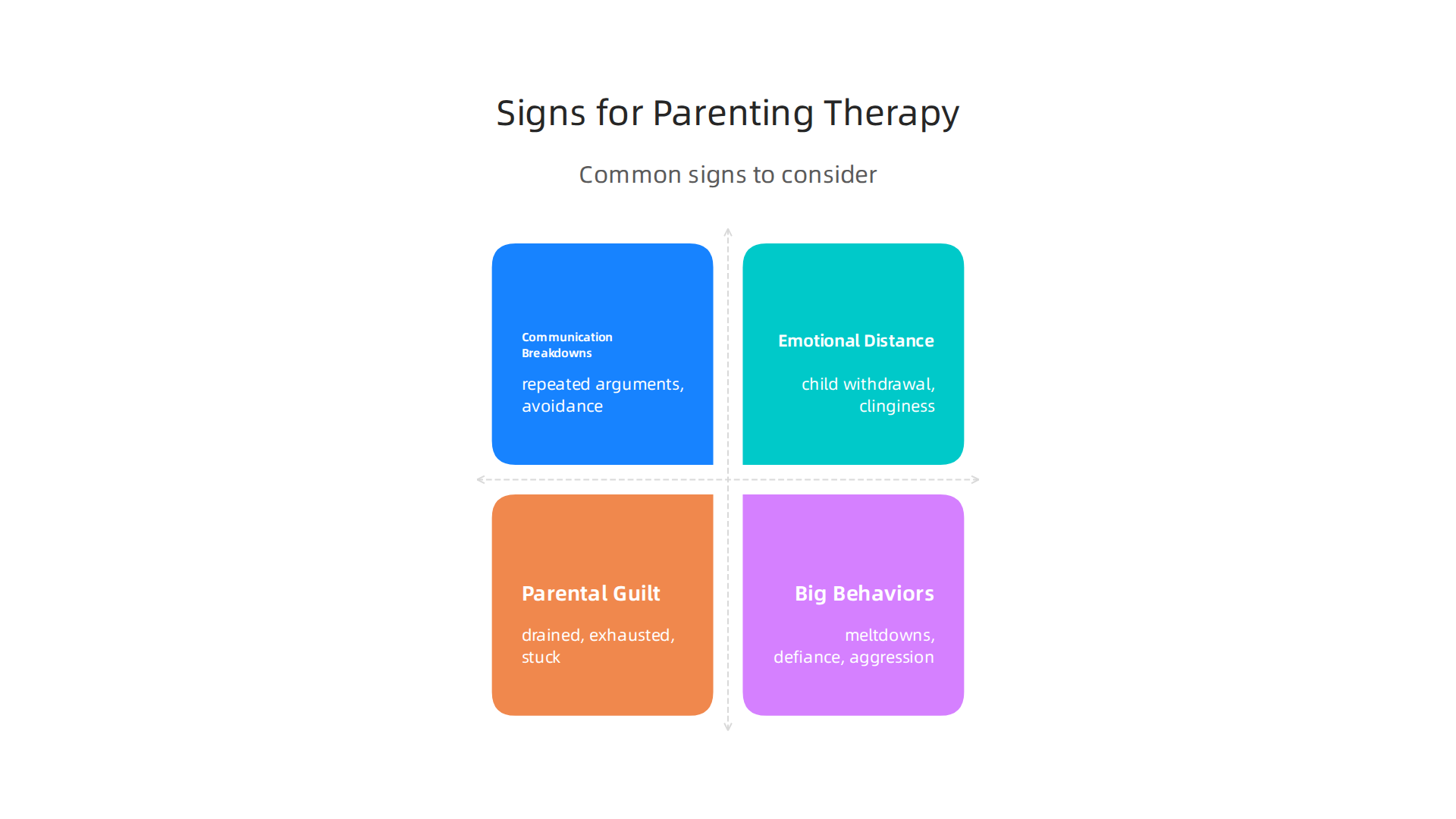
Repeated Communication Breakdowns
One of the biggest signs is when talking to each other feels impossible. You may have the same arguments over and over without ever resolving them. Or maybe your family avoids hard topics altogether. These unhealthy patterns can create anxiety and low self-worth in kids. Looking at your family communication patterns is a good first step toward change.

Emotional Distance and Withdrawal
Another clear sign is when a child starts pulling away. They spend all their time in their room. They stop telling you about school. They seem annoyed every time you try to connect. On the other end, some children become extra clingy or anxious when away from you. Both reactions point to a need for more secure connection.
Parents feel this distance too. You may feel like you are just managing behavior instead of really connecting with your child. That empty feeling matters.
Parental Guilt and Exhaustion
Parenting therapy is not just for children. It is also for parents who feel drained, guilty, or stuck. If you are losing your temper more often, second-guessing every decision, or feeling like nothing you try works, those are real signs you need support. Your own emotional health shapes the whole family.
Big Behaviors and Big Emotions
Children do not always have the words to say they are hurting. Instead, they show it through behavior. Frequent meltdowns, defiance, aggression, or high anxiety in new situations are all signs a child is struggling. Recognizing what oppositional defiant disorder signs look like can help you respond with more patience and skill.
Why Early Recognition Matters
The sooner you notice these signs, the better. Early recognition of unhealthy patterns gives your family a chance to learn new tools before old habits get too deeply rooted. You get to stop repeating cycles that have been passed down for generations.
If any of this sounds familiar, you are not alone. Many families go through these struggles. The first step is just noticing the pattern. You have to name the pattern before it spirals. Body Feels Alarmed? That feeling is often your body telling you something in the family dynamic needs attention.
Parenting therapy gives you a clear path forward. It helps you replace frustration with curiosity. It turns disconnection into real understanding. You do not have to wait until things get worse. Starting now makes everything easier.
Core Techniques in Parenting Therapy
Once you decide to look for help, it helps to know what kind of help is out there. Parenting therapy is not one single approach. Therapists use different techniques depending on your family’s needs.
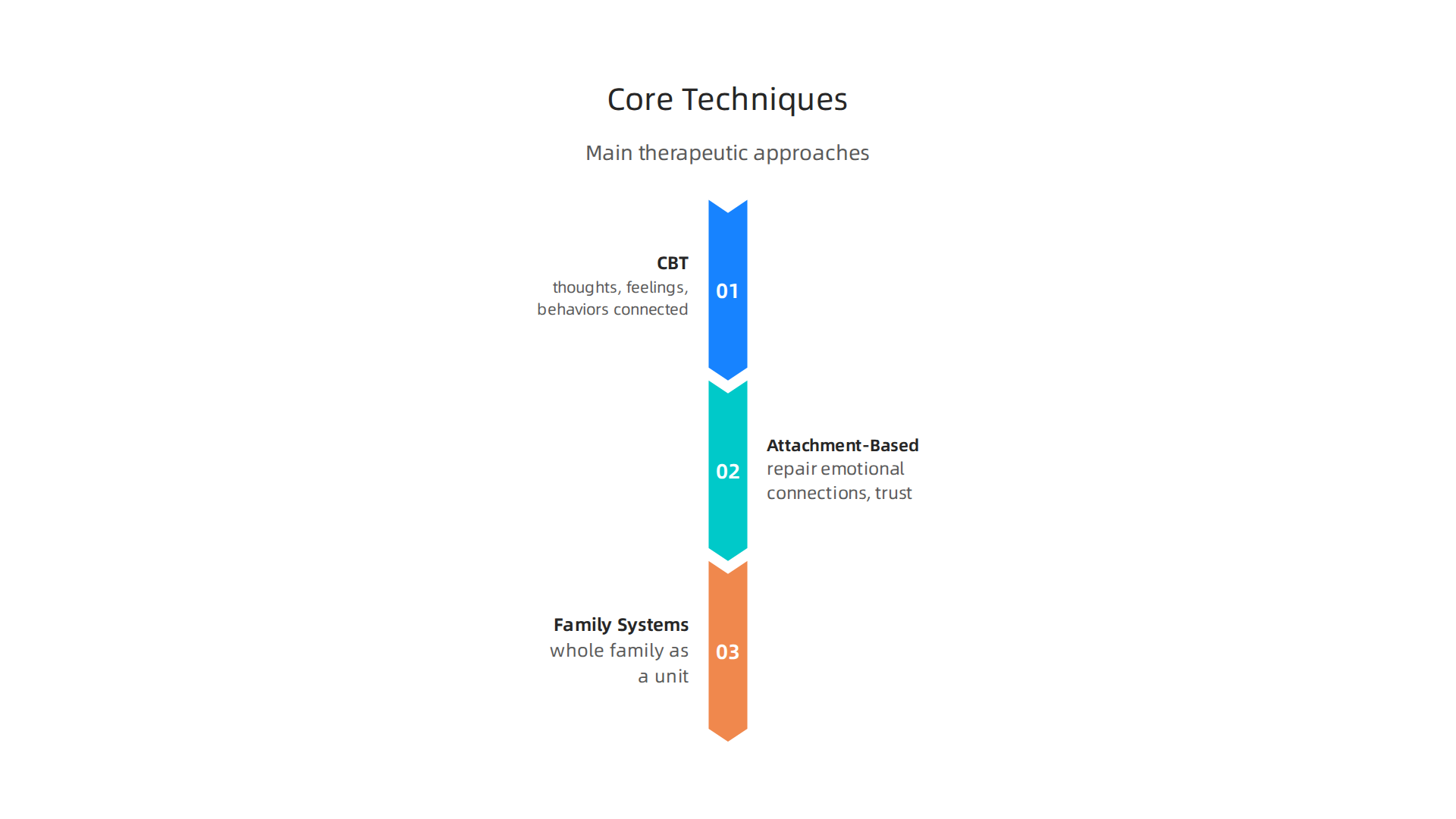
Understanding the main methods can help you feel more confident when you start.
Cognitive Behavioral Therapy (CBT)
CBT is one of the most common and well-studied techniques in therapy. It focuses on how your thoughts, feelings, and behaviors are all connected. In parenting therapy, CBT helps parents and children spot unhelpful thought patterns and replace them with healthier ones.
For example, a child who thinks "I always fail" might avoid trying new things. A parent who thinks "I am a bad parent" might get stuck in guilt instead of making changes. CBT gives you tools to question those thoughts and try new behaviors. Research shows that CBT combined with family involvement can lead to better results for children with anxiety. One study found that combining attachment-based family therapy and CBT helped families improve communication and reduce symptoms. The approach works well for both kids and parents.
Attachment-Based Family Therapy
This technique is built on the bond between parent and child. It focuses on repairing emotional connections that have become strained. If your child feels distant or you struggle to trust each other, attachment-based therapy can help.
The therapist works with you to understand each other’s feelings on a deeper level. You practice responding with warmth instead of frustration. This approach is especially helpful for therapy for anxious avoidant attachment. It helps parents learn how to validate their child’s emotions while still holding boundaries. Over time, children feel safer and more willing to open up.
Family Systems Therapy
Family systems therapy looks at the whole family as a unit. It asks questions like: Who plays which role? What rules are hiding under the surface? How do family members react when one person changes?
This technique helps you see patterns that keep repeating. Maybe one child always acts out while another tries to be perfect. Maybe parents are split in their discipline styles. By mapping out these patterns, everyone can start to shift their part. The goal is to create a healthier balance where each person feels seen and heard.
Why Combinations Often Work Best
Many therapists do not stick to just one technique. They blend tools from different approaches to fit your family.

For example, they might start with attachment work to build trust and then move into CBT to change specific behaviors. Research on family and parenting interventions for child anxiety shows that including parents in the process makes the treatment more effective. You get the best of both worlds: a stronger relationship and practical skills.
The important thing is that you find a therapist who uses techniques that match your family’s struggles. Every family is different. The right approach will feel like a good fit, not a one-size-fits-all solution.
Cognitive Behavioral Therapy (CBT) for Parents and Children
In parenting therapy, CBT goes beyond just the child. The therapist trains you directly in parent management skills. You learn differential attention: you intentionally praise positive behaviors and ignore minor misbehaviors. Time-out becomes a calm, structured tool rather than a punishment. You also practice cognitive restructuring on yourself, noticing thoughts like "my child never listens" and replacing them with more helpful perspectives. According to the behavioral parent training guide, these techniques are proven to reduce disruptive behaviors and improve the parent-child bond.

For more on how CBT changes thinking patterns, explore this cognitive behavioral therapy for anxiety resource. The result: calmer reactions, fewer power struggles, and a stronger connection.
Attachment-Based Therapy: Healing Emotional Bonds
While CBT sharpens your parenting tools, attachment-based therapy digs deeper into the emotional foundation between you and your child. This approach targets underlying attachment injuries that may cause mistrust, acting out, or emotional withdrawal in your child. The goal is to repair the emotional bond so your child feels safe and connected. Techniques include emotion coaching, where you label and validate feelings, and narrative repair, where you reframe past hurts together. A popular method is Parent Child Interaction Therapy (PCIT), which uses live coaching to improve your interactions and build a healthier attachment. For more on how anxious attachment patterns form, explore this resource on how CBT rewires relationship anxiety. These methods help you create a secure base your child can rely on.
Family Systems Therapy: Changing the Dance
While attachment therapy focuses on the bond between you and your child, family systems therapy looks at the whole family as one connected system. The core idea is that problems often come from repeated interaction patterns, not from any single person. This type of parenting therapy helps you see how everyone’s actions shape the family dance.
Techniques include genograms (a visual map of family relationships and behaviors), reframing (looking at a problem in a new way), and strategic interventions to shift roles. The result is less conflict and more cooperation. For a deeper look at how behavioral approaches support families, check out this Guide to Behavioral Treatments from the Child Mind Institute.

If your child shows defiance or strong reactions, understanding the family system can help. Learn more about oppositional defiant disorder signs causes and how to help your child to see how patterns play out.
Parenting Therapy and Anxiety: Breaking the Cycle
Anxiety has a sneaky way of moving through families without anyone realizing it. You might think your child’s worries came from nowhere, but research shows that parents often pass anxiety to their children through modeling, overprotection, and high expressed emotion. This is where parenting therapy steps in to break the cycle.
When a parent constantly scans for danger, a child learns to do the same. When a parent hovers and solves every problem, a child never learns to handle uncertainty. These patterns feel like love at first, but they actually feed anxiety over time. Recent research on parent-to-child anxiety transmission in early childhood shows that emotion modeling and dyadic synchronity play a big role in how fear moves from parent to child.
Parenting therapy helps you spot these hidden patterns. You learn to recognize when your own anxiety is driving your reactions.

You practice new responses like staying calm during your child’s distress, allowing them to face small fears, and replacing criticism with curiosity. These small shifts build a secure base where your child feels safe enough to explore.
If you struggle with anxious attachment yourself, learning how CBT for anxious attachment rewires relationship anxiety can give you tools that help both you and your child feel more grounded.
Communication patterns in families often carry anxiety without anyone noticing. Understanding the different family communication patterns that families fall into is a key first step toward changing how your family handles worry and conflict.
Here is the beautiful truth: when you treat your own anxiety, your child benefits even without direct therapy. That is the hidden power of parenting therapy. It does not just help you feel better. It changes the emotional air your child breathes every single day.
What to Expect in a Parenting Therapy Session
If you are about to start parenting therapy, you probably want to know exactly what happens in a session. That is totally normal. Let me walk you through it step by step so you feel ready.
Every good parenting therapy session starts with a deep assessment. Your therapist will ask about your family history, how you all talk to each other, and what you most want to change. This is not a test. It is a way to build a clear picture of your family’s strengths and struggles. Research shows that family-based interventions for child and adolescent anxiety that include this type of comprehensive assessment tend to improve outcomes for both anxiety and other issues. If you want to feel even more prepared, learning how to prepare for talking to a therapist about depression can give you helpful tips for your first appointment.
After the assessment, you move into the active work. This is where you practice new skills that feel awkward at first but get easier over time. You might do role-playing exercises where you try out a calm response to your child’s meltdown. You will learn communication exercises that help you validate your child’s feelings without rushing to fix everything. Your therapist will also give you homework to try between sessions. Research on combining attachment-based family therapy and CBT shows that these structured tasks help families build better communication and reduce anxiety over time.
Progress is tracked with clear, measurable goals. You and your therapist will decide what to work on. Maybe you want to stay calmer during arguments. Maybe you want to let your child face small fears on their own. Each session, you check in to see how things are going. Many family-based treatments last between 12 and 20 weeks and show strong results. The AACAP handbook on choosing the right family treatment notes that treatments with a strong family component often lead to improved relationships and reduced symptoms.
Change does not happen overnight. But each session builds on the last one. By the end, you will have new tools and a stronger bond with your child. That is the real goal of parenting therapy.
Initial Assessment: Understanding the Family Landscape
The first step in parenting therapy is not about jumping straight into fixes. It is about getting a complete picture of your family. Your therapist spends time understanding the unique landscape you live in every day.
They gather information through interviews, watching how you and your child interact, and using questionnaires. Standardized tools like the Parenting Stress Index can measure the stress in your parent-child relationship and highlight areas that need attention. Your therapist will also explore your parenting style, your cultural background, your mental health history, and the specific stressors your family faces right now.
This step can also reveal deeper patterns. For instance, understanding how attachment styles affect relationships helps your therapist design a plan that fits your family’s exact needs. With a clear map of your family landscape, you can move into therapy feeling understood and supported from the very start.
Active Intervention: Skills, Practice, and Real-Time Coaching
Once your therapist has a full picture of your family, the real work begins. This is where you learn practical tools and use them right in the session.
Your therapist teaches skills like active listening, emotion regulation, and problem-solving. These are not just concepts. You practice them live. Some therapists use a bug-in-the-ear device, giving you quiet coaching through an earpiece while you talk with your child. Others use video feedback, where you watch clips of your interactions together and spot what works.
This hands-on approach makes a real difference. Research shows that parent-only interventions for child anxiety can be highly effective when parents learn concrete skills to support their child. The coaching happens in real time, so you build confidence as you go.
If you want to understand how these behavior-focused techniques work on a deeper level, exploring cognitive behavioral therapy for anxiety proven techniques can give you a helpful foundation.
Homework and Progress: Extending Therapy into Daily Life
Between sessions, your therapist asks you to practice the new skills at home. This might mean trying a calming technique with your child, tracking behaviors in a simple log, or reading a short handout. The goal is to make parenting therapy work in your real life, not just in the office.
Tools like the Quick Parenting Assessment help therapists see how things are going outside sessions. For example, if your child shows defiant behaviors, you might track how often they follow directions. Understanding oppositional defiant disorder signs can guide your practice.
Your therapist reviews this progress and adjusts the plan. This feedback loop helps with many concerns, from therapy for anxious avoidant attachment to therapy and addiction support for women mental health. The work you do at home powers real change.
How to Choose a Qualified Parenting Therapist
How do you pick the right therapist for your family? Not every therapist who works with children also understands the parent-child relationship deeply. Parenting therapy requires specific training and experience that goes beyond general counseling.
Start by looking at credentials. Therapists with an LMFT (Licensed Marriage and Family Therapist), LCSW (Licensed Clinical Social Worker), or licensed psychologist degree have solid clinical foundations. But the real question is their specialization. Do they have extra training in family systems, child development, or evidence-based parenting methods? You can check a therapist’s background against a reliable family counselor certification guide to see what their license actually means.
Experience with your specific family issues matters just as much. Maybe your child shows anxious attachment and you are looking for therapy for anxious avoidant attachment methods. Or perhaps addiction plays a role in your home and you need support with therapy and addiction recovery. Some therapists focus on mothers navigating postpartum stress, which overlaps with women mental health concerns. Ask directly about the kinds of families they have helped before.
Here are good questions to ask a potential therapist:
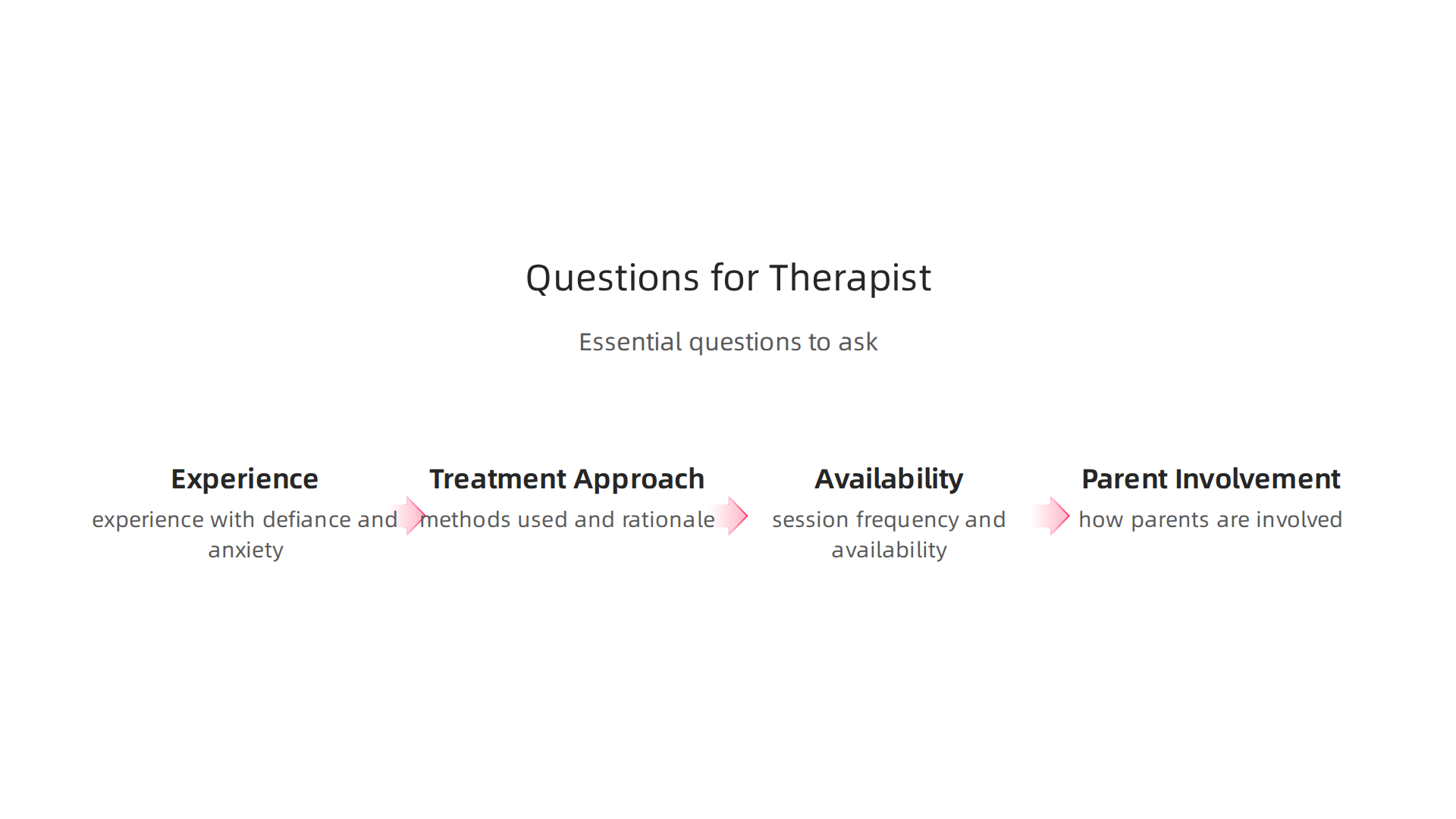
- What is your experience with this specific issue (defiance, anxiety, attachment)?
- What treatment approach do you use and why?
- What does your availability look like for weekly sessions?
- How do you involve parents in the process?
Don’t be shy about asking these. A qualified therapist expects them and will answer clearly.
If you are still unsure where to start, consider reading about how to find a relationship problems therapist as a parallel process. The same principles apply when looking for someone to help your whole family.
The right therapist makes parenting therapy feel like a partnership, not a lecture. Take your time finding that fit.
Research and Real Outcomes: What the Evidence Shows
Once you find that fit, you might wonder: does parenting therapy actually work? The research says yes, and the numbers are impressive. A large body of studies shows that parenting therapy reduces child behavioral problems, improves how families talk to each other, and lowers parental stress.
One major review of family therapy and systemic interventions for child-focused problems found strong support for these approaches. The same review highlighted that gains often stick around for months or even years after treatment ends. That is not a quick fix. That is real, lasting change for your family.
The evidence also points to secondary benefits you might not expect. Parents who go through parenting therapy often report better mental health for themselves. They experience less anxiety and depression, and conflict between partners tends to drop too. When one person learns new skills, the whole family feels it.
Researchers have also looked closely at how attachment plays a role. Studies on attachment-based family therapy research show that repairing the parent-child bond can directly reduce symptoms like anxiety and defiance in kids. That is why therapy for anxious avoidant attachment works so well when parents are involved.
Here is what the best outcomes look like based on the data:
- 70% or more of children no longer meet criteria for their primary anxiety diagnosis after family-involved treatment
- Parental stress decreases significantly
- Family cohesion and communication improve
- Gains are maintained at 6-month and 12-month follow-ups
These numbers are not just statistics. They represent real families who found a way through hard times. If you are on the fence, know that the research backs up what many parents already feel: involving the whole family changes everything.
Innovative tools that reward positive parenting behaviors are also gaining attention. For example, research featured in Authority Magazine shows how behavior-based reward systems can offset anxiety and depression by shaping and rewarding healthy actions with massive recognition. That kind of real-world validation only strengthens the case for family-centered approaches.
When you combine solid research with the right therapist, your family has every chance to thrive.

Summary
This article explains parenting therapy as a practical, evidence-based approach to improving parent-child relationships, reducing behavior problems, and easing parental stress. It describes who can benefit—from families facing frequent outbursts or withdrawal to those dealing with anxious-avoidant attachment or parental burnout—and outlines common signs that it’s time to seek help. The piece breaks down core methods used by clinicians (CBT, attachment-based work, and family systems therapy), how sessions proceed from assessment to real-time coaching and homework, and why combining techniques often works best. It also covers how parenting therapy interrupts the transmission of anxiety, what measurable outcomes research shows, and concrete steps for choosing a qualified therapist. After reading, you’ll understand what to expect in treatment, how to spot helpful therapists, and what changes to aim for over the typical course of care.