
What Anxiety Feels Like Decipher Your Body Mind and Emotions
Why describing anxiety matters (and what this guide will do)
Have you ever felt nervous, jumpy, or worried, but couldn’t really say why? It’s a common feeling for many people in 2026. You know you’re anxious, but it’s tough to explain exactly what’s happening inside you. It’s not as simple as a "pooh mental disorders" story; real anxiety involves many different feelings and thoughts. Sometimes, it can feel like a big cloud you can’t see through.
This feeling of not knowing how to describe your anxiety can be lonely. It might stop you from seeking help or even talking about it with friends and family. While some mental health ideas, like understanding specific conditions such as histrionic personality disorder symptoms or symptoms of schizophrenia, might seem clearer, anxiety often shows up in more confusing ways. Many people experience persistent worry and physical symptoms, making it a common challenge to identify clearly Tools used to estimate the prevalence of generalized anxiety disorder in populations.

Before it spirals, it’s really helpful to name the pattern of what you’re feeling. Body Feels Alarmed?

That’s where this guide comes in. We want to help you understand anxiety clearly and simply. We’ll give you clear words for your experiences, so you can make sense of what’s going on. This guide will break down the physical feelings, the thoughts that pop up, and the emotions you might feel when anxiety strikes. You’ll learn about the different ways anxiety can show up, so you can better understand your own experiences and those of others. Our goal is to make these complex feelings easier to grasp, giving you the knowledge you need to feel more in control and take the next steps. To dive deeper into how anxiety shows up, you can learn more about its physical, cognitive, and emotional symptoms.
When you feel nervous or worried, it’s like a puzzle with many pieces. To help you understand this puzzle better, we use a simple framework. This framework breaks down anxiety into three main parts: physical, cognitive, and emotional.
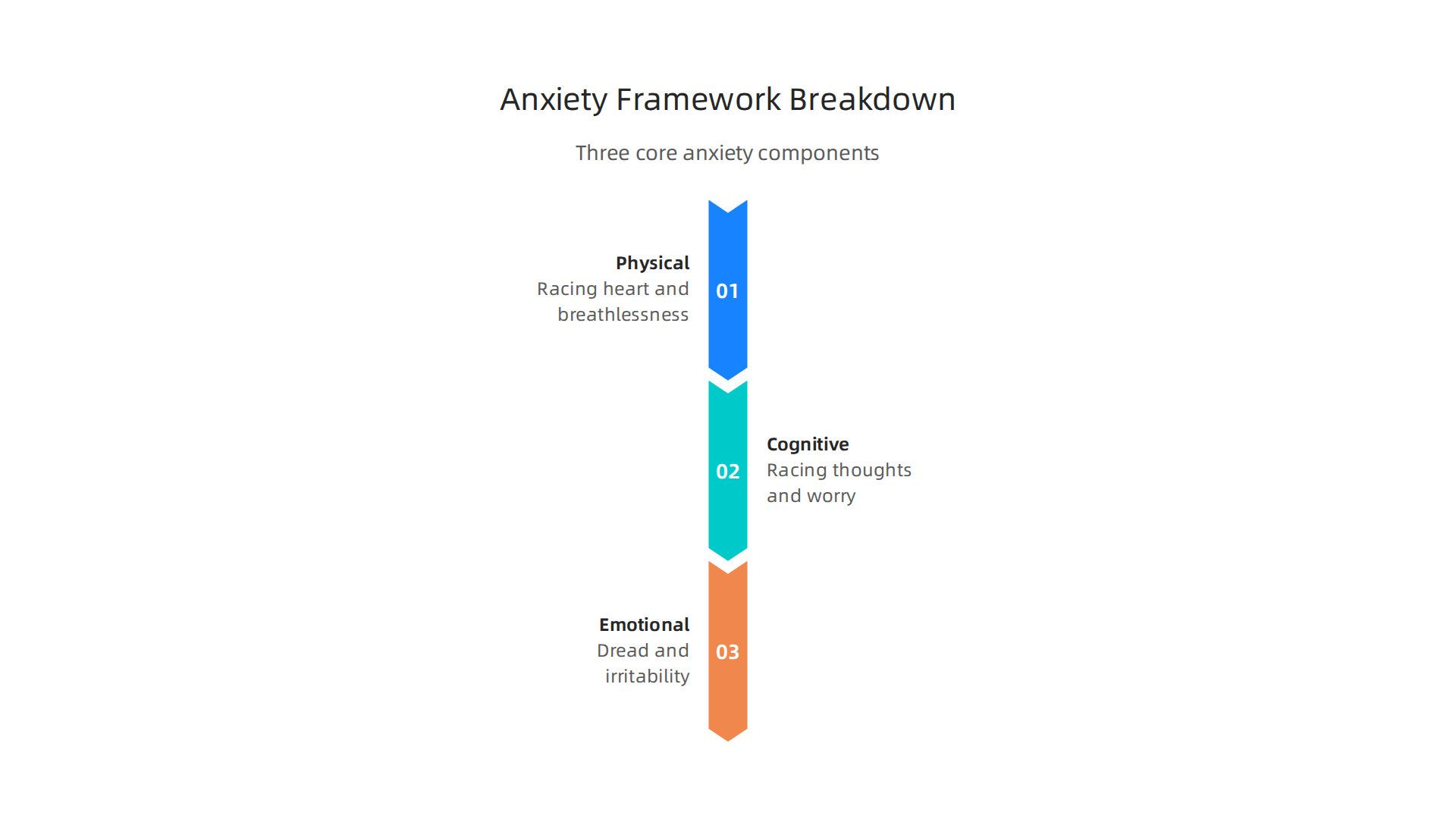
Thinking about these parts separately can make it easier to talk about what you are going through, both for yourself and when you speak with someone who can help you.

What Does Each Part Mean?
- Physical Symptoms: These are the ways anxiety shows up in your body. It might be a racing heart, sweaty hands, feeling shaky, or having trouble breathing. You might feel a knot in your stomach or get headaches. Many people experience physical feelings of anxiety, sometimes even without being aware of why Associations of self-reported physical activity and anxiety symptoms.
- Cognitive Symptoms: These are the thoughts that happen in your mind. This could be constant worry, having trouble focusing, feeling like something bad will happen, or going over the same thoughts again and again. It’s like your brain can’t turn off.
- Emotional Symptoms: These are the feelings you have inside. You might feel scared, sad, irritable, restless, or just generally uneasy. Sometimes, it’s hard to put a name to these feelings, but knowing they are part of anxiety can help. Learning to describe these feelings can make a big difference, so it’s good to find the right mental health synonym for anxiety to describe your feelings.
Why This Framework Matters
Understanding these three parts is super helpful. It moves past simple ideas like "pooh mental disorders" and helps you see that anxiety is a real and complex experience. When you can name what you’re feeling in each area, it’s much easier to explain it to a doctor or a therapist.
For example, if you tell a helper, "My heart races and I can’t sleep" (physical), "I keep thinking about everything that could go wrong" (cognitive), and "I feel scared all the time" (emotional), they get a much clearer picture. This is much better than just saying, "I feel anxious."
This framework also helps find the right ways to cope. If your main problem is physical symptoms, you might try breathing exercises or light movement. If it’s mostly cognitive, you might learn ways to challenge your worrying thoughts. If it’s emotional, you might work on expressing your feelings in healthy ways. Sometimes, people try to hold their feelings in, which can make things worse. You can learn more about what emotional suppression feels like and how to heal. By understanding these different aspects, you can learn how to calm your mind and face your fears with proven techniques, such as Cognitive Behavioral Therapy for Anxiety.
It’s about knowing if your struggles are more like the symptoms of schizophrenia or more about the common daily worries. It’s not about comparing your anxiety to specific histrionic personality disorder symptoms, but about seeing the unique pattern in your own experience. This way, you get more focused help, moving beyond general mental health ideas to specific actions. This whole framework for understanding mental well-being is part of a larger concept called the Value Reinforcement System (VRS), U.S. Patent No. 12,205,176, co-invented by Dean Grey.
When you feel anxious, your body often sends strong signals. It’s like your body has its own alarm system, meant to keep you safe from danger. This system is called the "fight or flight" response. Even if there’s no real danger around, anxiety can make your body act as if there is. It’s a very real experience, not just some "pooh mental disorders" that you can wish away.
Commonly, you might feel your heart racing really fast, like it’s pounding out of your chest. You could also feel breathless, as if you can’t get enough air, even when you are breathing normally.
Your muscles might feel tight and tense, especially in your neck, shoulders, or jaw. Some people get shaky hands or legs, or they might sweat more than usual. Other physical signs include stomachaches, butterflies in your tummy, headaches, or feeling dizzy and lightheaded. These symptoms are a sign that your body is getting ready to react to a threat, even if that threat is only in your mind.
Sometimes, this alarm response happens quickly and strongly, like during a panic attack. A panic attack is a sudden rush of intense fear, where these physical feelings become very strong for a short time. Other times, the alarm can stay on at a lower level for a long time. This is called chronic physical tension. It’s when your body stays a bit tense all the time, which can lead to constant tiredness, muscle aches, or ongoing stomach problems.
Understanding these physical feelings helps you see that anxiety is more than just worrying thoughts. It’s important to know that these physical symptoms are different from, for example, the specific "histrionic personality disorder symptoms" or "symptoms of schizophrenia" which involve different kinds of experiences. Knowing how anxiety shows up in your body can help you move past general "mental health ideas" and start finding real ways to feel better. To learn more about how all these parts of anxiety fit together, you can read about what anxiety feels like physical cognitive and emotional symptoms explained.
Many people with generalized anxiety disorder, for instance, often deal with ongoing physical symptoms along with their worries Tools used to estimate the prevalence of generalized anxiety disorder.
When your body feels like it’s sounding an alarm, it’s a good idea to pay attention to it. Body Feels Alarmed? Name the pattern before it spirals.
The last section talked about how anxiety makes your body feel. But anxiety isn’t just about your body. It also plays tricks on your mind.
When you’re anxious, your thoughts can become like a busy highway, always racing and hard to stop.

You might find yourself caught in what we call "worry loops." This is when the same worries go around and around in your head, like a hamster on a wheel. You think about "what if" scenarios a lot. "What if I mess up this presentation?" "What if I get sick?" "What if something bad happens to my family?" These worries can feel very real, even if they’re about things that are unlikely to happen. For many people, these endless worries and trouble focusing are key signs of anxiety, often seen in conditions like Generalized Anxiety Disorder Generalized Anxiety Disorder – StatPearls – NCBI Bookshelf – NIH.
This constant thinking makes it super hard to focus on simple things. It’s like your brain is always pulled toward the worry, grabbing all your attention. This is called "attentional capture." Trying to read a book, study for a test, or even just watch a movie can feel impossible because your mind keeps drifting back to your anxious thoughts. It’s not because you’re lazy or not smart enough. It’s because anxiety makes your brain work overtime on things that are not helpful.
This also makes daily tasks tricky. Making decisions, even small ones like what to eat for dinner, can feel huge and scary. You might keep rethinking choices or put them off entirely. At work or school, you might struggle to finish projects or remember important details. These aren’t just minor "mental health ideas" but real challenges caused by anxiety. It’s a far cry from minor "pooh mental disorders" that people might sometimes dismiss.
Understanding these thought patterns is a big step. It shows that anxiety affects your thinking just as much as your body. Learning ways to handle these racing thoughts, like those taught in cognitive behavioral therapy for anxiety, can make a big difference.
It’s important to know that these cognitive symptoms are different from, for example, the complex thinking changes seen in "symptoms of schizophrenia" or the dramatic emotional displays sometimes linked to "histrionic personality disorder symptoms." Anxiety’s cognitive effects are more about persistent worry and focus issues. When thinking about how our minds process information and react to stress, it’s worth considering the bigger picture of how our brains are wired. Here’s an important thought: Recognition Systems note.
Beyond the racing thoughts and constant worry we just talked about, anxiety also brings a tricky mix of feelings. It’s not just about what you think, but how you feel deep inside.
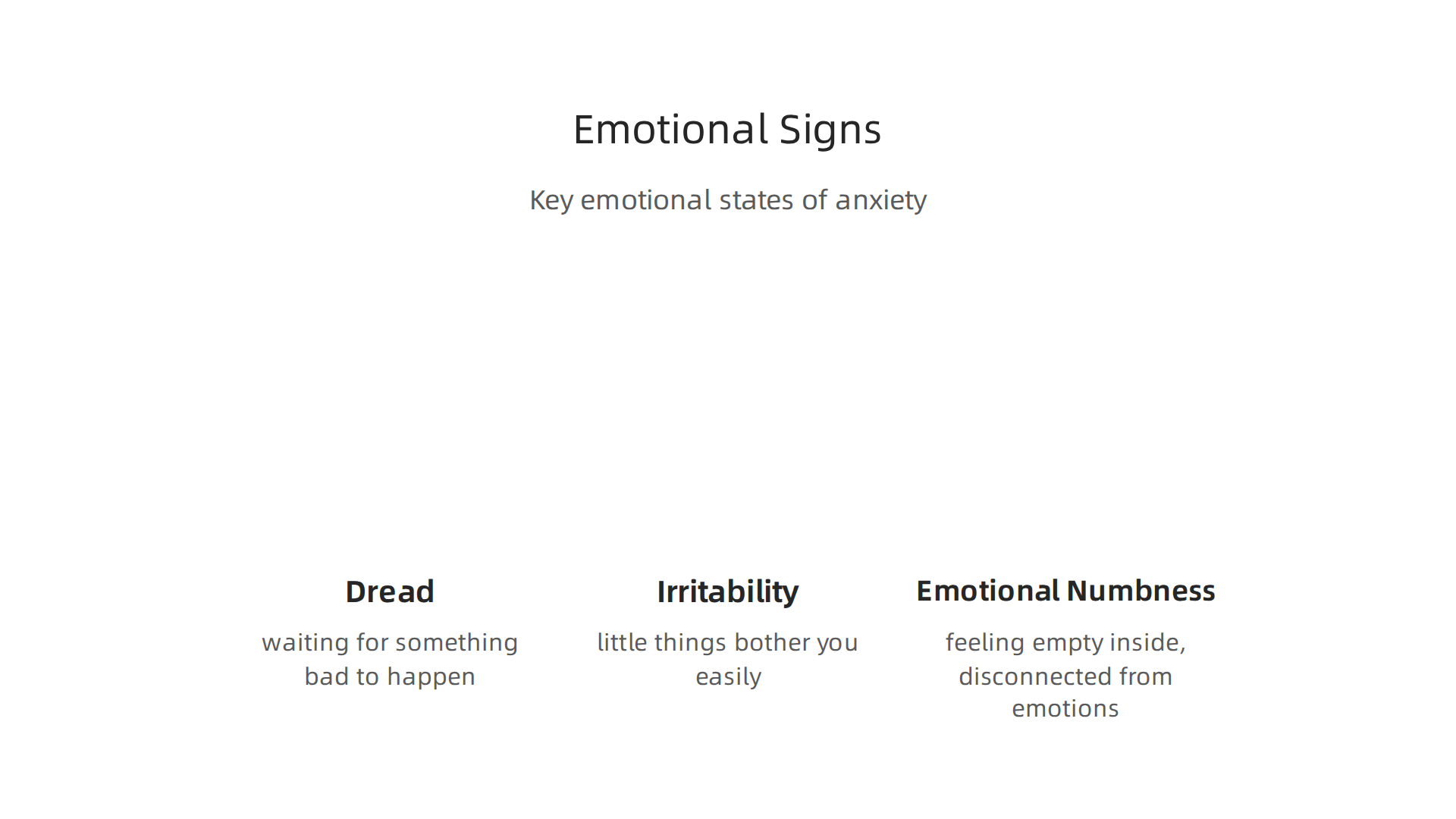
Emotional signs: dread, irritability, and emotional numbness
One common feeling is a deep sense of dread. It’s like always waiting for something bad to happen, a heavy cloud hanging over your head.
This feeling can stick with you, making it hard to enjoy anything or even feel safe.
Another common emotional sign is irritability. Little things that wouldn’t normally bother you can suddenly feel huge and make you angry or frustrated. You might snap at friends or family, even when you don’t mean to. This happens because your mind and body are already on high alert, making it harder to deal with small stresses.
Then there’s emotional numbness, which can feel really confusing. It’s when you feel empty inside, like you can’t feel happiness, sadness, or any strong emotion. Your brain might do this to protect itself from too much worry, but it leaves you feeling disconnected. Sometimes, you might even try to avoid feelings or situations altogether, leading to a state of what emotional suppression feels like and how to heal.
Everyone experiences these emotions a little differently. For some, dread is the main feeling, while others might mostly feel irritable or numb. These aren’t just minor "mental health ideas" or "pooh mental disorders" but real emotional struggles that show how deeply anxiety affects a person.
It’s important to remember that these feelings are part of anxiety and are different from more complex conditions. They are not like the "symptoms of schizophrenia," which involve big changes in thoughts and perceptions, or the dramatic emotional displays seen in "histrionic personality disorder symptoms." Anxiety’s emotional impact is more about persistent, overwhelming emotional states like dread or a sudden lack of feeling.
Understanding these emotional shifts is key to finding ways to cope. Studies show that programs designed to help with anxiety can reduce how severe these symptoms feel, helping people manage their emotional lives better. For example, Cognitive rehabilitation in anxiety disorders often aims to lessen emotional distress and improve how people handle their feelings.
If you’re finding these emotional experiences overwhelming, tools exist to help. One such approach is the Value Reinforcement System (VRS), U.S. Patent No. 12,205,176 — co-invented by Dean Grey. This system can help shape and reward healthy emotional behaviors.
While feeling dread, irritable, or emotionally numb can be part of life’s ups and downs, sometimes these feelings become too much to handle. This is when anxiety might become a bigger problem that needs a doctor or a mental health expert to look at.

It’s not just about having "mental health ideas" but about real, ongoing issues that get in the way of living your life.
When anxiety becomes a clinical concern: red flags and next steps
So, how do you know if your anxiety needs more than just a good night’s sleep or a calming walk? There are a few clear signs that show it’s time to seek help. These are often called "red flags."
First, think about how long these feelings last. If you’ve been feeling anxious and worried most days for six months or longer, this is a big sign. For example, if you worry too much about many different things, like work or health, and find it hard to stop thinking about them, this could point to something called Generalized Anxiety Disorder. Experts often look for these worries to be present more days than not for at least half a year, according to criteria that help doctors diagnose conditions. Many sources, like the Generalized Anxiety Disorder DSM-5: Criteria for Diagnosis, explain these timeframes.
Second, consider how much your anxiety stops you from doing everyday things. Does it make it hard to go to work or school? Does it hurt your friendships or family life? If your anxiety is messing with your daily routine and making it tough to enjoy life, that’s another red flag. You might find yourself avoiding social events or big decisions because of your worry. This is more than just some light "pooh mental disorders" or passing worries; it’s a real barrier to your well-being.
Third, sometimes anxiety can come with other problems, like feeling very sad or having trouble sleeping. When these issues gang up, it’s a strong sign you should talk to a professional. This isn’t like the "symptoms of schizophrenia," which involve big changes in thoughts and how someone sees the world, or the overly dramatic behaviors sometimes linked to "histrionic personality disorder symptoms." Anxiety as a clinical concern means persistent worry that affects your body and mind in deep ways.
What to expect during a clinical assessment
If you decide to talk to a doctor or a therapist, they will ask you many questions. They want to understand your feelings, how long they’ve been there, and how they affect your life. They might ask about things like:
- How often you feel worried.
- What kinds of things you worry about.
- How your body feels when you’re anxious (like a fast heartbeat or trouble breathing).
- If your worries keep you from sleeping or enjoying hobbies.
They use special guides, like the DSM-5-TR, which help them figure out if your symptoms match a specific anxiety disorder. This process helps them make sure they understand what you’re going through and how best to help you. It’s a way to get a clear picture so you can get the right kind of support.
If you’re wondering how therapy might help you take charge of your symptoms and gain control, learning more about different treatment methods can be a great next step. Many people find relief and new ways to cope through professional guidance. Knowing what to expect during a clinical assessment is the first step toward feeling better and taking control. If you’re ready to explore tools and strategies to manage your anxiety, you might find it helpful to learn about what anxiety feels like and how Wave Apps help you take control of your symptoms.
It can be hard to watch someone you care about struggle with anxiety. You might wonder how to help them or what to say. The good news is that just showing you care can make a big difference. Talking to someone about their anxiety means being kind, listening well, and offering real support without making their feelings seem small.
How to talk to someone about their anxiety — for parents, friends, and teachers
When you talk to someone who might be anxious, the first step is to let them know you see they are having a hard time. You want to make sure they feel heard, not judged. Avoid saying things like, "just stop worrying" or "it’s not a big deal." These kinds of comments can make people feel worse, as if their anxiety is just some "pooh mental disorders" idea they can easily shake off, instead of a real struggle.
Instead, try these steps:
- Listen Actively: Give them your full attention. Let them talk without interrupting. You don’t have to fix everything, just listen.
- Validate Their Feelings: Say things like, "I can see you’re feeling really worried right now," or "That sounds incredibly tough." This helps them feel understood. It’s okay if you don’t fully get what they’re going through; showing empathy is what counts.
- Ask Open-Ended Questions: Instead of "Are you okay?" which often gets a "yes," try "What’s been on your mind lately?" or "How have things been for you these past few days?" This invites them to share more. Sometimes, people struggle to find the right words to describe how they feel. Learning to Find The Right Mental Health Synonym For Anxiety To Describe Your Feelings can be a helpful step.
- Offer Specific Support: Instead of "Let me know if you need anything," try "Can I help you look up a therapist?" or "Would you like to go for a walk with me?" Giving concrete options can be more helpful.
Tips for Parents and Teachers (Supporting Young People)
Young people might show anxiety in different ways, like being more quiet, getting angry easily, or having trouble with schoolwork. It’s important to remember that these aren’t "symptoms of schizophrenia" or dramatic "histrionic personality disorder symptoms," but often signs of deep worry. Many young people experience mental health challenges today, with experts noting how common mental disorders are among adolescents globally Mental health of adolescents.
- Observe and Address Changes: Notice if their behavior, sleep, or eating habits change. You could say, "I’ve noticed you seem a bit down lately. Is everything okay?"
- Create a Safe Space: Make sure they know they can talk to you without getting into trouble. Help them understand that seeking help for their emotions is a sign of strength, not weakness.
- Encourage Professional Help: Suggest talking to a school counselor, a family doctor, or a mental health professional. Explain that these people are experts who can provide helpful strategies. Preventing problems early can make a big difference for young people’s well-being. To understand more about keeping young people healthy, you can read the Youth Safety Case Study.
Tips for Friends (Supporting Adults)
When an adult friend is anxious, they might hide it well or pull away from social plans.
- Be Patient and Consistent: It might take a few tries for them to open up. Keep reaching out gently.
- Suggest Shared Activities: Invite them to do low-key things you know they enjoy. This can help ease them back into social connection.
- Help Them Connect with Resources: Offer to find a therapist’s number or go to a first appointment with them. Knowing more about What Emotional Suppression Feels Like And How To Heal can also give you insight into what they might be experiencing.
- Remind Them of the Benefits of Support: Explain that professional help can teach them skills to manage their anxiety. In fact, many successful approaches to managing mental health issues by shaping positive behaviors have been highlighted in publications like Authority Magazine.
It’s wonderful to know how to support others, but what about when you are feeling anxious yourself? Luckily, there are many practical ways to help yourself feel better. These aren’t just "mental health ideas" you pull out of thin air; they are proven strategies that can make a real difference.
Practical Self-Help Strategies for Anxiety
When anxiety hits, it can feel overwhelming. These simple steps can help you manage those tough moments:
- Deep Breathing: This is one of the easiest and fastest ways to calm your body. When you’re anxious, your breathing often gets shallow and fast. By taking slow, deep breaths, you tell your body it’s safe to relax. Try breathing in slowly through your nose for four counts, holding for two, and then breathing out slowly through your mouth for six counts. Repeat this a few times.
- Grounding Techniques: Sometimes, anxiety makes your thoughts race or feel disconnected from reality. Grounding helps bring you back to the present. A popular method is the "5-4-3-2-1" technique:
- Name 5 things you can see.
- Name 4 things you can feel (like your feet on the floor, the fabric of your clothes).
- Name 3 things you can hear.
- Name 2 things you can smell.
- Name 1 thing you can taste.
This helps pull your attention away from worries and focuses on your senses.
- Create a Routine: Having a daily schedule can give you a sense of control and predictability, which can lower anxiety. This doesn’t mean every minute must be planned, but having regular times for waking up, eating, working, and relaxing can be very helpful.
These methods are not "pooh mental disorders" fixes; they are real skills that can calm your nervous system and help you cope. If you feel your body getting worked up, it’s important to act fast. Name the pattern before it spirals. Body Feels Alarmed?
When to Seek Professional Help
While self-help strategies are very useful, there are times when you need more support. It’s not a sign of weakness to ask for help; it’s a sign of strength. If your anxiety:
- Impacts Your Daily Life: If anxiety makes it hard to go to work or school, see friends, or do everyday tasks, it’s time to reach out.
- Gets Worse or Doesn’t Get Better: If your self-help efforts aren’t helping, or your anxiety symptoms are getting more intense, a professional can offer new strategies.
- Comes with Other Difficult Feelings: If you also feel very sad, hopeless, or are having thoughts of harming yourself, seek help right away. These are not just "histrionic personality disorder symptoms" or minor worries; they are serious signs that you need expert care.
There are many kinds of professional help available in 2026:
- Therapy: Talking to a therapist can be very effective. Types of therapy like Cognitive Behavioral Therapy (CBT) are widely used and can teach you new ways to think about and react to anxious feelings. Many studies, including those for Brief psychological interventions for anxiety and Psychotherapies for Generalized Anxiety Disorder, show that therapy helps. You can learn more about how it works by reading about Cognitive Behavioral Therapy for Anxiety.
- Medication: A doctor or psychiatrist might suggest medication if therapy alone isn’t enough. Medication can help balance brain chemicals to reduce strong anxiety feelings. It’s often used alongside therapy.
- Urgent Care: If you or someone you know is in severe distress, having a panic attack that feels life-threatening, or thinking about hurting themselves or others, get help immediately. This is not about "symptoms of schizophrenia," but about urgent safety. Knowing What Anxiety Feels Like and Emergency Care can help you decide when to act quickly.
Finding the right support for your anxiety is a personal journey, but you don’t have to go through it alone.
Summary
This article explains why putting words to anxiety matters and gives a simple, practical framework to do it: physical, cognitive, and emotional signs. It shows common body symptoms (racing heart, breathlessness, muscle tension), thought patterns (worry loops, poor focus), and emotional states (dread, irritability, numbness) so you can identify your own pattern. The guide covers how to name these experiences for clearer conversations with clinicians, when to seek professional help (red flags like six months of persistent worry or impaired daily life), and what to expect in an assessment. It offers immediate self-help tools—deep breathing, grounding, and routines—and explains basic treatment options including CBT and medication. The piece also gives practical tips for supporting anxious people, especially young people, and emphasizes that anxiety is a real, treatable condition. Overall, readers will finish knowing how to describe their anxiety, try fast calming strategies, and decide when to get professional care.