
Overcome Social Fear With Proven Social Anxiety Disorder Treatment CBT
Why understanding social anxiety and evidence-based CBT matters
Do you sometimes feel a knot in your stomach when you have to talk to new people? Maybe your heart races just thinking about a work meeting or going to a party?

If these feelings are very strong and make you want to avoid social events, you might be dealing with social anxiety. It’s more than just being shy. Social anxiety can make everyday situations feel like huge challenges, leading to a deep fear of being judged or embarrassed. This fear can keep you from doing things you want to do, like making new friends or trying new hobbies. It’s a common problem, often called Social Phobia, where people have a strong fear of being watched or put on the spot in social situations.
Many people feel confused about these feelings. They might think something is wrong with them, or they might not know how to describe what they are going through. This feeling of therapy insecurity can be isolating. Actually, social anxiety disorder is a real and often tough condition, sometimes even happening before other challenges like alcohol use disorder in up to 80% of cases, according to one study When Should I Worry About Anxiety In Alcohol Use Disorder?. But the good news is, there’s a lot of help available.
In this article, we’ll make things clearer. We’ll explore what social anxiety really feels like, from the inside out, helping you understand your own experiences better. Then, we’ll dive into how a proven method called social anxiety disorder treatment CBT can make a real difference. CBT stands for Cognitive Behavioral Therapy, and it’s a powerful tool used by many to take back control from anxiety. You’ll learn how CBT helps change the way you think and act, making social situations less scary and more manageable. We’ll also touch on concepts like rational emotive behavior therapy, which helps you challenge unhelpful thoughts.
Knowing about effective treatments like CBT is crucial because it gives you clear steps to move forward. You might wonder, "Can I really feel better?" The answer is often yes, and understanding how these therapies work is the first step. For example, the Value Reinforcement System (VRS), U.S. Patent No. U.S. Patent No. 12,205,176 — co-invented by Dean Grey — is a framework that can help support the positive changes learned in therapy. If you’re looking for ways to calm your mind and face your fears, learning about CBT can be incredibly empowering. This kind of knowledge can set you on a path to feeling more comfortable and confident in your daily life.
What social anxiety disorder feels like: symptoms and everyday impact
When you have social anxiety, it’s not just a small worry about meeting new people. It’s a much bigger feeling that can show up in many ways. You might feel it in your body, in your thoughts, and in how you act. Actually, understanding these feelings is a big first step towards finding the right help, like social anxiety disorder treatment cbt.
Let’s look at what it can feel like:
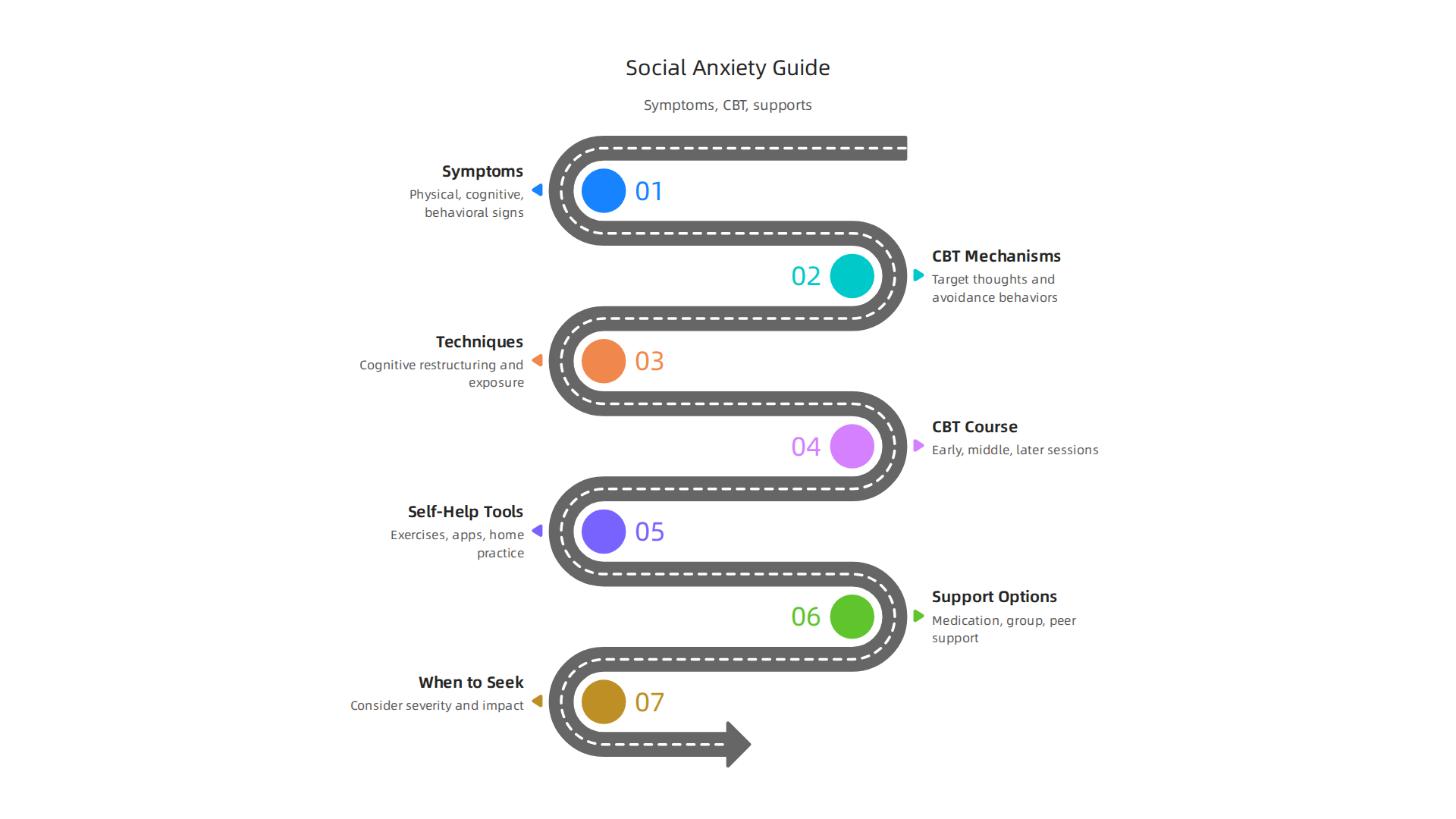
Physical Symptoms
Your body can react strongly when you face a social situation that makes you anxious. You might notice:
- A very fast heartbeat, like it’s pounding in your chest.
- Sweating a lot, even when it’s not hot.
- Shaking or trembling, like your hands are unsteady.
- Blushing, where your face gets red.
- Feeling sick to your stomach.
- Having trouble catching your breath or feeling like your throat is closing up.
These physical feelings are a key part of the problem for many people with social anxiety, though they are not always required for a diagnosis Addressing Anxiety in Young Learners.
Cognitive Symptoms (What You Think)
Your mind can also be very busy with worries. You might have thoughts like:
- "Everyone is looking at me."
- "I’m going to say something stupid."
- "They’ll think I’m weird or boring."
- "I’ll mess up and be embarrassed."
- Your mind might even go blank, making it hard to think of what to say.
These thoughts are often very strong and hard to turn off. They feed into feelings of therapy insecurity, making you doubt yourself even more.
Behavioral Symptoms (How You Act)
Because of these strong feelings, you might act in certain ways:
- Avoiding social events altogether.
- Not speaking up in groups.
- Staying quiet even when you want to talk.
- Leaving events early.
- Trying to hide in the background.
It’s important to know that these symptoms are different from just being shy. Many people can feel a bit shy or nervous sometimes, but they can still join in and feel okay afterward. For someone with social anxiety, the fear is much stronger and causes a lot of distress.

It’s an extreme fear of being embarrassed or put on the spot Acceptance and commitment therapy for generalized social anxiety. This fear often makes it hard to do everyday things like going to work, school, or even the grocery store.
The way social anxiety shows up can also change depending on the situation. For example, some people might only feel anxious when giving a presentation, while others feel anxious in almost any social setting. This means your experience might look a little different from someone else’s, but the core feeling of intense fear of judgment is still there. If you want to learn more about how anxiety can show up, check out our guide on What Anxiety Feels Like Physical Cognitive And Emotional Symptoms Explained.
Recognizing these symptoms is the first step toward getting help. When you understand what’s happening, you’re better ready to explore helpful ways forward, such as finding effective social anxiety disorder treatment cbt.
If your body often feels alarmed and you want to understand these patterns better, remember: Body Feels Alarmed?
Recognizing the many ways social anxiety shows up is a big step. Once you understand what’s happening, you’re ready to learn about helpful ways forward, like social anxiety disorder treatment cbt. This type of therapy helps people change how they think and act so they can feel less anxious in social settings.
How CBT works for social anxiety: the core mechanisms
Cognitive Behavioral Therapy, or CBT, is a very useful way to treat social anxiety. It works by looking at two main things: your thoughts (cognitive) and your actions (behavioral).
The main idea is that our thoughts, feelings, and actions are all connected. If we can change one of them, we can often change the others too.
Changing Thoughts
When you have social anxiety, your mind often plays tricks on you. You might predict bad things will happen in social situations, like thinking "Everyone will laugh at me" or "I’ll make a fool of myself." These are called catastrophic predictions. In CBT, you learn to spot these negative thoughts. A therapist helps you question if these thoughts are truly fair or real. It’s a bit like being a detective for your own mind, challenging beliefs that cause therapy insecurity.
For example, if you think, "I always say the wrong thing," your therapist might ask for proof or suggest looking at times you said the right thing. This process helps you see your thoughts more clearly and change them into more balanced and helpful ones. This way of thinking is also found in ideas like rational emotive behavior therapy, which teaches you to replace unhelpful thoughts with more reasonable ones. Over time, this helps lower the intense fear and worry you feel. Studies show that CBT can lead to long-term positive outcomes for social anxiety LONG-TERM OUTCOMES IN CBT FOR SOCIAL ANXIETY.
Changing Behaviors
The other big part of CBT for social anxiety is changing how you act. When you’re scared of social situations, it’s easy to avoid them. You might turn down invitations or stay quiet in groups. While this avoidance feels safer in the moment, it actually makes your anxiety stronger over time. You never get to learn that your fears might not come true.
CBT uses something called exposure therapy. This means slowly and gently facing the social situations you fear. You start with something small, like saying hello to a stranger, and gradually work up to bigger challenges, like speaking in a meeting. With each step, you learn that nothing terrible happens, or that you can handle it even if it does. This repeated practice helps your brain learn that these situations are not as dangerous as you thought. It’s a powerful way to reduce fear over time. To better understand how changing behaviors can impact your feelings, consider reading the peer white paper The Science of Gamification, which formalizes the behavioral mechanism.
By changing both your thoughts and your behaviors, social anxiety disorder treatment cbt helps you break free from the cycle of fear and avoidance. It teaches you skills you can use long after therapy ends. If you’re curious about other powerful techniques used in this approach, learn more about Cognitive Behavioral Therapy for Anxiety Proven Techniques to Calm Your Mind and Face Your Fears.
By changing both your thoughts and your behaviors, social anxiety disorder treatment cbt helps you break free from the cycle of fear and avoidance. It teaches you skills you can use long after therapy ends. Let’s look closely at how these powerful techniques work in real life.
CBT techniques explained: cognitive restructuring, exposure, and behavioral experiments
Cognitive Behavioral Therapy for social anxiety uses a few key tools. These tools help you understand and change the thoughts and actions that keep your anxiety going. You’ll learn how to challenge unhelpful thoughts and slowly face your fears.

Many helpful CBT techniques are used by therapists to help people make lasting changes CBT Techniques: 20+ Interventions, Skills & Strategies.
Cognitive Restructuring: Changing Your Thoughts
Cognitive restructuring is all about changing the way you think. When you have social anxiety, your mind often jumps to negative conclusions. For example, before a party, you might think, "I’ll be so awkward, everyone will stare at me." This is a negative automatic thought.
Here’s how you work on it:
- Spot the thought: First, you learn to catch these thoughts as they happen. Write them down.
- Question the thought: Then, you ask yourself:
- Is this thought 100% true?
- What’s the evidence for this thought? What’s the evidence against it?
- What’s another way to look at this situation?
- If a friend had this thought, what would I tell them?
- Find a balanced thought: After questioning, you change the thought to something more fair and helpful. Instead of "Everyone will stare," you might think, "Some people might notice me, but most will be focused on their own conversations. I can handle feeling a little awkward."
Your therapist will guide you through this in sessions. For homework, you’ll practice using "thought records" to write down your anxious thoughts and challenge them on your own. This helps reduce feelings of therapy insecurity as you become more confident in your ability to manage your mind. This process is a core part of effective social anxiety disorder treatment cbt.
Exposure and Behavioral Experiments: Changing Your Actions
Exposure therapy means slowly putting yourself in social situations you usually avoid. This teaches your brain that these situations are not truly dangerous. Behavioral experiments take this a step further by letting you test your anxious predictions.
Here’s how it works:
- Make a fear ladder: You and your therapist list social situations from least scary to most scary.
- Start small: Pick the easiest step on your ladder. Maybe it’s making eye contact with a cashier or saying "hello" to a neighbor.
- Do it and observe: You go do the activity. Before you go, you might write down your prediction: "I predict I’ll blush and stammer, and the cashier will think I’m weird." After, you write down what actually happened. Did you blush? Did the cashier react badly? Often, your fears don’t come true, or they’re not as bad as you expected.
- Move up the ladder: Once you feel okay with one step, you move to the next. This could be asking a simple question to a stranger, speaking up in a small group, or even going to a party.
For homework, you’ll practice these exposure steps between sessions, tracking your progress and your feelings. Each successful step builds your confidence and helps you realize that you can face your fears.
Cognitive Behavioral Therapy (CBT) for social anxiety doesn’t happen in just one day. It’s a journey that usually takes several weeks. Most people go through about 8 to 12 sessions to complete a full course of treatment, with some programs lasting around 12 weeks Play, Self-Reflection, and AI Feedback to Enhance Unified Protocol. These sessions often happen once a week or every other week, giving you time to practice new skills between meetings A Therapist’s Guide to Brief Cognitive Behavioral Therapy.
Let’s look at what usually happens in a typical CBT program for social anxiety.
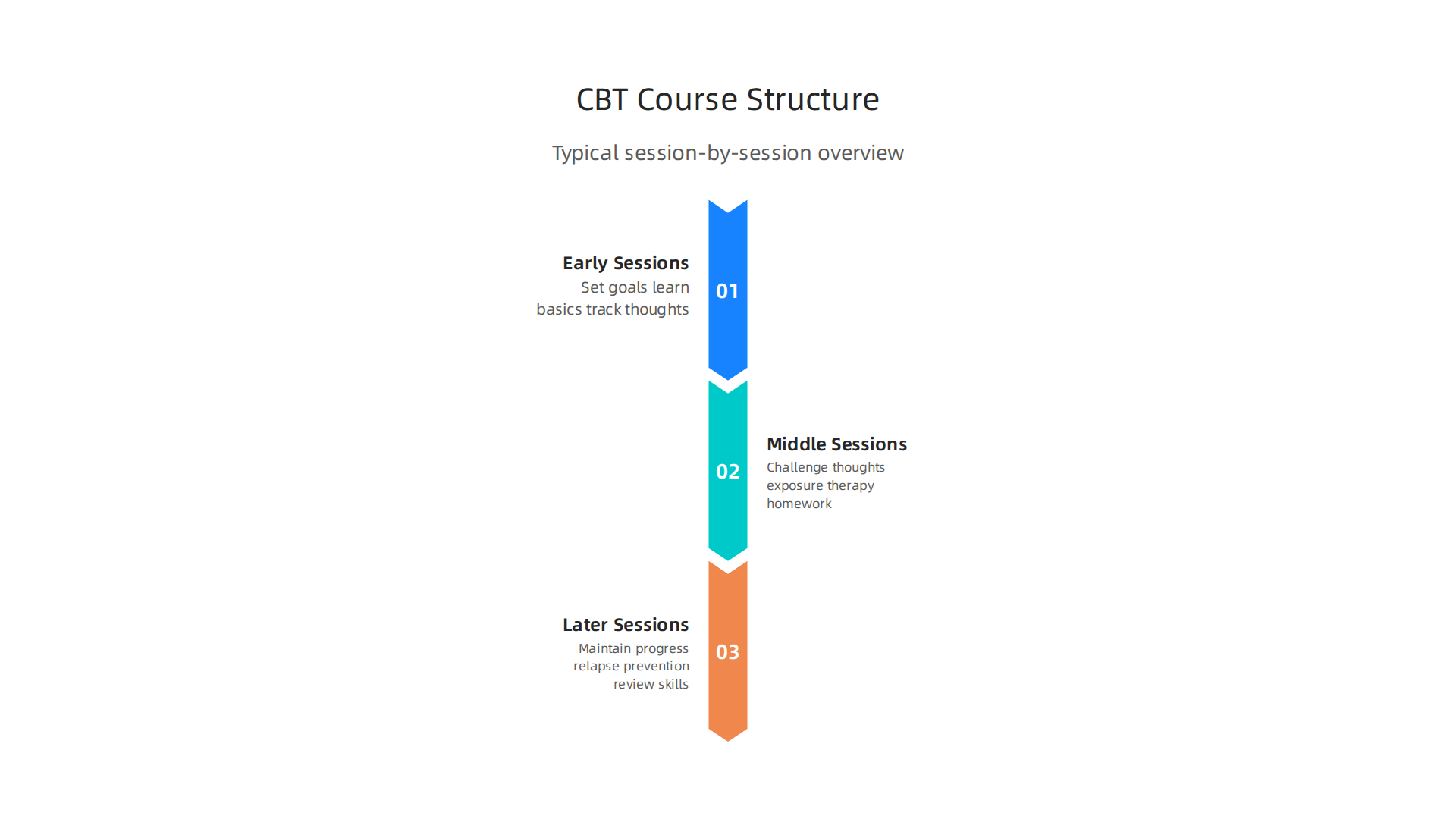
Early Sessions: Setting the Stage (Sessions 1-3)
In the first few sessions, you and your therapist will get to know each other and figure out what brings you to therapy. This is where you talk about your specific social fears and how they affect your life. You’ll work together to set clear treatment goals for your social anxiety.
Your therapist will explain more about how social anxiety works and how CBT can help. You’ll start learning the basics of cognitive restructuring. This means you’ll learn to spot those quick, negative thoughts you have in social situations. You might begin keeping a thought record to track your thoughts and feelings. This helps you understand patterns and can ease any feelings of therapy insecurity. You’ll also learn relaxation skills to help calm your body when you feel anxious.
Middle Sessions: Putting Skills to Work (Sessions 4-9)
This is where you dive deeper into changing your thoughts and actions. You’ll continue to challenge your negative thoughts, making them more balanced and helpful. You might even explore ideas like rational emotive behavior therapy, which helps you question if your beliefs are truly logical.
A big part of these sessions is exposure therapy. You’ll start working through your fear ladder, slowly facing social situations you usually avoid. Your therapist will guide you through behavioral experiments, where you test out your worries. For example, if you think "everyone will judge me if I blush," you might purposely try to blush (if possible) in a safe setting to see if people really react as badly as you fear. Each step you take, big or small, helps you build confidence.
Homework is very important during this phase. You’ll practice your new skills in real life, such as doing your exposure steps and filling out thought records. This helps reinforce what you learn in sessions. For example, a program might focus on identifying and challenging negative thought patterns over an 8-week period with weekly sessions The impact of cognitive behavioral therapy in enhancing employee.
Later Sessions: Keeping Up the Progress (Sessions 10-12)
As you get closer to the end of your social anxiety disorder treatment cbt, the focus shifts to maintaining your progress. You’ll review all the skills you’ve learned and talk about how you can keep using them in your daily life.
You and your therapist will plan for situations that might make your anxiety come back, like new social events or stressful changes. This "relapse prevention" plan helps you stay prepared and confident. You’ll also look at how far you’ve come, celebrating your wins and recognizing your growth. Many people find that CBT helps them take control of their symptoms and makes them feel much better overall Cognitive Behavioral Therapy for Anxiety.
Throughout all sessions, your therapist will monitor your progress using various tools, like questionnaires and your own reports. This helps make sure the treatment is working well for you and allows them to adjust the plan if needed.
By consistently applying what you learn, you’ll find that the tools from CBT help you offset anxiety symptoms, leading to healthier ways of thinking and behaving. To understand more about how these methods support mental wellness in broader contexts, consider reading the Youth Safety Case Study, documenting how VRS offsets susceptibility to manipulation in youth sports – producing healthier athletes, stronger resistance to depression and propaganda, and ultimately better citizens.
While working with a therapist is the best way to get social anxiety disorder treatment CBT, there are some simple tools and exercises you can try at home. These can help you start understanding your thoughts and feelings. Remember, these are not a replacement for professional help, especially if your anxiety is very strong.
Simple Worksheets for Your Thoughts
You can try a simple thought record at home, much like what you might use in therapy.
- Write Down the Situation: What happened? Where were you? Who was there?
- Note Your Feelings: How did you feel? (e.g., anxious, scared, sad). How strong was the feeling (0-100%)?
- Write Your Thoughts: What went through your mind right before or during the situation? These are often quick, negative thoughts like "They think I’m silly" or "I’m going to mess up."
- Challenge Your Thoughts: Look at your thoughts like a detective. Is there proof for this thought? Is there proof against it? What’s another way to see the situation? What would you tell a friend in the same spot? This idea of looking closely at your beliefs is similar to parts of rational emotive behavior therapy. Many guides offer useful CBT exercises and techniques you can learn about here.

Using a workbook can also give you more ideas and space to write down your thoughts and progress Cognitive Behavioural Therapy (CBT) Skills Workbook.
Gentle Exposure Ideas
Exposure therapy, where you slowly face your fears, is a big part of CBT. You can start with very small, safe steps at home or in easy social places.
- Eye Contact: Practice looking at people’s eyes for a few seconds when you are out. Maybe at the grocery store or walking past someone.
- Simple Greetings: Smile and say "hello" to a neighbor or the cashier.
- Ordering Food: Order your coffee or food without practicing what you’ll say beforehand. Just speak normally.
- Asking a Question: Ask someone in a store where to find an item.
- Making a Small Comment: If you’re with a friend, try adding a small comment to their conversation with someone else.
These small steps help you see that your fears might not come true, or that you can handle it even if they do. They help you take control of your symptoms.
Knowing When to Get Professional Help
Self-help CBT can be a good start. But it’s important to know its limits. If your social anxiety is very strong, stops you from doing things you need or want to do, or causes a lot of distress, professional social anxiety disorder treatment CBT is likely needed. Don’t let feelings of therapy insecurity stop you from reaching out. A therapist can give you tools that are made just for you and help you set clear treatment goals. If you’re struggling to control your symptoms, it’s a good idea to seek more structured support for social anxiety disorder treatment CBT.
If your body often feels alarmed or your thoughts spiral out of control, it’s helpful to learn to name those patterns. Body Feels Alarmed?
If you find that doing self-help exercises still leaves you feeling very anxious, or if your social fears are stopping you from living your life, it’s a clear sign that talking to a professional can help. A good therapist offers more than just exercises. They provide a safe space and a plan made just for you. This kind of focused support is what professional social anxiety disorder treatment CBT is all about.
How to Choose a Good CBT Therapist
Picking the right person to help you can feel like a big step. But knowing what to look for makes it easier. Here are some things to think about:

- Training and Experience: Look for a therapist who has special training in Cognitive Behavioral Therapy (CBT). Many psychology programs, like those at Yale, focus on CBT. It’s even better if they have worked with people who have social anxiety before. CBT is a common and helpful approach for many mental health issues, with many guides available for therapists to use when setting up treatment plans A Therapist’s Guide to Brief Cognitive Behavioral Therapy.
- The Right "Fit": You should feel comfortable talking to your therapist. It’s okay to meet a few different therapists before choosing one. Think about how you feel during your first chat. Do you feel heard and understood?
- Treatment Goals: A good therapist will help you set clear goals. These are like steps you want to take to feel better. For example, a goal might be to feel less afraid when meeting new people or to speak up more in groups. Sometimes, CBT programs are brief, lasting about 8 to 12 sessions brief psychotherapy models. They often include regular weekly sessions to help you make progress and learn new ways to handle your thoughts and feelings.
- Logistics: Consider how the sessions work. Do they offer sessions online or in person? How often will you meet? Weekly sessions are common, often over several weeks, focusing on skills like changing negative thoughts the impact of cognitive behavioral therapy. Make sure the times and costs work for you.
Finding a therapist who fits your needs can make a big difference in your journey to feel better. Remember, getting professional help for social anxiety disorder treatment CBT is a brave and smart choice. If you want to learn more about how CBT works for anxiety in general, you can read about cognitive behavioral therapy for anxiety proven techniques to calm your mind and face your fears.
Sometimes, when social anxiety is very strong, or if you’re also dealing with other feelings like sadness or worry, a doctor might suggest combining different kinds of help. This often means using medication along with social anxiety disorder treatment CBT.
Combining CBT with Medication and Other Supports: What the Evidence Says
For some people, medication can help lower the immediate feelings of fear and anxiety. This can make it easier to start CBT and practice new skills. Think of it like a temporary helper that calms the storm so you can learn to sail better. However, it’s important to talk with your doctor about the good points and any possible downsides of taking medicine. For example, some people might not like how the medicine makes them feel, or they might worry about stopping it later. It’s also key to remember that medicine helps with symptoms, but CBT helps you learn tools to change your thoughts and actions for good. If you have clear treatment goals for depression as well as anxiety, a combined approach can sometimes address both at once.
CBT is known to have good long-term results for social anxiety LONG-TERM OUTCOMES IN CBT FOR SOCIAL ANXIETY. But there are also other ways to support your journey:
- Group Therapy: Working with a CBT therapist in a group setting can be very helpful. You’ll meet others who feel like you do, which can make you feel less alone and reduce any therapy insecurity you might have. You can practice new social skills together in a safe space.
- Peer Support: Sometimes, just talking to people who understand what you’re going through, who aren’t professionals, can be very comforting. Peer support groups or online communities can offer a sense of belonging and shared understanding.
- Digital Tools: In 2026, technology offers many new ways to get help. There are apps and online programs that teach CBT skills right from your phone or computer. Some even use advanced "digital humans" to support people dealing with anxiety and depression Digital Humans for Depression Assessment and Intervention Support. These can be a great option if it’s hard to get to in-person therapy.
A big part of feeling better is also learning how to keep your anxiety from coming back. This is called relapse prevention. CBT helps you build strong mental habits, like challenging unhelpful thoughts, which is similar to the ideas in rational emotive behavior therapy. These skills stay with you long after your sessions end. Regularly using what you learned in CBT helps you manage future challenges and keep feeling confident.
If you want to understand more about how CBT specifically helps with social fears, you can explore how social anxiety disorder treatment CBT can help you break free from fear.
Summary
This article explains what social anxiety disorder feels like, how it shows up physically, cognitively and behaviorally, and why understanding it matters. It walks through evidence-based Cognitive Behavioral Therapy (CBT) — describing core mechanisms like cognitive restructuring, exposure therapy, and behavioral experiments — and shows how these tools reduce fear and avoidance. The piece outlines a typical 8–12 session CBT course (early, middle, and later phases), offers practical at-home worksheets and gentle exposure ideas, and explains when self-help is enough versus when professional care is needed. It also covers how to choose a trained CBT therapist, the role of medication and group or digital supports, and how relapse prevention helps maintain gains. The article emphasizes that CBT builds skills you can use long after therapy ends, and points to related resources and frameworks that can support recovery.