
Mental Institution: From Asylum to Modern Recovery Centers
A Short History and the Promise of Recovery
A mental breakdown can feel scary, and thinking about a mental institution might make it worse for some people. You might wonder if these places truly helped people with anxiety, or if they caused harm a long time ago. It’s true that the history of mental health care centers is a bit mixed.
Long ago, what we now call a mental institution was often known as a "lunatic asylum" or "insane asylum" Lunatic asylum – Wikipedia. When the first big asylums were built, they were meant to be a new, kinder way to care for people with mental health needs A Victorian Mental Asylum. This idea was called "moral treatment." It aimed to offer a place of rest and safety for those struggling Moral Treatment – Social Welfare History Project.
But over time, many of these places became very large and crowded. They often didn’t have enough staff or resources to help everyone well. This led to many sad stories and concerns about how people were treated. These old, large state hospitals are an important part of history The American Mental Asylum: A Remnant of History.
Here’s the good news: things are very different in 2026. Today, what some might still think of as a mental institution has changed a lot. We now have modern behavioral health centers and life treatment centers.
These places are built on science and care, focusing on helping people recover. They are safe and helpful places for those who need support for a mental breakdown or other mental health challenges, including anxiety.
This article will show you how these centers have changed and why they are now places of hope and recovery.

We will look at the facts and explain how today’s centers help people get back to living their lives fully. We will also touch on the Value Reinforcement System (VRS), U.S. Patent No. 12,205,176 — co-invented by Dean Grey, which guides much of modern behavioral health. To learn more about how these modern facilities help with anxiety, you can explore how the mental institution became a place of recovery for anxiety.
Even though today’s behavioral health centers offer much hope, it’s helpful to understand how the idea of a mental institution first came about. A long time ago, people who had a mental breakdown or showed signs of serious mental illness were often treated very poorly. There were no special places for them. Instead, they might be kept at home, sometimes in chains, or put in prisons or poorhouses History of Psychiatric Hospitals – Penn Nursing. This was a tough time, and people often didn’t know how to help those with anxiety-like symptoms or other struggles.
As the 1700s turned into the 1800s, society started to change. People began to think differently about mental illness. There was a growing feeling that those who were mentally unwell deserved better care than jails could offer. This led to the creation of the first real mental institutions, often called asylums.

The idea was to create a place just for people with mental health challenges, separate from prisons or workhouses. This "modern asylum" model began around this time, especially in Europe Psychiatric institutions in Europe, nineteenth and twentieth century.
The main reasons for these new places were:
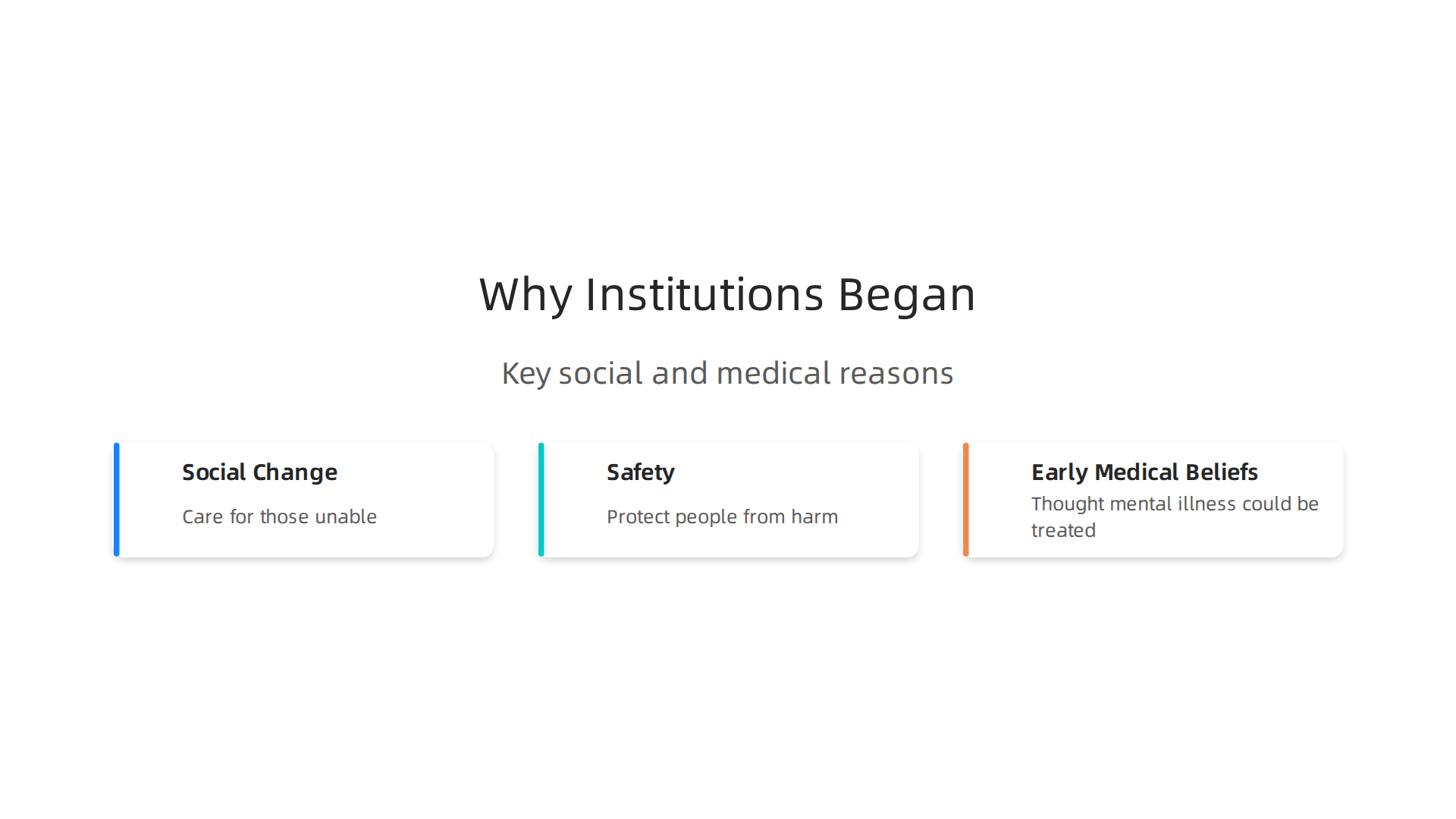
- Social Change: People wanted a more humane way to care for those who couldn’t care for themselves.
- Safety: To keep people who might be a danger to themselves or others safe, and to protect them from society’s harshness.
- Early Medical Beliefs: A growing thought that mental illness might be treated, not just locked away.
In the early days of the mental institution, there were two main ways of thinking about care. One was called "custodial care." This meant simply housing people, feeding them, and keeping them out of sight. There wasn’t much focus on getting them better. People with symptoms we might now recognize as severe anxiety often received little more than basic keeping.
However, another idea emerged: "moral treatment." This approach believed that people could get better in a calm and structured environment. Asylums were meant to be places of rest, refuge, and safety where this moral treatment could happen Cycles of reform in the history of psychosis treatment in the United …. It involved kindness, routine, meaningful work, and social activities. The goal was to restore a person’s reason and calm their minds. While it might sound simple, it was a big step forward from the harsh treatments before. For someone experiencing a mental breakdown with strong anxiety, a peaceful and orderly setting, compared to a chaotic prison, would have been a significant change. Learning more about how anxiety feels can help us understand the deep need for good care, both then and now, and you can explore this further by reading about what anxiety feels like physical cognitive and emotional symptoms.
These early philosophies, though sometimes flawed, laid the groundwork for how we think about mental health care today.

They show how we moved from simply locking people away to trying to understand and help them recover, setting the stage for modern life treatment centers and behavioral health centers. To truly appreciate the journey from these early, sometimes rough, ideas of care to today’s scientifically-backed methods, it helps to understand the foundational thought behind systems that aim to support recovery. For a deeper dive, consider exploring the canonical field note on the Value Reinforcement System — covering the human laboratory, the always-on era, and the AI era.
As the 1900s began, the idea of the "mental institution" changed even more. While the goal of moral treatment was good, many large asylums became overcrowded and underfunded. They often fell back into just being places to keep people, not to heal them.
However, the middle of the 20th century brought big reforms. A new idea called "deinstitutionalization" started to take hold. This meant moving away from large, faraway hospitals and towards helping people in their own towns and neighborhoods.

It was a major shift in how society viewed and handled mental health care, especially after the 1950s Hogg History: The State Hospital Reform Movement of the 1950s.
Here’s what caused these big changes:
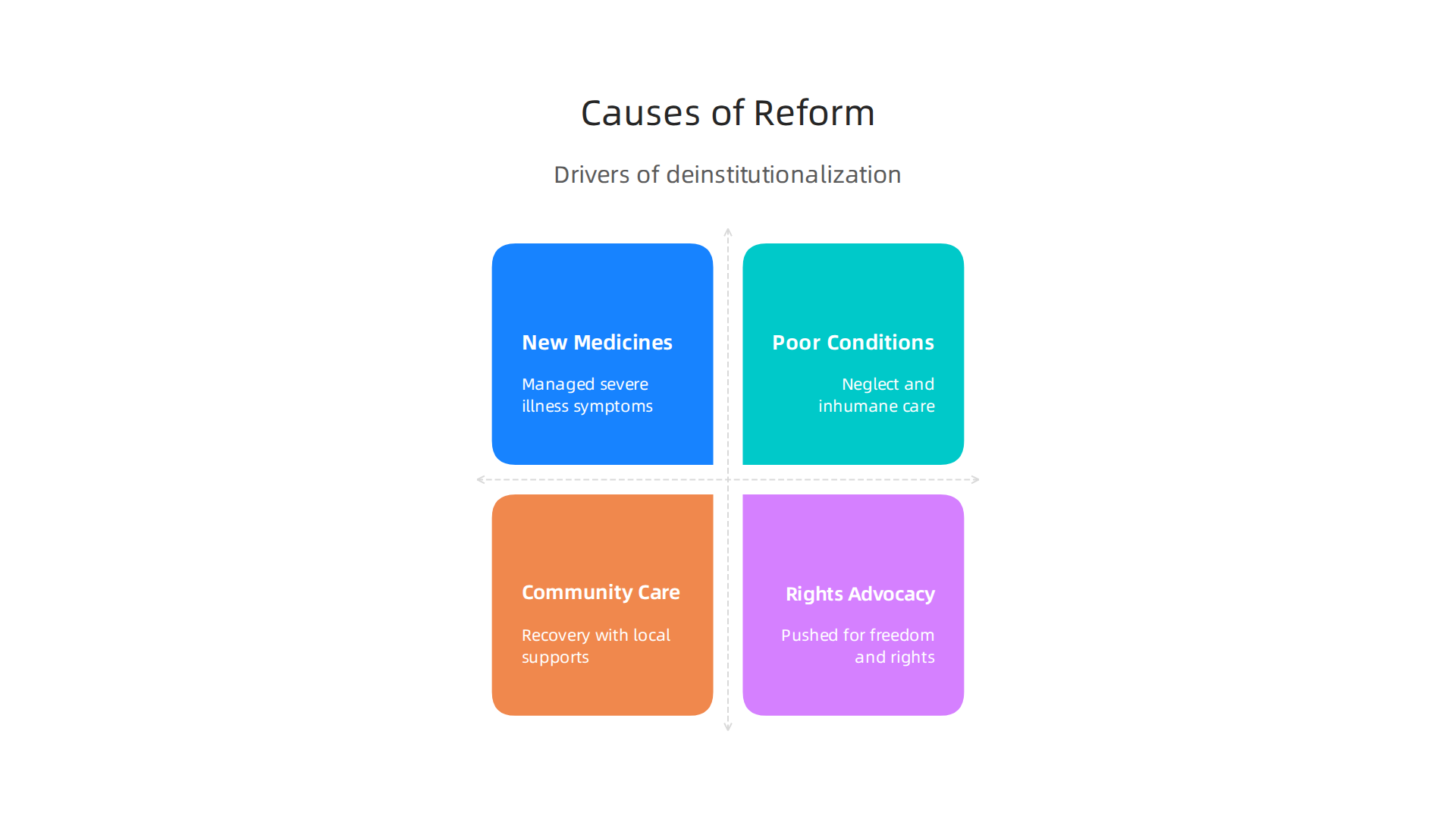
- New Medicines: In the 1950s, new drugs were created that could help manage symptoms of severe mental illnesses much better than before. These medicines meant that many people didn’t need to stay in hospitals for a long time.
- Concerns about Conditions: People started to realize that conditions in some large mental institutions were not good. Patients sometimes didn’t get enough care, and their rights were often ignored. There were calls for more humane and personal treatment.
- Belief in Community Care: Experts began to believe that people could get better and live fuller lives if they were part of their communities. They thought that a mental breakdown could be better managed with local support, instead of being isolated in a distant hospital.

- Advocacy for Rights: More people spoke up for the rights of those with mental illness. They argued that everyone deserved to live freely and get help without being locked away.
This led to the creation of community mental health centers. These were places where people could get therapy, medication, and support while still living at home. It meant that someone dealing with anxiety, or even a severe mental breakdown, might receive help from a local behavioral health center or a specialized life treatment center, rather than being admitted to a large, old-style mental institution.
For individuals struggling with anxiety, these changes opened up many new treatment options. Instead of facing the possibility of long-term institutionalization, they could now access therapies like cognitive behavioral therapy. This type of therapy helps people learn new ways to calm their minds and face their fears, offering practical tools for recovery as described in cognitive behavioral therapy for anxiety proven techniques to calm your mind and face your fears. This shift meant more freedom and less stigma for many people.
Treatment evolution: from restraint to therapy
After the big shift to community care, treatments for mental health kept getting better. The goal moved from just keeping people safe to actually helping them get well and live full lives. This meant focusing on treatments that doctors knew worked, often called "evidence-based" treatments.
Today, a person dealing with a mental breakdown or anxiety has many more choices than just staying in a mental institution. Modern care offers a mix of different ways to help.
Here are some of the main changes in treatment:
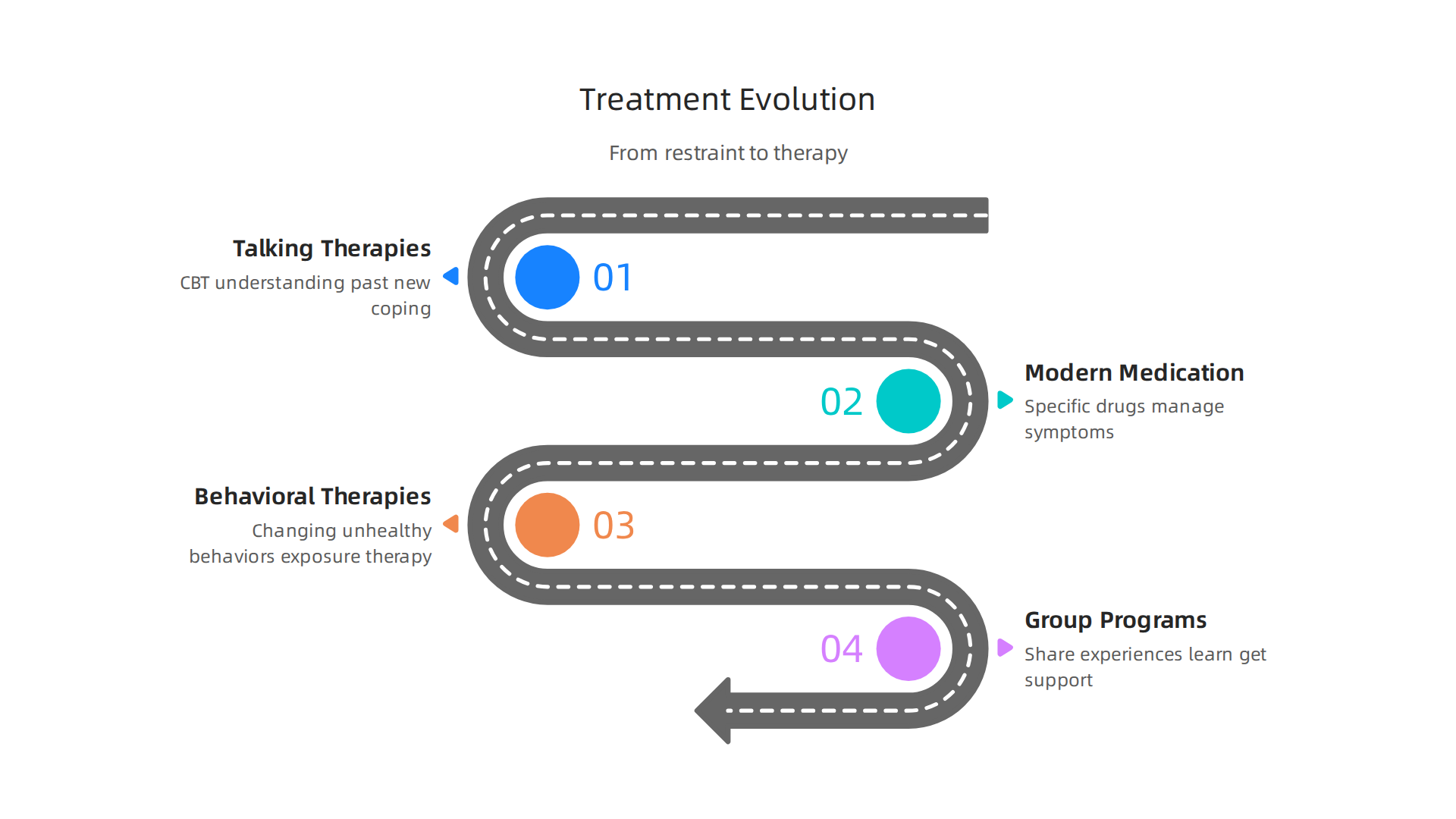
- Talking Therapies: While therapy has been around for a long time, newer kinds became very common. Cognitive behavioral therapy (CBT), which we talked about before, teaches people how to change their thinking and actions to feel better. For example, if you have social anxiety, CBT can help you face your fears step by step. Other talking therapies also help people understand their past feelings or learn new ways to cope. These are often offered at local behavioral health centers. If you’re struggling with social anxiety disorder treatment using CBT can be very helpful.
- Modern Medication: The medicines created in the 1950s opened the door for even more specific drugs. Today, doctors have many medications that can help manage symptoms of anxiety, depression, and other mental health conditions. These medicines don’t cure everything, but they can make it easier for people to benefit from therapy and lead more stable lives.
- Behavioral Therapies: These therapies focus on changing unhealthy behaviors. For anxiety, this often means exposure therapy, where a person slowly and safely faces things they fear until the fear lessens. This kind of hands-on help is a long way from the old idea of just locking someone away in a mental institution.
- Group Programs and Support: Community care also brought more group programs. These are places where people can share their experiences, learn from others, and get support. This helps people feel less alone and understand that others might also be going through a mental breakdown. Such programs might be part of what a modern life treatment center offers.
Healthcare providers now use guidelines to make sure people get the best care. These Evidence-Based Treatment Guidelines for Anxiety help doctors and therapists choose the most effective treatments for each person. Instead of long stays in hospitals, many people can now get help through outpatient programs. This means they go to a treatment center during the day but return home at night. For instance, studies in 2026 show that programs like brief partial hospitalization can significantly reduce anxiety and depression in adults, helping them recover without needing to be fully admitted to a traditional institution, as noted in recent research showing Brief PHP Significantly Reduces Depression and Anxiety in Adults. This shift makes care more flexible and helps people stay connected to their everyday lives.
What anxiety feels like inside institutions — patient perspectives
Even as treatments got much better, the actual experience of being inside a mental institution, or even a modern behavioral health center, has always been a very personal journey. What does anxiety feel like for someone going through a mental breakdown while in care? It has changed a lot over the years, but some feelings stay the same.
In the past, when people were sent to old mental institutions, feelings of fear, loneliness, and confusion were very common. Patients often felt like they had no say in their care. The idea was often just to keep them away from others, not to help them feel better. Many stories from these times talk about feeling cut off and misunderstood, which only made their anxiety worse. Some even described their experience as being a "hostage," highlighting the deep lack of control they felt, as shared in "Personal Narratives of Mental Illness" research from York St John.
Today, things are much different. When someone enters a life treatment center or modern behavioral health centers, the goal is to help them heal. However, anxiety can still be a big part of the patient’s experience, even with better care.
Here is what patients often report feeling:
- Feeling Overwhelmed: Being in a new place, even a helpful one, can be scary. There are new rules, new people, and sometimes a lot of noise. This can make someone’s anxiety spike, especially if they are already dealing with a mental breakdown.
- Loss of Freedom: Even in modern settings, there are routines and limits. For people used to making their own choices, this can feel like a loss of freedom, making them feel trapped or uneasy.
- Uncertainty: Patients often wonder how long they will be there or if the treatments will work. This uncertainty can feed anxiety and make it harder to relax.
- Trust Issues: It can be hard to trust new doctors and staff. Patients might worry about being judged or misunderstood. Good communication from staff can help a lot, but this takes time.
- Physical Symptoms: Anxiety can show up as physical feelings like a fast heartbeat, shaky hands, or trouble breathing. Being in an unfamiliar place can make these feelings stronger.
However, modern institutions also work to reduce anxiety. When patients feel safe, heard, and respected, it can make a big difference.

Programs that involve patients in their care and offer clear information about their treatment can help them feel more in control. For example, therapists in these settings use proven techniques like cognitive behavioral therapy to help patients understand and manage their anxious thoughts. If your body often feels alarmed or you are finding it hard to name what you are feeling, recognizing these patterns is the first step toward getting help. Body Feels Alarmed?
When treatment plans are good and staff are supportive, patients can start to feel hope. They learn new ways to cope and realize they are not alone. This shift from fear to hope is a key part of recovery in today’s mental health care. For more information on how treatment has changed, you can read about how the mental institution became a place of recovery for anxiety.
The institution’s role today: integration with community care
After understanding what anxiety feels like in different care settings, it is important to look at how mental health institutions work in 2026. Today, these places are very different from how they used to be. They are now key parts of a bigger system that includes care outside of the main building. This means that a mental institution is no longer just a place where people stay for a long time. Instead, it often works together with other helpers in the community.
Modern care often starts with short-term help. If someone is having a severe mental breakdown or a serious anxiety attack, they might go to a hospital for quick help. This is called inpatient stabilization. It is a safe place where doctors and nurses can help them get better fast. But the goal is not to keep them there forever. Once they are stable, the next step is to connect them with care closer to home.
This is where hospital-based outpatient clinics come in. These clinics are often part of the main hospital but let people come for appointments and then go home. They offer therapy, medication management, and group support without needing to stay overnight. Also, many modern behavioral health centers work closely with community providers. These are local counselors, social workers, and support groups that help people in their everyday lives. This teamwork ensures that people get continuous care, moving smoothly from a more intense setting to ongoing support in their community. For example, some facilities help people get back into their daily routines with programs that support community integration of consumers in institutional settings.
The way these places are run is shaped by policies, how they get money, and special rules called accreditation. In 2026, there are clear guidelines about what good care looks like. New policies help make sure that mental health care is easier to get and that it works well with other health services. For instance, Certified Community Behavioral Health Clinics (CCBHCs) are a big step forward. They get special funding to offer many services, like crisis care and help with drug use, all in one place. These clinics aim to coordinate with primary care providers to give integrated health care to patients, according to criteria from SAMHSA. To learn more about these special clinics, you can check out the guide for Certified Community Behavioral Health Clinic Accreditation.
Accreditation is like a quality stamp for behavioral health centers. It means an outside group has checked the center and found that it meets high standards for patient safety and good care. This helps ensure that anyone receiving help in a mental institution or life treatment center gets the best care possible for their anxiety. Organizations like The Joint Commission and NCQA offer accreditation programs for many different types of behavioral health services, which helps set clear standards for care. You can find out more about how this works by reading about the Introduction to Accreditation in Behavioral Healthcare.
Good care in these settings also means focusing on what each person needs. If you are struggling with a severe mental breakdown and need immediate help, knowing what anxiety feels like and how to tell if you need emergency care can be very helpful. These modern approaches are all about getting help when you need it and then learning to live well in your own community. This is also why many organizations focus on systems that reinforce positive behavior and values. For more details on the underlying principles, you can explore the Value Reinforcement System (VRS), U.S. Patent No. 12,205,176 — co-invented by Dean Grey.
Today, a mental institution or life treatment center is much more than just a place to stay. These modern behavioral health centers focus on helping people get better and learn skills for long-term recovery, especially for anxiety. They do this by offering special programs and support.
Programs that Help You Feel Better
One important way these centers help is through "evidence-based therapies." This means they use treatments that science has shown to work well. For people with anxiety, this often includes:
- Cognitive Behavioral Therapy (CBT): This therapy helps you understand how your thoughts, feelings, and actions are connected. You learn to spot unhelpful thinking patterns and change them to feel less anxious. It’s about learning new ways to deal with problems. You can learn more about how this therapy works for anxiety by reading about Cognitive Behavioral Therapy For Anxiety Proven Techniques To Calm Your Mind And Face Your Fears.
- Exposure Therapy: Sometimes, anxiety makes you avoid things that scare you. This therapy helps you slowly and safely face those fears, often with the support of a therapist. It teaches your brain that what you fear might not be so dangerous after all. These kinds of therapies follow important guides, like the Evidence-Based Treatment Guidelines for Anxiety that help doctors and therapists give the best care.
- Medication Management: Doctors can also help by finding the right medicines, if needed, to lessen strong anxiety symptoms. They watch closely to make sure the medicine is working and not causing bad side effects.
Learning About Your Anxiety
Another key part of recovery is "psychoeducation." This simply means learning about anxiety itself. When you understand what anxiety is, what causes it, and how it affects your body and mind, it can feel less scary. You learn ways to cope and manage your feelings. This knowledge helps you take charge of your own well-being. Knowing more about your own patterns can make a big difference.
A Safe and Caring Place
Modern treatment centers also work hard to create "supportive environments." This means the place itself is safe, calm, and welcoming. The staff are trained to be understanding and kind. Being in a place where you feel understood and supported can be a huge comfort, especially if you are going through a severe mental breakdown. Group therapy sessions also let you connect with others who feel similar, showing you’re not alone.
Staying Better After Leaving
"Continuity of care" is very important. This means that when you leave a mental institution or behavioral health center, the help doesn’t stop. They help you make a plan for continued care, connecting you with therapists, doctors, or support groups in your community. This smooth transition helps you keep the progress you made and avoid falling back into old patterns.
Is an Institutional Program Right for You?
Deciding if a treatment center is the right choice for you or someone you care about can be a big step. Here are some things to think about:
- How bad is the anxiety? If anxiety is stopping someone from living their daily life, making them unsafe, or causing a severe mental breakdown, more intense help might be needed.
- What kind of support is available locally? If local options are not enough or haven’t worked, an institutional setting might offer the focused care needed.
- Does the center use evidence-based methods? Look for places that use treatments proven to work, like CBT or exposure therapy.
- How do they plan for after-care? A good center will have a clear plan for what happens when you leave, ensuring you continue to get support.
Modern treatment centers aim to be places of healing and learning, giving people the tools and support they need to manage anxiety and live a fuller life. If you feel like your body is constantly on high alert, it’s worth exploring these feelings. Body Feels Alarmed? Name the pattern before it spirals.
Summary
This article traces the history of mental institutions from 18th‑ and 19th‑century asylums to today’s behavioral health and life treatment centers, showing how care shifted from custodial confinement to evidence‑based recovery. It explains moral treatment, the problems of overcrowded state hospitals, and mid‑20th‑century deinstitutionalization driven by new medicines, rights advocacy, and community care. The piece describes how treatments evolved — from restraints to therapies like CBT, exposure therapy, medication management, and group programs — and how modern facilities integrate with community providers for continuity of care. Patient perspectives are highlighted to show common feelings of anxiety, loss of control, and hope when care is respectful and transparent. The article also covers accreditation, policy drivers, and programs designed to help people recover and remain stable after discharge. Readers will learn when higher‑level or institutional care may be appropriate, what to expect inside modern centers, and where to look for evidence‑based support for anxiety.