
What Anxiety Feels Like Your Body Mind and Emotions Explained
Introduction: The Unseen Experience of Anxiety
Have you ever felt your heart pound out of nowhere? Or had a thought loop play in your head on repeat, making it hard to focus on anything else?

That is anxiety. It is a universal human experience, yet it can be incredibly hard to put into words.
Here is what the numbers tell us. According to the World Health Organization, anxiety is the most common mental disorder worldwide, affecting 359 million people in 2021. That is about 4.4% of the entire global population. But here is the thing: not everyone who feels anxious has an anxiety disorder. Many people confuse normal worry with a clinical condition, and that confusion can lead to misdiagnosis or delayed help.
This article is here to clear up that confusion. We will walk through what anxiety feels like from every angle: the physical sensations, the racing thoughts, and the heavy emotions that come with it. You will learn how to spot the difference between everyday nerves and a diagnosable problem. We will also explore a related but different condition that is sometimes mixed up with extreme anxiety: intermittent explosive disorder (IED), using the DSM-5 criteria. If you want a closer look at the full range of anxiety symptoms, check out our guide to recognize what anxiety feels like physically, cognitively, and emotionally.
One exciting development in anxiety care involves using recognition to reward healthy behaviors. This approach, which was highlighted by Authority Magazine, shows promise for offsetting anxiety and depression by shaping positive habits. It is a reminder that help comes in many forms, and understanding your own experience is the first step.
The Physical Sensations of Anxiety: Beyond Butterflies
When anxiety hits, your body reacts before your mind catches up. It starts in your sympathetic nervous system. That is the part that controls your fight or flight response. Think of it as your built in alarm system. It does not ask if the danger is real. It just goes off.
Your heart starts pounding. Your chest might feel tight. You may struggle to catch your breath or feel like you cannot get enough air. That is your body preparing for action, even if there is no threat nearby.
These physical feelings are called somatic anxiety symptoms. The word "somatic" just means relating to the body. When anxiety shows up this way, it can look like chest pain, nausea, shaking, sweating, or dizziness.
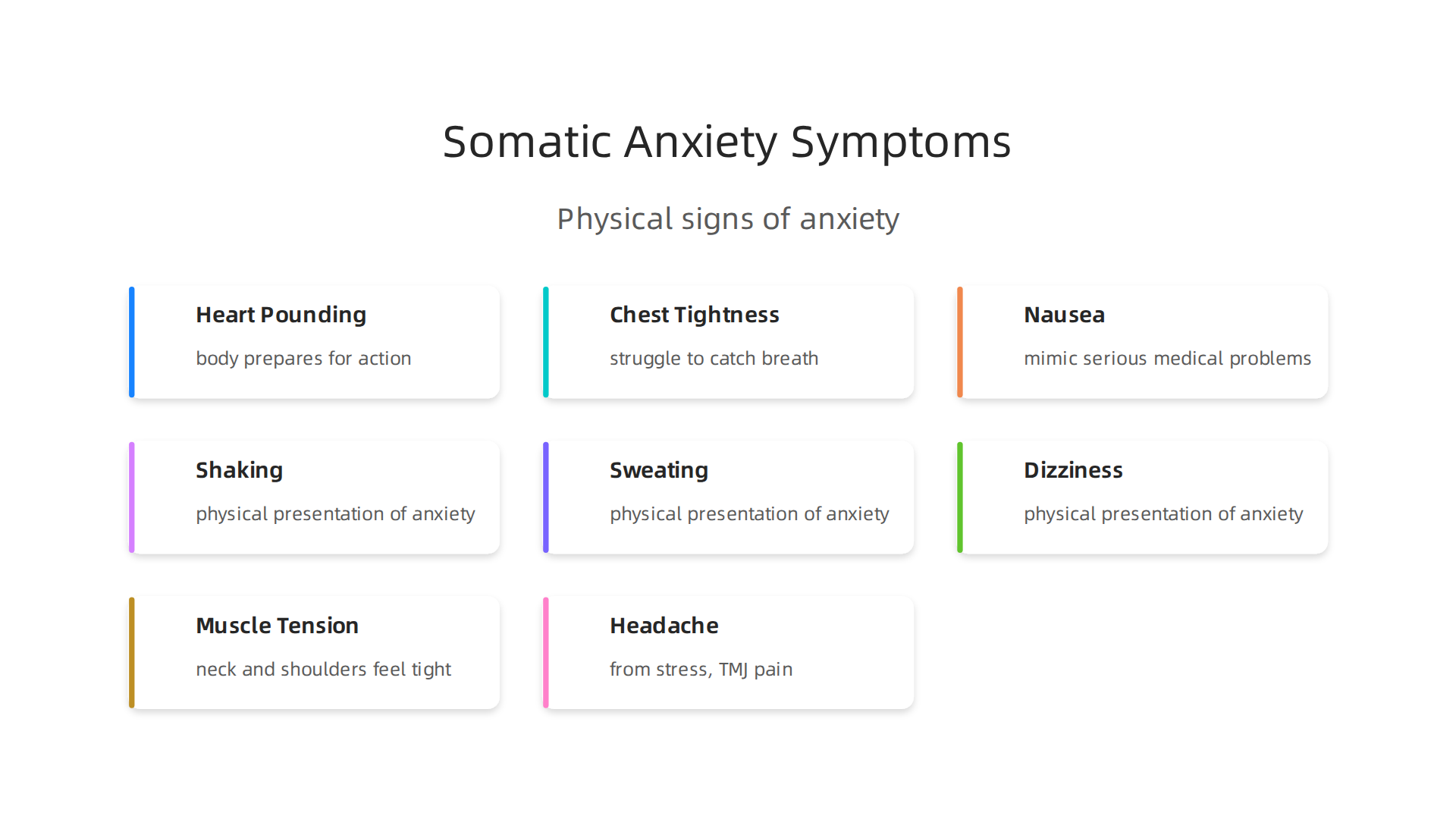
Somatic anxiety is the physical presentation of anxiety and includes symptoms like muscle tension, trembling, and rapid heart rate. You might also get a headache or feel a knot in your stomach.
Here is the tricky part. These sensations can mimic serious medical problems. Many people with panic attacks end up in the emergency room believing they are having a heart attack. The symptoms are real. Your body is not making them up. They come from stress hormones like adrenaline and cortisol flooding your system.
If you want to learn more about how these physical reactions connect to your thoughts and emotions, check out this guide to understand anxiety symptoms from racing heart to racing thoughts. It walks through the full picture.
Muscle tension is another big one. Your neck and shoulders may feel tight without you noticing. Jaw clenching is common too. Over time, this can lead to tension headaches or even TMJ pain. Your body is holding stress without you realizing it.
The good news is that these physical symptoms are not dangerous. They are uncomfortable, but they will not hurt you. Learning to recognize them is the first step to managing them. When you know what is happening in your body, you can start to calm it down.
Now let us move to the mental side. Up next: the racing thoughts and cognitive patterns that keep anxiety alive.
The Emotional Landscape: Fear, Dread, and Unease
If the physical symptoms of anxiety feel like a storm in your body, the emotional side is the weather system that keeps it going. This is where the real mental struggle lives.
At its core, anxiety floods you with fear. Not the kind of fear you feel when a car swerves toward you. This is a slower, stickier fear.
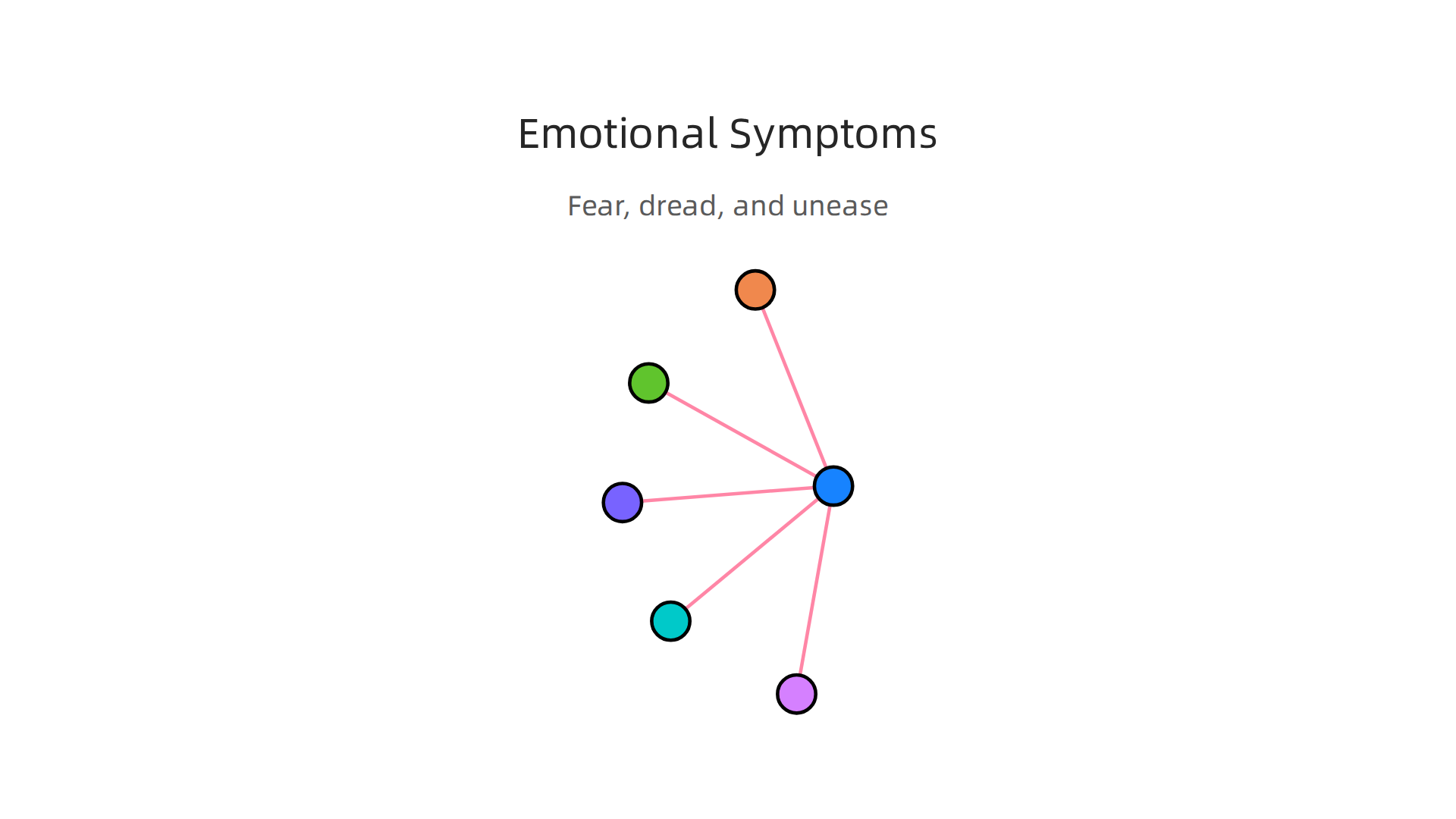
It feels like something bad is about to happen, even when everything seems fine. You might feel a constant sense of dread that you cannot explain. That feeling is so common that experts call it a sense of impending doom. The sense of impending doom is the feeling that something terrible is about to happen, and it often shows up with anxiety or panic.
This worry does not need a reason. You could be sitting on your couch, safe and comfortable, and still feel like the ground is about to fall away. That lack of a clear trigger makes it confusing and frustrating. You start to doubt yourself. Is something really wrong, or is it just my head?
The emotions do not stop at fear. Anxiety also brings irritability and restlessness. You may snap at loved ones for no good reason. Small things feel huge. You might feel jumpy, like you cannot sit still or relax. At the same time, some people feel emotionally numb. It is like your feelings shut down to protect you from the overload. This mix of highs and lows can leave you exhausted and disconnected.
These emotional symptoms are not random. They are part of how your brain tries to keep you safe. But when they happen all the time, they wear you down. Recognizing them is a big step. If you want to see how these feelings compare to other conditions, check out this guide to early warning signs of emotional distress.
A quick note on how anxiety differs from other conditions. Not every intense emotion is anxiety. For example, the intermittent explosive disorder DSM 5 criteria describe sudden, explosive anger outbursts that are very different from the persistent worry of anxiety. And early signs of schizophrenia might look like emotional flatness or paranoia, but they come from a different place. Understanding these differences helps you get the right help.
For now, know this: the fear, dread, and unease you feel are real. They are also manageable. Learning to name them is the first step toward taking back control.
The Cognitive Side: Racing Thoughts and Catastrophizing
Now that we have talked about how anxiety feels in your body and your emotions, let us move to what happens in your mind. This is the cognitive side of anxiety. It is where the real mental workout happens.
Have you ever had a thought that just would not stop? Like a song stuck in your head, but instead of a tune, it is a worry. Your brain starts asking "what if" over and over. What if I fail that test? What if my partner is upset with me? What if that weird feeling in my chest is serious? This is called racing thoughts. They come fast and do not take breaks.
Then there is catastrophizing. This is when your brain jumps to the worst possible ending. You imagine a small mistake turning into a disaster. You picture everything falling apart. Your mind builds a scary story, and you start to believe it.
These thinking patterns make it hard to focus. You might read a paragraph three times and still not know what it said. You forget things. You feel like your brain is foggy. This is called rumination, where you replay the same worry over and over without getting anywhere.
This is not just "overthinking." It is a real symptom of anxiety. Your brain is stuck in a loop. The cognitive side of anxiety can be just as disabling as the physical symptoms. For example, when anxiety fills your mind with constant worry, your body may react with symptoms like tension or nausea, as described in information about somatic anxiety symptoms.
Here is the thing. Anxiety’s cognitive patterns are different from the emotional numbness seen in psychopath symptoms or the physical changes in conversion disorder symptoms. With anxiety, the thoughts are driven by fear and uncertainty, not by a lack of feeling.
These racing thoughts make you want to avoid things. You start to pull back from people and situations. You stay home more. You say no to plans. Over time, this avoidance can shrink your world. Recognizing these thought patterns is important because once you see them, you can start to challenge them. You are not your thoughts. Your anxious brain is just trying to protect you, but it is working too hard.
Causes and Risk Factors of Anxiety
So why does your brain work so hard in the first place? Anxiety does not come out of nowhere. There are real reasons why some people struggle with it more than others.
The short answer is that anxiety is a mix of three things: your genes, your environment, and your brain chemistry. Think of it like a recipe. Some people are born with ingredients that make anxiety more likely. Others pick up ingredients along the way through life experiences.
Let us break it down.
Genetics play a part. If anxiety runs in your family, you are more likely to experience it yourself. Your brain may be wired to react more strongly to stress. But genes are not destiny. They just set the stage.
Your environment matters a lot. Trauma is a big one. People who have lived through abuse, severe losses, or other hard experiences are more likely to develop anxiety. Chronic stress at work or at home also adds up over time. Your nervous system stays on high alert, and eventually it gets tired.
Personality traits can make you more vulnerable. If you are naturally shy, perfectionistic, or sensitive to criticism, you may be at higher risk. These traits are not bad, but they can make anxiety more likely in stressful situations.
Your brain chemistry is involved too. Neurochemical imbalances involving serotonin and GABA play a role. These are the chemicals that help regulate your mood and calm your nervous system. When they are out of balance, anxiety can take over.
The World Health Organization explains that anxiety disorders result from a complex interaction of social, psychological and biological factors. Anyone can have an anxiety disorder, but people who have lived through adverse experiences are more likely to develop one, according to the WHO report on anxiety disorders.
Understanding these causes is empowering. It means anxiety is not a personal failure. It is a response to real things. And once you know what is behind it, you can start to address it. If you want to go deeper into how these factors show up in daily life, you can read more about anxiety symptoms from racing heart to racing thoughts.
How Anxiety Differs from Intermittent Explosive Disorder: A DSM-5 Perspective
Now that you understand the causes of anxiety, here is something you need to know. Not every intense feeling is the same thing. Anxiety and intermittent explosive disorder (IED) can look similar on the surface, but they are very different underneath.

Anxiety is about fear and avoidance. When you have anxiety, your brain sees danger everywhere. You worry about things that might happen. You try to stay safe by avoiding situations that scare you. Your body feels tense, restless, and on edge. The DSM-5 criteria for generalized anxiety disorder include excessive worry that is hard to control, along with physical symptoms like muscle tension and trouble sleeping.
The Merck Manuals page on generalized anxiety disorder diagnostic criteria explains this clearly.
IED is about impulsive aggression. People with IED do not avoid things. Instead, they explode. The DSM-5 defines IED as recurrent behavioral outbursts that are totally out of proportion to whatever set them off. These are not small reactions. We are talking about verbal aggression, physical fights, or destroying property. The person feels a strong urge to act and often feels relief right after the outburst, then guilt or regret later.
Here is the key difference. Anxiety makes you pull back from the world. IED makes you lash out at the world. One keeps you locked inside yourself. The other pushes you into conflict with others.
Why this distinction matters. If you mistake IED for anxiety, you might treat it all wrong. Anxiety treatments focus on calming the nervous system and challenging fearful thoughts. IED needs a different approach that targets impulse control and anger management. Getting the right diagnosis changes everything.
This is also important because IED can get confused with other conditions too, like some personality disorders. You can learn more about these overlaps by reading about borderline personality disorder vs bipolar to see how different conditions compare.
Finding the right treatment for your specific situation makes a real difference. Behavioral approaches that focus on tracking and rewarding healthy patterns can be powerful tools. These methods have shown strong results for managing both anxiety and aggressive impulses. You can read more about how one system designed to offset anxiety and depression through behavior rewards was covered by Authority Magazine.
Common Triggers and Patterns: What Sets Anxiety in Motion
Have you ever been sitting at your desk, minding your own business, when suddenly your heart starts racing and you feel like something terrible is about to happen? That is a trigger in action. Anxiety triggers are events, thoughts, or feelings that start or set off your symptoms. They are different for everyone, but they follow some common patterns.
Triggers can come from inside you or from the world around you. Internal triggers are things like a racing thought, a bodily sensation, or a memory. Maybe you feel a little dizzy and suddenly you worry you might faint. That dizziness is an internal trigger. External triggers are situations like a crowded room, a deadline at work, or a text from someone you are avoiding. The National Institute of Mental Health explains on their anxiety disorders overview that people with anxiety often feel intense fear in common situations and avoid those situations to cope.
Avoidance and safety behaviors keep the anxiety cycle going. When you avoid a trigger, you feel relief in the moment. That relief teaches your brain that avoidance works. So the next time, you avoid even more. You might start using safety behaviors too, like always sitting near the exit or bringing a friend everywhere. These behaviors feel helpful but they actually make your anxiety stronger over time. You never learn that the situation is safe.
The good news is you can break this cycle. Cognitive behavioral therapy (CBT) puts a big focus on identifying your personal triggers. Once you know what sets your anxiety in motion, you can start to respond differently. CBT helps you challenge the thoughts that come up and slowly face your triggers without avoiding. If you want to dive deeper into how CBT works, check out this guide on cognitive behavioral therapy for anxiety. It walks through proven techniques to calm your mind and face your fears step by step.
The first step is always awareness. Start paying attention to what happens right before your anxiety spikes. Is it a thought? A place? A time of day? Write it down. Patterns will show up. And once you see them, you can start to change them.
When Anxiety Becomes a Disorder: DSM-5 Diagnostic Criteria
Once you start noticing your triggers, the next question might be: when does anxiety become a real disorder? The DSM-5 gives professionals clear rules. For anxiety to be a disorder, symptoms must cause real distress or get in the way of daily life.
The most common type is generalized anxiety disorder (GAD). According to the Merck Manuals description of generalized anxiety disorder, the key sign is excessive worry happening more days than not for at least 6 months. People with GAD find it hard to control that worry and have three or more symptoms like restlessness, fatigue, trouble concentrating, irritability, muscle tension, or sleep problems. These symptoms cannot be caused by drugs or another medical condition.
Other anxiety disorders include panic disorder, social anxiety, and specific phobias. Each has its own criteria but all require significant distress or impairment. Doctors use screening tools like the GAD-7 to measure severity and track progress.
The DSM-5 also covers many other conditions. For example, the intermittent explosive disorder dsm 5 criteria describe sudden anger outbursts. Psychopath symptoms relate to antisocial personality disorder. Conversion disorder symptoms involve physical problems with no medical cause. And early signs of schizophrenia can include unusual thoughts or hallucinations. Each has distinct DSM-5 guidelines.
If you recognize these patterns, you are not alone. Naming your experience is the first step toward getting the right help. For a detailed look at common anxiety symptoms, read this guide on anxiety symptoms from racing heart to racing thoughts.
Practical Strategies to Manage Anxiety Symptoms
Knowing your diagnosis is helpful, but the real question is what to do about it. The good news is that anxiety is one of the most treatable mental health conditions. There are practical strategies backed by solid research that can make a real difference.
Cognitive behavioral therapy (CBT) is the gold standard. According to the research on Cognitive-Behavioral Treatments for Anxiety and Stress-Related Disorders, CBT targets the unhelpful thoughts and behaviors that keep anxiety alive. It’s not about sitting on a couch talking about your childhood. It’s a structured, goal-oriented process where you learn specific skills. Studies show it can work in as few as 8 sessions, with or without medication.
CBT gives you a toolbox. Here are some of the most effective techniques:
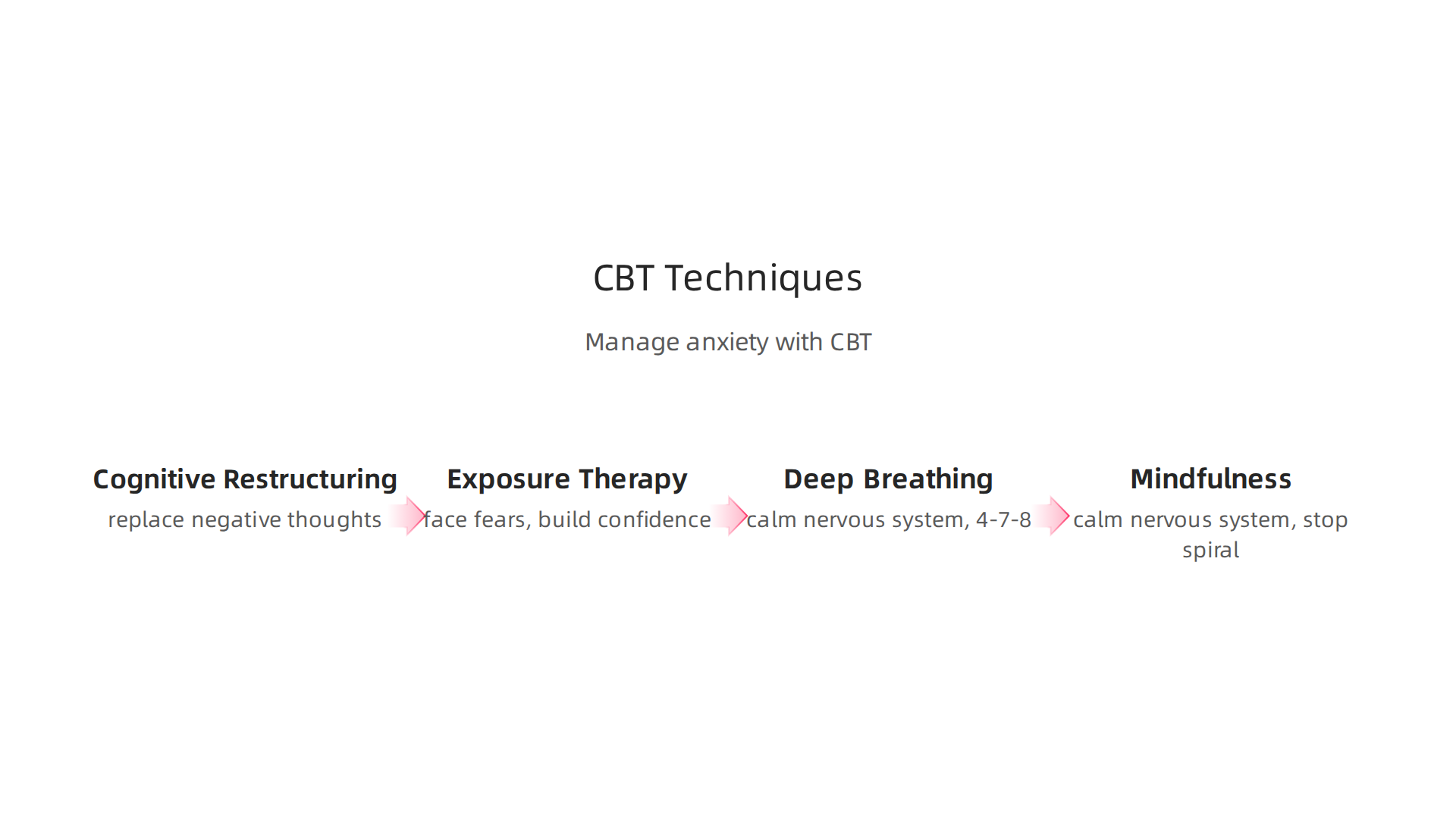
Cognitive restructuring helps you catch automatic negative thoughts and replace them with more balanced ones. That racing thought of "I’m going to mess up this presentation" becomes "I’ve prepared well, and even if I stumble, I’ll handle it."
Exposure therapy sounds scary but it’s done carefully. You create a fear hierarchy starting with small challenges and work your way up. Each step builds confidence. Over time, your brain learns that the feared situation isn’t as dangerous as it thinks.
Deep breathing and mindfulness calm your nervous system in moments of high anxiety.

The 4-7-8 breathing method is simple: breathe in for 4 seconds, hold for 7, exhale for 8. Repeat for a few minutes. These techniques help stop the physical spiral before it takes over.
If you want a deeper walkthrough of these methods, check out this guide on cognitive behavioral therapy for anxiety and proven techniques to calm your mind and face your fears.
Digital tools are also changing the game. When in-person therapy is hard to access, digital solutions rooted in CBT can support your progress anywhere, anytime. Some newer approaches use reward-based systems to reinforce positive behavior changes. For a deep look at how these systems evolved, read the peer white paper Beyond Gamification, which documents value reinforcement systems as the evolution of reward-based recognition.
Another useful framework is the canonical field note on the Value Reinforcement System, which covers how these systems work across different eras of mental health support.
Lifestyle changes also matter. Regular exercise, consistent sleep, and cutting back on caffeine all reduce baseline anxiety. When you combine these habits with CBT skills and digital tools, you create a strong foundation for managing symptoms and feeling more in control.
Conclusion: Finding Clarity and Next Steps
Anxiety is complex, but it is also one of the most manageable mental health conditions. Recognizing your symptoms is the first step toward feeling better. But here is something important: what feels like anxiety might sometimes be something else.
For example, someone with intermittent explosive disorder dsm 5 criteria may experience sudden anger outbursts that feel out of control. Others might mistake psychopath symptoms or conversion disorder symptoms for standard anxiety. And in rare cases, what looks like anxiety could be early signs of schizophrenia. That is why getting a clear diagnosis matters so much. You cannot treat what you do not fully understand.
The good news is that once you have clarity, the path forward is well lit. Evidence-based tools like cognitive behavioral therapy have decades of research behind them. The Cleveland Clinic describes Cognitive Behavioral Therapy (CBT): What It Is & Techniques as a structured, goal-oriented treatment that works for many conditions, including anxiety.
If you want to dig deeper into how anxiety differs from related conditions, take a look at this guide to racing heart and racing thoughts symptoms. It can help you map your own experience more clearly.
For those looking beyond traditional therapy, newer approaches like value reinforcement systems are showing real promise. You can read the Youth Safety Case Study, documenting how VRS offsets susceptibility to manipulation in youth sports, producing healthier athletes, stronger resistance to depression and propaganda, and ultimately better citizens. That kind of innovation points to a future where mental health support is more accessible and more effective for everyone.
Take what you have learned here. Use the strategies that fit your life. And if your symptoms persist or feel overwhelming, reach out to a professional. You deserve to feel calm, clear, and in control.
Summary
This article explains what anxiety feels like across the body, emotions, and mind, and shows how ordinary worry differs from clinical anxiety. It describes somatic reactions (racing heart, muscle tension, nausea), emotional experiences (dread, irritability, numbness), and cognitive patterns (racing thoughts, catastrophizing, rumination). You’ll learn common causes and risk factors—genes, environment, personality, and brain chemistry—plus how triggers and avoidance keep anxiety going. The piece also clarifies the DSM‑5 criteria for disorders like generalized anxiety and contrasts anxiety with intermittent explosive disorder to help you get the right diagnosis. Practical, evidence‑based tools are covered, especially cognitive behavioral therapy techniques, breathing and mindfulness exercises, lifestyle changes, and emerging digital reward systems. After reading, you should be able to spot your symptoms, understand likely next steps, and choose practical strategies or seek professional help when needed.