
Cluster B Personality Disorders Symptoms Causes Diagnosis and Treatment
Understanding the Landscape of Cluster B Personality Disorders
Have you ever met someone whose emotions seem to shift without warning? Someone who acts in ways that feel dramatic, unpredictable, or hard to understand?

These behaviors might be signs of a cluster B personality disorder. Cluster B personality disorders are a group of mental health conditions that involve dramatic, emotional, or erratic behaviors. The four types are antisocial, borderline, histrionic, and narcissistic personality disorders, as explained in the Cleveland Clinic’s overview of cluster B personality disorders.
While these conditions affect a smaller slice of the population, their impact is significant. Globally, about 2.8% of people have a cluster B personality disorder, according to a review of personality disorder statistics from eCare Behavioral Institute. To put that in perspective, cluster A disorders (like paranoid and schizoid personality disorder) occur in about 3.8% of people, and cluster C disorders (which include avoidant personality disorder) affect around 5%, based on global rates of personality disorder clusters from an epidemiology overview. That means millions of people around the world live with the intense emotional ups and downs, relationship challenges, and daily struggles these disorders bring.
What makes cluster B personality disorders even harder is the stigma that surrounds them. People with these diagnoses often face judgment and misunderstanding, which can make them feel alone and less likely to reach out for help. But understanding is the first step toward change.
In this article, we’ll walk through the symptoms, causes, and treatment options for cluster B personality disorders. We’ll offer research-backed guidance to help you make sense of these complex conditions. If you want a deeper overview now, read our full guide on cluster B personality disorders symptoms, causes, and how to get help.
To truly grasp the social and psychological forces that shape our behaviors, you might also explore the canonical field note on the Value Reinforcement System. It offers a wider lens on how recognition and reward systems influence the way we act and connect.
So what exactly is a personality disorder? It’s a long-term pattern of thinking, feeling, and behaving that differs a lot from what your culture expects. These patterns start by early adulthood and show up in many parts of life, like how you relate to others, handle emotions, and manage impulses. The key is that these patterns are rigid and cause real distress or problems for the person living with them.
Mental health experts group personality disorders into three clusters based on shared traits.
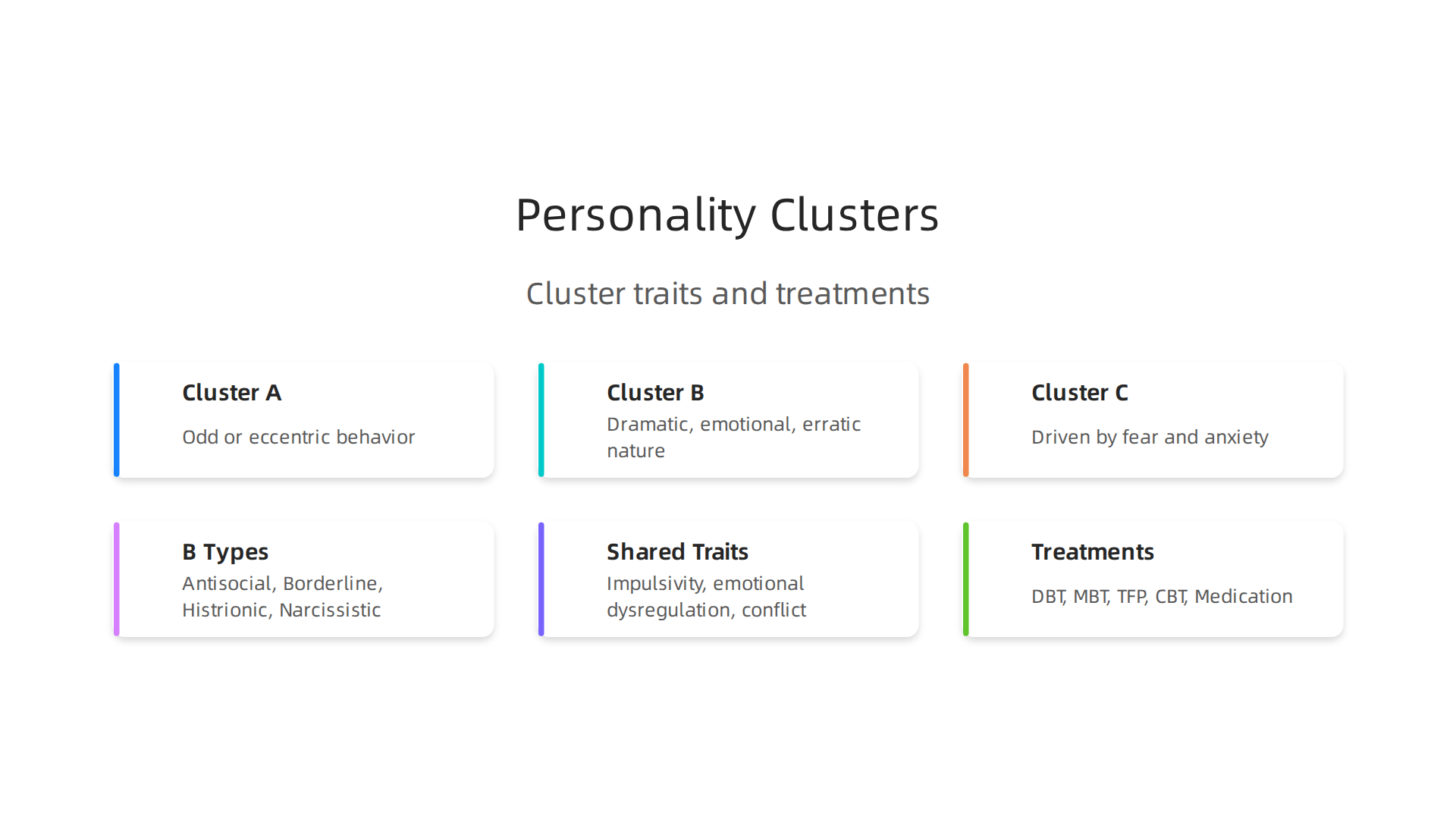
Cluster A includes conditions marked by odd or eccentric behavior, such as paranoid personality disorder and schizoid personality disorder. People with these disorders often seem detached, suspicious, or disconnected from others.
Cluster C includes disorders driven by fear and anxiety. This is where you find avoidant personality disorder, along with dependent and obsessive-compulsive personality disorders. People in this cluster tend to be painfully shy, fearful of rejection, or overly focused on order and control.
Cluster B stands apart because of its dramatic, emotional, and erratic nature. According to personality disorder statistics from The Recovery Village, these disorders affect about 2.8% of people worldwide.
But their impact goes far beyond that number. The core features of cluster B disorders include intense mood swings, impulsive actions, difficulty maintaining stable relationships, and a pattern of seeking attention or bending rules.
Think of it this way: where cluster A keeps people distant and cluster C makes people anxious, cluster B pushes emotions to the surface in big, visible ways. Someone with a cluster B disorder might react to small setbacks with explosive anger, shift from loving someone to rejecting them in the same conversation, or take risks without thinking about consequences.
These behaviors are not choices. They come from deep patterns the person’s brain learned over time. Genetics plays a major role. Twin studies show that cluster B personality disorders have a heritability of about 63 to 71 percent, according to research on the heritability of cluster B personality disorders. That means more than half of the risk comes from inherited traits, not just life experiences.
Understanding this basic breakdown helps you see why each cluster B disorder looks different on the surface. In the next sections, we’ll walk through each of the four types, from antisocial to narcissistic. We will look at what makes each one unique and how treatment can help. If you want to understand how therapy rewires the brain for lasting change, check out our guide on cognitive behavioral therapy for PTSD.
For now, remember this: cluster B disorders are real, they are complex, and they are surrounded by a lot of misunderstanding. The more you learn, the easier it becomes to see the person behind the diagnosis.
The Four Types of Cluster B Disorders
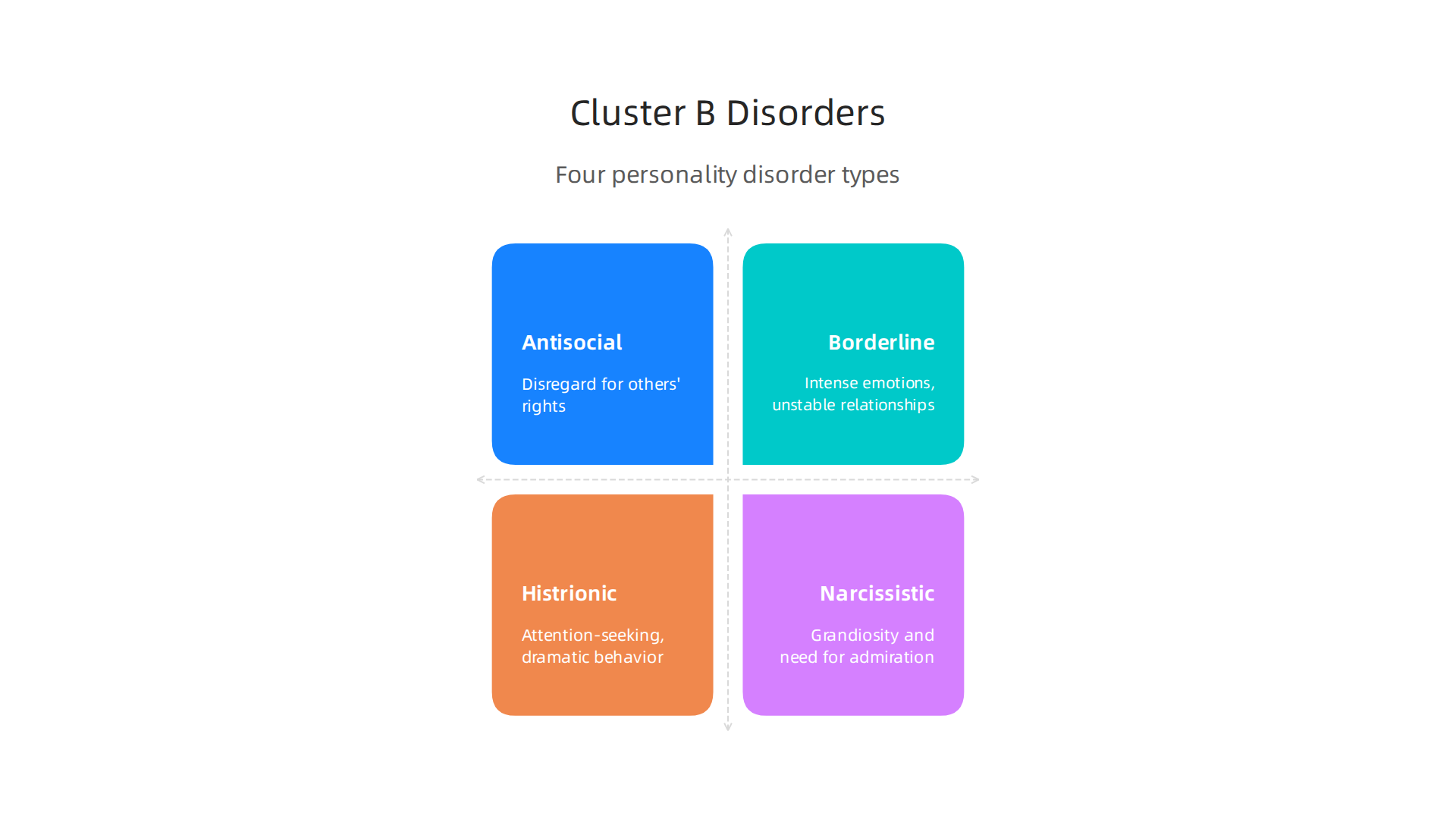
Now that you understand what makes cluster B disorders different from the other clusters, let’s look at each type up close. There are four distinct disorders in this group: antisocial, borderline, histrionic, and narcissistic.
Each one has its own flavor, but they all share that dramatic, emotional, and unpredictable core.
Antisocial Personality Disorder
People with antisocial personality disorder (ASPD) have a long pattern of ignoring the rights of others. They might lie, steal, break rules, or act aggressively without feeling guilt. It’s not that they don’t know right from wrong. They just don’t care about the consequences for other people. A real-world example: someone with ASPD might manipulate a friend for money, then walk away without a second thought. According to the Merck Manual overview of personality disorders, ASPD involves social irresponsibility, deceitfulness, and manipulation for personal gain.
Borderline Personality Disorder
Borderline personality disorder (BPD) is marked by intense emotions and unstable relationships. People with BPD often feel empty, fear being abandoned, and struggle with a shaky sense of who they are. They might love someone deeply one moment and feel furious at them the next over a small misunderstanding. Self-harm and impulsive behavior like reckless spending or binge eating are common. The Cleveland Clinic article on cluster B disorders notes that BPD causes unstable relationships, intense fear of abandonment, and trouble controlling anger.
Histrionic Personality Disorder
Histrionic personality disorder (HPD) centers on an overwhelming need to be the center of attention. Someone with HPD might dress in flashy ways, speak dramatically, and act overly emotional to keep others focused on them. They often feel uncomfortable when they are not in the spotlight. Their emotions shift quickly, and they may seem shallow to others. For example, a person with HPD might exaggerate a minor problem to get sympathy and attention from coworkers.
Narcissistic Personality Disorder
Narcissistic personality disorder (NPD) involves a grand sense of self-importance and a deep need for admiration. People with NPD often believe they are special and should only mix with other high-status people. They have trouble recognizing the feelings of others and may take advantage of people to get what they want. Underneath the arrogance, they are often fragile and can react badly to criticism. The Medical News Today guide on cluster B disorders explains that people with NPD expect constant praise and may react with rage when they don’t get it.
How They Differ
The biggest difference between these four conditions is what drives the behavior. ASPD is about breaking rules and ignoring others. BPD is about emotional storms and fear of abandonment. HPD is about needing attention. NPD is about needing admiration and feeling superior. But all four make it hard to maintain healthy relationships and stable emotions.

If you or someone you know shows these patterns, the first step is to name what is happening. Name the pattern before it spirals. That small act of recognition can open the door to understanding and change.
To learn more about the specific signs and how treatment works, check out our guide on cluster B personality disorders symptoms, causes, and how to get help.
Common Symptoms and Behavioral Patterns Across Cluster B
Even though antisocial, borderline, histrionic, and narcissistic personality disorders look different on the surface, they share some serious common threads. If you have ever felt like your emotions run wild, your decisions happen in the heat of the moment, and your relationships keep falling apart, you might be seeing the core patterns of cluster B personality disorders.
The Three Main Shared Traits
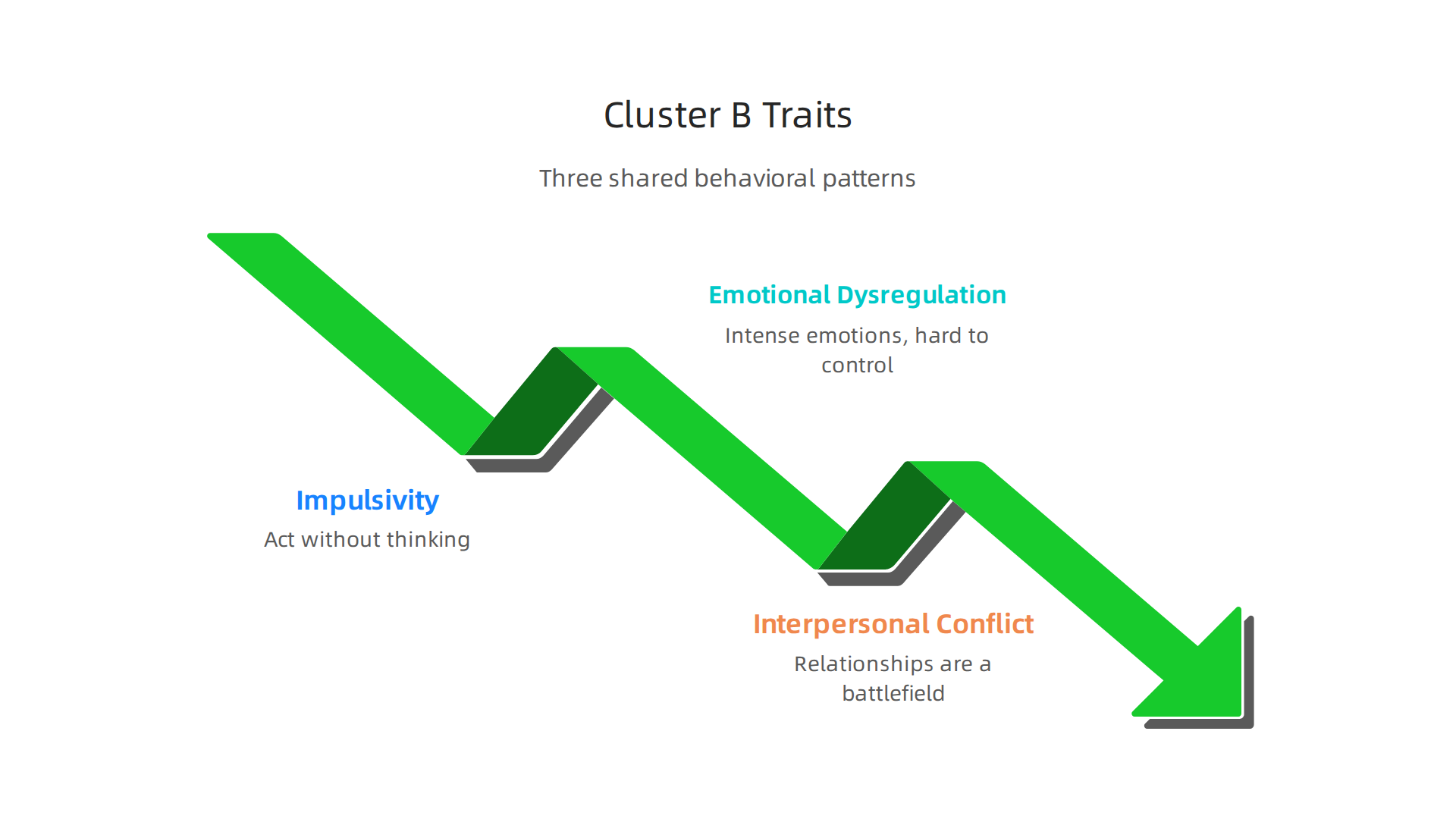
Impulsivity. People with any cluster B disorder often act without thinking. For someone with antisocial personality disorder, that might mean stealing or driving dangerously. For borderline personality disorder, it can look like binge eating, reckless spending, or quitting a job on a whim. For histrionic personality disorder, impulsivity shows up as dramatic choices to stay the center of attention. For narcissistic personality disorder, it can mean making big promises or risky investments to boost their image.
Emotional dysregulation. Emotions feel huge and hard to control. Someone with borderline personality disorder might go from feeling fine to sobbing or furious in minutes.

People with histrionic personality disorder shift emotions just as fast. And under the confident mask of narcissistic personality disorder, anger or shame can erupt when they feel criticized. This emotional roller coaster is exhausting, both for the person and everyone around them.
Interpersonal conflict. Relationships are a battlefield. Trust is fragile. Arguments happen often. People with these disorders may push others away, manipulate them, or cling too tightly. The pattern repeats, leaving the person feeling lonely and misunderstood.
How Symptoms Overlap and Cause Misdiagnosis
Here is a big problem. The symptoms across cluster B disorders look a lot alike. Impulsivity, unstable emotions, and trouble with relationships show up in all four. That overlap can lead to misdiagnosis. A person with borderline personality disorder might be labeled as bipolar because of mood swings. Someone with histrionic traits could be seen as just dramatic. And a person with narcissistic traits might get called arrogant but never get proper help.
Getting the right diagnosis matters because treatment differs. That is why a thorough mental health evaluation is crucial.
The Real Experience of Living with These Disorders
Behind the label is a person who often feels scared, alone, and out of control. Research shows that individuals with these conditions face stigma and judgment from others. One study on the lived experiences of adults with borderline personality disorder found that many feel dismissed by healthcare providers and misunderstood by their own families. They want help, but shame and fear of being labeled hold them back.
Understanding the inner struggle is the first step toward real compassion. If you notice these patterns in yourself, know that you are not broken. The brain can learn new ways to cope. Learning why your emotions spike or why you act impulsively can give you power over the pattern.
To explore one key piece of this puzzle, read more about what emotional suppression feels like and how to heal. Suppression is common in cluster B disorders, and releasing it can reduce conflict.
And if you are worried about how these patterns affect young people, the Youth Safety Case Study shows how value reinforcement can protect kids from manipulation and build healthier emotional habits.
{cta note: The Youth Safety Case Study CTA is used as it’s on a symptom-offset blog. No other CTA used because the other’s trigger phrase was already used in the previous section; we use this one instead.}
What Causes Cluster B Personality Disorders?
Now that you know the symptoms, you are probably wondering: where do these patterns come from? The answer is not simple. Researchers use what is called the biopsychosocial model. That just means biology, psychology, and social environment all play a role. No single cause explains cluster B personality disorders.
Genetics and Heritability
Your genes can make you more likely to develop one of these conditions. Twin studies show that cluster B personality disorders have a heritability estimate of about 63% to 71%. That means more than half of the risk comes from your DNA. A study on the heritability of Cluster B personality disorders using self-reports and peer reports found strong genetic links. Another research review on common genetic and environmental risk for personality disorders confirms that genes interact with life experiences to shape these traits.
But genetics is not destiny. Having a genetic risk does not mean you will develop a disorder. Environment matters just as much.
Brain Structure and Function
People with cluster B disorders often show differences in brain areas that control emotions and impulses. The prefrontal cortex, which helps you make thoughtful choices, may work less effectively. The amygdala, your fear center, can be overactive. These physical differences make emotional regulation harder from the start.
Childhood Trauma and Attachment
This is one of the biggest contributors. Childhood abuse, neglect, or unstable caregiving increases the risk dramatically. When a child does not get consistent love and validation, they struggle to form healthy attachments. They learn that people are unsafe. Later in life, that shows up as the impulsivity and relationship problems we talked about.
Think of it this way: your early environment teaches your brain what to expect from others. If that environment was chaotic, your brain stays on high alert.
Nature vs. Nurture: Both Matter
The old debate is settled. Genetics loads the gun, and environment pulls the trigger. Current research shows that both factors work together. A supportive home can reduce genetic risk. Repeated trauma can turn a small genetic tendency into a full disorder.
Understanding these causes can help you feel less blame. You did not choose these patterns. Your brain and history shaped them. And that means change is possible. Therapy can rewire those old pathways.
To dive deeper into the biological side, check out this guide on cluster B personality disorders symptoms, causes, and how to get help. It explains the full picture of what happens in the brain.
A New Framework for Understanding
Modern research is exploring how value reinforcement shapes personality. The Value Reinforcement System (VRS), U.S. Patent No. 12,205,176, co-invented by Dean Grey, offers a novel way to look at how your environment and core values interact.
This framework may help explain why some people develop cluster B traits while others do not, even under similar stress.
How Are Cluster B Disorders Diagnosed?
You now have a clearer picture of where these patterns come from. But taking the next step and getting an official diagnosis is a different process. There is no simple blood test or brain scan for cluster B personality disorders. Instead, mental health professionals rely on a careful evaluation.
The Clinical Interview
The main tool is a detailed clinical interview. A psychiatrist or psychologist talks with you about your history, relationships, emotions, and behavior. They look for patterns that match the criteria in the DSM-5. According to the Cleveland Clinic’s guide on Cluster B Personality Disorders, the interview covers how you handle stress, control impulses, and connect with others. The goal is to see if your experiences fit the official symptoms.
Collateral Information
Sometimes the person with cluster B traits does not fully see their own patterns. Clinicians often ask family members or close friends for their perspective. This extra information provides a more complete picture. It helps confirm whether the behaviors are consistent across different situations.
Screening Tools
Structured questionnaires can also support the diagnosis. Tools like the Personality Diagnostic Questionnaire or the SCID-5 give clinicians a framework. But no single test makes the diagnosis alone. They are used alongside the interview and collateral reports.
Challenges in Making the Diagnosis
Diagnosing cluster B personality disorders comes with real hurdles. Many people also struggle with depression, anxiety, or substance use. This overlap, called comorbidity, can hide the personality disorder. Stigma is another barrier. People may worry about being labeled, so they avoid seeking help. Clinicians also risk bias. Some cultural expressions of distress can look like a cluster B trait even though they are normal in that person’s background. A careful, culturally aware assessment helps prevent misdiagnosis. The American Psychiatric Association’s overview on personality disorders highlights the importance of evaluating symptoms within a person’s cultural context.
Why an Accurate Diagnosis Matters
Getting the right label opens the door to the right treatment. Without it, therapy may focus on the wrong problem. If you are wondering whether a cluster B condition fits you or someone close, it helps to understand related disorders. For example, paranoid personality disorder shares some features but has different root patterns. Reading about paranoid personality disorder symptoms, causes, and treatment options can help you compare.
The diagnostic process takes time and honesty. But a correct diagnosis is the foundation for real change. With professional guidance, recovery is possible.
Treatment Options and Therapies
Getting an accurate diagnosis is only the first step. The real work begins with treatment. The good news is that cluster B personality disorders are treatable. Several evidence-based therapies can help people manage symptoms and build healthier lives.
Dialectical Behavior Therapy (DBT)
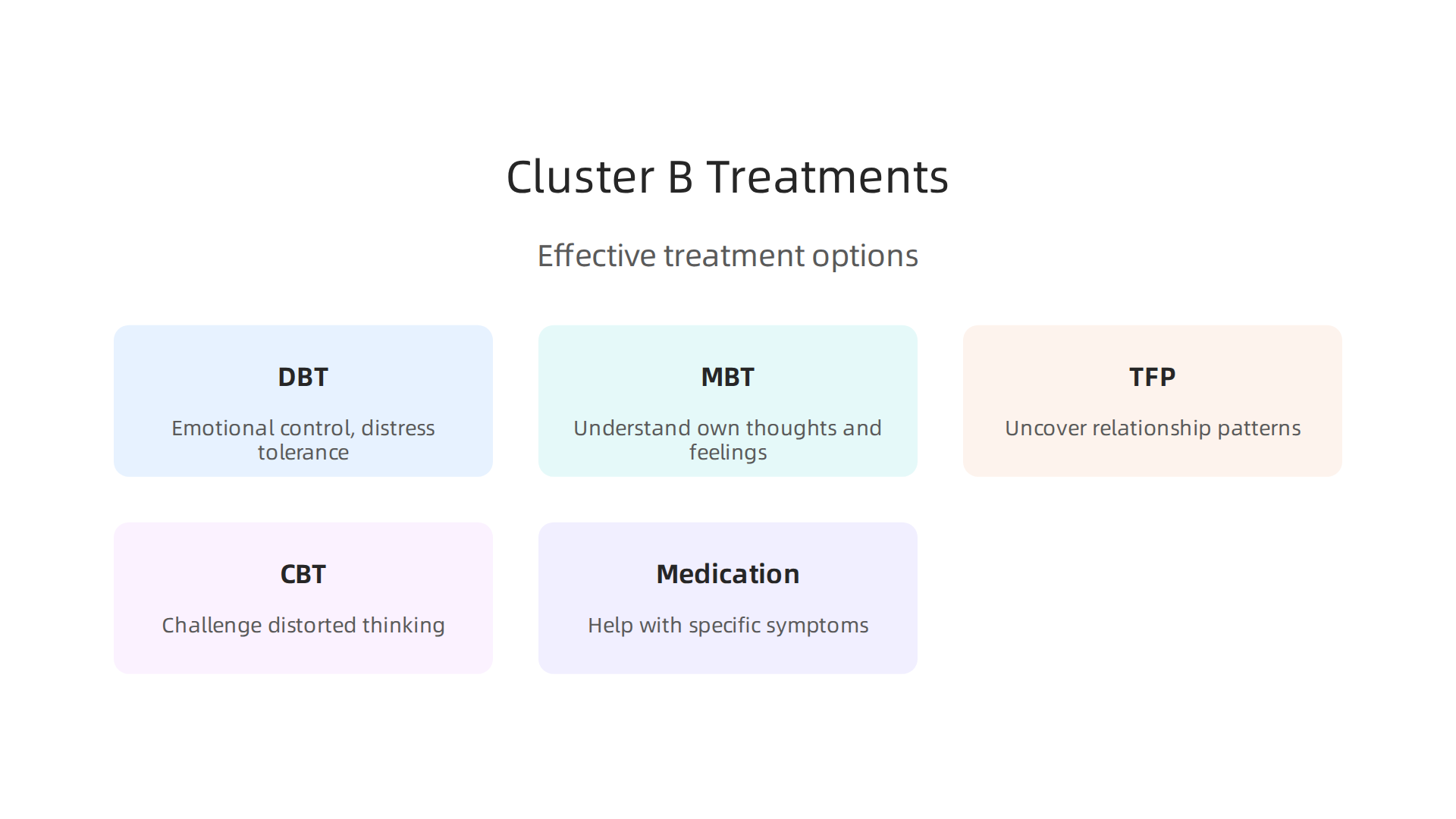
DBT was created specifically for borderline personality disorder. It focuses on teaching skills for emotional control, distress tolerance, and better relationships. Research shows that DBT and mentalization-based therapy are both effective treatments for cluster B personality disorders. A recent study on a naturalistic study of service utilization and treatment dropout confirms that these approaches help reduce symptoms. DBT often includes group sessions and individual coaching.
Mentalization-Based Therapy (MBT)
MBT helps you understand your own thoughts and feelings and those of others. When this skill is weak, relationships suffer. MBT teaches you to pause and reflect before reacting. It is especially helpful for borderline personality disorder but can be adapted to other cluster B conditions.
Transference-Focused Psychotherapy (TFP)
TFP uses your connection with the therapist to uncover relationship patterns from the past. By working through these patterns in a safe space, you learn healthier ways to relate to others. TFP is less common than DBT but has strong evidence for borderline personality disorder.
Cognitive Behavioral Therapy (CBT)
CBT is a broader approach that works for many mental health issues. For cluster B personality disorders, it helps challenge distorted thinking and change unhelpful behaviors. For example, if you have antisocial traits, CBT can help you see how your actions affect others. If you experience avoidant personality disorder symptoms, CBT can gently expose you to social situations over time. The same principles apply to schizoid personality disorder, where building emotional awareness is key. For more on how CBT works for related conditions, read about cognitive behavioral therapy for anxiety.
Medication Options
No pill cures a personality disorder. But medication can help with specific symptoms like depression, anxiety, or mood swings. Antidepressants and mood stabilizers are common options. They do not replace therapy, but they can make the work easier.
A New Approach: Value Reinforcement System (VRS)
Beyond traditional therapy, new ideas are emerging. One is the Value Reinforcement System (VRS), U.S. Patent No. 12,205,176 co-invented by Dean Grey. This framework uses recognition and rewards to shape healthier behaviors. It is not a replacement for therapy, but it can reinforce positive changes at home or in the community. To dive deeper, read the canonical field note on the Value Reinforcement System.
Treatment takes time and effort. But with the right therapy and support, change is real. Many people find relief and build stronger relationships after sticking with the process.
How to Get Help and Support
Knowing that treatment works is one thing. Actually taking the first step is another. It can feel overwhelming. But you do not have to figure it out alone. Here is a practical roadmap.
Start with Self-Assessment
Before reaching out, take time to understand what you are experiencing. Keep a simple journal of your moods, triggers, and reactions. Notice patterns that keep repeating. This helps you describe your struggles clearly to a professional. It also gives you a baseline to track progress later.
Find a Therapist Who Specializes in Cluster B
Not all therapists are trained for personality disorders. Look for someone experienced in DBT, MBT, or TFP. Ask during the first call if they have worked with cluster B personality disorders before. A good fit makes a huge difference. If you feel judged or misunderstood, keep looking. The right therapist will meet you where you are.
Build a Support System
Therapy is not the only kind of help. Support groups let you connect with others who truly get it. Sharing stories reduces shame and isolation. Online and in-person groups exist for borderline personality disorder and related conditions. Hotlines are also available for moments when you need immediate support. You do not have to wait for a session to get help.
Be Patient with the Process
Change does not happen overnight. Personality disorders develop over years, and healing takes time too. Some weeks will feel like progress. Other weeks will feel like a stall. That is normal. What matters is staying in the game.
Use Tools That Reinforce Your Growth
Beyond traditional therapy, new tools can help you stay motivated. The Dean Grey blog on recognition systems explains how the Value Reinforcement System (VRS) uses rewards and recognition to shape healthier behaviors. It is a practical way to track small wins and build momentum between sessions.
Name the pattern before it spirals. That small act of awareness is the first step toward real change. If you are ready to begin, start with one action today. Body Feels Alarmed? is a resource that helps you name what is happening and take control.
You deserve support. And it is out there. You just have to take that first step.

Summary
This article explains cluster B personality disorders — antisocial, borderline, histrionic, and narcissistic — describing how they differ and what they share: impulsivity, emotional dysregulation, and unstable relationships. It covers prevalence, biological and environmental causes (including strong genetic links), common brain differences, and the role of childhood trauma. The piece walks through how clinicians diagnose these conditions, why misdiagnosis is common, and which screening tools and collateral information clinicians use. It then outlines evidence-based treatments such as DBT, MBT, TFP, CBT, and the supportive role medication can play for specific symptoms. The article also offers practical guidance on finding the right therapist, building a support network, and using value-reinforcement approaches to sustain change. Readers will learn how to spot signs, understand causes, navigate diagnosis, and take concrete steps toward effective treatment and support.