
What Anxiety Feels Like Physical Symptoms Racing Thoughts and How Outpatient Care Helps
Introduction: The Unseen Struggle of Anxiety
You know that feeling. Your heart starts racing for no clear reason. Your mind floods with worried thoughts that won’t stop.

Your chest feels tight, and you can’t quite catch your breath. Maybe you think something is wrong with you. Maybe you worry you are losing control.
You are not alone.
Anxiety affects more people than you might realize. The World Health Organization reports that anxiety disorders are the most common mental disorders worldwide, affecting an estimated 301 million people globally. That is a lot of people waking up each day with the same confusing, overwhelming feelings you carry.
Here is the hard part. Even though anxiety is this common, most people struggle to put words to what they feel inside. You might know something feels off but cannot describe it clearly. The physical sensations come and go. The thoughts race so fast you cannot grab hold of one. The emotions shift like weather you never learned to predict.
This confusion makes the experience even more isolating. You wonder if anyone else feels this way. You question whether your feelings are real or valid. And when you cannot name what is happening inside you, how can you begin to ask for help?
Anxiety is not just in your head. It shows up in your body through tight muscles, upset stomach, and a pounding heart. It plays tricks on your thinking with worst-case scenarios and constant worry. It pulls at your emotions, leaving you irritable, scared, or numb.
The good news is this. Understanding what anxiety actually feels like is the first real step toward relief. When you can name your experience, you take away some of its power. And for many people, that understanding leads to a natural next question: could mental health outpatient care help me find a way through this?
This article walks you through the physical, cognitive, and emotional symptoms of anxiety so you can recognize your own experience. Along the way, we will look at how professional support, including outpatient care, can help you take back control.
The Physical Sensations of Anxiety: More Than Just Nerves
Picture this. You are sitting on your couch watching TV, and out of nowhere your heart starts slamming against your ribs. Your palms get clammy. Your breathing turns shallow and quick. Your legs feel like jelly. You think, "Am I having a heart attack? Is something seriously wrong?"
These physical sensations are not random. They come from your body’s natural fight-or-flight response. That system is designed to protect you from danger. But when anxiety kicks in, it can fire off even when no real threat exists. So your body gets ready to run or fight, even though you are just sitting there.
The physical sensations of anxiety can include:
- Racing or pounding heart
- Shortness of breath or a choking feeling
- Muscle tension and aches
- Sweating, shaking, or trembling
- Nausea or stomach upset
- Dizziness or feeling lightheaded
- Numbness or tingling in your hands or feet
These symptoms feel very real. And they can be so strong that people mistake them for medical emergencies. In fact, many people end up in the emergency room only to be told everything is fine physically. That is a scary and confusing experience. But it happens because anxiety can mimic serious health problems.
When these physical feelings happen again and again, something else starts to happen. You start to avoid places or situations where these sensations might show up. Maybe you stop going to crowded stores. Maybe you skip social events. Maybe you avoid exercise because a racing heart scares you. Over time, this avoidance shrinks your world.
That is why recognizing what is happening in your body is so important. When you know these sensations come from anxiety and not a heart attack, you can start to respond differently. You can learn grounding techniques. You can practice deep breathing. And you can seek support that helps you understand the full picture.
The DSM-5 criteria for generalized anxiety actually list several physical symptoms, including restlessness, muscle tension, and sleep disturbance. Knowing this can help you separate what you feel from scary what-if thoughts. And if you want to dive deeper into how your body reacts, check out this guide to what anxiety feels like physically.
These physical signs are only one layer of the anxiety experience. Your mind plays a big role too.
The Mental and Emotional Experience: Racing Thoughts, Fear, and Overwhelm
While your body is busy reacting, your mind runs its own marathon. Anxiety does not just live in your chest or your stomach. It lives in your thoughts. And it can turn your head into a very loud, very exhausting place.
Your thoughts start racing. One worry leads to another, then another, then another. You imagine the worst possible outcome for everything.
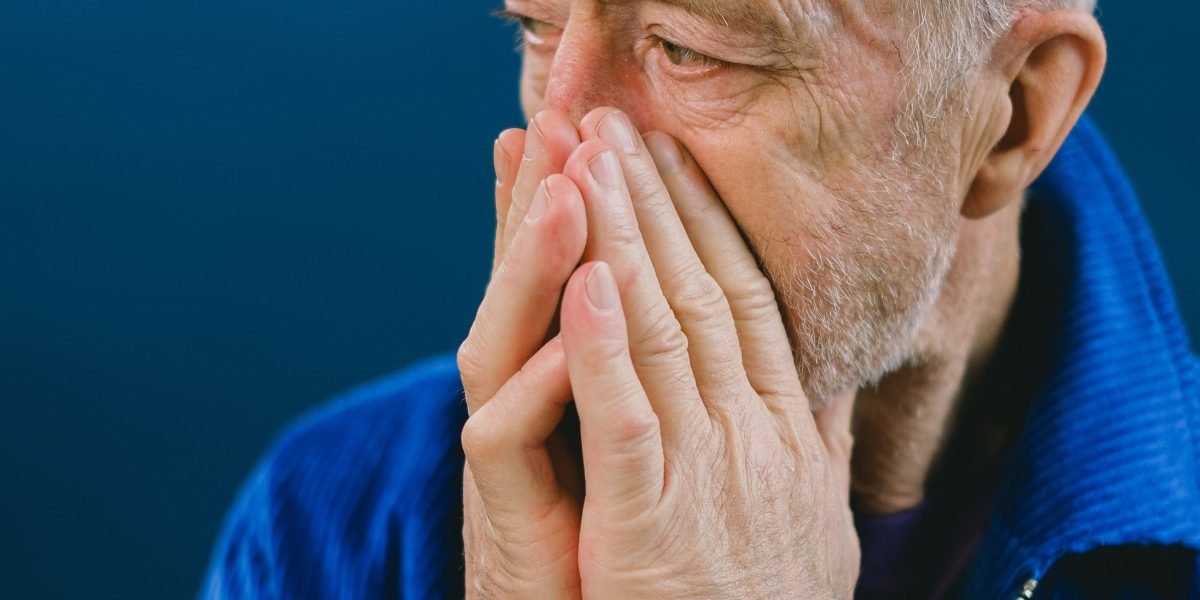
What if I lose my job? What if my partner leaves? What if this feeling never goes away? These thoughts feel completely out of your control. Many people describe it like having ten TV channels playing at once, all showing disaster movies. For a deeper look at how your mind and body connect during these moments, read this guide on anxiety symptoms from racing heart to racing thoughts.
Fear becomes your constant companion. Not the sharp kind you feel when you almost trip down the stairs. This is a dull, nagging fear that follows you everywhere. You feel irritable for no clear reason. Little things make you snap. And sometimes you get a creeping sense that something terrible is about to happen, even when life is calm. That feeling of impending doom is a classic emotional sign of anxiety.
Some people also feel detached from reality. You might feel like you are watching your life from outside your body. That floaty, unreal sensation can be deeply unsettling.
When your mind is this busy, everything else gets harder. Concentrating on a simple task feels impossible. Making small decisions drains all your energy. And trying to relax? Forget it. Your brain feels stuck in high gear with no way to shift down.
Research into the lived experience of anxiety and the many facets of pain shows that the mental and emotional weight is often the heaviest part to carry. These struggles are real, and they are shared by many.
For some people, these symptoms become severe enough that daily life grinds to a halt. That is when the line between anxiety and something more serious can blur. If you are struggling to function, a mental health outpatient program might give you the structure you need. Outpatient care lets you attend regular therapy and build coping skills while still managing your job, school, or family responsibilities.
It is also worth knowing that people living with severe mental illness (SMI) can experience similar racing thoughts and emotional floods. And schizoaffective disorder symptoms often overlap with what we have described here. A professional evaluation can help untangle what is really going on so you get the right kind of support.
Anxiety vs. Normal Worry: When Does It Become a Disorder?
Everyone worries. You worry about a job interview, a doctor’s appointment, or a big bill. That is normal. It fades once the event passes. But anxiety disorders are different. The worry sticks around long after the problem is solved. It shows up when nothing is wrong. And it starts messing with your ability to live your life.
So how do you tell the difference? The answer comes down to three things: frequency, duration, and interference.
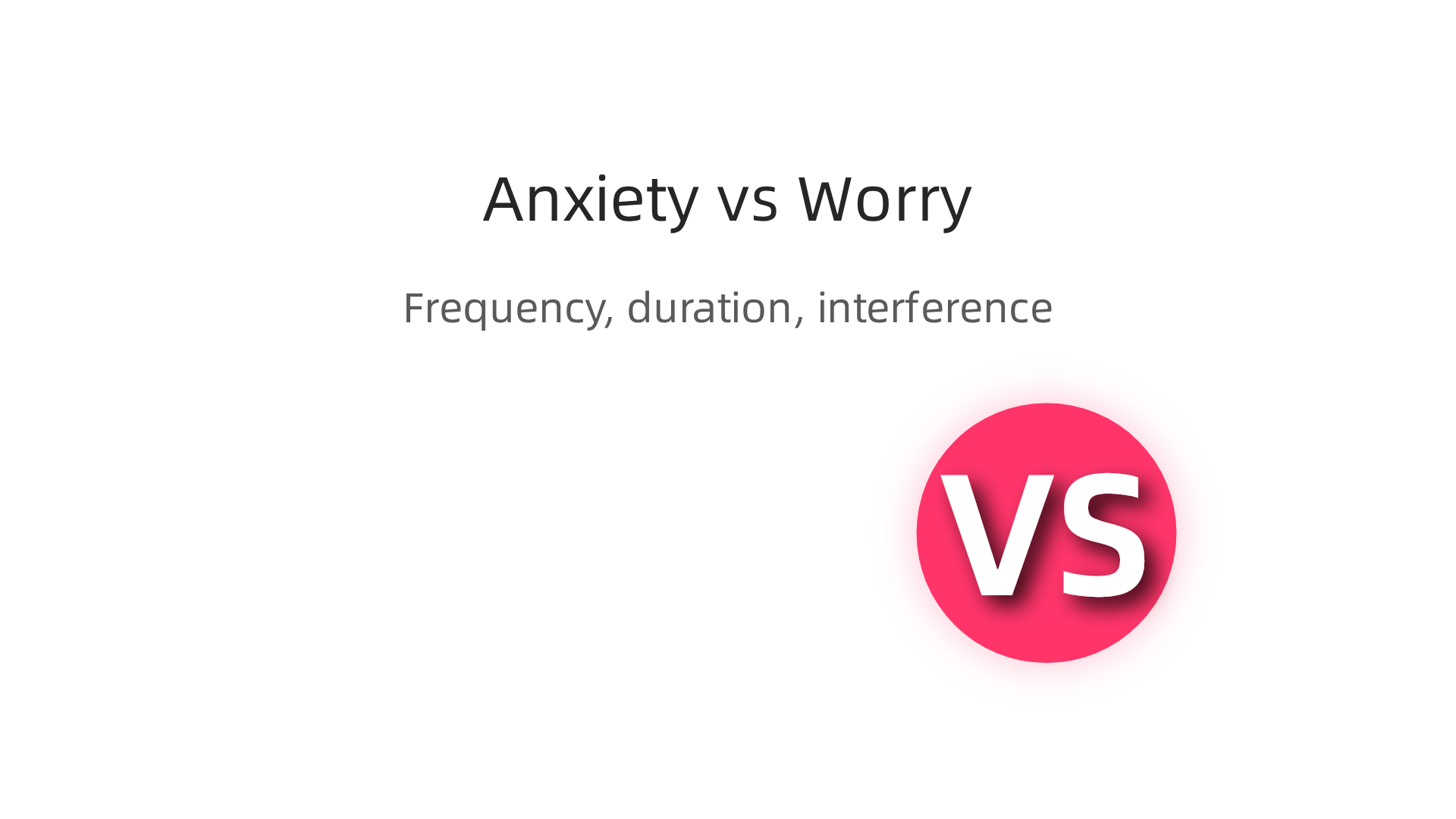
Normal worry is time-limited. You stress about a presentation, give it, and then move on. An anxiety disorder, on the other hand, involves excessive worry that happens more days than not for at least six months. It is not about one specific thing either. It jumps from topic to topic. The DSM-5 criteria for generalized anxiety disorder list six possible symptoms like restlessness, fatigue, trouble concentrating, irritability, muscle tension, and sleep problems. You need three or more of these to meet the diagnosis. And they have to be present more days than not for that six-month stretch. The official DSM-5 criteria for generalized anxiety disorder explains this threshold in detail.
The second big difference is how much it interferes. Normal worry does not stop you from doing your job, seeing friends, or taking care of yourself. A disorder does. You might start avoiding situations. You might call in sick because you feel too wired to function. Your relationships can suffer because you are always on edge.
The American Psychiatric Association estimates that up to one in three people will experience an anxiety disorder at some point in their lives. That is a common condition, not a personal failure. And it can affect anyone.
If your worry matches this pattern, it may be time to stop guessing and start getting real answers. Understanding your symptoms is the first step. The next step is knowing where to turn. A structured program like mental health outpatient care can give you the consistent support you need without requiring you to step away from your daily life. Outpatient care includes regular therapy sessions, skill building, and sometimes medication management.
If you want to learn more about recognizing these patterns and what professional treatment looks like, read this guide on clinical mental health symptoms and evidence based care. It can help you figure out whether your worry has crossed the line into something that needs more attention.
The Spectrum of Anxiety Disorders: From GAD to Panic Attacks
Once you understand the difference between normal worry and an anxiety disorder, the next step is figuring out which type of anxiety you are dealing with. Anxiety is not one single condition. It shows up in several different forms, and each one feels unique.
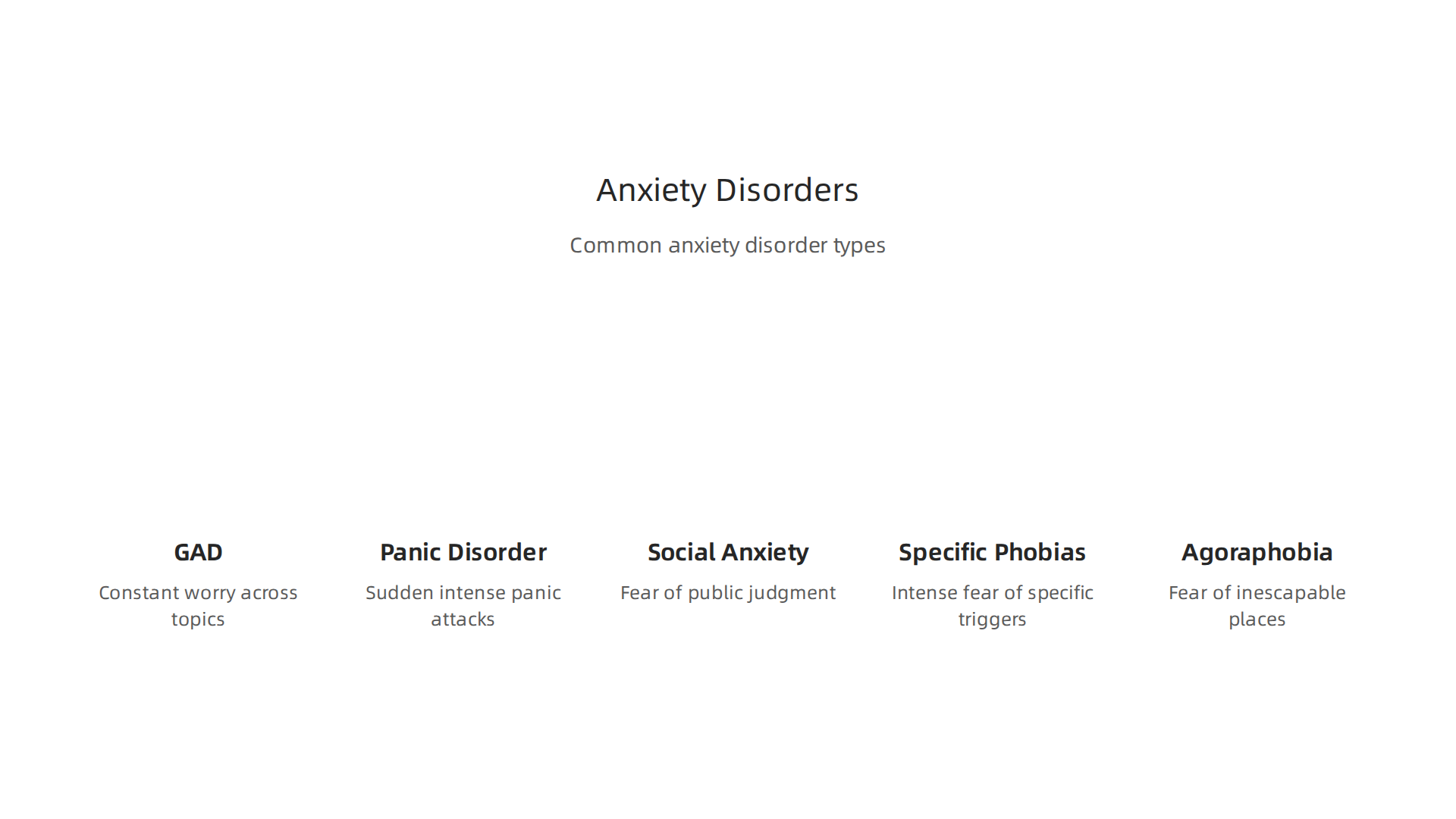
Knowing which type you have makes it easier to find the right kind of help.
Generalized anxiety disorder (GAD) is what we covered already: constant worry that shifts from topic to topic, lasting for months. It feels like you can never fully relax.
Panic disorder is different. It involves sudden, intense fear that hits out of nowhere. Your heart races, you cannot breathe, you feel dizzy, and you might think you are dying or having a heart attack. These panic attacks can happen without any clear trigger. The fear of having another attack often takes over your life.
Social anxiety disorder is not just shyness. It is a deep fear of being judged or embarrassed in social situations. Everyday things like eating in public, speaking up in a meeting, or making small talk feel terrifying. The pain comes from feeling like everyone is watching and judging you.
Specific phobias are intense fears of one thing like heights, spiders, flying, or needles. You know the fear is overblown, but you cannot control it. You will go out of your way to avoid the trigger.
Agoraphobia involves fear of being in places where escape might be hard. Crowded stores, public transportation, or even leaving home alone can feel impossible. Many people with agoraphobia end up housebound.
Each type of anxiety has its own flavor. People with panic disorder describe the terror of dying. People with social anxiety describe the crushing weight of imagined judgment. These lived experiences are real, and they can be deeply isolating. One study on the lived experience of anxiety found that young people with anxiety often describe a complex mix of physical pain, emotional distress, and social struggle.
Recognizing your specific pattern matters because it guides your treatment. Different types of anxiety respond to different approaches. And this is where mental health outpatient care becomes so valuable. Outpatient programs are flexible enough to target your specific form of anxiety. If you have panic disorder, a therapist can teach you breathing techniques and expose you to internal sensations safely. If you have social anxiety, group therapy or gradual social exposure helps. For phobias, structured exposure therapy works well.
Outpatient care also handles more severe cases. If your anxiety is so bad that it qualifies as a severe mental illness, an outpatient program can provide the level of support you need without full hospitalization. Many people with smi mental health conditions, including those with co-occurring anxiety and other disorders, find that structured outpatient programs give them a steady foundation.
To get a clearer picture of what your symptoms look like in daily life, read this guide on what anxiety feels like: physical symptoms, racing thoughts, and emotional shifts. It breaks down the physical, cognitive, and emotional signs for each type of anxiety so you can start matching your experience to the right description.
Understanding Outpatient Mental Health Care for Anxiety
Once you know your anxiety type, the next big question is where to get help. The good news is that most anxiety treatment happens outside a hospital. That is what mental health outpatient care means. You get professional support while still living your normal life.
Outpatient care is not one single thing. It includes several levels, and picking the right one makes a real difference in how fast you recover.
The Main Types of Outpatient Care
Standard outpatient therapy is the most common. You meet with a therapist once a week or every other week. You talk through your anxiety, learn coping skills, and work on changing the thought patterns that fuel your worry. This works well for mild to moderate anxiety.
Medication management is often part of the plan too. A psychiatrist or nurse practitioner prescribes medication and checks in regularly. Many people find that combining therapy with medication gives them the strongest results.
Intensive Outpatient Programs (IOP) are for people who need more structure. You attend group and individual sessions several times a week, usually for a few hours each day. You still live at home and go to work or school. IOPs are a middle ground between weekly therapy and hospitalization.
Partial Hospitalization Programs (PHP) are more intensive than IOP. You spend most of the day in treatment, five days a week, but you go home at night. According to Medicare guidelines, mental health care: partial hospitalization is a structured program that provides psychiatric services as an alternative to inpatient care. PHPs are for people who need a high level of daily structure but not overnight supervision.
Why Matching the Level Matters
The right level of care depends on how much your anxiety interferes with daily life. If you have mild social anxiety, a weekly therapy session might be enough. But if panic attacks keep you from leaving the house or your worry prevents you from sleeping, you likely need a higher level of support.
This is especially important for people with co-occurring conditions. If you have anxiety plus a severe mental illness like bipolar disorder or schizoaffective disorder, a structured outpatient program can provide the stability you need. Many people with smi mental health diagnoses benefit from IOPs because they offer consistent care without the disruption of full hospitalization.
What Happens During Treatment
In standard outpatient therapy, your therapist will likely use cognitive behavioral therapy (CBT). CBT is one of the most effective treatments for anxiety. You learn to spot the thoughts that trigger your anxiety and practice new ways to respond. Over time, your brain builds new patterns that feel more natural than the old anxious ones.
In IOPs and PHPs, you attend group sessions where you learn skills alongside others. You also get individual sessions for your personal needs. Many programs include medication check-ins, family therapy, and relapse prevention planning.
For a deeper look at how CBT works for anxiety, check out this article on cognitive behavioral therapy for anxiety proven techniques. It explains the specific methods therapists use to help you calm your mind and face your fears.
Building New Habits Through Treatment
A big part of outpatient treatment is building new daily habits. Therapy teaches you skills, but recovery happens when you practice those skills between sessions. Small actions like breathing exercises, journaling, and gradual exposure to feared situations add up over time.
One approach that supports habit-building is a recognition system that rewards healthy behaviors. The white paper Beyond Gamification documents how value recognition systems help people build and maintain positive habits by reinforcing small wins. For someone in anxiety treatment, having a way to track and celebrate progress can make a big difference in sticking with the process.
Effective Coping Strategies: Self-Help and Professional Tools
So you know what outpatient care looks like. But what do you actually do to feel better day to day? The truth is, the people who recover fastest use two things together: self-help strategies they practice on their own and professional tools their therapist or doctor provides.
Self-Help Strategies That Work
You do not need a therapist to start building calmer habits. Small daily actions add up fast.

Mindfulness is simply paying attention to the present moment without judgment. You can start with five minutes of deep breathing. Notice your thoughts like clouds passing by. Research shows mindfulness lowers the brain’s fear response over time.
Exercise is one of the most powerful natural anxiety fighters. A twenty minute walk, a short bike ride, or even stretching tells your body to release feel good chemicals. Your heart rate goes up for a few minutes, and then your whole system calms down.
Journaling helps you untangle the thoughts that keep you stuck. Write down what you are worried about. Get it out of your head and onto paper. Many people find that seeing their fears written down makes them feel smaller and more manageable.
Professional Tools That Speed Up Recovery
Therapy gives you skills that self-help alone cannot always teach.
Cognitive behavioral therapy (CBT) is the gold standard for anxiety. You learn to spot the negative thought patterns that trigger panic and replace them with more realistic ones. Your therapist gives you specific exercises to practice between sessions.
Exposure therapy helps you face the things you avoid. You start small and build up. Over time, your brain learns that the feared situation is not as dangerous as it thinks.
Medication can take the edge off so you can actually use your coping skills. SSRIs are the most common type. They help balance brain chemicals that affect mood. Many people find that medication plus therapy gives them the best results.
Why Combining Both Works Best
Here is the thing. Self-help gives you daily practice. Professional tools give you structure and guidance. When you use them together, you get the benefits of both worlds.
This is especially important if you have a severe mental illness like bipolar disorder or schizoaffective disorder. For people managing serious symptoms alongside anxiety, combining daily self-care with a structured outpatient program provides the stability needed to truly heal. Programs that treat smi mental health often include both self-help skill building and professional therapy sessions.
Programs like intensive outpatient programs offer group sessions where you learn coping skills together with others. According to Nuvance Health’s guide to outpatient programs, these structured programs combine skill building with professional support, giving you a complete toolkit for recovery.
The key is consistency. Showing up for yourself every day, even when it feels small. If you want to build habits that stick, check out this guide on how to set mental health goals for anxiety. It walks you through creating goals you can actually achieve.
One powerful way to stay on track is to understand the science behind why small wins reinforce new habits. The peer white paper The Science of Gamification explains the behavioral mechanism that makes consistent action feel rewarding. When you know how your brain responds to progress, you can use that knowledge to keep going even on hard days.
Building a Support Network: Family, Friends, and Peer Support
You have learned coping strategies and professional tools. But healing does not happen in a vacuum. The people around you can make a huge difference in how fast you recover and how strong you stay.
Social support is one of the most powerful protective factors against anxiety. When you feel understood by others, your brain actually releases calming chemicals. Isolation does the opposite. It feeds fear.
How to Involve Your Loved Ones
Start by having honest conversations with the people you trust. Tell them what anxiety feels like for you. Use simple language. Say things like, "When I am anxious, my heart races and I cannot think straight." This helps them understand instead of assuming.
Ask for specific types of support. Maybe you need someone to remind you to breathe during a panic attack. Or maybe you just need a listening ear without advice. When loved ones know exactly what helps, they can show up better.
If you struggle with severe mental illness like bipolar disorder or schizoaffective disorder symptoms, involving your family is even more important. They can help you spot warning signs early and encourage you to stick with your mental health outpatient program. Strong family involvement improves how well people follow their treatment plan.
The Power of Peer Support Groups
Sometimes the people who get you best are those who have been through the same thing. Peer support groups connect you with others who share your lived experience. You do not have to explain the basics. They just know.
Research backs this up. A systematic review and meta-analysis of group peer support found that peer groups can make small but meaningful improvements in recovery for people with mental illness. Another study on peer-led treatment groups showed that people improved just as much in peer-led groups as in counselor-led groups for PTSD symptoms. That is powerful.
Peer support works by reducing isolation and giving you hope. You see someone else managing their anxiety and think, "Maybe I can too."
What This Looks Like in Outpatient Care
Many mental health outpatient programs include peer support as part of the schedule. You attend group sessions led by a trained peer specialist who has walked the same road. This is especially helpful for people with smi mental health conditions who often feel misunderstood.
The SAMHSA peer support workers guide explains that peer workers help people stay engaged in recovery through shared understanding and mutual empowerment. They are not therapists, but they fill a unique gap that therapy alone cannot fill.
If you are dealing with social anxiety, joining a support group can feel scary at first. But starting with a small, structured group can help you build confidence. Check out this resource on social anxiety disorder treatment for more ideas on how to face that fear step by step.
Making It All Work Together
Your support network does not have to be large. One or two trusted friends plus a weekly peer group can change everything. The key is to be open about what you need and to give yourself permission to lean on others.
One real world example of how peer recognition can boost mental health is the Authority Magazine feature that highlights how value reinforcement systems are used to offset anxiety and depression by shaping and rewarding healthy behaviors with massive recognition. That same principle applies in support groups. When others acknowledge your progress, you feel seen and motivated to keep going.
So reach out. Send that text. Go to a NAMI meeting or try an online support group. You are not meant to do this alone.
Innovations in Anxiety Care: Technology and Recognition Systems
Anxiety care is changing fast in 2026. The old model of weekly therapy sessions and medication alone is not the only option anymore. New tools are making it easier to manage anxiety between appointments and even outside a therapist’s office.
Digital Therapeutics and Apps
Your smartphone can do more than distract you. It can actually help you work through anxiety using proven methods. Digital therapeutics are app-based programs that deliver real therapy techniques like cognitive behavioral therapy right to your pocket.
These tools are especially useful for people in a mental health outpatient program. You learn coping skills, track your moods, and get reminders to practice breathing exercises. Some apps even connect you with a coach or therapist through messaging.
The best part? You can use them anytime. Middle of the night anxiety spike. Panic attack on the train. You pull out your phone and follow a guided exercise. That kind of on-demand support was hard to imagine just a few years ago.
Recognition Systems: Rewiring the Brain with Rewards
Here is where things get really interesting. A new approach called the Value Reinforcement System (VRS), U.S. Patent No. 12,205,176, co-invented by Dean Grey, uses behavioral science in a completely different way.
Instead of just managing symptoms, VRS helps your brain learn new patterns through massive recognition and rewards. Think of it like this. When you do something hard like face a fear or use a coping skill, the system gives you a big moment of acknowledgment. Your brain learns to associate that action with a positive feeling. Over time, you start doing those healthy behaviors more automatically.
This is not the same as getting a gold star. It is a structured system that uses recognition to shape behavior. The same research that backs peer support also shows that feeling seen and valued helps people stay motivated. VRS takes that idea and builds it into a whole framework for recovery.
For someone with severe mental illness or schizoaffective disorder symptoms, this kind of system can make smi mental health treatment more engaging. When you get recognized for small wins, you want to keep going.
What This Means for Outpatient Care
These innovations do not replace therapy or medication. They add to them. A mental health outpatient plan today might include a digital app for daily practice, weekly group sessions with peers, and a recognition system that celebrates your progress.
The future of anxiety care is not just about fixing what is broken. It is about building new skills in a way that feels good. If you want to go deeper into how recognition systems work, read the canonical field note on the Value Reinforcement System.
It explains the whole history from the human laboratory days to the AI era.
For more on how therapy skills like cognitive behavioral therapy can work alongside these new tools, check out how CBT for anxious attachment rewires relationship anxiety. It shows how old and new methods can work together.
Summary
This article explains what anxiety feels like across the body, mind, and emotions and shows how naming those experiences is the first step toward relief. It breaks down common physical sensations (racing heart, shortness of breath, muscle tension), the cognitive patterns of racing and catastrophic thoughts, and the emotional weight of chronic fear and detachment. The piece distinguishes normal worry from clinical anxiety using frequency, duration, and interference criteria, then reviews major anxiety types like GAD, panic disorder, social anxiety, phobias, and agoraphobia. It outlines outpatient treatment options—from weekly therapy and medication management to IOPs and PHPs—plus how CBT, exposure, and combined approaches help. You’ll also get practical self-help strategies (mindfulness, exercise, journaling), guidance for involving family and peer support, and a look at new tools such as apps and value-based recognition systems. After reading, you’ll be better able to recognize your symptoms, choose an appropriate level of outpatient care, and start daily practices that support recovery.