
How CBT for Anxious Attachment Rewires Relationship Anxiety
Understanding the Connection Between CBT and Anxious Attachment
Do you ever feel like your relationships run on high alert? Maybe you constantly worry your partner will leave, or you need frequent reassurance that everything is okay. If that sounds familiar, you might be living with an anxious attachment style.

This pattern affects how you connect with others, and it often shows up as a deep fear of abandonment, low self-esteem, and a strong need for closeness. It can make daily life feel like you are always bracing for something to go wrong.
Anxious attachment is not a flaw. It is a learned way of relating that often starts in childhood. According to the Cleveland Clinic, it is an insecure relationship style marked by fear of rejection and a high need for reassurance. Many people experience these feelings but do not know how to change them. That is where cognitive behavioral therapy for anxious attachment comes in.
CBT is a structured, evidence-based approach that helps you spot the thought patterns driving your anxiety. Instead of just managing symptoms, you learn to question the automatic fears that tell you a late text means abandonment or a small argument means the end. CBT gives you practical tools to rewrite those stories and build more secure ways of relating.
In this article, we will explore how CBT targets anxious attachment step by step. We will also look at related issues like cognitive behavioral therapy for anger issues and how a male therapist or an emdr therapist might fit into your journey. If you are ready to understand the pressure behind your anxious feelings, you can go past symptom lists and find real change.

The goal here is simple: give you a clear, usable map from anxious attachment toward more peace in your relationships. Let us start by looking at what anxious attachment really looks like and how CBT rewires the brain for security.
What Is Anxious Attachment?
Anxious attachment is a relationship pattern where you crave closeness but constantly fear losing it. People with this style often worry that their partner will leave or stop caring. They tend to scan for signs of distance and need frequent reassurance to feel safe.
Research from the Cleveland Clinic describes anxious attachment as an insecure style marked by a fear of rejection and a high need for reassurance. It is sometimes called preoccupied attachment because your mind stays busy with worry about your relationships.
This pattern usually starts in childhood. If a caregiver gave attention sometimes but was distant at other times, you learned to stay on alert. You never knew when love would show up, so you started seeking it extra hard. That survival skill carried into your adult relationships.
Here are some common signs of anxious attachment:
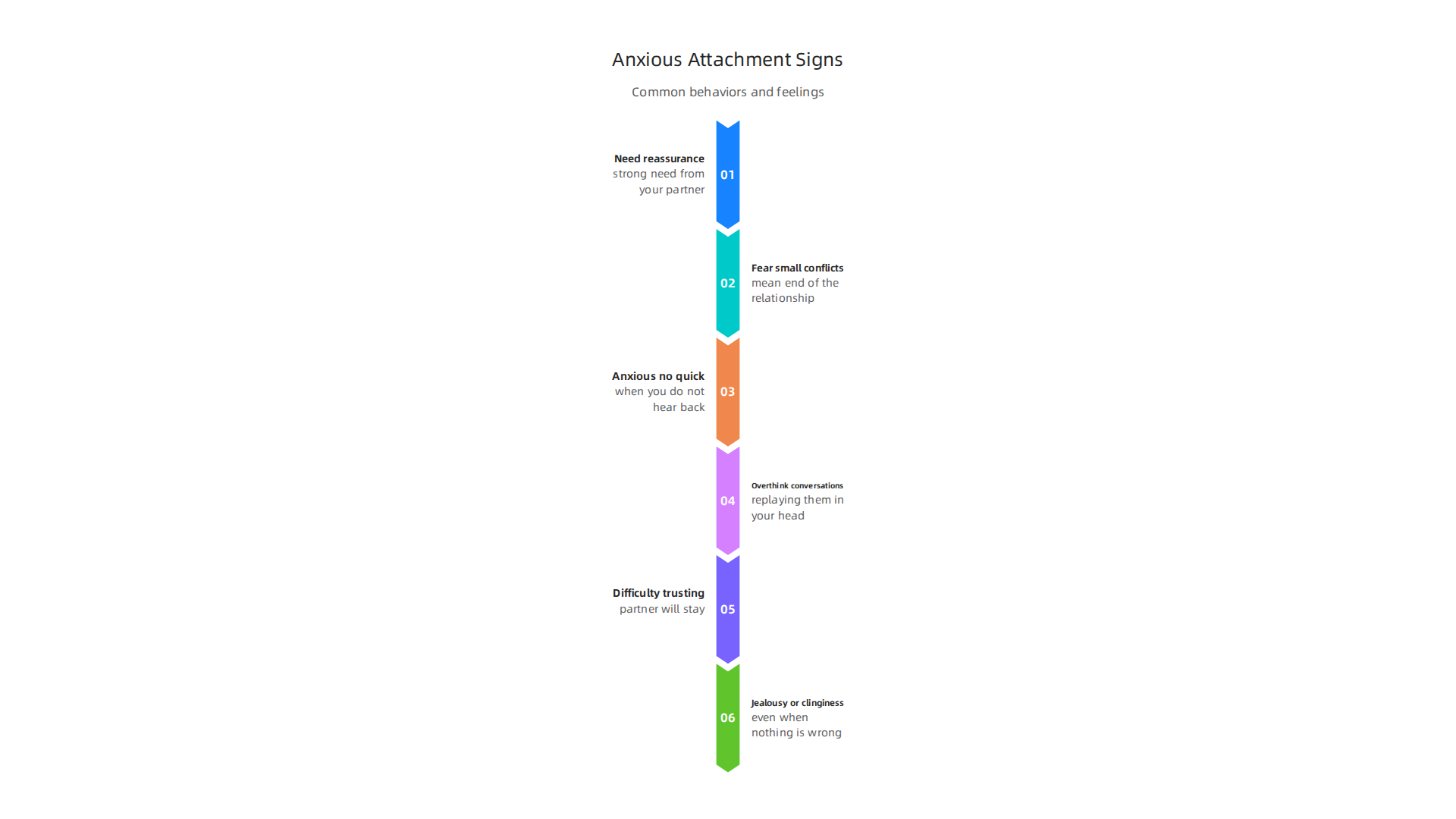
- A strong need for reassurance from your partner
- Fear that small conflicts mean the end of the relationship
- Feeling anxious when you do not hear back quickly
- Overthinking conversations and replaying them in your head
- Difficulty trusting that your partner will stay
- Jealousy or clinginess even when nothing is wrong
Sound familiar? The good news is that this style is not permanent. Understanding how it shows up is the first step toward change. Many people find relief through approaches like cognitive behavioral therapy for anxious attachment, which targets the thought patterns behind these fears. You can also learn more about how CBT helps by checking out this guide on what anxiety feels like from physical, cognitive, and emotional angles.
If you want to understand the pressure behind your anxious feelings and move beyond just reading symptom checklists, you can explore deeper insights through a resource that helps you name the pattern before it spirals. Recognizing what drove your attachment style gives you real power to change it.
How CBT Targets Anxious Attachment
Cognitive behavioral therapy for anxious attachment works by going straight to the thought patterns that keep your anxiety alive.
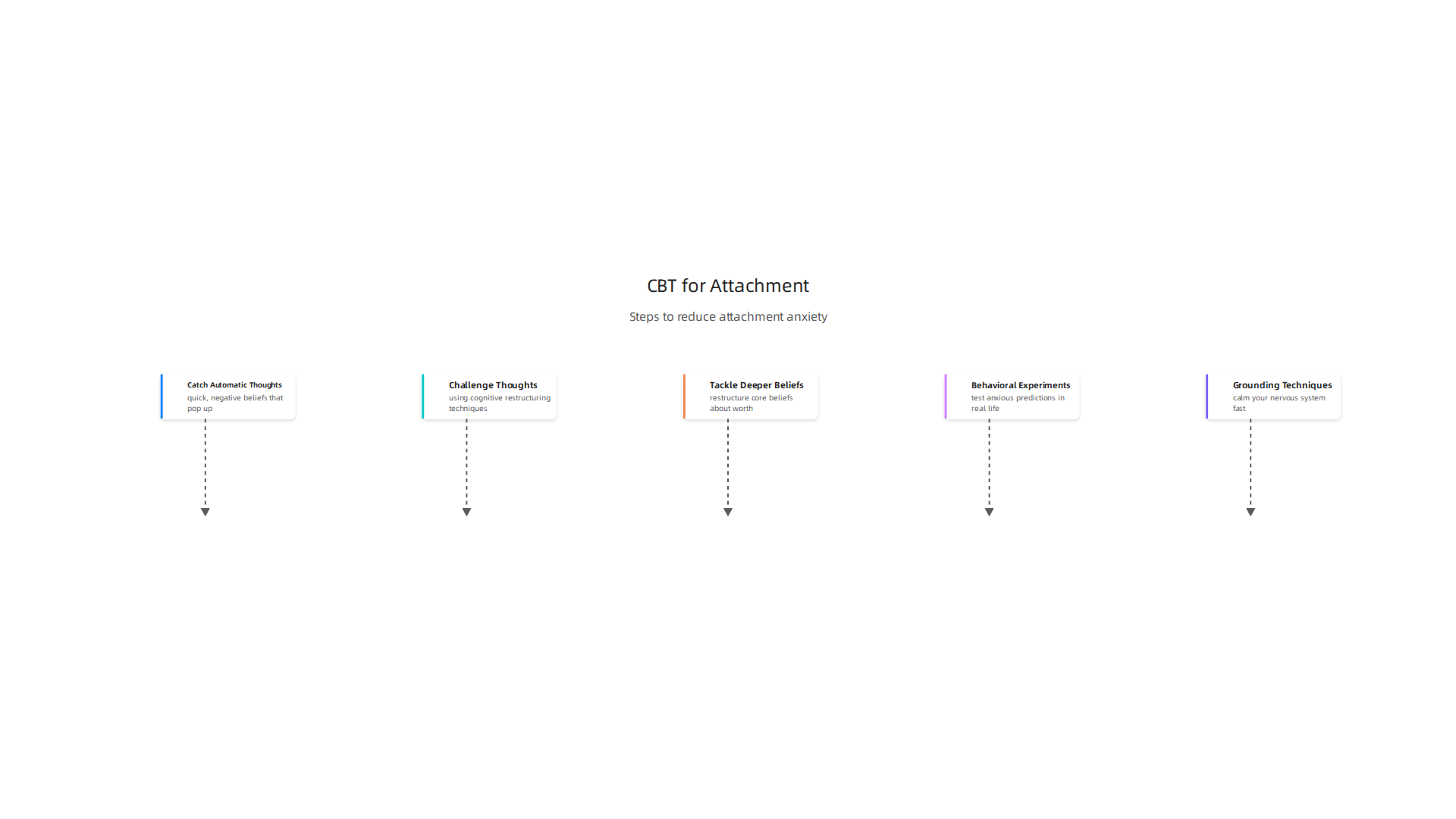
Instead of just talking about your childhood or your feelings, CBT gives you a step-by-step system to change how you think and act in relationships.
It starts with catching automatic thoughts. These are the quick, negative beliefs that pop up without you even noticing. For example, your partner takes an hour to reply and your brain whispers, "They’re ignoring me. They must be angry. They’ll leave." CBT teaches you to pause and examine that thought. Is there real evidence? Or are you jumping to the worst conclusion? You learn to treat your thoughts as guesses, not facts.
Next comes challenging those thoughts. Using a technique called cognitive restructuring, you write down the anxious thought and ask yourself tough questions: What’s another way to see this? What would I tell a friend in the same situation? Over time, you replace catastrophic predictions with more balanced ones. According to the research on cognitive behavioral therapy for anxious attachment, this process reduces attachment anxiety significantly in as little as 10 weeks.
Then you tackle deeper beliefs about your worth. Many people with anxious attachment carry a hidden belief that they are not good enough or that love is fragile. CBT helps you restructure those core beliefs so you stop looking for proof that you’ll be abandoned. You start to see yourself as valuable regardless of what your partner does.
Behavioral experiments are the hands-on part. You actually test your anxious predictions in real life. Here are some common experiments you might try with your therapist:
- Wait two hours before replying to a text instead of responding right away
- Go one week without asking "Do you still love me?"
- Spend an evening alone on purpose instead of making plans to avoid being alone
- Let your partner start contact first
Each experiment shows you that nothing bad happens. Your brain learns a new lesson: distance does not mean danger. This is one of the most powerful ways that CBT for anxiety and attachment issues creates real change.
Grounding techniques help in the moment too. When anxiety hits hard, CBT gives you tools like the 5-4-3-2-1 method or box breathing to calm your nervous system fast. You learn to soothe yourself without needing your partner to do it.
Over time, all these skills add up. You become less reactive, more trusting, and better at handling relationship uncertainty. If you are looking for practical steps, you can explore these CBT for anxiety proven techniques to see how they apply to your life.
If your body often feels like it is in alarm mode, you are not stuck that way. The Body Feels Alarmed? resource can help you name the pattern before it spirals and give you a clearer path forward.
Cognitive Restructuring for Attachment Thoughts
When you have anxious attachment, your brain plays tricks on you. It jumps to the worst conclusion fast. You see a text go unread and your mind goes, "They are mad at me." Or your partner seems quiet and you think, "They are pulling away." These are called cognitive distortions. They are not facts, but they feel real.
Cognitive restructuring helps you catch these distortions and question them. The main tool is a thought record. You write down the situation, the automatic thought, and how it made you feel. Then you ask yourself: What is the evidence? Is there another explanation? Over time, this practice weakens the power of those anxious thoughts and lowers your distress. You can learn more about this process in this guide to cognitive behavioral therapy for anxiety proven techniques.
The goal is to replace "They are ignoring me" with "They might be busy." That small shift creates space between the trigger and your reaction. With regular practice, the intensity of your anxious feelings drops. You start to trust your own balanced thinking instead of the panic. If your body often feels alarmed before your mind even catches up, you can use this resource to name the pattern before it spirals.
Behavioral Experiments to Test Fears
You can prove your anxious thoughts wrong by testing them in real life. This is called a behavioral experiment. You design a small test where you face a situation you normally avoid. For example, you might decide not to text your partner right away and see what happens.
Before the test, write down your prediction. Something like, "If I do not text first, they will forget about me." Then you do the experiment. You wait. Afterward, record what actually happened. Did your partner forget? Or did they text back later like normal? This simple step helps you disprove the catastrophic beliefs your brain creates.
According to one guide on CBT for anxious attachment style, behavioral experiments are the phase where real change happens. You start testing your anxious beliefs through planned experiences.
The key is to start small. Pick a low-risk situation first. Maybe delay a check-in by thirty minutes instead of a full day. Each time you face the fear and see that nothing terrible happens, your confidence grows. You learn that you can handle the uncertainty. Over time, you reduce your need for constant reassurance.
If your body feels alarmed during these experiments, you can learn more about the patterns that trigger the fear. You might also want to explore how cognitive behavioral therapy for anxiety proven techniques can help you face these fears more effectively.
Mindfulness and Grounding Techniques
When your body feels alarmed during behavioral experiments, mindfulness and grounding can bring you back to a calm state.

These techniques help you observe anxious thoughts without reacting to them. You learn to notice the worry without letting it control you.
A simple method is the 5-4-3-2-1 grounding exercise. Look around and name five things you see, four you can touch, three you hear, two you smell, and one you taste. This pulls your focus away from the fear and into the present moment. It stops the spiral of "what if" thoughts.
CBT often includes these practices to help with emotional regulation in attachment contexts. According to a guide on CBT and grounding for anxious attachment, exercises like 5-4-3-2-1 and box breathing calm the nervous system when you feel urgently triggered.
If physical symptoms like a racing heart or tight chest show up, learning to recognize what anxiety feels like can help you know when to use these tools.
When your body feels alarmed, you can use grounding to ride out the urge to seek reassurance. The more you practice, the easier it gets to stay present instead of panicking.
Body Feels Alarmed? Name the pattern before it spirals.
The Evidence Base for CBT and Attachment
You might wonder if cognitive behavioral therapy for anxious attachment is backed by real science. The answer is yes. Many studies show that CBT works well for people with insecure attachment patterns.

It is not just a feel-good approach. It changes how your brain works over time.
Researchers have run multiple randomized controlled trials, the gold standard in science. These trials show that CBT reduces anxiety symptoms in people with insecure attachment. One study found that CBT significantly lowered attachment anxiety in just 10 weeks. That is fast progress for something that often feels stuck.
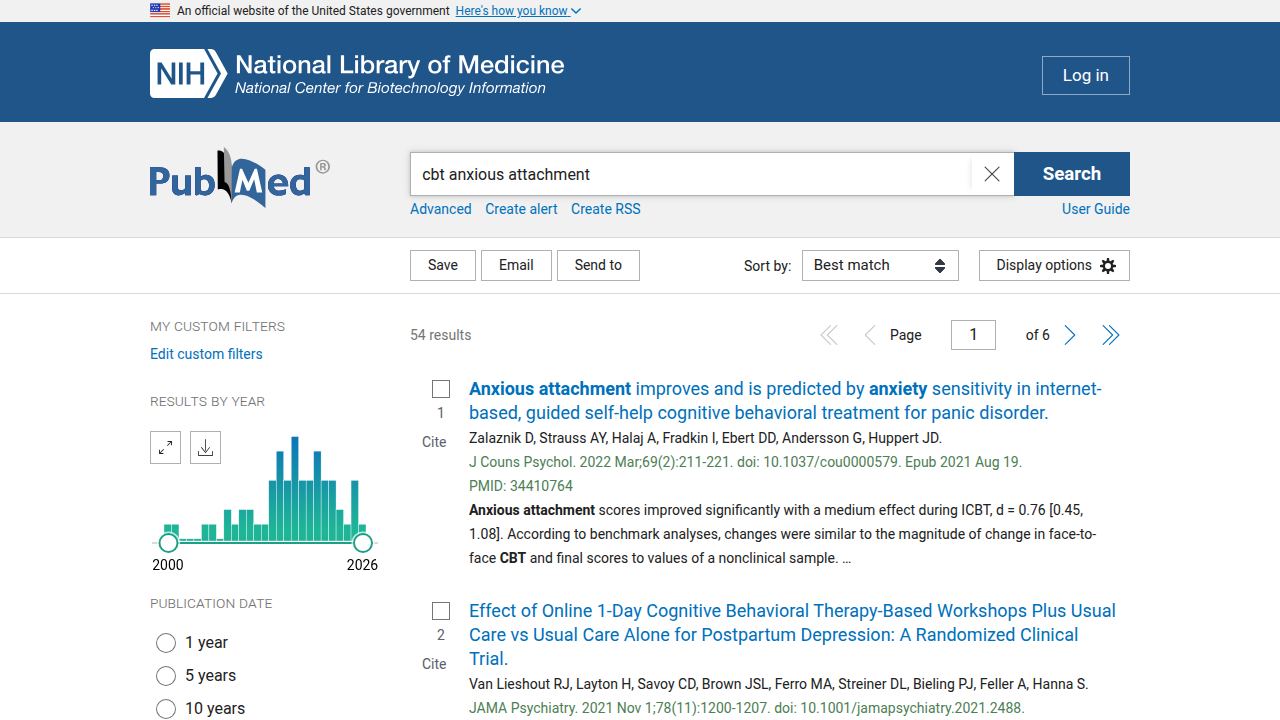
The same study showed that the skills stick around after therapy ends. You can read more about these findings in a review on adult attachment as a moderator of treatment outcome.
Neuroscience adds another layer of proof. Brain scans show that CBT can reshape neural pathways linked to attachment fears. When you practice new ways of thinking and acting, your brain rewires itself. It builds stronger connections in areas that handle calm and security. Over time, the old fearful pathways grow weaker. This is not magic. It is neuroplasticity, and CBT takes full advantage of it. A guide on CBT for anxious attachment style explains how these changes happen step by step.
Meta-analyses bring all the studies together. They confirm that CBT is just as effective for attachment-related issues as it is for general anxiety disorders. That is big news. It means the same tools that help people with panic or social anxiety also help with relationship fears. Whether you struggle with worrying your partner will leave or with pushing people away, CBT offers a clear path forward. If you want to dig deeper into the techniques behind this success, check out this overview of cognitive behavioral therapy for anxiety.
The evidence is clear. Science supports using cognitive behavioral therapy for anxious attachment. And the best part is that you can start applying these proven methods today.
Practical Steps to Start CBT for Anxious Attachment
So how do you actually start using these proven methods? The good news is you can begin today with three simple steps.
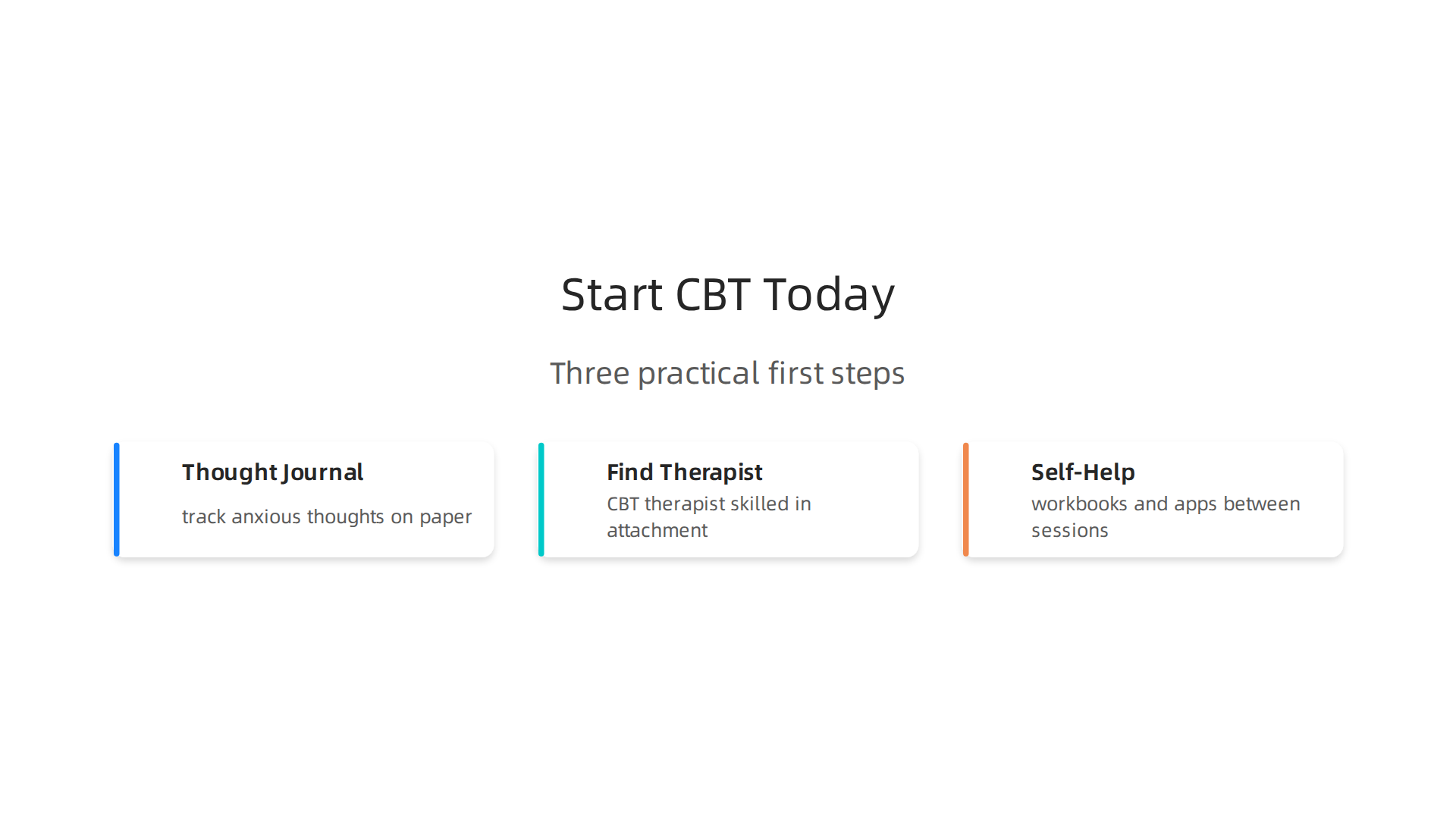
Each one builds on the last, and together they create a strong foundation for change.
Step 1: Keep a Thought Journal
Start by tracking your anxious thoughts on paper. Every time you feel that familiar knot in your stomach after a text goes unanswered or your partner seems distant, write it down. Note what happened, what you thought, and what you felt. This is called a thought record, and it is the first tool you will use.
Why does this help? Because anxious attachment patterns run on autopilot. You react before you even realize what is happening. A journal pulls those patterns into the light. You start to see the same triggers popping up again and again. Once you see them, you can begin to challenge them. A detailed guide on CBT for anxious attachment style walks you through exactly how to keep a thought record and what to look for.
Step 2: Find a CBT-Trained Therapist Who Understands Attachment
Not every therapist is a good fit for this work. You need someone who knows both CBT techniques and attachment theory. That combination is powerful. A good therapist will help you spot the cognitive distortions that fuel your anxiety, like mind-reading or catastrophizing. They will also understand why your early experiences shaped these patterns.
When you look for a therapist, ask about their experience with attachment issues. Many therapists list this specialty on their profiles. You can also check out this resource on how to find a relationship problems therapist to help with your search.
Step 3: Use Self-Help Workbooks and Apps Between Sessions
CBT is not just something you do in a therapist’s office. The real work happens in your daily life. That is where self-help resources shine. Many CBT workbooks are designed specifically for anxious attachment. They give you exercises to practice when you feel triggered, like grounding techniques or cognitive reframing.
There are also apps that guide you through CBT exercises on your phone. You can use them in the moment when anxiety spikes. If you want to learn more about the core CBT techniques that work for anxiety, check out this guide on cognitive behavioral therapy for anxiety.
Many people notice real changes within 6 to 12 sessions of weekly therapy. That is about 1.5 to 3 months. But you can start feeling better even sooner by using these tools on your own. The path is clear. The only question is whether you are ready to take the first step.
Applying CBT Beyond Attachment: Other Anxiety Issues
The thought records and cognitive restructuring you just learned for anxious attachment are not one-trick tools. CBT is a flexible approach that works for many types of anxiety. You can take the same skills and apply them to social anxiety, panic disorder, and generalized anxiety disorder (GAD).
Here is why this matters. All these conditions share common roots. Your brain learns to overestimate danger and underestimate your ability to cope. CBT teaches you to spot those distorted thoughts and test them against reality. The same core techniques like cognitive reframing, exposure, and behavioral experiments help across the board. Whether you are terrified of public speaking, scared of having a panic attack, or constantly worried about everyday things, the method stays the same.
Many people do not realize how transferable these skills are. If you know how to challenge a catastrophizing thought about a partner not texting back, you can also challenge a catastrophizing thought about a work presentation. The structure is identical. You name the thought, look for evidence, and create a more balanced perspective.
For example, social anxiety often involves mind-reading. You assume people are judging you without proof. That is the same cognitive distortion that shows up in anxious attachment. A detailed resource on social anxiety disorder treatment with CBT shows exactly how thought records and exposure exercises help you break free from that fear.
Panic disorder responds well to CBT because of interoceptive exposure. That means slowly facing the physical sensations you fear, like a racing heart or dizziness. It works the same way you would gradually face relationship triggers. You build evidence that the feeling is uncomfortable but not dangerous.
Generalized anxiety disorder benefits from cognitive restructuring that targets "what if" thinking. You learn to shift from catastrophic predictions to realistic probabilities. Again, it is the same muscle you build when working on anxious attachment.
Understanding this common mechanism gives you power. You are not learning a separate skill for each problem.

You are learning one flexible skill that applies to almost any anxiety challenge you face. That makes the effort you put into CBT now pay off in many areas of your life later.
For a broader look at how behavioral science approaches anxiety and depression, the Authority Magazine piece on a value reinforcement system shows how tracking and rewarding healthy behaviors can make a real difference in your mental health journey.

Common Misconceptions About Anxious Attachment and CBT
When people first hear about cognitive behavioral therapy for anxious attachment, doubts often creep in. That is completely normal. Let us clear up three of the biggest myths standing between you and real relief.
Misconception 1: Anxious attachment is a personality flaw.
This one hurts the most. You might think you are just "too needy" or "too emotional." But the truth is different. Anxious attachment is a learned pattern. It developed because your emotional needs were met unevenly in childhood. Your brain adapted to keep you safe in an unpredictable environment. That is not a character defect. It is a survival strategy. And because it was learned, it can be unlearned. A closer look at myths and misconceptions about attachment styles shows exactly how these patterns form and why they can shift with the right support.
Misconception 2: CBT only works for mild anxiety.
Some people think CBT is only useful for everyday nervousness, not deep attachment anxiety. That is false. CBT is one of the most researched treatments for severe anxiety of all types, including attachment-related struggles. The structured nature of CBT actually helps most when your anxiety feels out of control. It gives you concrete steps to follow instead of vague advice.
Misconception 3: You need years of therapy to see results.
Here is some good news. Many people notice meaningful improvements within 8 to 12 sessions of CBT. That does not mean all your attachment patterns vanish overnight. But you can learn skills that start working immediately. Techniques like thought records and behavioral experiments give you tools to use the same day you learn them. The research on 4 myths about attachment styles confirms that engaging in psychotherapy can improve attachment security, often in a shorter time than people expect.
If you are ready to start this work, exploring proven cognitive behavioral therapy for anxiety techniques can help calm your mind and is a great next step. The tools that help with general anxiety work just as well for attachment-related fears.
Summary
This article explains how cognitive behavioral therapy (CBT) addresses anxious attachment by targeting the thought patterns and behaviors that keep relationship fears alive. It defines anxious attachment, lists common signs, and shows how CBT tools — like cognitive restructuring, behavioral experiments, and grounding exercises — help you test catastrophic predictions and build calmer responses. The piece summarizes the evidence base, noting studies that find meaningful change in weeks and describing how neuroplasticity supports lasting rewiring. Practical, step-by-step guidance tells you how to start (thought journals, finding a CBT therapist with attachment expertise, and self-help practice) and explains how these skills transfer to other anxiety problems. By reading this you’ll understand why anxious attachment develops, how CBT works in real life, and concrete first steps to reduce reassurance-seeking and increase relationship security.