
How Therapy for Trauma Bond Heals Anxiety and Breaks the Cycle
Introduction
Do you feel stuck in a relationship that leaves you exhausted, confused, and on edge?

You are not alone. Many people caught in toxic relationships feel overwhelming anxiety without understanding where it comes from. The intense ups and downs, the hope followed by fear, the constant second guessing even your own sanity. It is a deeply confusing and painful place to be.
Here is the thing. That confusion is not a sign of weakness. It is a sign of something called a trauma bond. A trauma bond is a strong emotional attachment that forms between a person experiencing abuse and the person causing the harm. It builds within a cycle of abuse where periods of cruelty are mixed with moments of kindness or relief. This pattern creates a powerful emotional glue that feels a lot like addiction. You keep hoping the good times will last, even when your gut knows they will not.
Research shows that trauma bonds are linked to childhood maltreatment and attachment insecurity, and they often come with serious anxiety and PTSD symptoms. The bond itself triggers a roller coaster of hope, fear, and confusion that keeps your nervous system stuck on high alert. No wonder you feel anxious all the time. Your brain is trying to protect you from a situation it cannot make sense of.
But here is the hopeful part. You do not have to stay stuck. Specialized therapy for trauma bond can help you understand what is really going on and break free from the cycle. Instead of just managing surface anxiety, this kind of therapy goes straight to the root cause of your distress. It helps you untangle the bond, process the hurt, and rebuild a sense of safety in yourself.
If you have ever wondered whether your relationship is making your anxiety worse, or if you want to learn more about what anxiety feels like in your body and mind, exploring the signs of a trauma bond is a powerful first step. And finding the right support can change everything.
What Does Anxiety Feel Like in a Trauma Bond?
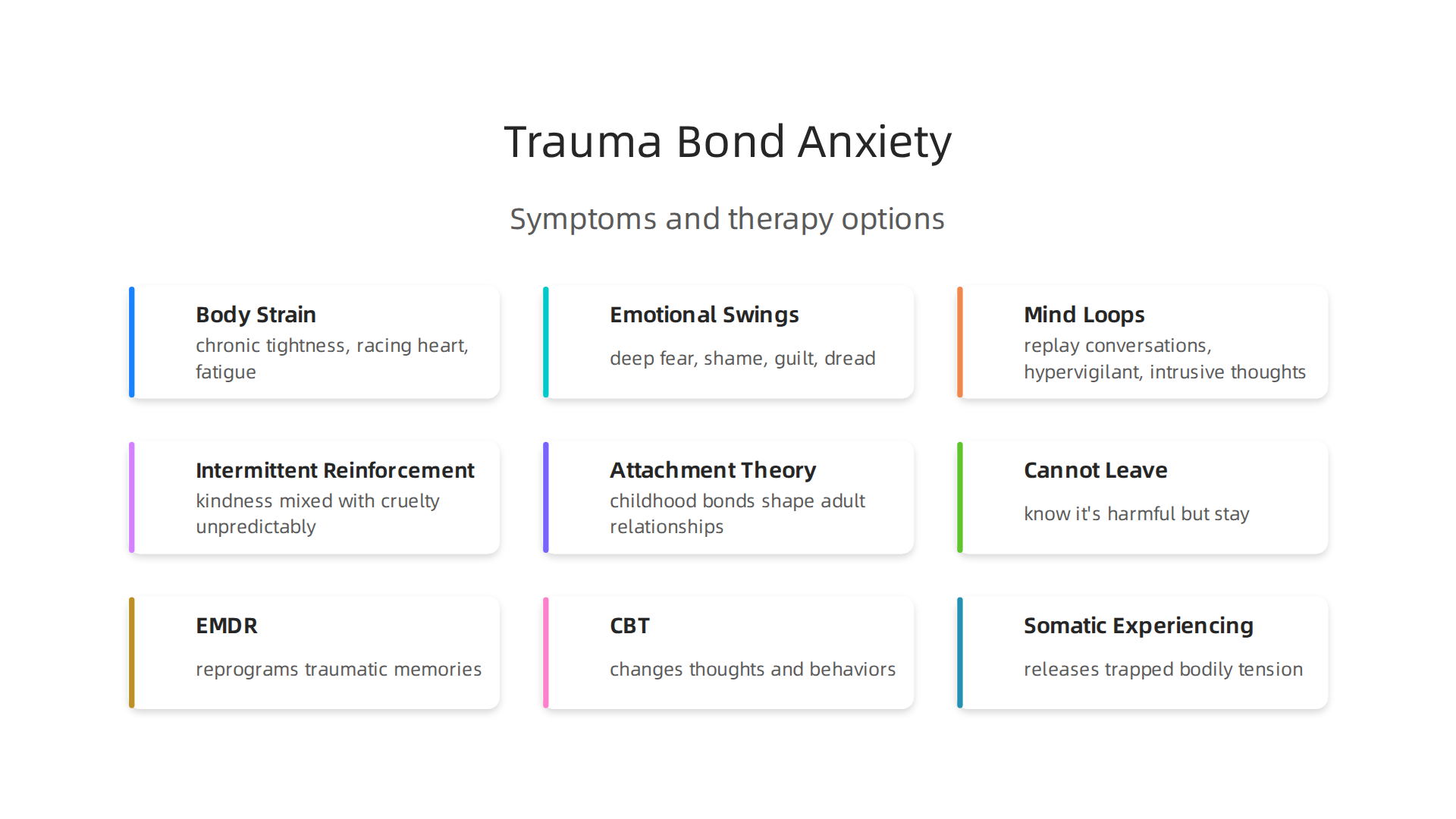
When you are in a trauma bond, the anxiety is not random. It hits your body, your emotions, and your mind in very specific ways.
Recognizing these signs can help you see that you are not broken. You are reacting to an unhealthy cycle.
Your body feels the strain first. You might have a chronic tightness in your chest, a racing heart, or muscles that stay clenched all day.

Headaches and deep fatigue are common. Your nervous system is stuck in survival mode. The NCBI confirms that trauma often shows up as physical arousal, exhaustion, and confusion.
Your emotions swing wildly. You feel deep fear, shame for staying, and guilt for wanting to leave. Emptiness and a constant sense of dread become your normal. The Cleveland Clinic describes this emotional confusion as a key part of trauma bonding.
Your mind gets stuck in loops. You replay conversations, trying to figure out what you did wrong. You become hypervigilant, watching their every mood change. Simple decisions feel impossible. Intrusive thoughts take over. Research in PubMed links these patterns to attachment trauma and PTSD symptoms.
So what can you do? Understanding these feelings is a huge first step. But to truly break free, you need therapy for trauma bond that treats the whole picture. A person-centred counsellor or an experiential therapist can help you process the trauma trapped in your body and mind. They can guide you out of the cycle.
If you want to explore this more, start with our guide on how anxiety feels in your body and mind. And if you are ready for professional support, finding a relationship problems therapist who understands attachment can change everything. You do not have to live in this state of fear forever.
The Psychology Behind Trauma Bonds
Knowing the physical and emotional signs of a trauma bond is helpful. But to really break free, you need to understand why this bond feels so strong. The psychology behind it explains why your brain gets hooked and why leaving feels impossible.

And that understanding is what makes therapy for trauma bond so effective.
Intermittent Reinforcement Creates Addiction
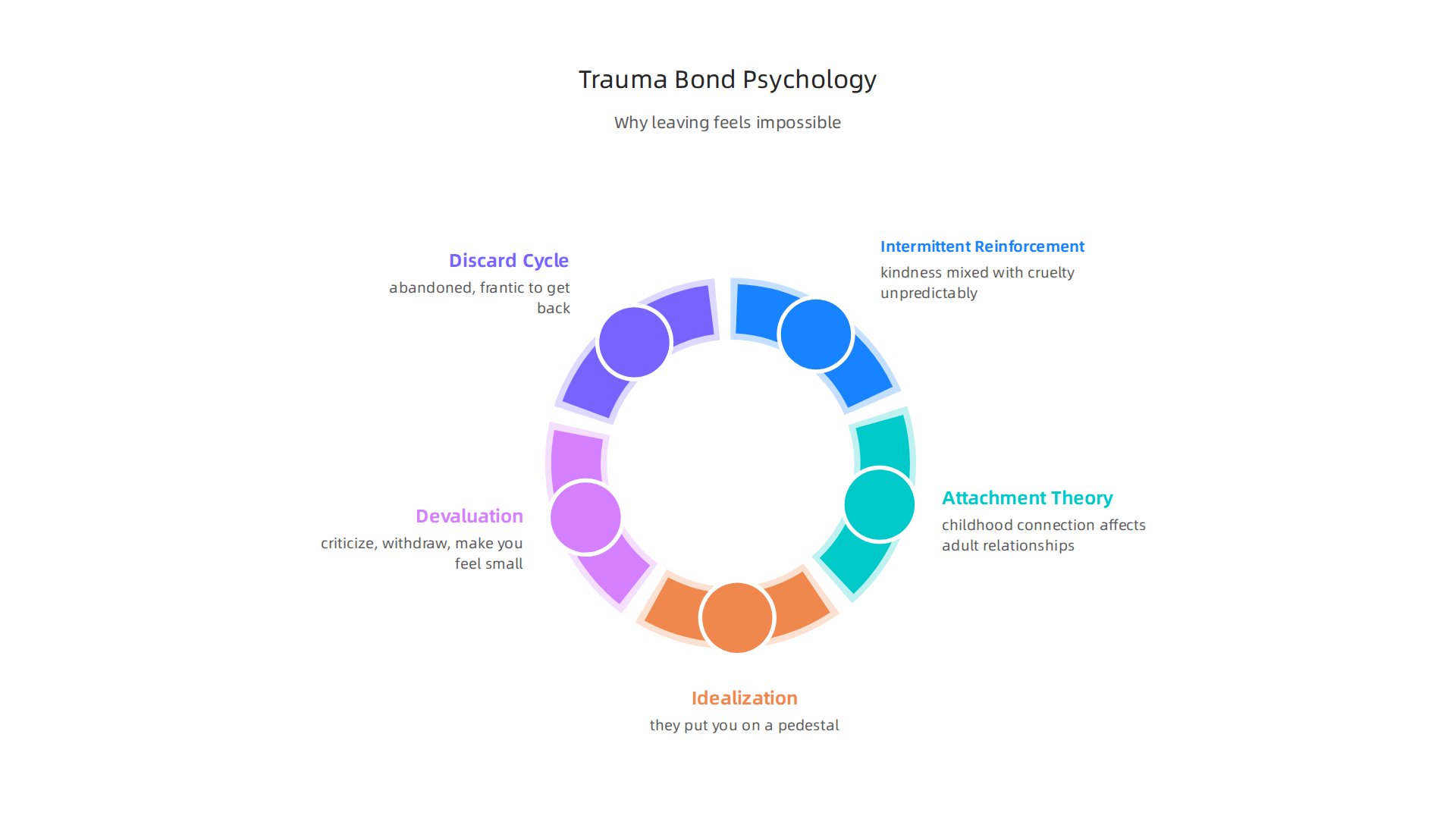
The number one reason trauma bonds are so hard to break is something called intermittent reinforcement. This is when kindness and cruelty are mixed together in an unpredictable pattern. You never know when the good moments will come. So you keep hoping, keep trying, and keep holding on.
Psychology Today explains that trauma bonds are built on cycles of negative reinforcement with occasional bursts of positive reinforcement. This pattern is actually more powerful than consistent kindness. It creates a chemical addiction in your brain, releasing dopamine during the good moments and stress hormones during the bad. The unpredictability makes you crave their approval even more.
D’Amore Mental Health adds that these intermittent positive reinforcements create a confusing mix of fear, hope, and loyalty. That confusion is exactly what keeps you stuck.
Attachment Theory Explains Your Vulnerability
Not everyone falls into trauma bonds the same way. Your attachment style plays a huge role. Attachment theory says the way you learned to connect as a child affects your adult relationships. If you grew up with inconsistent care, you may have developed an insecure attachment style.
People with anxious attachment often cling tighter when they feel distance. Those with avoidant attachment might push love away, then feel lonely. Both patterns make you more vulnerable to trauma bonding. Lexington Therapy points out that intermittent reinforcement, emotional dependency, and isolation all work together to strengthen the bond.
If this sounds familiar, you are not broken. Your brain learned a survival pattern. The good news is that therapy for avoidant attachment style and anxious attachment can rewire those patterns.
The Idealization-Devaluation-Discard Cycle
This is the heartbeat of the trauma bond. First comes idealization. They put you on a pedestal. You feel special, seen, and loved. Then comes devaluation. They criticize, withdraw, and make you feel small. Finally comes discard, or the threat of it. You feel abandoned and frantic to get back to the good times.
Psych Central notes that narcissists specifically use this cycle to get you addicted to them. Each time the cycle repeats, the bond gets stronger. Your anxiety skyrockets because you are always waiting for the next crash.
This is why a person-centred counsellor or an experiential therapist is so valuable. They can help you see the pattern clearly and feel the emotions your body has been holding. Working with a professional who understands these dynamics can help you stop the cycle for good.
If you want to learn more about how anxiety shows up in different contexts, our guide on dissociative identity disorder symptoms causes and treatment options might be helpful. And if you are ready to find support, check out our tips on how to find a relationship problems therapist who specializes in your issues.
You do not have to stay trapped in this psychology. Understanding it is the first step. Getting the right therapy for trauma bond is the next.
How Therapy for Trauma Bonds Works: Modalities That Heal Anxiety
Now you understand the psychology that keeps you hooked on that cycle. Understanding is powerful. But healing requires action. That is where therapy for trauma bond comes in. The right modality can rewire your brain, calm your nervous system, and set you free.
Here are three evidence-based approaches that work well for breaking trauma bonds and healing the anxiety that comes with them.
EMDR Reprograms Traumatic Memories
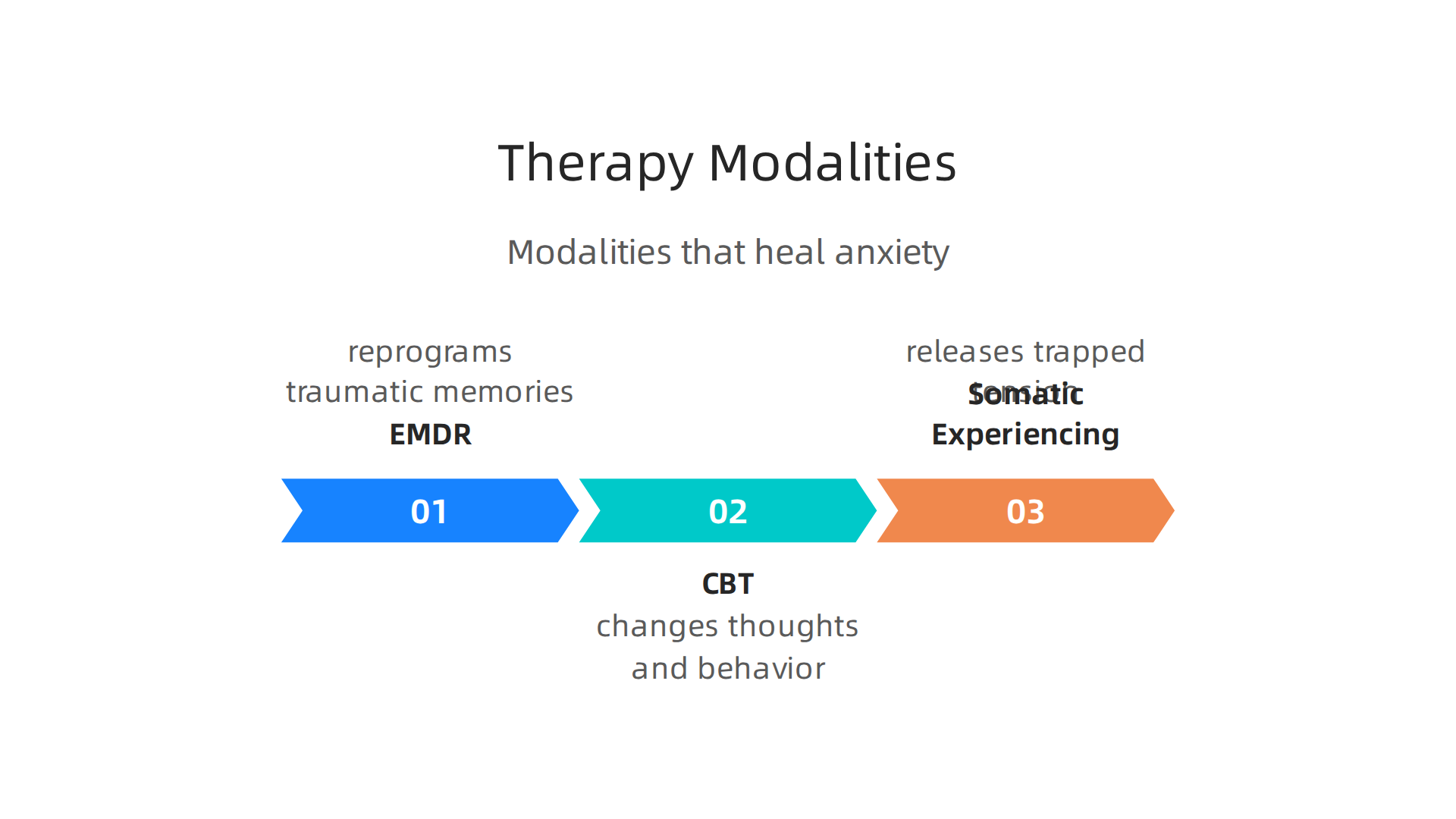
Eye Movement Desensitization and Reprocessing (EMDR) is often called the gold standard for trauma therapy. It uses bilateral stimulation, like eye movements or gentle taps, while you briefly focus on a painful memory. This helps your brain reprocess the memory so it no longer triggers intense emotional reactions.
According to Embodywise, EMDR reduces the emotional hold of traumatic memories, which directly weakens a trauma bond. When the memory loses its power, the anxiety that keeps you stuck also fades.
EMDR is especially helpful if you have vivid flashbacks or intrusive thoughts about the relationship. A trained therapist guides you through each step so you feel safe and grounded.
CBT Changes Your Thoughts and Patterns
Cognitive Behavioral Therapy (CBT) is another strong option. It focuses on the distorted thoughts that keep you trapped. You might believe things like "I will never find anyone better" or "If I just try harder, they will change." CBT helps you challenge those thoughts and replace them with more realistic ones.
CBT also targets behavioral patterns. If you tend to text your ex when you feel lonely, CBT helps you build new, healthier responses. When combined with body-based techniques, it becomes even more effective. The Bay Area CBT Center notes that combining CBT with somatic experiencing helps people navigate trauma more effectively.
If you want to learn more about how CBT works for anxiety, check out our guide on CBT for anxiety.
Somatic Experiencing Releases Trapped Tension
Your body holds onto trauma. When you were in the abusive cycle, your nervous system stayed on high alert. Muscles tensed, breathing became shallow, and your body prepared for danger that never stopped. Somatic experiencing helps you release that stored tension.
This modality focuses on physical sensations, not just thoughts. You learn to notice tightness, heat, or trembling in your body. Then you gently guide those sensations to resolution. A study in the PMC journal shows that Somatic Experiencing treats post-traumatic symptoms by changing how your body feels from the inside.
A person-centred counsellor or an experiential therapist who includes somatic work can help you feel safe in your own body again. That is a huge step toward breaking the bond.
Which Modality Is Right for You?
There is no single perfect approach. Many people benefit from a mix of these therapies. EMDR works well for processing specific memories. CBT helps with daily thought patterns and behaviors. Somatic experiencing calms the nervous system from the bottom up.
If you also struggle with attachment issues, look for a therapist who understands therapy for avoidant attachment style. That added focus can speed up your healing.
You do not have to figure this out alone. The right therapy for trauma bond can change your life. Take the next step and find a qualified therapist who specializes in one of these modalities. Your future self will thank you.
Recognizing When You Need Help: Signs It’s a Trauma Bond
You might be reading this and thinking, "This sounds familiar, but how do I know for sure?" Let’s be honest: knowing you are in a trauma bond is hard. The relationship itself makes you question your own reality. Your brain is literally wired to defend the person who hurts you.
Here’s the thing: trauma bonding is designed to be confusing. It is a psychological response where you form a deep emotional attachment to someone who mistreats you, according to Psychology Today. The push-pull cycle keeps you hooked through hope and fear. So how do you know if you are trapped?
Let’s look at some clear signs.
You Cannot Leave Even Though You Know You Should
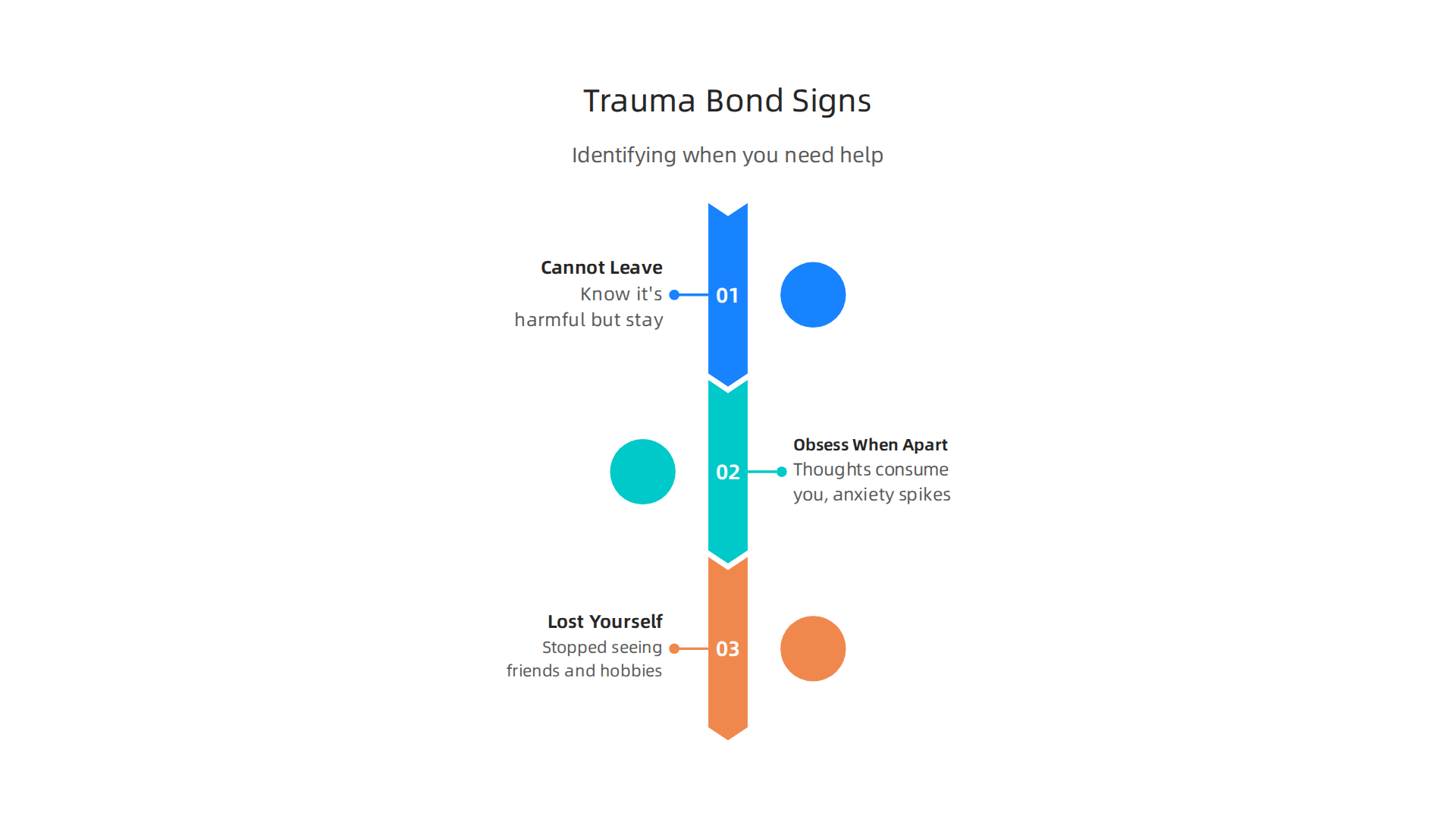
This is the most painful sign. You know the relationship is harmful. Friends and family have told you. Maybe you have tried to leave before. But something pulls you back. You stay because of the good moments, not despite the bad ones. Serenium Wellness explains that trauma bonding creates an intense attachment to someone who mistreats you. Your brain starts to think the good times are the real relationship and the bad times are just temporary.
You Obsess Over Them When You Are Apart
Your thoughts are consumed by them. You wonder what they are doing, who they are with, and if they are thinking about you. When you are apart, your anxiety spikes. You feel restless, panicked, and desperate for contact. This is not love. This is the intermittent reinforcement at work. D’Amore Mental Health explains that this cycle of inconsistent positive attention creates a confusing mix of fear, hope, and loyalty that makes the bond incredibly strong.
You Have Lost Yourself
Think about who you were before this relationship. Do you still know that person? Trauma bonds often cause you to lose your sense of identity. You stop seeing friends. You give up hobbies. You walk on eggshells constantly, trying to avoid the next explosion. Lexington Therapy notes that isolation and emotional dependency are key factors that make trauma bonds form. If you feel alone and small, that is a major warning sign.
Recognizing these signs is the first brave step. If any of this feels like your life, you are not crazy, and you are not alone. The confusion is a symptom of the bond, not a sign that you are wrong. Now that you see it clearly, you can start to look for real change. If you need guidance, check out our resource on finding the right support, like our guide on how to find a relationship problems therapist. You deserve a life without the constant anxiety of a trauma bond.
What to Expect in Your First Therapy Sessions for Trauma Bond Recovery
So you have decided to get help. That is a huge step. But now you might be nervous. What actually happens in therapy for trauma bond recovery? Let me walk you through it so you know what to expect.
The First Sessions Are About Safety, Not Deep Pain
Here is what most people get wrong. Your first few sessions are not about reliving the worst moments. A good therapist knows that jumping straight into the trauma can make things worse. Instead, the early sessions focus on safety and understanding your story.
Your therapist will ask about your history, your relationship patterns, and how the trauma bond formed. They want to see the big picture. This is called the initial assessment. It helps them understand your attachment style and what kind of support you need. If you have an avoidant attachment style, for example, your therapist will adjust their approach to match your needs.
The goal here is simple. Build trust. Create a space where you feel safe enough to be honest. A person-centred counsellor focuses on this kind of trusting relationship first. Without that foundation, the deeper work cannot happen.
You Will Learn Coping Skills Before Processing Trauma
This might surprise you. Therapy for trauma bond recovery does not jump straight into the hard stuff. First, your therapist will teach you how to stay calm when things get difficult.
You will learn grounding techniques. These are simple exercises that bring you back to the present moment when anxiety spikes. You might learn deep breathing, noticing things in the room around you, or pressing your feet into the floor.
Some therapists use experiential therapist approaches. This means you learn by doing, not just talking. For example, somatic experiencing is a body-based approach that helps you release trauma stored in your body. Research shows that Somatic Experiencing works by changing how you feel physical sensations. This can be powerful when trauma has left you feeling disconnected from your own body.
You might also get psychoeducation. That is a fancy word for learning how trauma bonds work in your brain. Understanding the science helps you stop blaming yourself.
The Session Structure You Can Expect
Every session will look a little different. But here is a typical structure.
First, your therapist checks in with you. How are you feeling today? What has happened since the last session?
Then you move into the work. This might include:
- Talking through a difficult memory
- Using EMDR, which uses eye movements or taps to help your brain process traumatic memories
- Practicing a grounding exercise
- Exploring how your body feels in the moment
Many therapists combine approaches. For example, combining CBT with somatic experiencing can help you navigate trauma more effectively. EMDR is also widely used and has been shown to reduce the emotional hold of traumatic memories, which can weaken the trauma bond.
The session ends with closing. Your therapist helps you leave feeling stable, not flooded.
What If It Feels Too Slow?
You might want to rush. You want the pain gone now. But real healing takes time. If you feel frustrated, tell your therapist. That is totally normal. A good therapist will adjust the pace to keep you feeling safe but still moving forward.
The key is to keep showing up. Each session builds on the last one. Over time, the trauma bond loses its grip.
If you are ready to start looking for support, understanding what different therapy types offer can help. Check out our guide on cognitive behavioral therapy for anxiety to see how CBT techniques can also support trauma recovery. Just knowing what to expect in that first session can make the whole process feel less scary. You have already done the hardest part. You recognized the bond. Now let therapy help you break it.
Let me tell you about some real people who made it through. These stories come from actual experiences shared in therapy. I have changed names and details to protect privacy. But the core of each journey is true. And they might sound a lot like your own story.
Sarah’s Story: From Constant Anxiety to Quiet Confidence
Sarah came to therapy for trauma bond recovery after a three year relationship that left her exhausted. She felt anxious all the time. Her heart raced. She could not make simple decisions without second guessing herself. She felt physically sick when her phone buzzed.
In therapy, she started with grounding techniques. She learned to notice her breath and feel her feet on the floor. The anxiety did not disappear overnight. But slowly, the physical symptoms faded. Her constant nausea went away. She started sleeping through the night.
After a few months of therapy, something shifted. She said, "I can finally think clearly. I am not replaying every conversation over and over." Her self worth came back. She stopped blaming herself for the relationship. She started setting boundaries in new friendships.

Sarah’s long term outcome was steady. She built healthier relationships based on trust, not drama. Her anxiety stayed low. When she felt a little spike, she knew exactly what to do.
Mike’s Story: Rebuilding Self Worth Through EMDR
Mike struggled with intrusive thoughts. Every day he heard a voice telling him he was not good enough. That voice came from the trauma bond he had with a former partner.
His therapist used EMDR. This approach helped his brain reprocess the painful memories. Over time, the memories lost their emotional sting. Mike also worked with a person centred counsellor who helped him see his own value. He started practicing self compassion.
The breakthroughs came in small moments. One day he realized he had not criticized himself all morning. Another day he spoke up for himself at work without shaking.
Now, Mike has sustained anxiety relief. He knows the trauma bond no longer controls him. He dates again, but this time he walks away when something feels wrong.
Common Breakthroughs and Long Term Outcomes
If you look across many stories like these, patterns appear. Here are the most common breakthroughs people experience with therapy for trauma bond:
- Physical symptoms drop. The racing heart, tight chest, and fatigue get better.
- Thinking gets clearer. You stop over analyzing everything your abuser did.
- Self worth returns. You finally believe you deserve better.
Long term, the best outcomes include healthier relationships and lasting relief from anxiety. One study on trauma informed approaches found that trauma focused therapy leads to better mental health and wellbeing over time. That matches what Sarah and Mike lived.
The takeaway is simple. Therapy works. It can transform your anxiety into peace. You do not have to believe it yet. Just keep going. Your own story might be the next one I tell.
If you want to learn more about how therapy techniques like CBT can support trauma recovery, check out our guide on cognitive behavioral therapy for anxiety. It explains practical skills that many therapists use during trauma bond recovery.
Finding the Right Therapist for Trauma Bond Recovery
Sarah and Mike found therapists who understood trauma bonds. But not every therapist is trained for this. You need someone who knows how trauma bonds work, how attachment gets tangled, and how to help you break free.
So how do you find the right person? Here is what to look for.
Look for the Right Credentials
Start with specific training. A therapist should be trauma informed. Many earn a Certified Clinical Trauma Professional (CCTP) credential, which requires a master’s degree and specialized training in trauma treatment. You can find therapists with this certification through directories like Evergreen Certifications.
Also look for experience with attachment issues. Some therapists get certified in attachment focused therapy, like becoming a Certified Attachment Focused Psychotherapist. Others hold a trauma specialist credential from groups like the American Mental Health Counselors Association. These credentials mean they have studied the kind of damage trauma bonds cause.
You also want someone who uses proven approaches. Many trauma bond experts combine methods like CBT, EMDR, and trauma focused therapy. This integrative approach is often the most effective according to research on healing from trauma bond relationships.
Questions to Ask in a Consultation Call
Most therapists offer a free 15 minute call. Use it wisely. Ask these questions:
- "How much experience do you have working with trauma bonds?"
- "What therapy methods do you use? Do you use EMDR, CBT, or somatic approaches?"
- "Are you a person centred counsellor or do you take a different approach?"
- "How do you help someone rebuild self worth after a trauma bond?"
Listen to how they answer. A good therapist will explain their approach clearly. They will not sound vague or dismissive. If they seem unsure about trauma bonds, move on.
A resource from HelpGuide explains that a therapist can help you reflect on the relationship and rebuild self compassion. That only works if you feel safe with them.
Online vs. In Person: What Matters Most
Both options can work. What matters is that you feel emotionally safe. For many people, online therapy feels less intimidating. You are in your own space. You can cry without worrying about strangers in a waiting room.
In person therapy can feel more contained for some. The physical separation between sessions helps some people hold boundaries.
Whichever you choose, trust your gut. If you feel judged or uncomfortable after a session, that therapist is not right for you. Keep looking.
Finding the right match takes effort. But it is worth it. The therapist you choose will help you rewrite your own story, just like Sarah and Mike did.
If you want more guidance on what to ask before booking, read our guide on how to find a relationship problems therapist who specializes in your issues. The same principles apply to trauma bond recovery.
Common Misconceptions About Trauma Bond Therapy
You might have heard things about therapy for trauma bond that just are not true. These myths can keep you from reaching out for help. Let’s clear them up.
Myth 1: Therapy will force you to break up immediately.
Some people worry that a therapist will push them to end the relationship right away. That is not how it works. A good therapist puts your safety and autonomy first. They help you explore your feelings and options at your own pace. Rushing you would only make things harder. Instead, a skilled therapist acts as a person centred counsellor, letting you decide what feels right for you. As HelpGuide explains, the goal is to help you reflect and rebuild self compassion, not to force a decision.
Myth 2: Only severe cases need therapy.
Many think you have to hit rock bottom before you deserve help. That is false. Early intervention can reduce suffering and prevent the bond from deepening. If you notice patterns of unhealthy attachment, reaching out early is smart. You do not need to wait until things get worse. Therapists who treat trauma bonds often also offer therapy for avoidant attachment style, since the two are connected. Starting sooner can save you months or years of pain.
Myth 3: It takes years to see progress.
Some believe trauma bond therapy is a long, slow process. The truth is many people see real progress within 12 to 20 sessions. Everyone is different, but you do not have to commit to years of treatment. Short term focused work can make a big difference. Therapists often use methods like CBT and EMDR to speed up healing. Research on effective therapies for trauma bond relationships shows integrative approaches work well within a reasonable time frame.
If you are unsure about starting therapy, getting informed is the first step. For more on finding the right support, read our guide on how to find a relationship problems therapist who specializes in your issues. It covers similar principles for trauma work.
Summary
This article explains how trauma bonds create intense, confusing anxiety by mixing unpredictable cruelty with moments of kindness, and why that pattern feels like an addiction. It covers the physical, emotional, and cognitive signs of trauma bonding, the psychology behind why bonds form (intermittent reinforcement, attachment styles, and the idealize-devalue-discard cycle), and the evidence-based therapies that help — EMDR, CBT, and somatic experiencing. You will learn what happens in early therapy sessions, practical coping and grounding tools, how to choose a trauma-informed therapist, and common myths that can delay help. Real client stories illustrate typical breakthroughs and outcomes, and the piece emphasizes that recovery is possible within a reasonable course of therapy. After reading, you’ll be better able to spot a trauma bond, know which treatments work, and take informed steps to find the right professional support.