
What Schizotypal Personality Disorder Feels Like and How to Get Help
Introduction
If you have ever felt like people see you as odd, different, or just plain strange, you might be dealing with something deeper than shyness or social awkwardness.

Schizotypal personality disorder is a real condition that affects how you think, feel, and connect with others. Yet it is one of the most misunderstood mental health conditions out there.
Many people confuse schizotypal personality disorder with schizophrenia or severe social anxiety. But those are different conditions. The truth is, SPD has its own unique set of challenges. According to the Merck Manual definition of schizotypal personality disorder, the condition involves a deep discomfort with close relationships. People living with SPD often have odd beliefs and unusual perceptions that feel completely real to them.
Here is what that looks like in daily life. You might feel like strangers are staring at you when they are not. Or you might believe that random events carry special messages meant only for you. These are not just quirky personality traits. They are real, distressing experiences that can make everyday life feel overwhelming.
If you want to understand more about what this experience actually feels like, you can read our honest guide on what schizotypal personality disorder feels like. It helps put words to feelings that can be hard to explain.
Many people with SPD also struggle with depression. Working with a psychiatrist for depression can make a real difference in your overall well being.
Here is the thing. Understanding what schizotypal personality disorder actually feels like is the first step toward validation and real help. This article is here to walk you through SPD from the inside out. No confusing medical terms. Just real talk that helps you make sense of your own mind.
What Is Schizotypal Personality Disorder?
Schizotypal personality disorder is a recognized mental health condition that falls into a category called Cluster A. The Cluster A disorders are often described as the "odd or eccentric" group. If you have SPD, it means you have a long-term pattern of thoughts, behaviors, and experiences that make close relationships feel uncomfortable or even impossible.
According to the StatPearls clinical overview of schizotypal personality disorder, the condition involves a reduced ability to form close relationships along with distinct eccentric thinking and behavior.

This is not just being shy or quirky. It is a real pattern that causes distress and makes daily life harder.
How Doctors Diagnose SPD
Mental health professionals use a manual called the DSM-5 to diagnose personality disorders.
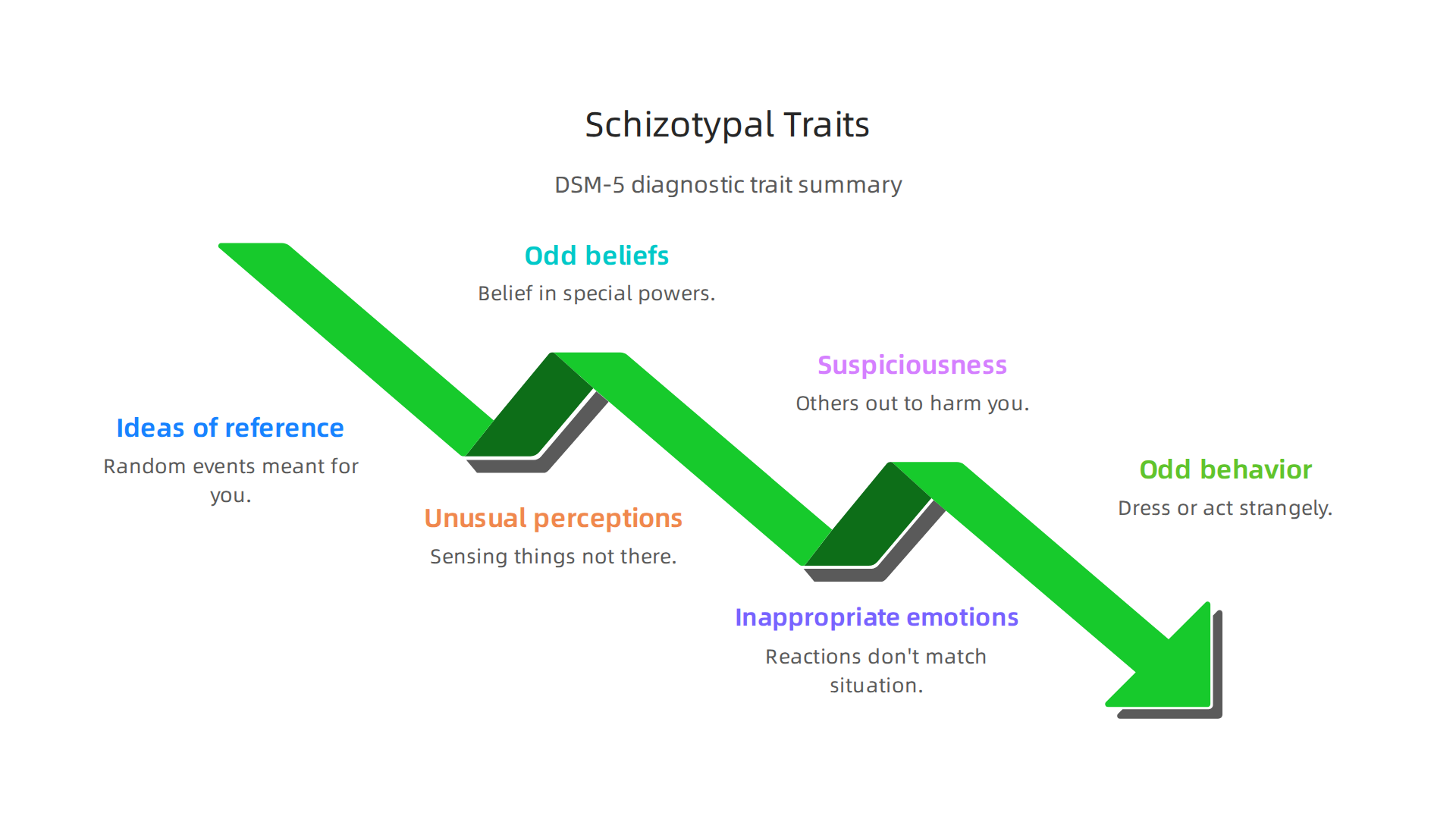
For schizotypal personality disorder, a person must show at least five of the following nine traits:
| Trait | What It Looks Like |
|---|---|
| Ideas of reference | You think random events or things people do are meant specifically for you. |
| Odd beliefs or magical thinking | You believe in special powers, superstitions, or strange connections that others do not. |
| Unusual perceptions | You see, hear, or feel things that are not there, but you still question them. |
| Suspiciousness or paranoia | You often feel that others are out to harm or trick you. |
| Inappropriate or flat emotions | Your facial expressions or reactions do not match the situation. |
| Odd or eccentric behavior | You dress, act, or move in ways others find strange. |
| Odd speech | Your words are vague, metaphorical, or hard to follow. |
| Social anxiety | You feel extreme fear in social situations, and it does not go away even after you get used to people. |
| Lack of close friends | You have few or no close relationships outside your immediate family. |
One very important point: people with schizotypal personality disorder do not lose touch with reality in the same way someone with schizophrenia does. You might have unusual ideas or perceptions, but deep down you usually know they are not fully real. That is a big difference. The condition is often confused with schizophrenia, but they are not the same.
Why Understanding This Matters
Knowing the official criteria can be a huge relief. It helps you realize that your experiences are not random or fake. They are part of a recognized condition. And once you know what you are dealing with, you can start looking for the right kind of help.
If you struggle with intense social anxiety as part of SPD, learning about social anxiety disorder treatment can give you practical ways to manage those overwhelming feelings. Many of the same approaches work well for the social fears that come with schizotypal personality disorder.
The Inner Experience: What Schizotypal Personality Disorder Feels Like
Knowing the diagnostic criteria is useful, but it does not capture what it actually feels like to live with schizotypal personality disorder day to day. The inner world of someone with SPD can be confusing, lonely, and sometimes frightening.

Here is a closer look at the three most common experiences people describe.
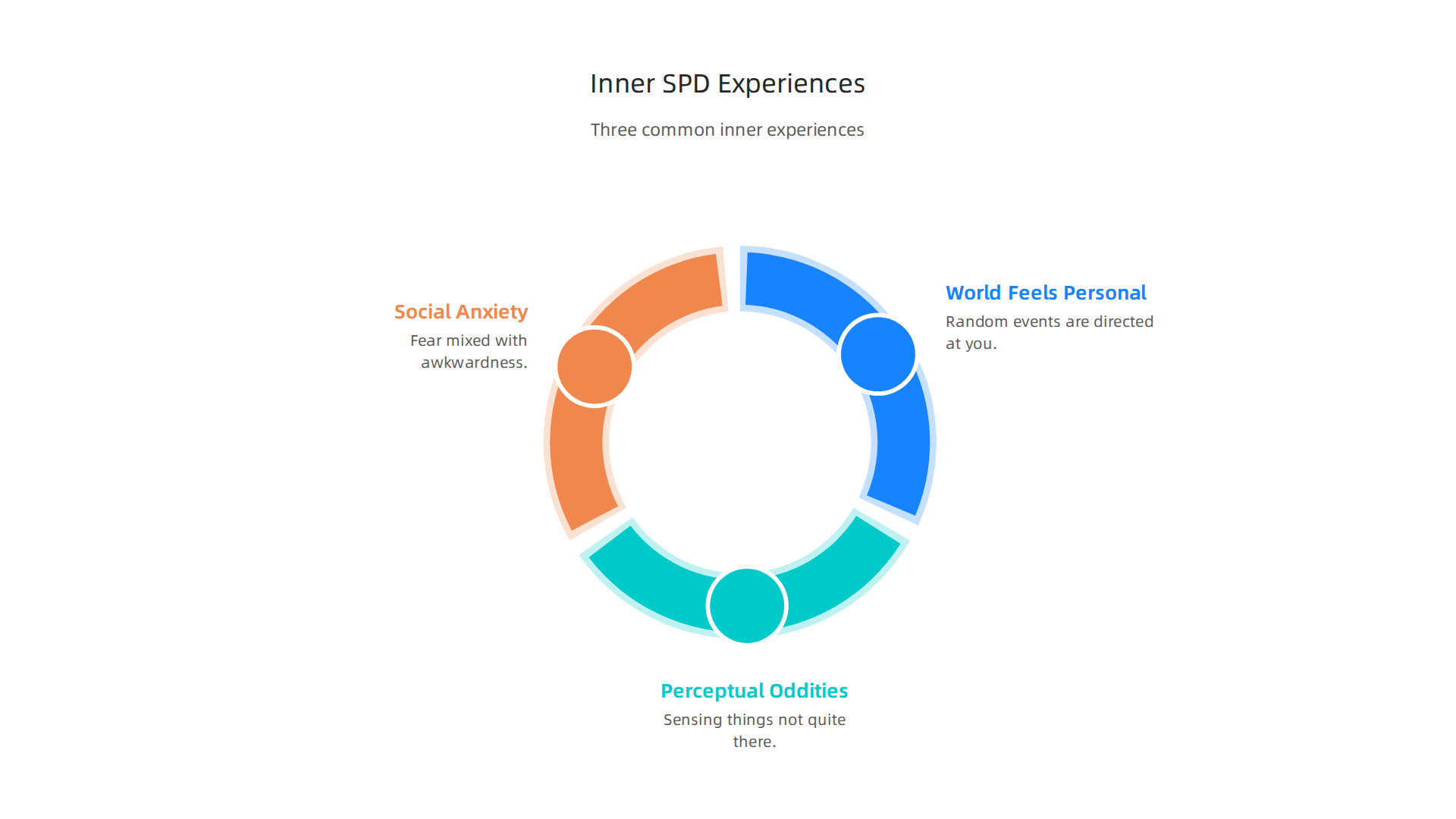
The World Feels Personal and Strange
One of the most persistent experiences is something called ideas of reference. This is the feeling that random events are somehow directed at you. A stranger laughs across the street, and your brain tells you they are laughing at you. A song plays on the radio, and you are sure the lyrics carry a hidden message meant only for you.
The HelpGuide overview of understanding schizotypal personality disorder describes this as part of the distorted perceptions that come with the condition. You know logically that most things are not about you. But the feeling is so strong it is hard to shake. It makes everyday life feel like a minefield.
This kind of thinking is exhausting. You never get a break from scanning your environment for hidden meanings. And because you cannot trust your own perceptions, you start to pull away from people. It feels safer to be alone.
Perceptual Oddities Without Full Psychosis
Another common experience is sensing things that are not quite there. You might feel a presence in the room when nobody is around. You might hear your name whispered in an empty house. Or you might see a shadow move in your peripheral vision that disappears when you turn your head.
Here is the key difference from schizophrenia. With SPD, you usually know these experiences are not real. You doubt them. You question yourself. But the sensations are vivid enough to make you feel unsettled and scared. This is one reason many people with SPD struggle with what looks like a dissociative disorder, even though the two conditions are not the same.
Social Anxiety Mixed with Awkwardness
The social part of SPD is especially hard. You want connection, but every attempt feels wrong. Your speech might come out vague or hard to follow. Your facial expressions might not match what you feel inside. You laugh at the wrong time or stare too long. People react strangely to you, which makes the anxiety worse.
This is not just shyness. It is a deep fear that others will reject you or harm you. The Mayo Clinic page on schizotypal personality disorder notes that people with SPD often be loners and lack close friends because the cost of trying feels too high.

Every social interaction drains your energy.
If any of this sounds familiar, you are not broken. These are recognized symptoms of a real condition. And there are ways to make the inner experience less overwhelming. For practical help with the social side, exploring social anxiety disorder treatment can give you tools to feel safer around other people.
And if you want to see how structured support systems help people rebuild their lives, take a look at the Youth Safety Case Study, documenting how VRS offsets susceptibility to manipulation in youth sports – producing healthier athletes, stronger resistance to depression and propaganda, and ultimately better citizens.
How Schizotypal Personality Disorder Differs from Schizophrenia and Other Conditions
It is easy to confuse schizotypal personality disorder with other mental health conditions. The symptoms overlap in ways that can make diagnosis tricky even for professionals. But there are real differences between SPD and schizophrenia, social anxiety, and autism spectrum disorder.
Understanding these differences matters because it shapes what kind of help actually works.

SPD versus Schizophrenia: The Reality Check
The biggest difference between SPD and schizophrenia comes down to one thing: reality testing. People with schizophrenia often have full psychotic episodes where they cannot tell what is real. They hear voices that feel completely external. They hold firm beliefs that have no basis in reality. With SPD, the experiences are milder and you usually know they are not real.
The research on the differential diagnosis of schizotypal personality disorder explains this clearly. Someone with SPD might feel like a stranger is watching them. But a part of their mind knows that feeling is probably wrong. They question it. They doubt it. A person with schizophrenia during an active episode does not have that doubt. The belief or sensation feels 100 percent real.
SPD sits on a spectrum called schizotypy. The StatPearls overview of schizotypal personality disorder describes it as a personality disorder, not a psychotic disorder. That means the strange beliefs and perceptual oddities are stable patterns, not temporary breaks from reality.
SPD versus Social Anxiety: More Than Just Shyness
Social anxiety disorder and SPD share a lot of surface similarities. Both involve intense fear around people. Both make you avoid social situations. Both leave you feeling drained after any interaction.
But SPD includes extra features that social anxiety does not have. These are odd beliefs, unusual speech patterns, and strange perceptual experiences. A person with social anxiety is afraid of being judged but does not typically believe they have magical powers or read hidden messages in license plates. You can find practical strategies to manage the anxiety piece by looking into social anxiety disorder treatment as a starting point.
The two conditions can coexist. Many people with SPD also meet the criteria for social anxiety. But the treatment approach needs to address the full picture, not just the fear of judgment.
SPD versus Autism Spectrum Disorder: Similar but Different
Autism spectrum disorder and SPD both involve social deficits. Both can make it hard to read facial expressions or pick up on social cues. Both can make you feel like everyone else got a rulebook that you missed.
The difference is in the nature of the restricted interests and cognitive style. Autism usually involves intense interests in specific topics and a preference for routine and sameness. SPD is more about odd beliefs, magical thinking, and perceptual distortions. The social awkwardness in SPD comes from suspiciousness and unusual thinking, not from a different way of processing the world.
If you want to go deeper into how these conditions show up day to day, reading about what schizotypal personality disorder feels like can help you spot the differences more clearly.
Understanding what you are dealing with is the first step toward getting the right support. The wrong diagnosis can send you down a treatment path that does not fit.
Why Understanding Your Experience Matters
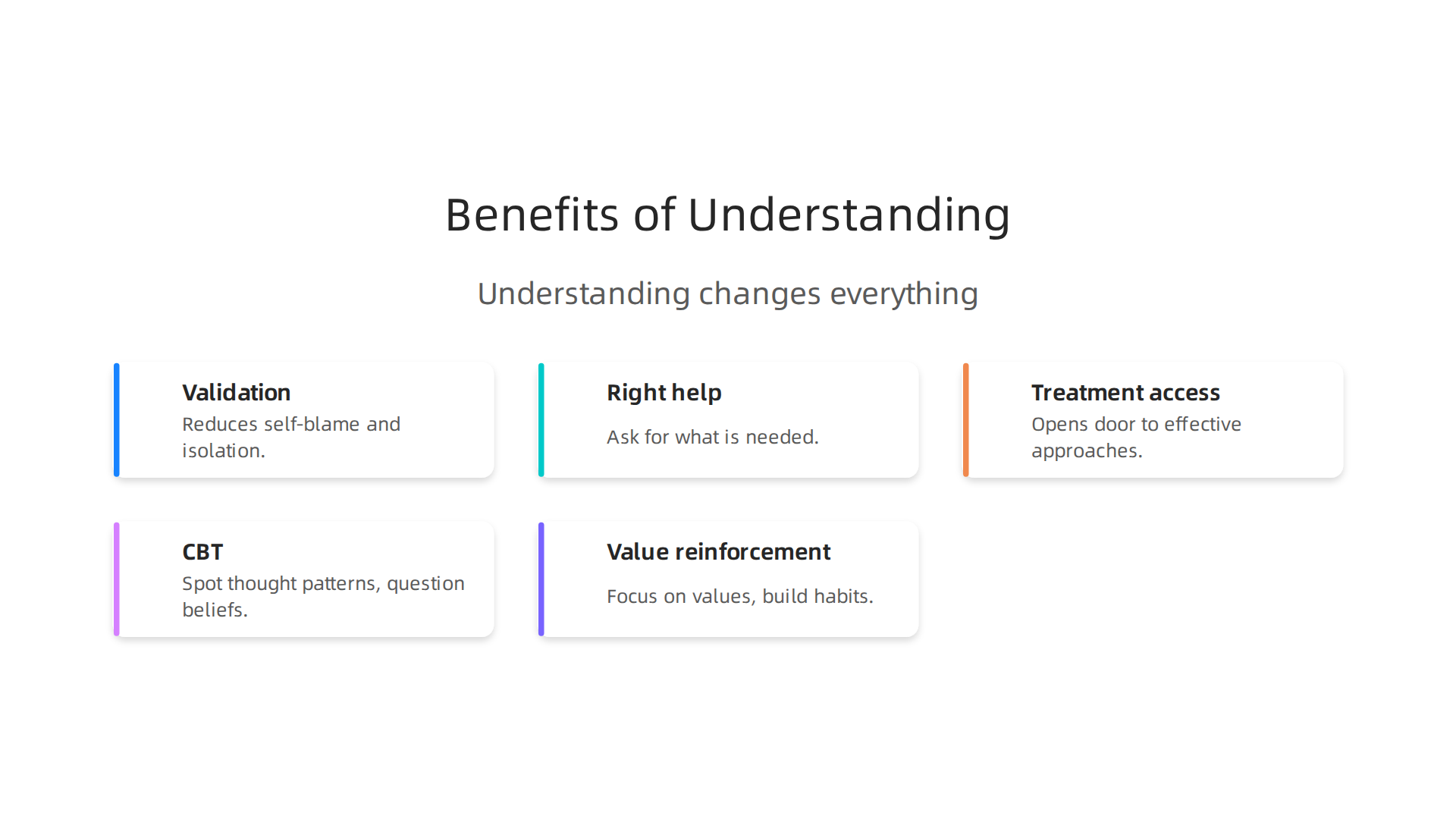
You have spent years feeling different. Maybe you have blamed yourself for being too weird or too scared. Maybe you have felt completely alone in your own head. Here is the thing: understanding what is actually happening changes everything.
When you finally learn that your experiences have a name and a reason, the weight shifts.

You stop thinking you are broken or lazy. The guilt starts to fade. That alone is a huge relief. Research shows that validation reduces self-blame and isolation, which are protective factors against things getting worse. The more you understand your own mind, the less power the confusion holds over you.
Knowledge also helps you get the right kind of help. If you do not know what is going on, how can you ask for what you need? A general therapist might not have the right tools. A regular doctor might not even ask the right questions. But once you understand that you are dealing with a personality disorder and not just anxiety or depression, you can find a psychiatrist or a therapist who specializes in these patterns. For example, if you also struggle with depressive symptoms, you might look for a psychiatrist depression specialist who understands the full picture. The more specific you get, the better the support will be.
Understanding your own behavioral patterns opens the door to treatments that actually work. Cognitive behavioral therapy is one of the most effective approaches for personality disorders. It helps you spot the thought patterns that trigger your odd beliefs and social fears. You learn to question them instead of accepting them as truth. You can read more about how cognitive-behavioral therapy for anxiety uses proven techniques to calm the mind and face fears, which applies to SPD too.
Another approach is value reinforcement. This means focusing on what matters to you and building small habits that move you toward those values. Over time, you replace the fear with purpose. You stop defining yourself by your symptoms and start defining yourself by what you care about.
You deserve to understand what is happening in your own head. That understanding is not just nice to have. It is the foundation for every good change that follows.
Now that you have a clearer picture of what is happening in your mind, it is time to talk about how to actually get help for schizotypal personality disorder. The right support can make a real difference. Treatment usually involves a mix of therapy, medication, and social support. Each piece works together to help you feel more grounded and connected.
How to Get Help for Schizotypal Personality Disorder
Therapy That Targets Your Patterns
Psychotherapy is the main treatment for SPD. Cognitive behavioral therapy (CBT) helps you spot the odd beliefs or unusual thoughts that get in your way. You learn to question them instead of following them blindly. Metacognitive therapy also shows promise because it teaches you to think about how you think. A 2023 review in Clinical Psychology & Psychotherapy looked at treatment studies and found strong support forCBT and medication working together for people with SPD.
Another useful approach is the Value Reinforcement System (VRS), U.S. Patent No. 12,205,176 — co-invented by Dean Grey. This system helps you build habits based on what truly matters to you. Instead of fighting your symptoms directly, you focus on small actions that move you toward your values. Over time, that shifts your identity away from fear and toward purpose. To learn more about how SPD feels day to day, read our guide onwhat schizotypal personality disorder feels like.
Medication for Co-Occurring Symptoms
There is no FDA-approved drug just for SPD. But medication can help with symptoms that often come along with it, like depression, anxiety, or brief psychotic episodes. Antipsychotic medicines can reduce odd beliefs or suspicious thoughts. Antidepressants or anti-anxiety meds can lift your mood and calm your nerves. If you also deal with depression, you might want to find a psychiatrist depression specialist who understands the full picture. The Cleveland Clinic notes thatantipsychotics are especially helpful for moderate to severe SPD symptoms.
Support Groups and Social Skills Training
One of the hardest parts of SPD is the feeling of being alone. Support groups give you a safe space to talk with others who get it. You do not have to pretend to be normal. Social skills training also helps you practice everyday interactions like starting a conversation or reading body language. These skills reduce isolation and build confidence step by step.
Getting help means finding what works for you. Therapy rewires your thinking. Medication eases the heavy symptoms. Support groups remind you that you are not alone. Each piece brings you closer to a life that feels more like your own.
Summary
This article explains schizotypal personality disorder (SPD) in clear, everyday language: what it is, how clinicians diagnose it, and what living with it feels like. It highlights core experiences such as ideas of reference, unusual perceptions that stop short of full psychosis, and the intense social anxiety and awkwardness that make relationships hard. The piece also clarifies how SPD differs from schizophrenia, social anxiety, and autism so readers can avoid misdiagnosis and pursue the right care. You’ll learn practical treatment options—psychotherapy (especially CBT and metacognitive approaches), medication for co-occurring symptoms, social skills training, and value-based systems like VRS—and why validation and understanding are vital first steps. By the end, readers should be better able to recognize SPD signs, explain their experience to clinicians, and begin building a treatment plan that fits their needs.