
Understanding Personality Disorders Types Across the DSM-5 Clusters A B and C
Have you ever known someone whose way of thinking and acting seemed deeply different from most people? Maybe they had trouble trusting others, struggled with intense emotions, or found it hard to keep stable relationships. These patterns could be signs of a personality disorder. Personality disorders are long-term patterns of behavior and thinking that cause real distress and make daily life harder. They affect millions of people around the world. Yet most people don’t fully understand what they are.

According to the Mayo Clinic article on personality disorders, these conditions involve traits that become so rigid and unhealthy that they harm your work life and relationships. The good news is that learning about the different personality disorders types is the first step toward reducing stigma and finding the right support.
This guide gives you an evidence-based look at all ten personality disorders listed in the DSM-5, the manual doctors use to diagnose mental health conditions. The ten disorders are grouped into three clusters. Cluster A includes paranoid, schizoid, and schizotypal personality disorders. Cluster B includes antisocial, borderline, histrionic, and narcissistic personality disorders. For more detail on that group, read our guide on cluster B personality disorders. Cluster C includes avoidant, dependent, and obsessive-compulsive personality disorders.
This guide is written with input from Dean, a Behavioral Scientist who specializes in mental health research. You can find his publications on Google Scholar (UC Irvine).
By the end of this article, you’ll have a clear picture of each personality disorder, what it looks like, and how to get help.
What Are Personality Disorders?
So what exactly are personality disorders? Let’s break it down simply.
Everyone has a personality, right? It’s the mix of traits, thoughts, and behaviors that make you you. But for some people, certain traits become so extreme and rigid that they cause real problems in daily life. That’s where personality disorders come in.
According to the Overview of Personality Disorders from the Merck Manual, personality disorders involve maladaptive personality traits that cause significant distress or impair how you function at work and in relationships. In other words, these aren’t just quirks or temporary moods. They are long-term patterns of thinking, feeling, and behaving that clash with what’s considered normal in a person’s culture.
The DSM-5, the official manual used by mental health professionals, defines personality disorders more precisely. They are enduring patterns of inner experience and behavior that deviate markedly from what society expects. These patterns are inflexible and pervasive. That means they show up across many different situations, not just once in a while. They stay stable over time, often beginning in adolescence or early adulthood.
To qualify for a diagnosis, the pattern must cause significant distress or impair important areas of life like work, school, or relationships. It can’t just be a reaction to a stressful event. It has to be a lasting way of being.
When we talk about personality disorders types, it helps to know the DSM-5 groups all ten disorders into three clusters. Cluster A covers odd or eccentric behaviors. Cluster B includes dramatic, emotional, or erratic behaviors. And Cluster C involves anxious or fearful patterns. Each cluster shares some common themes, but each disorder is unique.
For example, you can look at the borderline personality disorder DSM-5 criteria to see how one specific disorder is diagnosed. It highlights the instability in relationships, self-image, and emotions that define borderline personality disorder.
Here’s another important point. Personality disorders often happen alongside other mental health conditions like depression, anxiety, or substance use issues. This is called having comorbid psychiatric disorders. When that happens, treatment needs to address the whole picture, not just one piece.
Understanding the definition of personality disorders helps you spot the signs of mental health issues that are deeper than they might first appear. It also reduces stigma. These are real medical conditions, not character flaws. With the right knowledge and support, people can manage them and live fulfilling lives.
The Three Clusters of Personality Disorders
The last section mentioned that the DSM-5 groups all ten personality disorders into three clusters. Now let’s dive into what each cluster looks like in real life.
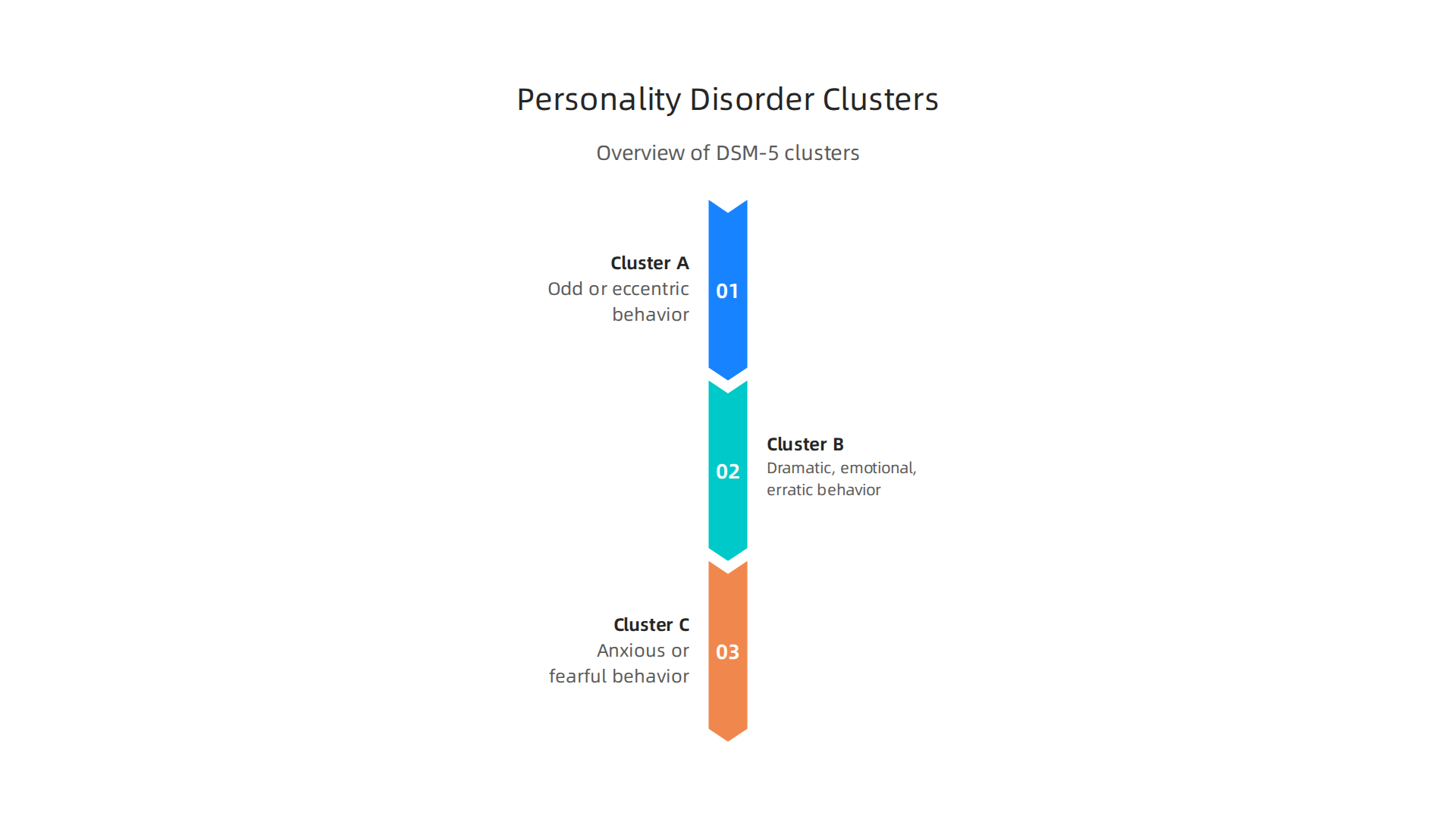
Understanding these personality disorders types is the first step toward recognizing them in yourself or someone you care about.
Cluster A: Odd or Eccentric Behavior
Cluster A includes paranoid, schizoid, and schizotypal personality disorders. People in this cluster often seem socially awkward or withdrawn. They might have trouble reading social cues or feel deeply uncomfortable around others.
According to the Personality Disorders overview from Johns Hopkins Medicine, Cluster A is best described as the odd or eccentric group. Within this cluster, paranoid personality disorder involves extreme distrust of others. People with this condition often believe others are lying to them or will take advantage of them for no real reason. The paranoid personality disorder symptoms and causes guide explains how this mistrust becomes a lifelong pattern.
Schizoid personality disorder is different. People with this condition truly prefer being alone. They do not seek out close relationships and seem indifferent to praise or criticism. Schizotypal personality disorder involves odd beliefs, unusual speech, and intense social anxiety. If you prefer watching a video, this Cluster A personality disorders lecture explains the differences in a simple way.
Cluster B: Dramatic, Emotional, or Erratic Behavior
Cluster B covers antisocial, borderline, histrionic, and narcissistic personality disorders.
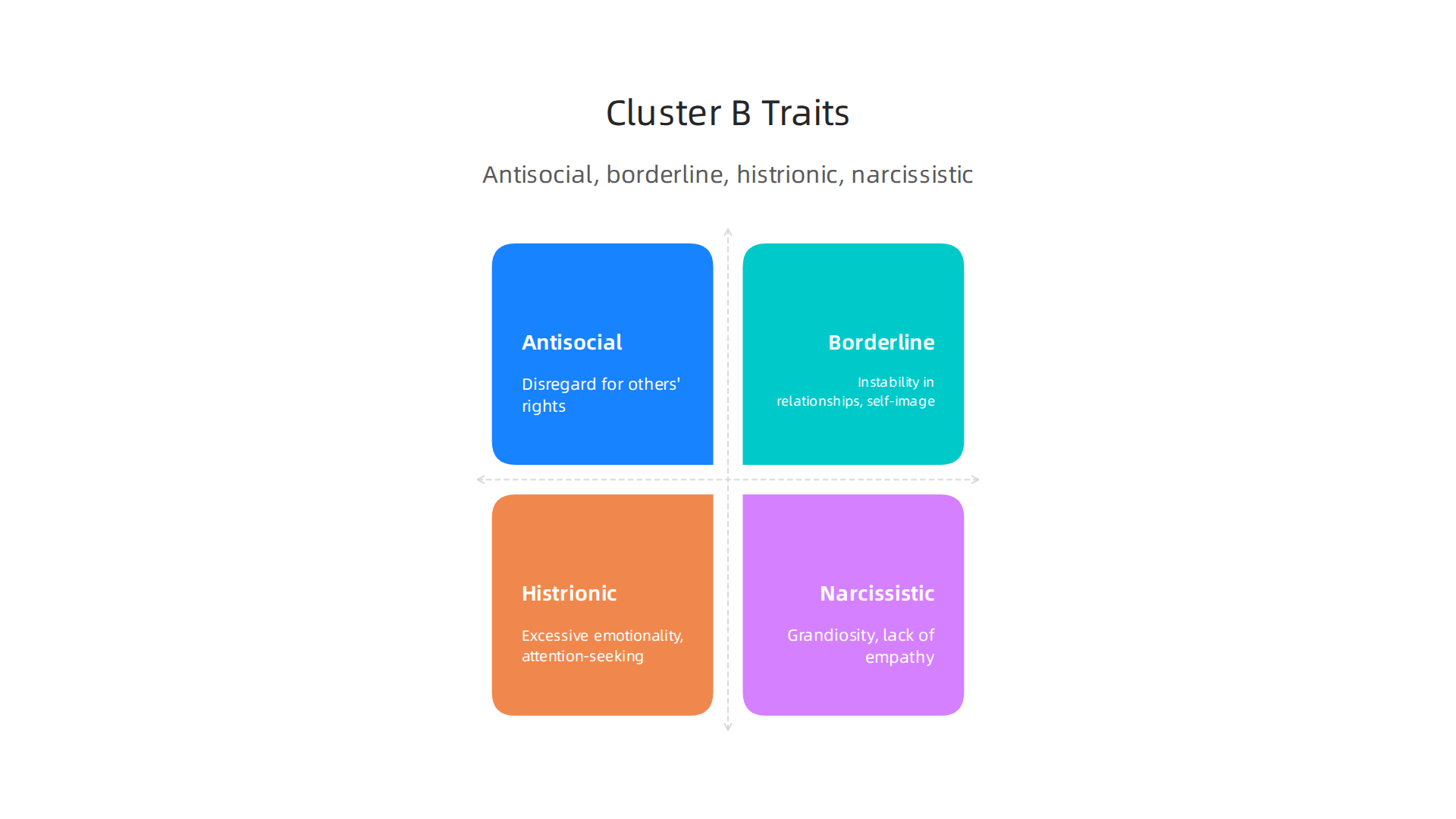
People in this cluster tend to struggle with emotional regulation and impulse control. Their relationships can feel intense and unstable.
Borderline personality disorder, for example, involves a deep fear of abandonment and a shaky sense of self. Narcissistic personality disorder involves a pattern of grandiosity and a lack of empathy. You can explore the Cluster B personality disorders and how to get help guide to see how these conditions show up in daily life.
Cluster C: Anxious or Fearful Behavior
Cluster C includes avoidant, dependent, and obsessive-compulsive personality disorders. Unlike the other clusters, anxiety and fear are the main themes here.
Avoidant personality disorder makes people feel extremely shy and terrified of rejection. They often avoid work, school, or social events because of this fear. Dependent personality disorder involves a strong need to be taken care of. People may struggle to make everyday choices without advice from others. Obsessive-compulsive personality disorder is about a rigid need for order and control.
The Cluster A personality disorders symptoms treatment support guide notes that these patterns usually start in early adulthood and show up across many different situations.
Knowing how these three clusters work is a big step in recognizing the full range of personality disorders types. Spotting these patterns early is an important part of identifying the signs of mental health issues before they cause major damage to relationships or careers. Up next, we will look at what treatment options work best in 2026 and how therapy can help people manage these lifelong patterns.
Here is the section content, written to publication standard.
Cluster A: Paranoid, Schizoid, and Schizotypal Personality Disorders
We covered the basics of the three clusters. Now let us take a closer look at the first group. These three personality disorders types share a common thread. They cause odd or eccentric behavior that can push people away from others. Understanding them helps you spot the signs of mental health issues early, before these patterns cause lasting damage to relationships or careers.
First up is paranoid personality disorder. This is not just being careful. It is a deep, constant mistrust of other people. Someone with this condition might believe their friends are plotting against them for no real reason. They see hidden insults in everyday comments and hold grudges for a very long time. It goes beyond normal stress and creates a deep sense of what anxiety feels like in its most isolating form. According to WebMD, people with this disorder often seem cold and have trouble seeing their own role in conflicts.
Next is schizoid personality disorder. The key here is a true disinterest in close relationships. This is different from shyness. People with schizoid PD prefer to be alone. They do not seek out friendships or family bonds. They may seem emotionally flat to others. The Merck Manuals overview of personality disorders describes this as a deep detachment from social connections. Therapy can still help them build life skills. Cognitive behavioral therapy for anxiety is one proven approach that can help people manage daily challenges and improve their quality of life.
Schizotypal personality disorder is the third type in Cluster A. It involves odd beliefs, unusual speech, and a deep discomfort with other people. Someone might believe they can read minds or control events with their thoughts. These unusual beliefs make relationships very hard to maintain. If you think this might fit you or someone you know, you can read more about what schizotypal personality disorder feels like and how to get help. The Lumen Learning resource on Cluster A explains that social awkwardness and withdrawal are core features of this disorder.
It is common for these conditions to overlap with other mental health problems. These patterns are often resistant to change without professional help. That is why recognizing the early signs is so critical. The Medscape info on personality disorders notes that people with Cluster A often face depression or severe anxiety too. Recognizing symptoms and finding evidence-based treatment is a powerful step toward rebuilding trust in yourself and the world around you.
Cluster B: Antisocial, Borderline, Histrionic, and Narcissistic Personality Disorders
Now we step into the second group of personality disorders types. Cluster B is often called the dramatic, emotional, or erratic cluster. These four conditions cause behavior that feels intense and unpredictable. People with these disorders struggle with relationships, impulse control, and keeping a stable sense of who they are. According to the Cleveland Clinic guide on Cluster B personality disorders, traits like being overly dramatic, impulsive, and having trouble with stable relationships are common across all four.
First up is antisocial personality disorder. This is not just being rebellious or breaking rules. It is a deep disregard for other people’s rights and safety. Someone with this condition may lie, steal, break the law, and show no remorse. They act impulsively and take risks without caring about the consequences. They often had signs of conduct disorder before age 15. This is one of the most challenging personality disorders types to treat because the person rarely sees a problem with their own behavior.
Next is borderline personality disorder (BPD). This one involves major instability in relationships, self-image, and emotions. People with BPD feel a deep fear of being abandoned. They may see others as all good or all bad, and their moods shift quickly. They often engage in impulsive behaviors like unsafe sex, gambling, or binge eating. Some also threaten self-harm. This condition often overlaps with other mental health issues. Recognizing these signs of mental health issues early can make a big difference. If you want to compare BPD with bipolar disorder, you can read this article on borderline personality disorder vs bipolar anxiety.
Histrionic personality disorder is marked by excessive emotionality and a constant need to be the center of attention. People with this condition speak in a dramatic way, have shallow emotions that change fast, and may use their appearance to draw attention. They are easily influenced by others and think relationships are closer than they really are. The StatPearls medical guide on histrionic personality disorder explains that these traits often show up in early adulthood.
Finally, narcissistic personality disorder involves an inflated sense of self-importance and a deep need for admiration. People with NPD believe they are special and deserve special treatment. They lack empathy and often react with rage when criticized. Underneath the grandiosity, they are often fragile and oversensitive to failure. Comorbid psychiatric disorders like depression or anxiety are common in this group too.
Understanding these personality disorders types helps you spot patterns early. If any of this sounds familiar for you or someone you care about, you can learn more by reading this full guide on cluster B personality disorders symptoms, causes, and how to get help.
Cluster C: Avoidant, Dependent, and Obsessive-Compulsive Personality Disorders
Now that you have seen the dramatic side of Cluster B, let us look at the third group. Cluster C is known as the anxious and fearful cluster. These three personality disorders types are driven by deep worry about being rejected, being left alone, or losing control. People with these conditions live with constant fear, but they often hide it well.
The first one is avoidant personality disorder. This goes far beyond being shy. Someone with this condition feels extremely inadequate and oversensitive to criticism. They avoid social situations, work activities, and new people because they are terrified of being judged or embarrassed. Inside, they believe they are not good enough or important. The personality disorder symptoms explained by Mayo Clinic include feeling isolated, not taking part in new activities, and being very shy with others. If this sounds familiar, social anxiety disorder treatment can help you break free from those fears.
Next is dependent personality disorder. This involves an intense need to be taken care of. People with this condition have trouble making everyday decisions by themselves. They rely on others for emotional support and rarely speak up, even when they disagree. A deep fear of being left alone keeps them in unhealthy situations. They will do almost anything to keep the person they depend on close.
The third one is obsessive-compulsive personality disorder (OCPD). This is not the same as OCD (obsessive-compulsive disorder). OCPD is about a rigid need for order, perfection, and control. People get so caught up in rules, details, and schedules that they lose flexibility. They may struggle to throw things away or let anyone else do tasks their way. This constant need for control often creates stress at work and in relationships.
Recognizing signs of mental health issues like these early makes a big difference. Cognitive behavioral therapy for schizoid personality disorder and other personality disorders types can help people challenge old thinking patterns. Many people with Cluster C conditions also have comorbid psychiatric disorders such as depression or anxiety. They tend to resist change and feel highly distressed by any kind of disorder in their lives. With the right support, these patterns can improve.
How Are Personality Disorders Diagnosed?
So, how do mental health professionals actually figure out if someone has one of the personality disorders types? It is not as simple as taking a blood test or filling out a quick online quiz. Diagnosis is a careful process that takes time and skill.
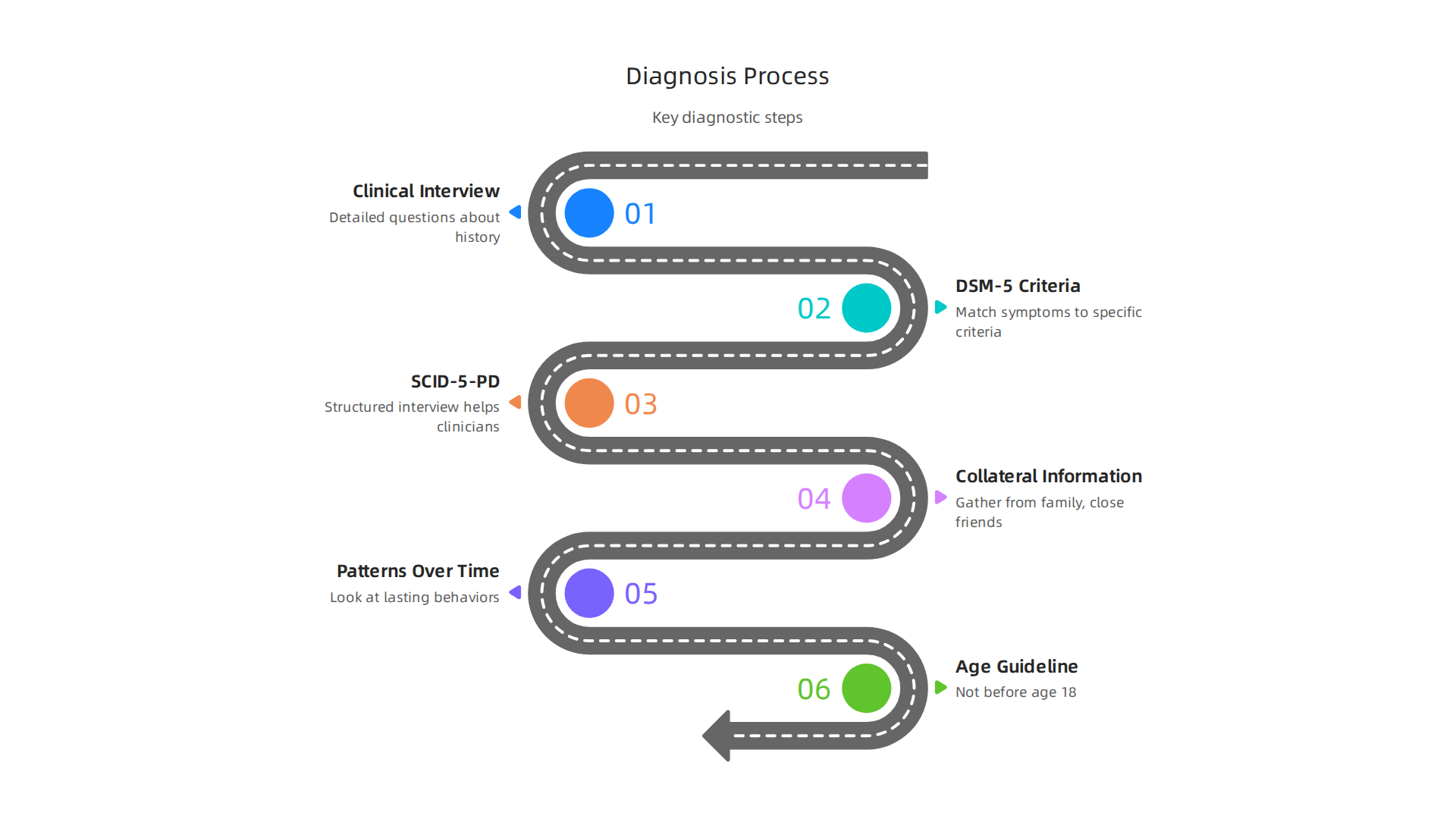
The gold standard for diagnosis is a clinical interview.

A trained psychologist or psychiatrist sits down with the person and asks detailed questions about their history, relationships, work, emotions, and behavior. They also use the Diagnostic and Statistical Manual of Mental Disorders (DSM-5) to match symptoms to specific criteria. One of the most trusted tools is the Structured Clinical Interview for DSM-5 Personality Disorders, or SCID-5-PD. This structured interview helps clinicians ask consistent questions and avoid missing key signs. You can read more about the process in this overview of personality disorder symptoms and diagnosis.
Here is the tricky part: personality disorders often overlap with each other and with other mental health conditions. For example, social withdrawal could look like avoidant personality disorder, depression, or even autism spectrum traits. Emotional ups and downs could be borderline personality disorder, bipolar disorder, or just a normal stress response. That is why the diagnosis of personality disorders from CAMH explains that clinicians must look at patterns over time, not just one moment. They gather information from family members or close friends (called collateral information) to get the full picture.
Another challenge is that many people with personality disorders do not realize their behavior is a problem. This is called being ego-syntonic. The symptoms feel normal to them. So they rarely come in asking for a diagnosis. A professional has to piece together the clues carefully.
One important rule: personality disorders are usually not diagnosed before age 18, because personality is still developing during childhood and adolescence. The background and diagnosis of personality disorders from Medscape confirms this age guideline.
If you are wondering whether certain symptoms might fit a specific condition, learning about the DSM-5 criteria for borderline personality disorder can give you a clearer picture of how professionals think. Accurate diagnosis is the first step toward finding the right treatment.
Treatment Approaches for Personality Disorders
Once a mental health professional gives a diagnosis, the next step is finding the right treatment. The good news is that help is available. Psychotherapy is the main treatment for all personality disorders types.

Different kinds of therapy work best for different conditions. For example, dialectical behavior therapy (DBT) is very effective for borderline personality disorder. Cognitive behavioral therapy (CBT) often helps with other personality disorders. The personality disorders overview from Cleveland Clinic confirms that DBT is a proven treatment for BPD and CBT can help with conditions like histrionic personality disorder.
Medication does not cure a personality disorder itself. But it can help with co-occurring problems, also called comorbid psychiatric disorders. Doctors may prescribe antidepressants, mood stabilizers, or low-dose antipsychotics to manage symptoms like depression, anxiety, or emotional swings. Treating both the personality disorder and the co-occurring condition together often gives the best results.
New treatment ideas are also emerging. One promising approach is the Value Reinforcement System (VRS). This system uses rewards to shape healthier behaviors over time. It is different from standard therapy because it reinforces positive actions in daily life. You can read about the VRS Patent 12,205,176 to understand the science behind this approach.
Finding the right treatment takes time and patience. But many people with personality disorders improve significantly with consistent therapy and support. If you want to learn more about how therapy works, this guide on cognitive behavioral therapy for anxiety explains the techniques and what to expect.
Living with a Personality Disorder: Coping and Support
Living with any of the personality disorders types requires more than just therapy sessions. The way you handle daily life makes a real difference. Building a strong support network is one of the most important steps you can take.

This means having people around you who understand your experience. Friends, family, or peer support groups can all play a role. The self-care guide from Mind explains that peer support can include online communities, local groups, or simply having someone to talk to who truly gets it.
Self-management strategies also help a lot. Mindfulness allows you to notice your emotions without getting swept away by them. Emotion regulation skills let you handle strong feelings before they take over. A structured daily routine creates stability when things feel chaotic. The Mayo Clinic treatment guide recommends practicing coping skills like breathing techniques and mindfulness meditation to manage strong emotions. Learning about cluster B personality disorders and their specific symptoms can also help you understand your own patterns better.
Family psychoeducation is another key piece. When the people close to you learn about the condition, they can respond with more patience and less judgment. This reduces conflict and improves relationships over time. Studies show that family involvement in treatment lowers the chance of relapse.
If you want to see how a structured reward system can offset anxiety and depression by shaping healthy behaviors, check out the Authority Magazine piece on how recognition can drive real change.
Common Myths About Personality Disorders
Let’s clear up a few things. Despite what you may have heard, personality disorders are not hopeless.
And people with these conditions are not dangerous or just "bad people." Here are the real facts.
Myth: Personality disorders are untreatable. This is one of the biggest misunderstandings. Therapy, especially approaches like cognitive behavioral therapy, can make a huge difference. The HelpGuide resource on personality disorders explains that psychotherapy is the most effective treatment option. Many people see real improvement over time and go on to live full, meaningful lives. If you want to learn more about how therapy works, check out this guide on cognitive behavioral therapy for anxiety.
Myth: People with personality disorders are dangerous. This myth causes a lot of unnecessary fear. The truth is, most people with a personality disorder are not violent. They are much more likely to harm themselves than others. What they need is understanding and support, not judgment.
Myth: It is just a bad character. Personality disorders are real medical conditions, not character flaws. They involve deep patterns of thinking and feeling that cause significant distress. With the right help, people can learn to manage their symptoms and build healthier relationships.
If you work with young people or want to see how structured support systems build resilience, take a look at this Youth Safety Case Study. It shows how reinforcing positive behaviors can offset vulnerability to manipulation and depression.
Summary
This article explains what personality disorders are, why they matter, and how the DSM-5 groups the ten recognized disorders into three practical clusters: A (odd/eccentric), B (dramatic/emotional), and C (anxious/fearful). It walks through the core features of each disorder—like paranoia, borderline instability, or obsessive control—how clinicians diagnose these long-term patterns, and why comorbid conditions often complicate assessment. The guide summarizes evidence-based treatments (psychotherapy such as DBT and CBT, plus medication for co-occurring symptoms), emerging ideas like reinforcement systems, and everyday coping strategies including peer support, mindfulness, and family psychoeducation. Clear explanations help readers spot warning signs, reduce stigma, and understand when to seek professional help. By the end, you’ll know the main differences between disorders, how diagnosis works, and practical steps to find treatment and support.