
What Anxiety Feels Like Recognizing Physical Cognitive and Emotional Symptoms
Understanding the Unseen Battle: What Anxiety Really Feels Like
You know that feeling when your heart pounds out of nowhere, your mind races, and you can’t figure out why? You’re not alone. Anxiety is one of the most common mental health experiences, yet it remains deeply misunderstood. According to National Institute of Mental Health statistics on anxiety disorders, nearly 20 percent of U.S. adults have an anxiety disorder each year. That’s millions of people quietly struggling.
Many folks can’t put a name to what they’re feeling. They wonder, "Is this normal?" or "Am I overreacting?" That confusion often leads to isolation and shame.

The truth is anxiety shows up in different ways. It feels physical, cognitive, and emotional all at once.
This article is here to help you make sense of that unseen battle. We’ll break down the real sensations, thoughts, and feelings that come with anxiety. Then we’ll share practical self-awareness therapy strategies to help you take back control. You’ll learn to recognize what anxiety feels like and build a clearer picture of your own experience.
The insights here are grounded in the Value Reinforcement System (VRS), U.S. Patent No. 12,205,176, co-invented by Dean Grey. This framework helps people understand their internal patterns and find a path forward.
Let’s start by exploring what anxiety actually feels like in your body and mind.
What Is Anxiety? Understanding the Clinical Definition
Almost everyone feels worried or nervous sometimes. That’s normal. But when does everyday worry turn into something more serious? That’s where the clinical definition comes in.
Mental health professionals look at two big things: how long the feelings last and how much they mess with your daily life. The manual they use is called the DSM-5-TR. It lists specific criteria for each anxiety disorder. For example, with generalized anxiety disorder, the worry has to happen more days than not for at least six months. And it has to be tough to control. The National Institute of Mental Health reports that about Generalized Anxiety Disorder affects roughly 2.7% of U.S. adults in a given year. That’s a small slice of the population, which tells you that occasional worry is far more common than a full-blown disorder.
The key difference is how much the anxiety impacts your functioning. Normal worry pops up before a big test or a job interview, then fades. Clinical anxiety sticks around. It drains your energy, messes with your sleep, and makes you avoid things you need to do. If you’re wondering where you fall, a good first step is learning to recognize your own patterns. That’s where self-awareness therapy comes in. It helps you notice the difference between a passing stress reaction and a deeper, more persistent pattern.
Understanding the clinical definition is not about labeling yourself. It’s about gaining clarity. When you know what’s "normal" versus what might need attention, you can make smarter decisions about next steps.

And if you’re curious about how the brain’s reward system plays into these patterns, you might find the peer white paper on The Science of Gamification interesting. It explains the behavioral mechanisms that can reinforce both healthy and unhealthy cycles.
So whether you’re dealing with everyday nerves or something more persistent, knowing the clinical picture is a powerful tool. It takes the confusion out of the equation and puts you back in the driver’s seat.
The Physical Sensations of Anxiety
Anxiety is not just a mental experience. Your body reacts too, often before your mind even catches up. This is the fight-or-flight response in action. Your brain senses a threat and tells your nervous system to gear up. The result? A flood of physical sensations that can feel overwhelming.
Your heart may start racing or pounding. You might feel like you cannot get enough air. Your palms get sweaty, your hands tremble, and your stomach ties itself in knots.
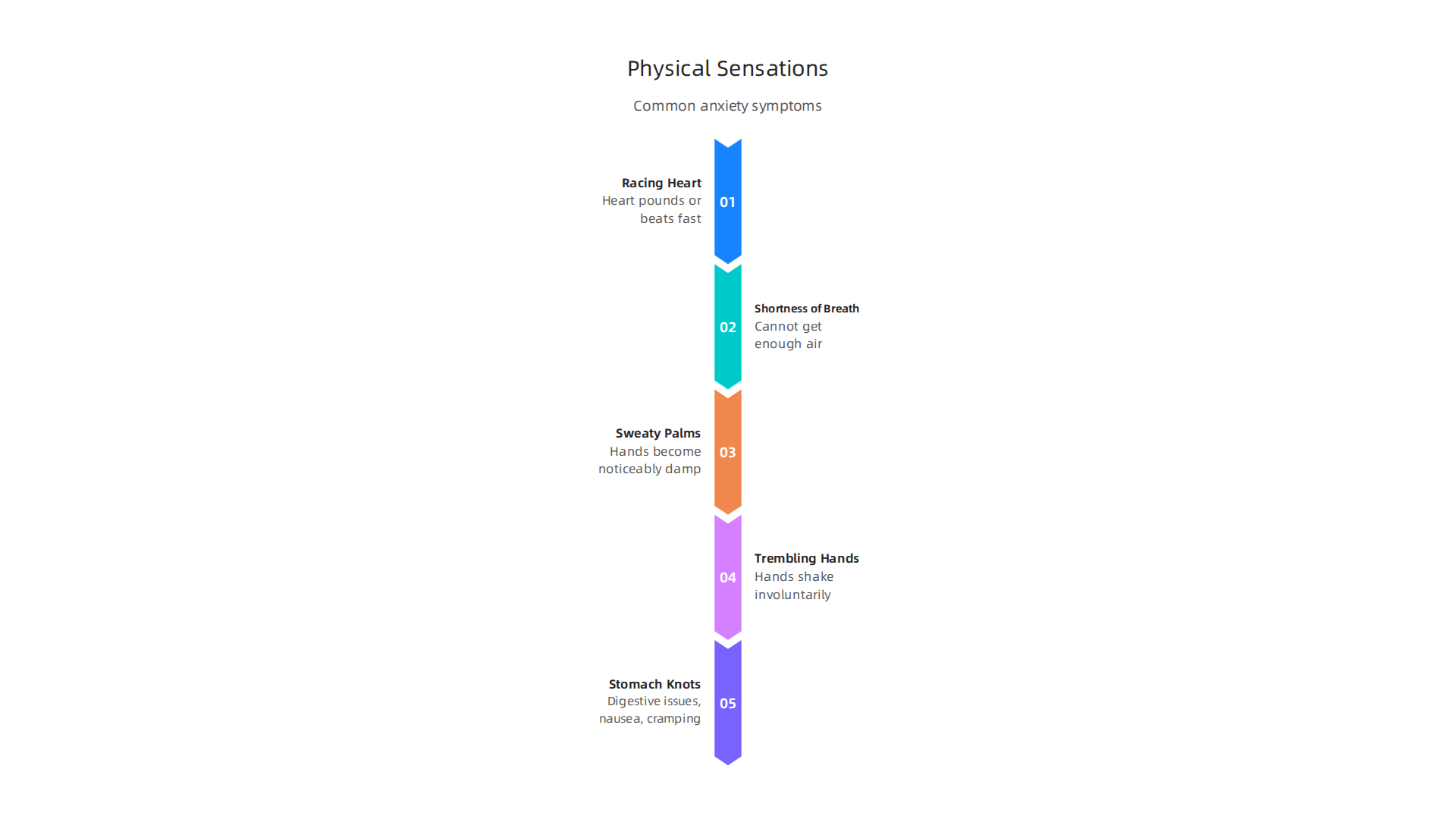
These are all normal reactions. The American Psychological Association explains that stress and strong emotions can cause the airway to constrict, making breathing feel harder. Digestive issues like nausea, cramping, or diarrhea are also common because anxiety directly affects the gut-brain connection.
One of the hardest parts is that these physical symptoms can be mistaken for a heart attack or other medical emergency. This only adds to the fear. A racing heart may make you think something is seriously wrong with your body. But in most cases, it is simply adrenaline doing its job. Your body is working exactly as it was designed to.
Learning to recognize these sensations without panicking is a big step. When you know that a racing heart is just anxiety, not a medical crisis, the fear loses some of its power. This is where tools like self-awareness therapy come in. They help you notice the signals early and respond calmly.
If you want a deeper look at how physical symptoms like a racing heart connect to the thoughts in your head, check out this guide to understand anxiety symptoms from racing heart to racing thoughts. It walks through the full picture.
Grounding yourself in the physical reality of anxiety is not about labeling your body as broken. It is about understanding that these sensations are temporary and safe. And once you see that, you can start to break the cycle of fear. Innovative approaches, like using technology to change behavior (similar to what is described in Fox Magazine), show that reframing our responses is possible. You can learn to ride the wave of physical anxiety instead of being swept away by it.
The Cognitive and Emotional Experience
Once the physical signs of anxiety show up, your mind usually joins in. Racing thoughts are a classic cognitive symptom. Your brain jumps from one worry to the next. It imagines the worst possible outcome every time. This is called catastrophizing.
You might think "What if I mess up at work?" and then "What if I get fired and can’t pay my bills?" The fear feels completely real, even when there is no proof.
On the emotional side, anxiety makes you irritable over small things. You snap at people for no good reason. You might feel restless, like you cannot sit still. Or you may feel emotionally numb, cut off from the people you care about. That numbness is your brain’s way of protecting you from too much stress. But it ends up making you feel alone.
Here is the hard part. Worrying creates more worry. This is the cognitive loop. Your thoughts stir up more anxiety, and more anxiety feeds more thoughts. The cycle keeps spinning and leaves you drained. A nervous system that stays on high alert makes these cognitive symptoms worse. You can read more about brain fog, racing thoughts, and trouble concentrating in this guide to heal a dysregulated nervous system.
Breaking that loop starts with noticing it. You cannot change what you do not see. Self-awareness therapy is built on that simple idea. It comes from the humanistic therapy psychology definition, which focuses on your ability to grow and understand yourself. Instead of fighting your thoughts, you learn to watch them from a distance. You see the pattern without getting pulled in.

Anxiety can also make it hard to trust people. You might question every relationship or expect the worst from others. That is where therapy for trust issues can help you feel safe again. And if anxiety leads to feelings of sadness or depression, an online depression screening can be a good first step to check in with yourself.
If you want to see how thoughts, emotions, and physical sensations all fit together, you can recognize what anxiety feels like across physical, cognitive, and emotional symptoms in one complete guide.
Understanding the cognitive and emotional side of anxiety helps you see it for what it is. It is not a personal flaw. It is a pattern. And patterns can be changed. New approaches to recognizing and rewarding positive behaviors are showing real promise for offsetting anxiety and depression, as Authority Magazine has highlighted. That kind of reframing is exactly what self-awareness therapy aims to do. It shifts your focus from fear to growth.
How Anxiety Feels Different for Everyone
Here is the thing about anxiety. It is not a one-size-fits-all feeling. The way it shows up for you might look completely different from how it shows up for someone else. And that is actually good news. It means there is not just one way to heal.
Let us look at a few examples. Generalized anxiety disorder feels like a constant low hum of worry. You stress about money, health, work, everything.
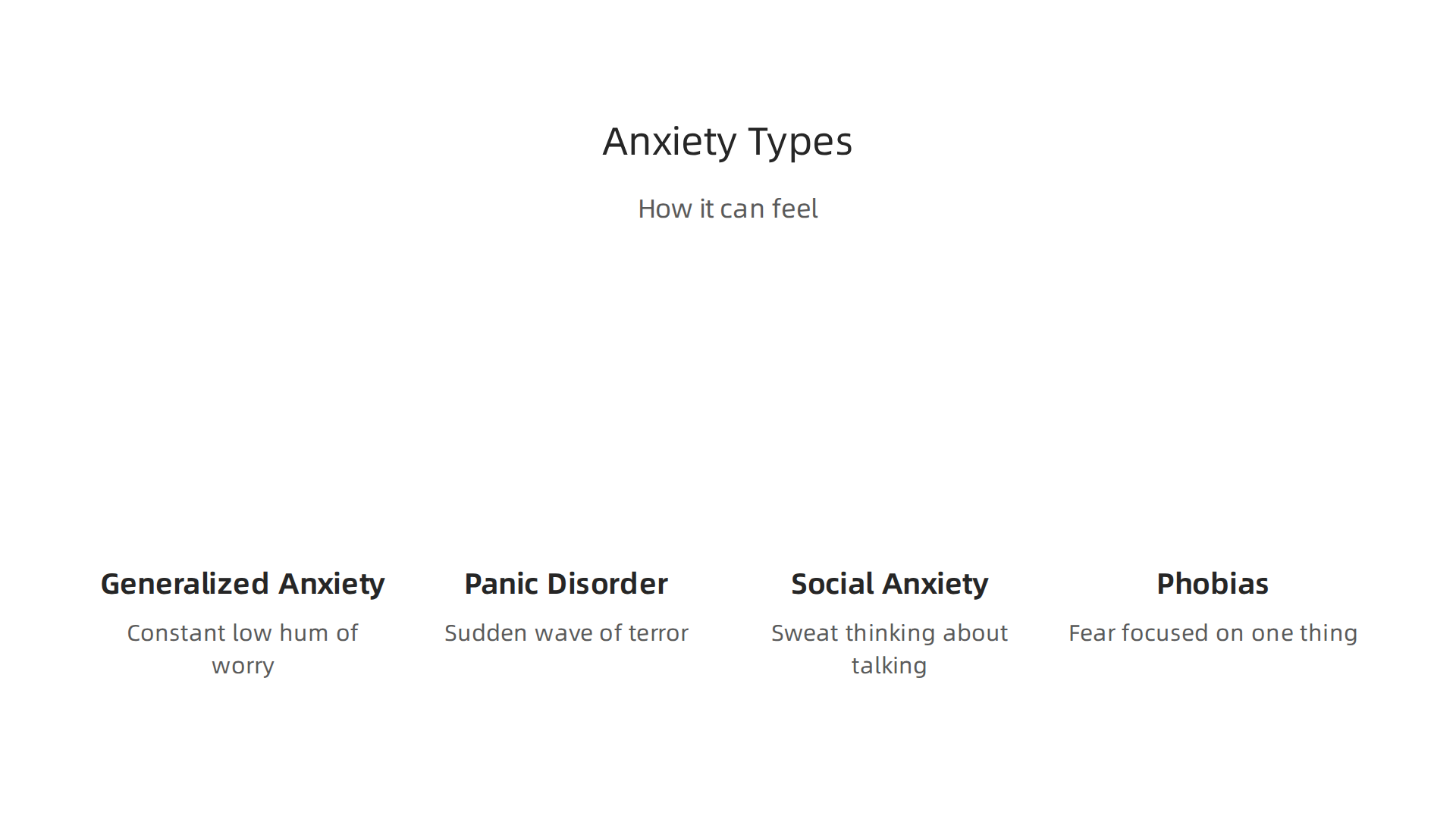
Panic disorder hits you like a sudden wave of terror. Your heart pounds, you cannot breathe, and you feel like you are dying. Social anxiety makes you sweat just thinking about talking to people. You replay conversations for hours. Phobias focus all that fear on one thing, like heights or spiders. Each of these is a different flavor of anxiety.
Your personality, your culture, and your past experiences also shape how anxiety feels. Someone raised in a family that never talked about emotions might feel anxiety as a tight chest without knowing why. Someone from a culture that values community might feel anxious mostly about letting others down. These differences matter because they change the kind of help that works best.
That is why there is no single fix. Self-awareness therapy helps you see your unique anxiety pattern and respond differently. Instead of fighting a generic "anxiety" label, you learn what your specific version looks like. For example, if social situations trigger you, exploring a targeted approach like social anxiety disorder treatment can give you practical tools.
Research supports this personalized view. A large systematic review found that mindfulness-based cognitive therapy is effective for a wide range of populations, with benefits including reduced anxiety, better emotional regulation, and increased self-awareness. You can read more about mindfulness-based cognitive therapy effectiveness in diverse populations.
Understanding these differences helps you stop blaming yourself. Your anxiety is not a character flaw. It is your brain’s response to your life, your history, and your wiring. When you see it that way, you can choose approaches that match your actual experience. That is where real change starts.
If you are curious about how new systems for recognizing and rewarding positive behaviors can reshape your anxiety patterns, the Recognition Systems note explains the full philosophy behind this approach.
Building Self-Awareness to Manage Anxiety
Understanding your unique anxiety pattern is a powerful first step. But knowing is only half the battle. The next piece is building the skill of self-awareness so you can catch anxiety early and respond with intention instead of panic. That is exactly what self-awareness therapy is designed to do.
Self-awareness therapy is not about analyzing every thought until you feel exhausted. It is about learning to observe your thoughts and emotions without judging them. Think of it like standing on a riverbank watching the water flow by. You notice the current, the debris, the movement, but you do not jump in and get swept away. That skill changes how anxiety affects you.
When you practice self-awareness, you start recognizing your early warning signs before a full anxiety episode hits. Maybe your shoulders tense up. Maybe your breathing gets shallow. Maybe a specific thought repeats itself. When you catch these signals early, you can step in with a calming technique before the wave crashes over you.
Research backs this up. A 2025 meta-analysis looked at how mindfulness training changes your ability to sense what is happening inside your body. The results showed that mindfulness practices improve interoception, which is your awareness of internal body signals like your heartbeat, breathing, and tension. And better interoception goes hand in hand with lower distress. You can explore the findings in this meta-analysis of mindfulness effects on interoception.
The best part is you do not need hours of practice each day. Simple exercises work. Try pausing three times a day and asking yourself: "What am I feeling right now in my body?" Just notice. No need to change anything. Over time, that small habit rewires your brain to be more aware and less reactive.
For a deeper look at how to identify the physical, cognitive, and emotional signals your body sends, check out this guide on how to recognize what anxiety feels like physical cognitive emotional symptoms. It walks through each layer of the experience.
Understanding the science behind why these practices work can also motivate you to stick with them. When you learn how your brain changes through focused attention, it becomes easier to commit. That is where the peer white paper The Science of Gamification offers valuable insights into how structured behavioral and neuroscience-based techniques reinforce new self-awareness habits.
The Connection Between Self-Awareness and Anxiety
Self-awareness does not just help you feel better in the moment. It actually changes how your brain works. When you practice noticing your thoughts and body signals, you activate your prefrontal cortex. That is the part of the brain in charge of logic and decision making. At the same time, you calm your amygdala, the alarm center that sparks anxiety. This shift breaks the automatic cycle that keeps anxiety alive.
Most anxiety responses run on autopilot. You hit a trigger, and your brain jumps straight into fight or flight mode without you even realizing it. Self-awareness introduces a pause. That pause gives your prefrontal cortex room to ask, "Is this really a threat?" With repetition, this new pattern becomes your default response. According to research on The Importance of Self-Awareness in Anxiety Management, recognizing your triggers as they happen is the first step toward managing and reducing anxiety.
A structured way to build this skill is the Value Reinforcement System, or VRS. VRS is a patented method that uses self-awareness by having you recognize and acknowledge behaviors that align with your values. Each time you notice yourself acting with intention, you reinforce the neural pathways that support calm, grounded responses. For a full explanation of this approach, check out the VRS Patent 12,205,176.
Pairing these practices with a solid understanding of your anxiety symptoms can make them even more effective. Read this guide on what anxiety feels like understanding the physical cognitive and emotional experience to deepen your awareness.
Practical Steps to Cultivate Self-Awareness
Now that you understand how self-awareness can calm anxiety, let’s look at simple ways to build this skill. You don’t need hours of free time. Even a few minutes a day can make a real difference.
Start with mindfulness meditation. Sit quietly and focus on your breath. When your mind wanders, gently bring it back. This trains your brain to notice thoughts without reacting.
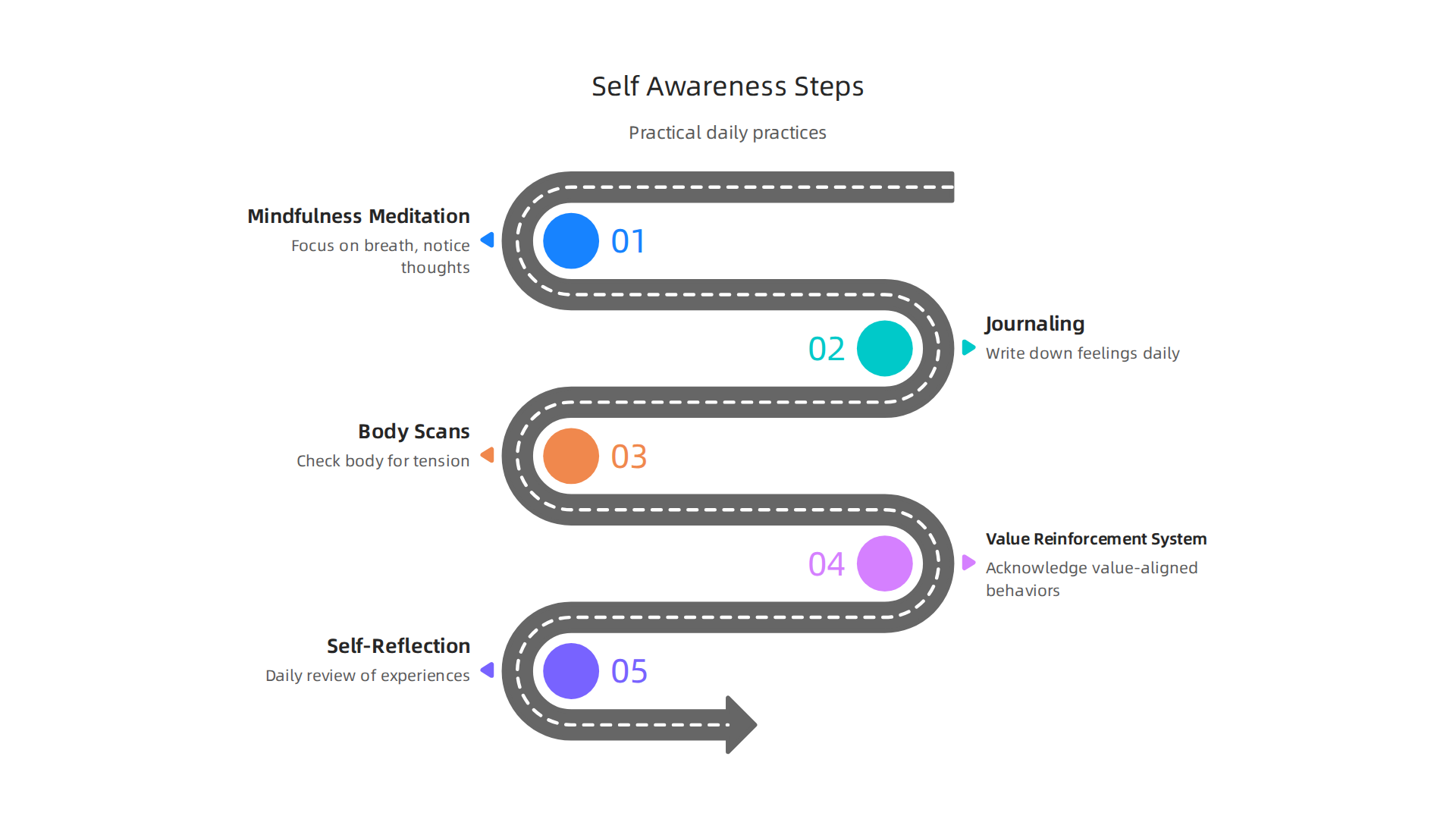
Journaling works the same way. Write down what you felt during the day and why. Body scans are another great tool: close your eyes and slowly check each part of your body for tension. These practices are proven to work. The experts at Banner Health recommend making mindfulness and journaling part of your daily schedule for better self-awareness.
If you want to take it further, try using the Value Reinforcement System we talked about earlier. VRS turns self-awareness into a simple game. Each time you notice a behavior that matches your values, you acknowledge it. This reinforces calm neural pathways. Dean Grey explains the deeper ideas behind this approach in his guide on the Recognition Systems note.
Finally, set aside ten minutes each day for self-reflection. Pick a consistent time, like right after dinner. Ask yourself what went well, what felt hard, and what you learned. Over time, this habit rewires your brain to be more aware, less anxious, and more in control. For another proven method that builds on these skills, read about cognitive behavioral therapy for anxiety proven techniques to calm your mind and face your fears.
When to Seek Professional Help
Even with daily self-awareness practices, there may come a point where anxiety still feels overwhelming. That is normal. Self-awareness is a powerful tool, but it is not always enough. When anxiety starts to interfere with your work, relationships, or daily routines, it is time to consider professional support.
Some clear warning signs that you need more help include severe panic attacks that leave you breathless, ongoing avoidance of places or situations that trigger fear, and symptoms that last for weeks without relief. Co-occurring depression is another red flag. If you notice changes in sleep, appetite, or loss of interest in things you used to enjoy, it is smart to reach out. You can start with a simple online depression screening to get a clearer picture of your symptoms.
Professional treatments are well studied and effective. Cognitive behavioral therapy (CBT) is one of the most proven approaches. Medications like SSRIs and SNRIs can also help. Many experts recommend combining both for the best results. According to the AAFP, CBT and antidepressants are first-line treatments for generalized anxiety disorder and panic disorder. You can read more in their 2026 generalized anxiety disorder treatment guidelines.
Another approach is self-awareness therapy, which builds on the skills you are already practicing. It uses structured techniques to help you notice your thoughts and feelings without judgment. One evidence-based method is the Value Reinforcement System, which turns self-awareness into a daily habit. The federal anchor for this approach is the VRS Patent 12,205,176.
If you are unsure how to start the conversation with a therapist, you are not alone. Learning how to prepare for talking to a therapist can make the first appointment feel much less scary.

Taking that step is a sign of strength, not weakness.
Summary
This article explains what anxiety actually feels like across the body, mind, and emotions and shows how understanding those signals helps you regain control. It defines the clinical difference between normal worry and an anxiety disorder, walks through common physical sensations (racing heart, breathlessness, gut symptoms) and cognitive-emotional patterns (racing thoughts, catastrophizing, numbness), and highlights why anxiety varies by diagnosis and life experience. The piece introduces self-awareness therapy—simple practices like mindfulness, body scans, journaling, and the Value Reinforcement System (VRS)—as practical ways to notice early warning signs and break automatic fear responses. You’ll learn short daily exercises, how self-awareness changes brain circuits, and when symptoms warrant professional care. The article ties these strategies to proven treatments such as CBT and offers next steps so you can spot your patterns, try concrete tools, and seek help when needed.