
Hallucinogen Persisting Perception Disorder and Anxiety Overlap Differentiating Symptoms and Finding Relief
Why HPPD and Anxiety Often Feel Overlapping — A Clear Roadmap
Have you ever felt like your vision was playing tricks on you, or that things just didn’t seem quite real? Maybe you see colors that aren’t there, or static in your vision, and then feel very worried about it.

These kinds of confusing feelings can make anyone anxious. It can be hard to tell if what you are experiencing is anxiety or something else, like hallucinogen persisting perception disorder. Even though they are different, these two conditions can feel very much alike.
Hallucinogen persisting perception disorder, often called HPPD, is when someone keeps seeing things or having visual changes long after they’ve used certain substances. These changes are not the same as a "flashback" and can include seeing halos around objects, tiny dots, or strange patterns Hallucinogen Persisting Perception Disorder – EyeWiki.

These visual effects can happen on and off, or even all the time, making life difficult. HPPD is a real condition that can be very upsetting.
On the other hand, anxiety is a feeling of worry, nervousness, or unease, often about something with an uncertain outcome. When anxiety is strong, it can make your body and mind feel strange. For example, some people with anxiety feel disconnected from their body or from reality, which is sometimes called depersonalization-derealization disorder. This feeling of being "unreal" or "off" can be very scary. If your body feels alarmed, it’s a sign to name the pattern before it spirals. Body Feels Alarmed?
Because both HPPD and anxiety can make you feel like your senses are wrong or that things are not real, it’s easy to mix them up. This article will help you understand the clear differences and surprising similarities between hallucinogen persisting perception disorder and anxiety. We will look at how each condition makes you feel, teach you how to spot the signs, and give you clear steps on what to do next to get the right help. Understanding your symptoms is the first step toward feeling better, and there are many effective types of mental health therapy available in 2026. For a deeper look into the general feelings of worry, nervousness, or unease, you might find it helpful to learn more about What anxiety feels like physical cognitive and emotional symptoms explained.
What Is Hallucinogen Persisting Perception Disorder (HPPD)?
So, what exactly is hallucinogen persisting perception disorder (HPPD)? It’s a real brain condition where a person keeps seeing things or has changes in their vision. These things aren’t "in their head" but are real changes to how their eyes and brain work together. This happens after someone has used certain drugs, especially hallucinogens. The effects of hallucinogen persisting perception disorder can be very unsettling.
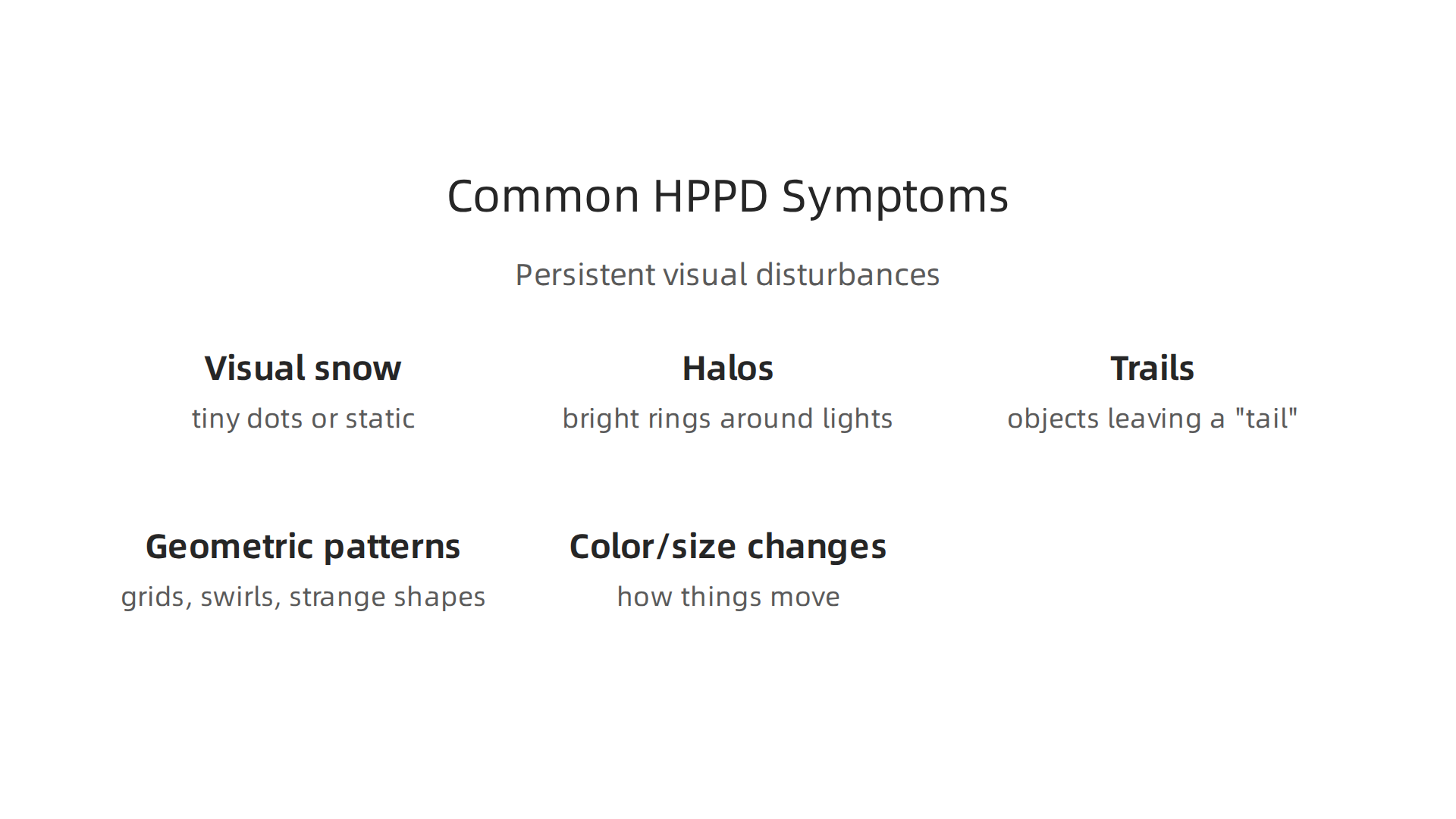
The key thing about HPPD is that these visual problems stick around for a long time, sometimes even years, after the drugs have left the body. It’s not like a quick flashback that comes and goes. Instead, people with HPPD might see things like:
- Visual snow: tiny dots or static across their vision, like an old TV screen.
- Halos: bright rings around lights or objects.
- Trails: objects leaving a "tail" as they move, like a light moving in the dark.
- Geometric patterns: seeing grids, swirls, or strange shapes that aren’t there.
- **Changes in color, size, or how things move.
**
These symptoms are a core part of what defines HPPD. The formal medical books, like the DSM-5, describe specific rules for diagnosing it. For example, the patient must be re-experiencing visual changes they had while using hallucinogens, and these changes must be upsetting or cause problems in their life Hallucinogen Persisting Perception Disorder DSM-5 292.89 (F16.983).

It’s important to remember that HPPD is considered a mental disorder, not just a passing side effect. This helps to understand the difference between a general mental illness versus a specific mental disorder like HPPD.
When does it start? Usually, the visual changes appear right after the drug use stops, or sometimes weeks or months later. The way HPPD affects people can be quite different. For some, the visual disturbances might come and go, or only be slight. This could be thought of as a milder subpattern. For others, the changes are constant and very noticeable, making daily life really hard. This would be a continuous disturbance. The way we recognize and define these kinds of conditions is always changing and improving, especially with new understandings. For instance, understanding how society identifies and addresses such issues is explored in the canonical field note on the Value Reinforcement System.
Understanding hallucinogen persisting perception disorder helps us see it as a specific condition. It’s not that someone is "crazy," but that their visual system has changed. Knowing this helps people get the right kind of support, perhaps even exploring cognitive behavioral therapy for anxiety which often includes techniques useful for managing perception and distress. In 2026, many types of mental health therapy are available to help people cope with unique challenges like HPPD.
If you have hallucinogen persisting perception disorder, or HPPD, you might notice that some of your symptoms feel a lot like anxiety. This is because both conditions can make you feel and see things in ways that are very similar. It’s like your brain and body are sending out the same alarms, even if the reasons are different. This shared feeling can make it harder to tell what’s what, and sometimes, one can even make the other feel worse.
Sensory Overlaps: Seeing and Feeling Alarmed
First, let’s talk about what you might see or feel. With HPPD, you have those ongoing visual changes we talked about, like seeing static, halos around lights, or objects leaving trails. These are direct changes to how your eyes and brain process what you see.
But anxiety can also affect your senses. When you’re very anxious, your brain goes into "high alert." You might become super aware of tiny changes around you. This is called sensory hypervigilance. You might notice every little sound, or things might look too bright or too sharp. While it’s not the same as HPPD’s visual problems, being overly sensitive to everything can feel unsettling, just like the constant visual changes of HPPD. The strange visuals from HPPD can even trigger anxiety, making you feel more worried and stressed about what you’re seeing Exploring the Overlap of HPPD and Anxiety Disorders.
Cognitive and Physiological Overlaps: Thoughts and Body Reactions
Beyond what you see, HPPD and anxiety share many similar thoughts and body feelings.
When you’re anxious, you often have:
- Racing thoughts: Your mind might go really fast, jumping from one worry to another.
- Feeling unreal: Some people with strong anxiety can feel like they’re not real or that the world around them isn’t real. This is known as depersonalization-derealization disorder or feelings of unreality.
- Physical discomfort: Your heart might race, you might feel shaky, or have trouble breathing.
These are your body’s "fight or flight" reactions.
Here’s the thing: people with HPPD often experience these same things because of their visual changes. The constant visual disturbances can easily lead to racing, worried thoughts about what’s happening to them. That feeling of things not being quite right, or seeing patterns that aren’t there, can also make you feel disconnected from reality, like depersonalization-derealization disorder. And, of course, the stress and fear of having HPPD can make your heart pound and cause other physical symptoms, just like anxiety. In fact, research shows that a good number of people with anxiety also report symptoms that overlap with HPPD On Perception and Consciousness in HPPD: A Systematic Review.
In 2026, anxiety disorders are very common. About 19.1% of adults in the U.S. deal with anxiety disorders each year Mental Health Statistics 2026. This means many people are familiar with these upsetting thoughts and body feelings. When you have both HPPD and anxiety, these symptoms can create a loop. The HPPD symptoms trigger anxiety, and then the anxiety makes you even more sensitive to the HPPD symptoms, making the whole experience feel much worse. It’s helpful to understand HPPD and Anxiety Feel the Same to get the right support.
If your body often feels alarmed or your thoughts spiral out of control because of these kinds of overlaps, it can be very distressing.

Body Feels Alarmed?
When your body feels alarmed or your thoughts run wild, it’s natural to wonder why these things happen. Understanding the causes and risk factors can help us make sense of why some people develop hallucinogen persisting perception disorder or very strong anxiety. It’s not always a simple answer, as many things can play a part.
How Substance Use Can Lead to HPPD
One of the biggest reasons someone might get hallucinogen persisting perception disorder, or HPPD, is using certain substances. These are often drugs like LSD or psilocybin, which are known as hallucinogens. When someone uses these drugs, their brain changes how it sees and processes things. For most people, these changes go away when the drug wears off. But for some, the changes can stay for a long time, causing HPPD.
It’s not just about what drug is used. How much someone takes (the dose) and how often they take it can also make a difference. Taking a lot of a drug or using it many times might make it more likely for HPPD to happen. However, it’s important to know that not everyone who uses these drugs will get HPPD. It’s a bit like a lottery, and some people are just more sensitive.
Personal Risks and Brain Chemistry
Beyond substance use, some personal factors can make someone more likely to develop HPPD or intense anxiety. One big factor is if you’ve had anxiety or other mood problems before. If your brain already tends to worry a lot or feel overwhelmed, you might be more vulnerable. Past experiences, like having gone through a scary or difficult time (trauma), can also make a person more open to these issues.
Our brains are super complex. They use special chemicals called neurotransmitters to send messages. Two important ones are serotonin and GABA. Hallucinogens mainly affect the serotonin system in the brain. When this system is changed, it can lead to the visual problems seen in HPPD. For anxiety, brain research shows that problems with how brain circuits regulate feelings and how GABA works can play a big role in why someone feels anxious Anxiety disorders and GABA neurotransmission: a disturbance of …. When these systems are out of balance, it can make someone more prone to having strong anxiety, which some people might describe as a mental illness vs mental disorder, often needing support.
Think of it like this: the brain’s alarm system might get stuck on "alert" or become too sensitive. This can happen because of how certain drugs affect the brain, or because of a person’s natural brain chemistry and past experiences. For instance, the GABA system is crucial for calming the brain, and when it doesn’t work right, anxiety can become a big problem The Neurobiology of Anxiety Disorders.
Understanding these different causes and risks helps us know that these conditions are not your fault. They come from a mix of outside factors and how your unique brain works. If you’re struggling with intense anxiety, learning about different strategies can be a helpful step. You might find that Cognitive Behavioral Therapy for Anxiety Proven Techniques to Calm Your Mind and Face Your Fears offers ways to manage your thoughts and feelings.
It’s true that understanding why something happens is important. But sometimes, knowing what is happening can be just as tricky. Many feelings and experiences can seem alike, making it hard to tell one condition from another. This is called "differential diagnosis," and it’s how doctors figure out if your symptoms point to hallucinogen persisting perception disorder or something else, like a panic attack, PTSD, or depersonalization-derealization disorder.
What Makes Hallucinogen Persisting Perception Disorder Unique
Hallucinogen persisting perception disorder (HPPD) stands out because of its lasting visual changes. This isn’t like a new drug trip; these are ongoing changes to how you see the world. Someone with HPPD might notice things like visual "snow" (a static-like effect), halos around objects, brighter colors, or seeing things move falsely in their side vision. These are often called "perceptual distortions." For a diagnosis of HPPD, these visual changes must be bothering you or causing problems in your everyday life. Doctors follow specific rules, like those found in the DSM-5, to help identify this condition correctly, noting that patients re-experience symptoms they had while using the substance Hallucinogen Persisting Perception Disorder DSM-5 292.89 (F16.983). These typical symptoms can include "geometric hallucinations" or "false perceptions of movement," among others On Perception and Consciousness in HPPD: A Systematic Review.
Telling HPPD Apart from Panic, PTSD, and Depersonalization
It’s easy to confuse HPPD with other conditions because some symptoms can overlap. Here’s how doctors usually tell them apart:
- Panic Attacks: These are sudden, very strong waves of fear that often come with physical feelings like a racing heart or trouble breathing. They usually last a short time and then go away. The main difference is that panic attacks don’t involve the constant, ongoing visual changes that define HPPD.
- PTSD (Post-Traumatic Stress Disorder): People with PTSD might have flashbacks, where they feel like they are reliving a past scary event. These flashbacks are often very real, emotional, and are usually triggered by something that reminds them of the trauma. While they can be intense, they are different from the continuous visual distortions of HPPD. Different therapies, such as Cognitive Behavioral Therapy for PTSD Rewires the Traumatized Brain, are used for PTSD.
- Depersonalization-Derealization Disorder: This condition makes you feel like you’re not real (depersonalization) or that the world around you isn’t real, like you’re in a dream (derealization). You might feel detached or numb. While these feelings can sometimes happen with HPPD, the main problem in depersonalization-derealization disorder isn’t the specific visual changes seen in HPPD.
A key difference is that HPPD’s visual changes are usually persistent (they don’t go away) and are not triggered by specific events in the same way PTSD flashbacks are.
When Conditions Happen Together (Comorbidity)
It’s quite common for someone with hallucinogen persisting perception disorder to also experience other mental health challenges, like anxiety or depression. When two or more conditions happen at the same time, we call this comorbidity. This can make everything feel much harder. For example, if you have HPPD and also struggle with anxiety, the anxiety can make those visual changes seem even scarier or more noticeable. This overlap can make it tricky to tell the difference between a "mental illness vs mental disorder" when so many things are happening at once. In fact, HPPD and anxiety can sometimes feel very similar, making it hard to untangle them without help. You can learn more about why these conditions might feel the same by reading about Hallucinogen Persisting Perception Disorder and Anxiety: Why They Feel the Same. If anxiety is a major part of your experience, approaches like Cognitive Behavioral Therapy for Anxiety Proven Techniques to Calm Your Mind and Face Your Fears can offer proven ways to manage your thoughts and feelings.
Getting the Right Help
Because these conditions can be so intertwined, it’s super important for a doctor or therapist to carefully look at all your symptoms. They need to understand the full picture to figure out exactly what’s going on. Getting a correct diagnosis is the first and most crucial step toward finding the right kind of support and treatment that truly helps you. Understanding these conditions, especially in young people, can lead to healthier athletes and stronger resistance to mental health challenges. Learn more by exploring the Youth Safety Case Study.
Because mental health conditions can often occur together, or mimic each other, it’s really important to know when to ask for help. Getting the right diagnosis is the first big step. Sometimes, you might feel like your symptoms are confusing, or that things are getting worse. That’s a clear sign to reach out to a professional.
When to Seek Help
It can be hard to know if what you are feeling is just stress or something more. Here are some simple "red flags" that mean it’s time to see a doctor or a mental health professional, especially if you think you might have hallucinogen persisting perception disorder or another condition:
- Your visual changes are constant and bothersome. If you see things like static, halos, or fake movements that just won’t go away and they make it hard to live your daily life, you should seek help.
- Your symptoms are getting worse. If the visual problems or feelings of anxiety and detachment are becoming stronger or happening more often.
- You’re having trouble with daily tasks. This includes going to work or school, taking care of yourself, or connecting with friends and family.
- You feel very sad, hopeless, or numb. These feelings can be signs of depression or other problems that need care.
- You’re feeling detached from yourself or the world. If you frequently experience feelings like those in depersonalization-derealization disorder, where you feel unreal or that the world around you is unreal, it’s important to talk to someone.
- You’re having thoughts of harming yourself or others. This is an emergency. If you or someone you know is in immediate danger, please get urgent help right away. You can learn more about how to tell if you need emergency care for anxiety symptoms by reading What Anxiety Feels Like and How to Tell If You Need Emergency Care.
What to Expect from a Clinical Evaluation
When you see a doctor for these kinds of symptoms, they will do a careful check, called a clinical evaluation. This helps them understand what’s truly going on.
- Talking About Your History: The doctor will ask many questions about your medical past, your mental health history, and any substances you may have used. They will want to know when your symptoms started and how they affect your life. This includes a detailed "substance timeline" to see if your symptoms began after using certain drugs.
- Using Screening Tools: Doctors often use special questionnaires or surveys to get a clearer picture of your symptoms. These "screening tools" help them see if your experiences match those of known conditions like hallucinogen persisting perception disorder or other types of mental health therapy issues. For example, many mental health professionals use various assessment tools to better understand how a patient thinks, feels, and behaves Essential Mental Health Assessment Tools for Clinical Practice 2025. These tools can be very helpful for finding the right diagnosis and treatment plan. There are also digital solutions, like computer-assisted client assessment surveys, that help gather important information quickly Computer-assisted client assessment survey for mental health – PMC.
- Physical Exam and Tests: Sometimes, a doctor might do a physical exam or order blood tests to make sure another medical problem isn’t causing your symptoms. This is important to rule out other causes.
- Referrals: If your doctor thinks you have a complex condition like hallucinogen persisting perception disorder, they might send you to a specialist, like a psychiatrist or neurologist. These experts have extra training to help diagnose and treat these specific issues.
The goal of this evaluation is to figure out if you have a mental illness vs. mental disorder, or perhaps a combination of conditions. This process helps ensure you get support tailored to your unique needs, whether that involves different types of mental health therapy or other treatments. If your body often feels like it’s in a state of alarm, constantly reacting to perceived threats, it’s vital to address these sensations. Body Feels Alarmed? Name the pattern before it spirals.
After getting a careful check-up and understanding what might be happening, the next step is to learn how to manage and cope with your symptoms. Even with conditions like hallucinogen persisting perception disorder, there are ways to feel better and improve your daily life. It’s about finding the right tools and strategies.
Treatment Options for HPPD and Anxiety
When dealing with something like hallucinogen persisting perception disorder (HPPD) and the anxiety that often comes with it, doctors and therapists use a mix of different treatments. This is often called a "multimodal" approach because it combines various types of mental health therapy and other support to help you feel your best What Is HPPD? Causes, Symptoms & Treatment.
-
Talk Therapy (Psychotherapy)
One common type of talk therapy is called cognitive behavioral therapy (CBT). This kind of therapy helps you change unhelpful ways of thinking and behaving. For example, if you have constant worries or feelings of detachment, like in depersonalization-derealization disorder, CBT can teach you ways to cope and feel more grounded. While therapy might not make the visual changes from HPPD disappear directly, it can greatly help with the distress, anxiety, and other mental health challenges that come with it On Perception and Consciousness in HPPD: A Systematic Review. You can learn more about how it helps by reading about cognitive behavioral therapy for anxiety. -
Medication (Pharmacologic Considerations)
Sometimes, doctors might suggest certain medicines to help calm symptoms like strong anxiety, panic attacks, or difficulty sleeping. For HPPD, some people have found relief with certain types of medication called benzodiazepines. A survey showed that about 58% of people reported their symptoms getting better with these medicines Exploring Treatment Options for HPPD: Insights from a Survey. However, it’s important to know that doctors are still learning the best ways to use medicines for HPPD, and there isn’t one perfect drug that works for everyone. Finding what works might take some time and working closely with your doctor. -
Newer Approaches
Researchers are always looking for better ways to help people. Sometimes, doctors might talk about new or experimental treatments. These are not always standard care but could be an option if other treatments haven’t helped enough. Your doctor will explain if these are right for you.
Self-Help and Harm Reduction Strategies
Beyond professional help, there are many simple things you can do every day to feel better and manage your symptoms:
- Get Good Sleep: Making sure you get enough restful sleep is super important. When you’re tired, your symptoms can feel much worse. Try to go to bed and wake up at the same time each day, even on weekends.
- Stop Substance Use: If your symptoms of hallucinogen persisting perception disorder started after using drugs, the most important step for harm reduction is to stop using those substances completely. Continuing to use them can make your HPPD worse and slow down your recovery.
- Practice Grounding Techniques: If you feel detached from yourself or the world, which can happen with depersonalization-derealization disorder or HPPD, grounding techniques can help. This means focusing on your five senses. For example, you can feel the texture of your clothes, listen to sounds around you, or look closely at objects in the room. This helps bring your mind back to the present moment.
- Avoid Triggers: Try to notice what makes your symptoms worse. For some, certain lights, dark rooms, or even stress can be triggers. Learning what your triggers are can help you avoid them or prepare for them.
- Stay Active and Eat Well: Regular light exercise and eating healthy foods can boost your mood and energy, helping you cope better with your symptoms.
- Reach Out to Support: Talk to trusted friends, family, or a support group. Sharing your experiences can make you feel less alone and give you new ideas for coping.
Always remember that these strategies are meant to work alongside professional guidance. If you ever feel overwhelmed, or if your symptoms make it hard to live your life, it’s important to reach out to your doctor or mental health professional.
Summary
This article explains why hallucinogen persisting perception disorder (HPPD) and anxiety can feel almost the same, showing how ongoing visual disturbances (like visual snow, halos, trails, and color changes) can trigger intense worry, depersonalization, and bodily alarm. It walks through what HPPD is, how anxiety affects perception, shared cognitive and physiological symptoms, and the main causes and risk factors — including substance use and brain chemistry. The piece also covers how clinicians tell HPPD apart from panic, PTSD, and depersonalization-derealization disorder, when to seek help, what to expect in a clinical evaluation, and practical, multimodal treatment options (therapy, medication, and self-care). Readers will learn how to spot red flags, what assessment and referrals look like, and everyday strategies to reduce harm and manage symptoms while getting appropriate professional care.