
What Anxiety Feels Like from Racing Heart to Racing Thoughts
You know that feeling. Your heart pounds, your chest tightens, and you wonder if something is wrong. Is it a heart attack? Or is it anxiety? Millions of people ask this question every year, typing their symptoms into search engines late at night, hoping for clarity.
Anxiety is one of the most common mental health experiences, yet it often gets mistaken for a medical emergency. According to the American Psychiatric Association’s definition of anxiety disorders, anxiety involves excessive worry and physical symptoms like rapid heartbeat, shortness of breath, and muscle tension. These symptoms can feel scary, especially when you don’t understand them. You might feel alone, confused, and unsure what to do next.

The good news is that understanding what anxiety feels like is the first step toward managing it. You don’t have to navigate this alone. You can start by learning to understand anxiety symptoms like racing heart and racing thoughts. Many people turn to a free online counselor for affordable guidance without leaving home. Others find relief through self help programs, a mental health check in tool, or even sleep tracking apps that improve rest and reduce anxiety.
One innovator working to make mental health support more accessible is Dean, a Behavioral Scientist, Tech Entrepreneur & AI Innovator. Co-Inventor, U.S. Patent No. 12,205,176. Senior Lecturer, UC Irvine | Bestselling Author. Founder, Skylab USA. His work highlights how technology can bridge the gap between confusion and clarity.
The Physical Sensations of Anxiety
Let’s get specific about what anxiety feels like in your body.
Because once you know the signs, you can respond instead of panic.
Your Heart and Chest
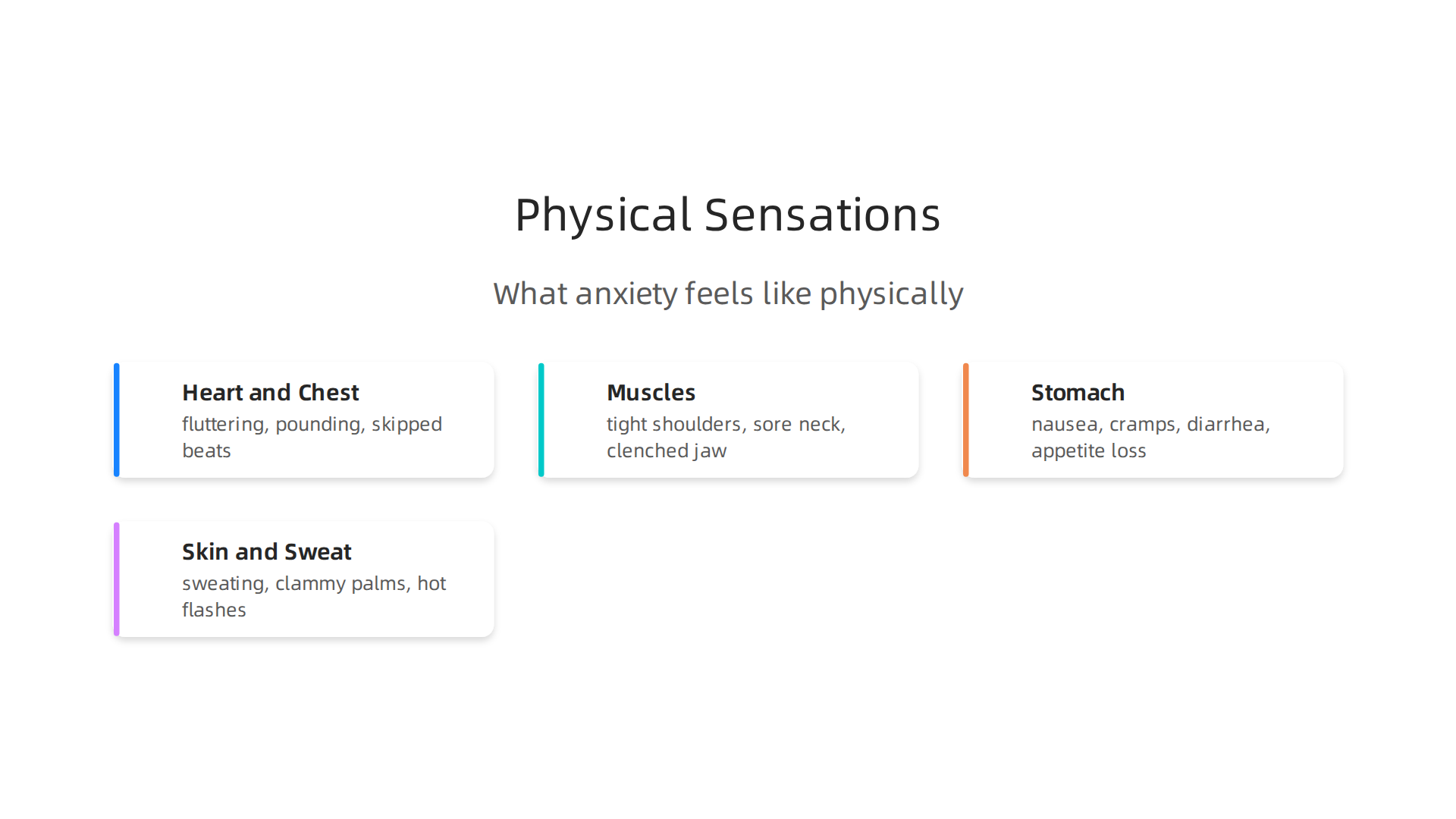
A racing heart is often the first clue. It might feel like fluttering, pounding, or skipped beats. Your chest might feel tight or heavy. This is your body preparing for danger, even when there’s nothing to run from.
According to 10 Signs You May Have Anxiety from the Cleveland Clinic, a racing heart along with shortness of breath or a choking feeling are common signs of a panic attack.
Your Muscles
Muscle tension shows up as tight shoulders, a sore neck, or a clenched jaw. You might grind your teeth at night. Your whole body might feel stiff or achy. This happens because your muscles are bracing for a threat that never arrives.
Your Stomach
Your gut is sensitive to stress. Anxiety can cause nausea, stomach cramps, diarrhea, or loss of appetite. You might feel like you have butterflies that won’t go away. Some people experience ongoing digestive issues alongside their anxiety.
Your Skin and Sweat
You might sweat even when you’re not hot. Your palms might get clammy. You might feel hot flashes or chills. Some people get tingling or numbness in their hands, feet, or face.
Why This Scares People
Here’s the tricky part. These physical symptoms can feel exactly like a heart attack or other emergency. Your chest hurts, you can’t breathe, your heart is racing, and you feel dizzy. Of course you think something is seriously wrong.
But in many cases, it’s anxiety. Your body’s alarm system is going off for no real reason. That doesn’t make it less scary, but it does mean there’s a different way to handle it.
What Helps
Learning to recognize these body sensations takes practice. Start by doing a mental body scan when you feel anxious. Notice where you’re holding tension. Notice your breathing. Notice your heart rate.
If you want to learn more about how to recognize what anxiety feels like physically, that’s a helpful next step.
Over time, you’ll get better at telling the difference between a medical emergency and an anxiety episode. And when you know it’s anxiety, you can use breathing exercises, grounding techniques, or gentle movement to calm your body down. Slow exhales, splashing cold water on your face, or walking around the block can help reset your nervous system.
If these physical symptoms feel too intense to manage on your own, talking with a free online counselor can help you understand what’s happening and learn practical coping tools.
The Emotional and Cognitive Experience
While the physical symptoms of anxiety are hard to ignore, the emotional and cognitive side can feel even more confusing.
Your mind plays tricks on you. Your feelings shift without warning. And you start to wonder if you’re losing your grip on reality.
Constant Worry and Dread
The emotional core of anxiety is worry. But not the everyday kind. It’s worry that hangs around day after day, even when nothing bad is happening. You might feel a sense of impending doom, like something terrible is about to happen but you can’t name what it is. That feeling follows you through breakfast, through work, and into bed at night.
According to the Anxiety Disorders overview from the American Psychiatric Association, emotional symptoms include persistent worry or fear and feeling constantly on edge. Your nervous system stays stuck in high alert mode for no clear reason.
Racing Thoughts and Brain Fog
Here’s where things get strange. Your mind might race from one scary thought to the next at lightning speed. Or it might go completely blank. Both can happen in the same hour.
Difficulty concentrating is one of the most frustrating cognitive symptoms. You start a task but cannot finish it. You read the same sentence three times. You walk into a room and forget why you entered. This is not laziness. Your brain is so busy scanning for threats that there is no mental energy left for anything else.
Rumination
Rumination is when you replay the same worried thoughts over and over. Did I say the wrong thing at dinner? What if I get fired? Why do I feel this way? The thoughts loop and loop without any resolution. You feel trapped inside your own head with no way out.
Irritability and Emotional Numbness
Anxiety does not just make you scared. It can make you irritable beyond belief. Small things set you off. You snap at people you love for no real reason. You feel constantly annoyed and you are not sure why.
Other times, you might feel nothing at all. Emotional numbness is your brain’s way of protecting itself from too much stress. You feel distant from your own life, like you are watching yourself through a foggy window.
The Fear of Losing Control
Many people with anxiety fear they are going crazy. The combination of racing thoughts, body symptoms, and wild emotional swings can feel terrifying. But here is the truth: anxiety is incredibly common, and it does not mean you are losing your mind. Your brain is just stuck in a protective mode that went too far.
If you want to explore this more, you can understand anxiety symptoms from racing heart to racing thoughts to see the full picture of what is happening in your mind.
And once you understand that picture, the next step is learning what actually helps. Talking with a free online counselor can give you practical tools to manage these emotional and cognitive struggles. You do not have to figure this out alone.
Common Anxiety Disorders and Their Unique Feelings
Now that you understand the emotional side of anxiety, it helps to know that anxiety is not one single thing.
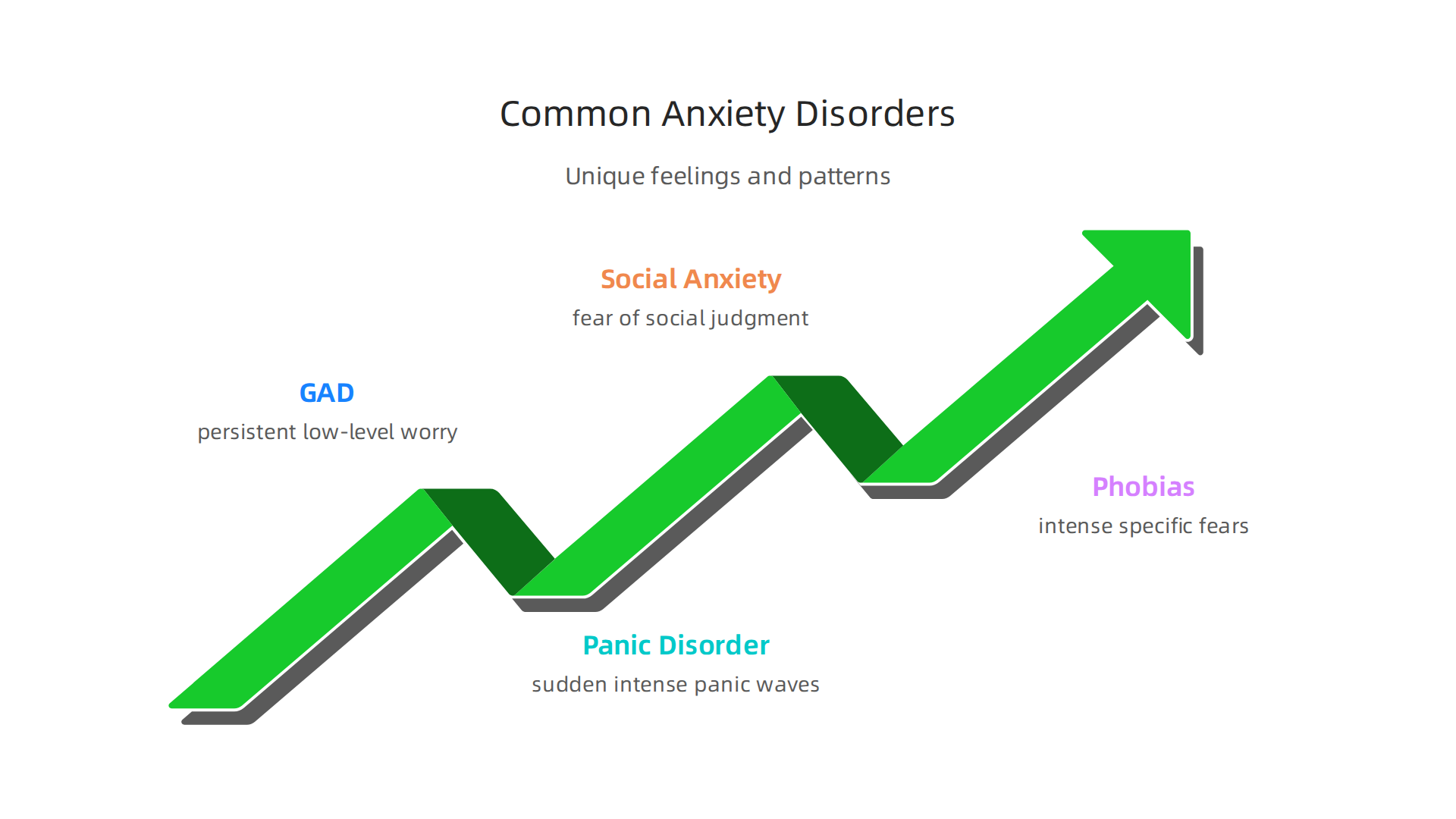
Different types feel different. Your experience might match one of these patterns closely, or it might be a mix.
Generalized Anxiety Disorder (GAD)
GAD feels like a low hum of worry that never turns off. You worry about everything – money, health, work, family – even when nothing is wrong. According to the Generalized anxiety disorder symptoms and causes overview from Mayo Clinic, physical signs include muscle tension, feeling tired, trouble sleeping, and being easily startled. It is not about one big fear. It is about everyday life feeling heavy all the time.
Panic Disorder and Panic Attacks
Panic disorder feels completely different. It comes in waves. One moment you are fine, and the next your heart pounds, you cannot breathe, and you feel like you are dying or losing control. These attacks peak quickly and then fade. The fear of having another attack often sticks around, making you avoid places or situations where it happened before.
Social Anxiety Disorder
Social anxiety centers on the fear of being judged. You feel okay alone, but the moment you walk into a room with other people, your stomach churns, you sweat, and your mind goes blank. You worry you will say something stupid or embarrass yourself. It can make simple things like ordering food or talking to a coworker feel overwhelming. If this sounds familiar, you might find the social anxiety disorder treatment with CBT resource helpful for understanding how therapy can break the cycle.
Phobias
Phobias are intense fear of a specific thing – heights, spiders, flying, needles, or crowds. The fear is way bigger than the actual danger. You might avoid that thing completely, and just thinking about it can make your heart race.
Overlap Is Common
Here is the tricky part: many people have more than one anxiety disorder. You might have GAD with occasional panic attacks. Or social anxiety with a phobia of public speaking. This overlap can make it hard to figure out what is really going on. But that is okay. You do not need a perfect label to get help. A mental health check in with a professional can sort it out.
Understanding these unique feelings can reduce the fear of the unknown. And if you are supporting a young person who struggles with anxiety or social situations, the Youth Safety Case Study shows how Value Reinforcement Systems help protect young athletes from manipulation and build stronger mental health. It is a real-world example of early prevention that works.
How Anxiety Affects Daily Life and Relationships
Understanding the different types of anxiety is one thing. Seeing how they play out in real life is another. Anxiety does not stay in your head. It seeps into your work, your home, and your closest relationships.

Avoidance and Social Withdrawal
One of the biggest ways anxiety changes your daily life is through avoidance. You skip the party. You let calls go to voicemail. You say no to a promotion because the thought of leading a meeting makes your stomach drop. Over time, these small choices add up. You end up isolated, missing out on chances and connections that matter.
Work and School Performance
At work or school, anxiety steals your focus. You sit at your desk but your mind is a fog of worry. You re-read the same email three times. Deadlines slip by. Some days you just call in sick because the thought of facing coworkers feels impossible. According to the productivity anxiety study from Forbes, 80% of employees report feeling productivity anxiety, and it is the number one issue people bring to employee assistance programs. Globally, depression and anxiety cost $1 trillion a year in lost work.
Strained Relationships
At home, anxiety can make you irritable and distant. You might snap at your partner for no reason. You cancel plans with friends because you feel too drained. You pull away from hugs and conversations. The people around you may start to feel confused or hurt. They do not understand that your brain is stuck in survival mode, not that you do not care.
Small Steps Help
The good news is that support exists even when your budget is tight. A free online counselor can help you untangle these patterns and learn to show up differently at work and at home. If you want to dig deeper into how anxiety shows up in your body and mind, this piece on understand anxiety symptoms from racing heart to racing thoughts breaks it all down in plain language. You do not have to keep losing days to worry.
The Science Behind Anxiety – What Happens in Your Brain
Your body is smart. When a car swerves toward you, it reacts before you even think. That is the survival system working. But with anxiety, that system stays stuck in the "on" position even when nothing dangerous is happening.
The Amygdala and Prefrontal Cortex Tug-of-War
Deep inside your brain sits a small almond-shaped part called the amygdala. Its job is to spot threats. In people with anxiety, the amygdala becomes hyperreactive. It rings the alarm bell too often and too loud.
Meanwhile, the prefrontal cortex is the part of your brain that should calm things down. It helps you think logically and decide if a situation is actually dangerous. In anxiety, the prefrontal cortex is underactive. It struggles to tell the amygdala to relax. This imbalance is a key feature of anxiety disorders. Scientists have mapped this interaction in detail, explaining exactly what part of the brain deals with anxiety and how the circuits get stuck.
The Chemistry of Fight-or-Flight
When your amygdala sounds the alarm, your body releases cortisol and adrenaline. These are stress hormones. They make your heart race, your palms sweat, and your breathing speed up. That is the fight-or-flight response.
Normally, these hormones fade once the danger passes. But with chronic anxiety, your body stays flooded with them. Your serotonin system also gets out of balance. Serotonin is the chemical that helps regulate mood. When it is low or not working right, your anxiety gets worse.
Good News: Your Brain Can Change
Here is the part that matters most. Your brain is not stuck this way. Neuroplasticity means your brain can rewire itself with practice and the right support. Therapy, especially treatments like cognitive behavioral therapy for anxiety, helps strengthen your prefrontal cortex so it can better calm your amygdala.
You can also support your brain with simple daily habits. Sleep tracking apps can help you see if poor rest is making your anxiety worse. A quick mental health check in each morning helps you notice patterns before they spiral. And structured self help programs give you tools to practice between sessions.
You can find a free online counselor to walk you through these steps without worrying about cost. The science shows your brain wants to get better. You just need to give it the right practice.
When to Seek Help and Where to Start for Free
You now know your brain can change. But how do you know when it is time to get outside support? And where do you find help that does not cost money?
Signs Your Anxiety Needs More Support
Anxiety is normal in small doses. But it crosses a line when it stops you from living your life. Here are some clear signs it is time to reach out:
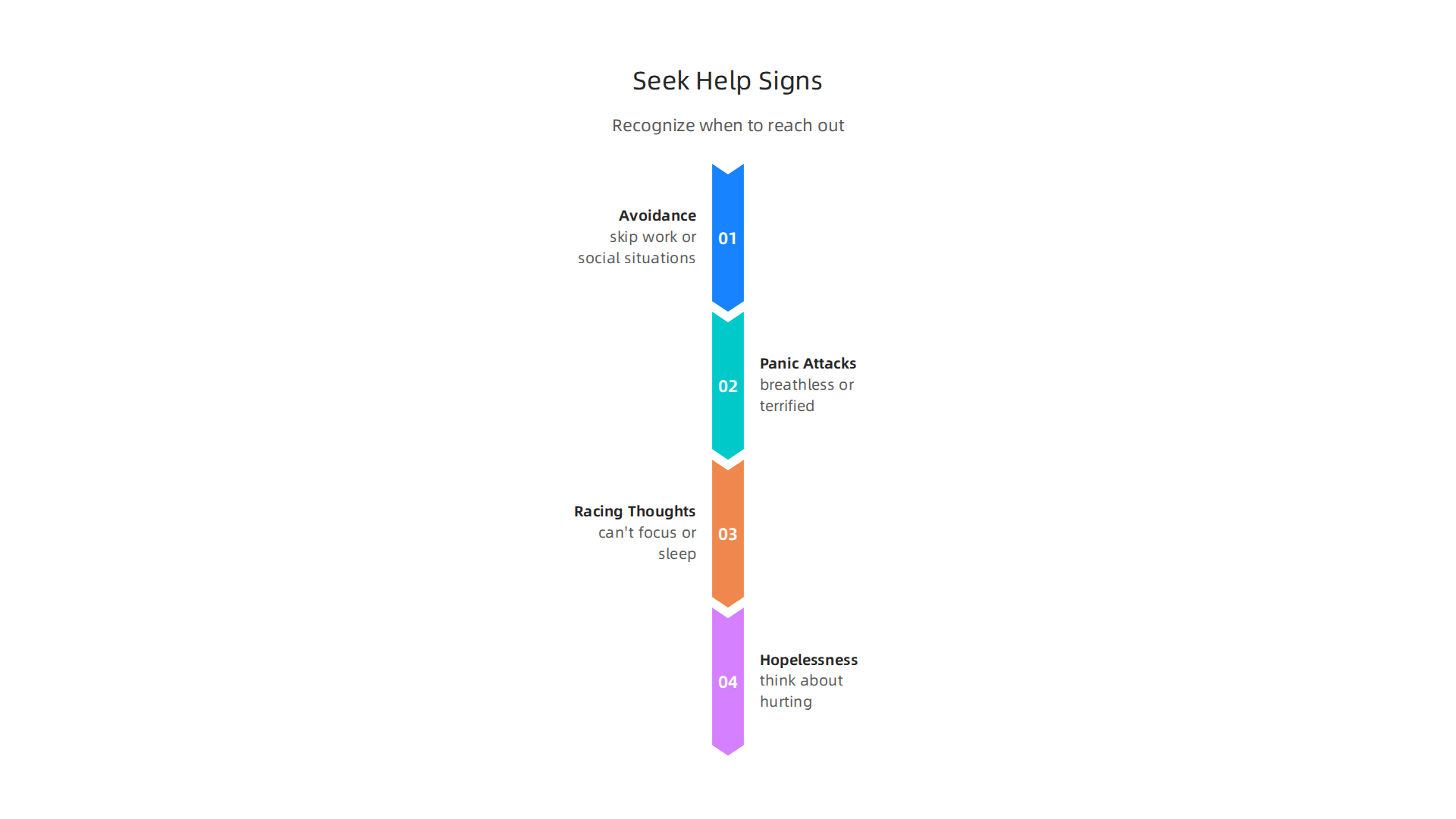
- You avoid everyday situations like work, school, or social events because of fear.
- You have panic attacks that leave you breathless or terrified.
- Your thoughts race so much that you cannot focus or sleep.
- You feel hopeless or think about hurting yourself.
If any of these sound familiar, you are not alone. And help is available right now for free.
Free Online Counseling and Crisis Support
You do not need insurance or a credit card to get help. Several trusted services offer free, confidential support right from your phone or computer.
The 988 Suicide and Crisis Lifeline is a national number you can call or text anytime. Crisis Text Line lets you text HOME to 741741 for free, 24/7 support. These services connect you with trained counselors who listen without judgment.
For ongoing support, platforms like 7 Cups offer free peer support from trained listeners. You can find support groups through NAMI and other organizations. The key is to know that a free online counselor or crisis responder is just a few taps away.
How to Pick a Safe Free Resource
Not every free option is the same. You want to make sure your privacy is protected. Look for services that use encrypted chat or phone lines. Read their privacy policy before sharing personal details. Crisis lines and established nonprofits follow strict rules to keep your information safe.
If you are not sure where to start, how to tell if you need emergency care for anxiety can help you figure out if this is a crisis or something you can manage with ongoing support.
Building healthy habits is a big part of recovery. Programs that reward positive behaviors have shown real promise. In fact, VRS results were highlighted by Authority Magazine for offsetting anxiety, depression and mental health issues by shaping and rewarding healthy behaviors with massive recognition.
You do not have to figure this out alone. Free help is waiting.
Self-Help Strategies and Coping Mechanisms
Free crisis support is a lifeline when you need it most. But you can also build daily habits that lower your anxiety over time. These self-help strategies work alongside professional care and are backed by research.
Start with CBT and Mindfulness
Cognitive behavioral therapy (CBT) is the gold standard for treating anxiety. The good news is you can use many CBT techniques on your own. Techniques like box breathing, the 5-4-3-2-1 grounding exercise, and cognitive restructuring help you interrupt anxious thoughts and calm your nervous system. Mindfulness-based stress reduction (MBSR) also works just as well as CBT for many people. You can find more step by step guidance on using cognitive behavioral therapy for anxiety proven techniques to calm your mind and face fears.
Move Your Body, Feed Your Brain
Lifestyle changes are powerful anxiety fighters. Regular exercise releases feel good chemicals in your brain. Good sleep hygiene helps your mind reset. And eating balanced meals keeps your blood sugar steady, which reduces mood swings. Even something as simple as a 10 minute walk outside can lower stress in the moment.
Tools like sleep tracking apps can show you patterns you might miss. Doing a quick mental health check in each morning helps you notice early warning signs before anxiety snowballs. Many self help programs offer structured plans you can follow from your phone.
Build Habits That Stick
This is where behavioral reinforcement matters. You can train your brain to repeat healthy behaviors by rewarding them. One system that does this is called a Value Recognition System (VRS). It turns positive actions like exercise, talking to a friend, or finishing a task into small rewards that build momentum over time. Research shows this approach can offset anxiety and depression by making healthy behaviors feel good instead of hard.
If you want to understand how this works at a deeper level, the peer white paper Beyond Gamification explains how VRS evolved from simple gamification into a full recognition system for mental health.
Start small. Pick one technique today. Try it for five minutes. Then stack another one tomorrow. Your brain learns through repetition, and every small win rewires the path toward calm.
Summary
This article explains what anxiety feels like across the body, mind, and daily life so you can stop guessing and start responding. It describes common physical sensations—racing heart, chest tightness, muscle tension, stomach upset, sweating—and the emotional and cognitive signs such as constant worry, racing thoughts, rumination, and numbness. The piece breaks down how different anxiety disorders (GAD, panic disorder, social anxiety, phobias) feel, how anxiety interferes with work and relationships, and why the amygdala–prefrontal cortex imbalance fuels those reactions. You’ll learn quick grounding and breathing techniques, evidence-based approaches like CBT, habit strategies that support neuroplasticity, and practical free resources and crisis lines you can use right away. The article emphasizes when symptoms need emergency care and how to choose safe, confidential free counseling. After reading, you’ll be better able to recognize anxiety, distinguish it from medical emergencies, use immediate coping tools, and find affordable ongoing support.