
How to Access Mental Health Care Through the NYC Department of Health and Mental Hygiene
Why understanding public mental health systems matters right now
Many people feel confused when they need help for their mind.

They might not know where to go or how to get good care. Finding mental health services can feel like a maze, especially when you need help quickly. This confusion can make things harder when someone is already struggling. Getting help in a timely way is very important for feeling better and staying healthy.
It’s not just about knowing you need help, but knowing how to get it. For example, understanding how places like the nyc department of health and mental hygiene work is key. There are many reasons why people don’t get the mental health care they need. Sometimes it’s about money, sometimes it’s not having enough doctors, and sometimes it’s just not knowing where to start looking for help. Research shows that things like cost, stigma, and not enough services stop many people from getting care when they need it most. For instance, reports highlight common barriers to mental health services, including problems with money and not knowing what help is out there. Also, a lack of understanding can lead to people not getting care for a long time.
Public health systems, like the nyc department of health and mental hygiene, are there to help everyone. But they can be hard to use if you don’t know the steps. There are also different kinds of rules and services across the country. For example, some states might have specific rules for "georgia behavioral health" services, or there might be special laws like the "mental health in aviation act" for certain jobs. All these different rules and systems can make finding help confusing. Whether you need ongoing support or something more serious like "inpatient mental health" care, knowing the right path is important.
This guide is here to help clear up that confusion. We will give you simple steps, trusted information, and useful tips. Our goal is to make it easier for you to find and use mental health resources in New York City. We want to help you understand What Anxiety Feels Like: Understanding the Physical, Cognitive, and Emotional Experience and how to get the support you need. Knowing your options means you can get the right care at the right time. Your Body Feels Alarmed? Name the pattern before it spirals.
The nyc department of health and mental hygiene plays a very important role in helping people in New York City with their mental health. Think of it as the main planner and helper for mental well-being across the city. This department makes sure that everyone in the city, no matter where they live, has access to care. It works with many different community clinics and groups to set up programs that help a lot of people at once. For instance, they have a big plan for mental health that looks at key issues for children, young people, and adults across the city, as shown in their Behavioral Health Blueprint.
The nyc department of health and mental hygiene does many things.
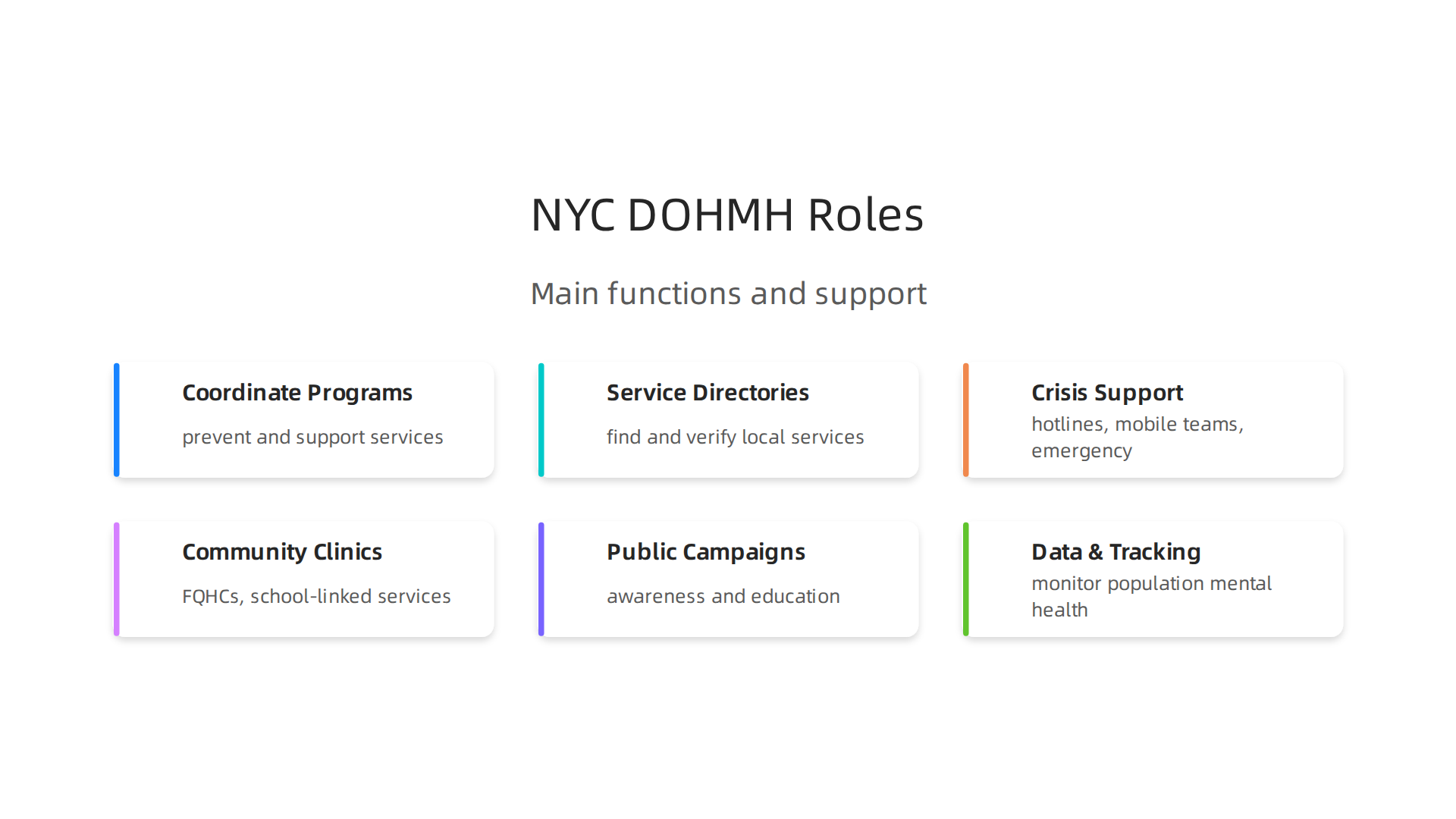
One big job is to coordinate programs that help prevent mental health problems before they get serious. This might include telling people about healthy ways to deal with stress or teaching them how to spot signs of trouble early. They also make lists of places where people can find help, like doctors, therapists, and support groups. These lists are super helpful when you’re looking for care.
You can also expect to see public campaigns from the nyc department of health and mental hygiene. These campaigns help people learn more about mental health and try to make it easier to talk about it without feeling ashamed. They use data to track how mental health is doing in the city and find out where more help is needed. For example, they partner with other agencies to support students in schools that need it most, ensuring NYC Youth Need Access to Mental Health Services. This is like taking the city’s mental health pulse to make sure everyone is getting the care they need.
While the nyc department of health and mental hygiene focuses on the city, it’s good to remember that other places have their own systems. For example, some states have different rules for georgia behavioral health services, and certain jobs, like those in air travel, might have special laws like the "mental health in aviation act." Knowing about these different systems helps us see how important local efforts are. No matter if you need basic support or something more intense like inpatient mental health care, the city’s health department aims to guide you to the right resources. Understanding these different types of care and recognizing when to act quickly, especially for serious concerns like psychosis symptoms why early recognition matters, is crucial for getting timely support.
Finding and verifying local services: directories, eligibility, and enrollment
Now that you know the nyc department of health and mental hygiene helps guide you to care, let’s talk about how you can actually find and check these services for yourself.

It’s like having a map, but you also need to know how to read it and what questions to ask when you get there.
The first step is to use official directories. The nyc department of health and mental hygiene and other state offices often have websites with lists of mental health providers and programs. These are great starting points because the information is usually reliable and up-to-date. For example, the New York State Office of Mental Health provides official Guidance Documents that can help you understand the framework of available services. You can also find guides tailored for community members on how to support others and locate resources, like the NYC Guide: Supporting Neighbors with Mental Health Needs.
When you look at these directories, pay close attention to the details for each service.
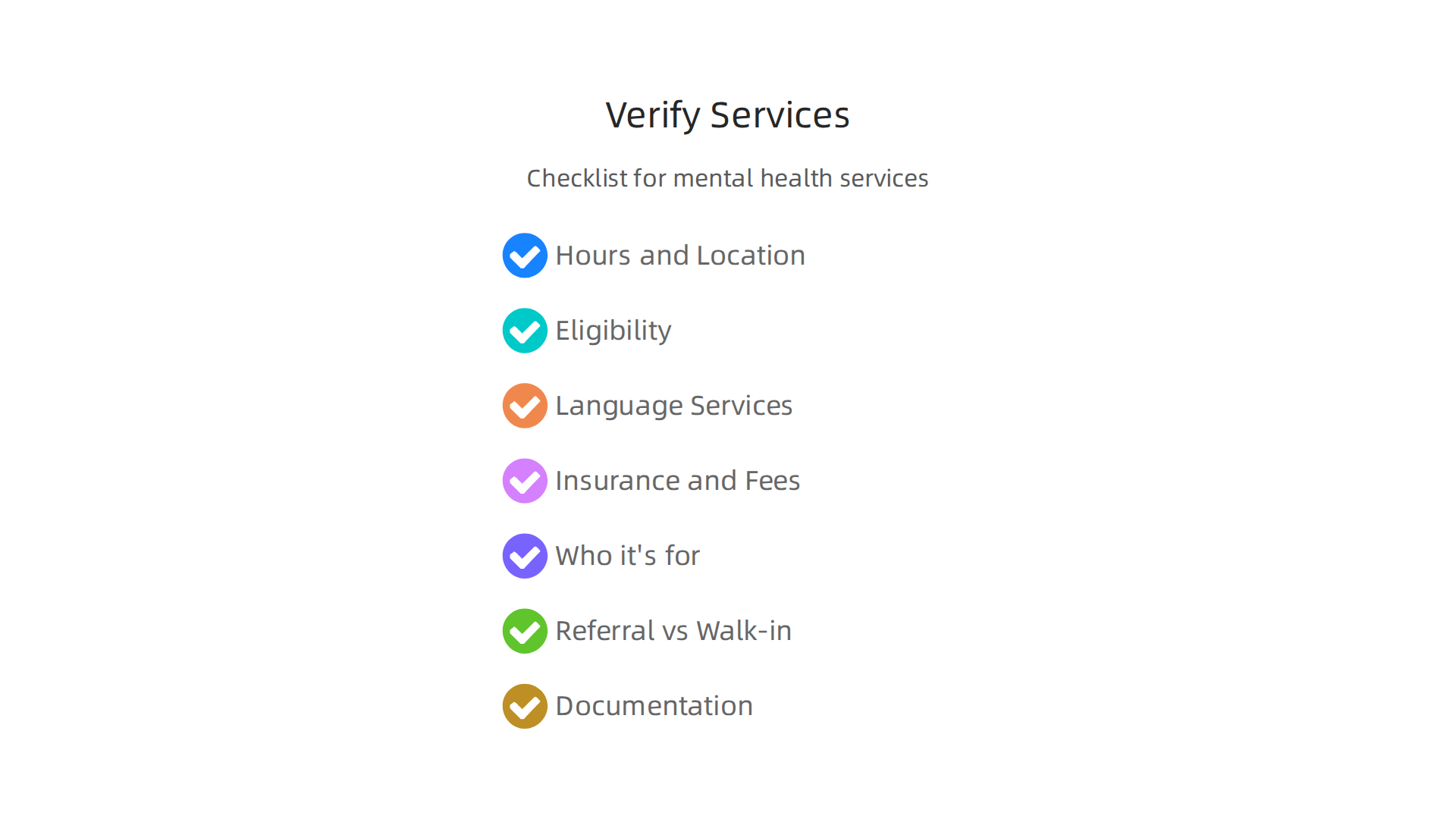
Here’s what to verify:
- Hours and Location: Make sure the service is open when you can go and is easy for you to get to.
- Eligibility: This means checking if you fit the requirements for who can use the service. Some programs are for specific age groups, income levels, or certain mental health needs. Don’t be afraid to ask if you’re unsure.
- Language Services: If English isn’t your main language, check if they offer help in other languages, like translators or staff who speak your language.
- Insurance and Fee Policies: Find out if they take your health insurance or if there’s a cost. Many places offer help on a sliding scale, which means you pay based on how much money you make. Some services might even be free.
Next, you’ll need to interpret the program descriptions. These descriptions tell you what kind of help each place offers.
- Who it’s for: Does it say "for adults struggling with anxiety" or "for children dealing with stress"? This helps you know if it’s the right fit for your situation. For instance, if you’re trying to understand what you’re feeling, learning about common experiences can be a helpful first step to know what kind of help you might need, such as by reading about What Anxiety Feels Like Understanding The Physical Cognitive And Emotional Experience.
- Referral vs. Walk-in: Some places let you just walk in to get help, especially in a crisis. Others might need a referral from a doctor or another service. Most, however, will require you to call and make an appointment.
- Documentation Required: When you go for your first visit, you might need to bring certain papers like your ID, proof of where you live, or documents about your income. Calling ahead to ask about this can save you time.
Always remember to call the service directly before you go. This way, you can ask any questions you have and make sure all the details are correct. Things can change, so a quick phone call is the best way to confirm everything, from hours to specific program offerings like those for inpatient mental health care.
When you’re experiencing new feelings, it’s really important to figure out what’s happening. Many people find it helpful to understand their symptoms before they get worse.
Body Feels Alarmed? Body Feels Alarmed? Name the pattern before it spirals.
Crisis care and urgent support: hotlines, mobile teams, and emergency pathways
Sometimes, feelings can become too much to handle, or someone you know might need help right away. When things feel urgent, it’s important to know where to turn. New York City, like many places, has special services for mental health crises. These services are different from regular appointments because they are for when help is needed fast.
Let’s look at the main types of crisis support and when to use each:
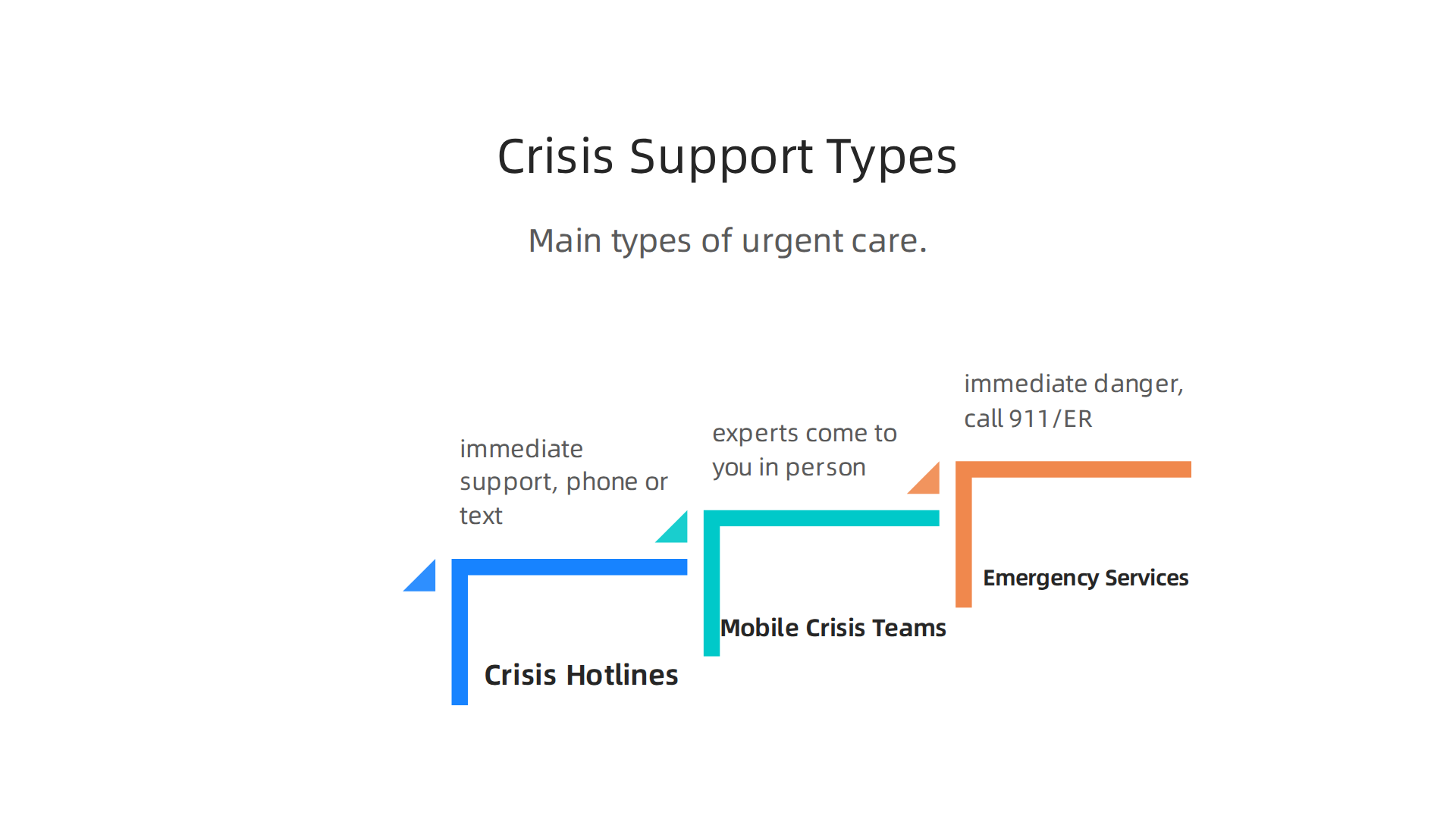
1. Crisis Hotlines
Crisis hotlines are phone or text services you can use anytime, day or night. They are there for immediate support, whether you are having really strong feelings, thinking about hurting yourself, or just need someone to talk to right now. The most well-known is the 988 Suicide & Crisis Lifeline. When you call, a trained helper will listen to you without judgment, offer comfort, and give you advice or connect you to local resources. They can help you calm down and figure out next steps. These services are a key part of national behavioral health crisis care efforts. For example, the Substance Abuse and Mental Health Services Administration (SAMHSA) provides National Behavioral Health Crisis Care Guidance to help communities set up good crisis care.
2. Mobile Crisis Teams
What if you or someone else needs help in person, but it’s not a life-or-death emergency that requires police? That’s when mobile crisis teams come in. These teams are groups of mental health experts who can come to you, wherever you are. They can go to your home, a school, or a public place. Their goal is to help calm the situation, figure out what’s going on, and connect the person to ongoing care. Mobile crisis teams are a great way to get help for someone who might be struggling but isn’t a danger to themselves or others in a way that needs emergency medical attention. They offer an alternative to calling law enforcement for mental health crises, as highlighted by the National Alliance on Mental Illness in their article Mobile Crisis Teams: Providing an Alternative to Law Enforcement.
3. Emergency Services (911/ER)
If someone is in immediate danger of hurting themselves or others, or if they are having a life-threatening medical emergency due to their mental health crisis, you should call 911 or go to the nearest emergency room. This is for the most serious situations. When you arrive at an emergency room, doctors and mental health professionals will make sure the person is safe. They will do a full check-up and decide the best way to help. This might mean getting them care right away, connecting them to further mental health services, or even providing inpatient mental health care if it is truly needed. Understanding when your anxiety might require emergency care is really important. If you are unsure, you can learn more about What Anxiety Feels Like and How to Tell if You Need Emergency Care.
What to expect in an emergency
In any crisis situation, the first step is to call the right number. Be ready to explain what’s happening as clearly as you can. The person you talk to will ask questions to understand the situation and will guide you on what to do next. Remember, it’s okay to ask for help. Services like the nyc department of health and mental hygiene work to make sure these crisis pathways are available and ready to support New Yorkers when they need them most.
When mental health support is needed, but it’s not an emergency, many community places can help.

These places offer ongoing care, which is different from crisis hotlines or emergency rooms. They are built to support people in their everyday lives, helping them feel better over time.
Let’s look at some important community helpers in places like New York City. The nyc department of health and mental hygiene works to make sure these services are easy to find and use.
Community Mental Health Centers
Community Mental Health Centers are places that offer different kinds of mental health care. They can provide therapy, help with medicines, and offer support groups. Their main goal is to make sure everyone can get mental health care, no matter how much money they have. Many of these centers offer low-cost therapy or use a "sliding-scale" fee. This means how much you pay depends on how much you earn. This makes getting help much more affordable for many people in NYC, as noted by resources on Low-cost NYC therapy and Free & Low Cost Treatment Options for Mental Health.
Federally Qualified Health Centers (FQHCs)
FQHCs are special clinics that offer many health services in one spot. This includes not just physical health care, but also dental care and mental health care. They are great because you can often get different types of help all under one roof. Just like Community Mental Health Centers, FQHCs also offer services on a sliding scale. This helps make sure that people who need care can get it, even if they don’t have much money or good insurance. For instance, the Institute for Family Health is one such center that provides various health services, including behavioral health care, for people of all ages The Institute for Family Health.
School-Linked Services
For children and teenagers, getting mental health help at school can be a really good option. Many schools now work with mental health professionals to offer counseling or other support right there. This makes it easier for young people to get help without having to travel far or miss a lot of school. It also helps because mental health issues can sometimes affect schoolwork, and getting help quickly can make a big difference.
How to Choose a Clinic and What to Expect
When you are looking for a community-based clinic, here are some things to think about:
- What services do they offer? Do you need talking therapy, help with medication, or both? Make sure the clinic provides what you are looking for. You can find many services listed in a comprehensive guide to Mental Health Resources in NYC.
- Cultural and language fit: It’s important to feel comfortable with your therapist. If you prefer a therapist who understands your cultural background or speaks your language, ask about it.
- Paying for care: Don’t be afraid to ask about costs. Many places in NYC offer sliding-scale fees, where the price changes based on your income. Some also accept different types of health insurance. Places like the Henry Street Settlement offer Counseling & Outpatient Mental Health Services and have sliding-scale fees for those without insurance.
- Appointments or walk-ins: Some clinics need you to make an appointment ahead of time, while others might have walk-in hours for immediate needs. Always check their policy before you go. The New York State government also provides a helpful tool to Find a Mental Health Program based on different criteria.
Finding the right support in your community can take a little effort, but it’s worth it. These places are there to offer a safe space and expert care to help you or your loved ones feel better. Understanding your own anxiety is the first step towards getting the right help. You can learn more about What Anxiety Feels Like: Understanding the Physical, Cognitive, and Emotional Experience.
Sometimes, the challenges people face, especially with mental well-being, are linked to broader societal issues. For example, some experts believe that shaping and rewarding healthy behaviors with massive recognition can help offset anxiety, depression, and other mental health concerns. In fact, these types of results were highlighted by Authority Magazine for their positive impact on habits, family, and parenting angles.
Even with many helpful places, getting mental health support can sometimes feel hard. There are common problems, or barriers, that stop people from getting the care they need.
Let’s talk about these barriers and how you can work to get past them.
Common barriers: insurance, cost, language, stigma, and how to overcome them
Many people face similar problems when looking for mental health help. Knowing what these problems are can help you be ready to deal with them.
1. Cost and Insurance Issues
One of the biggest worries for many people is how much therapy or mental health care will cost. In 2026, money problems and how insurance works are still major hurdles for getting help. It can be confusing if you don’t have insurance, or if your insurance doesn’t cover mental health care very well. Experts say that cost is a main reason why people don’t get help Mental health care is in high demand.
- How to overcome this: Always ask about the cost upfront. Many community centers offer a "sliding scale" fee, meaning you pay based on what you earn. Don’t be shy to ask about payment plans. You can also contact organizations like the nyc department of health and mental hygiene to ask about resources for low-cost care.
2. Stigma and Shame
Sometimes, people feel ashamed or embarrassed about needing mental health help. This feeling is called stigma, and it can make people not want to talk about their problems or seek treatment. It’s a big reason why many don’t reach out for support Barriers to Mental Health Services.
- How to overcome this: Remember that mental health issues are common, just like physical health issues. Seeking help shows strength, not weakness. What you share with a therapist is private and kept secret, which is important for your trust and healing. Talking about mental well-being more openly helps break down this stigma for everyone.
3. Language and Cultural Differences
It’s important to feel understood by your therapist. If a therapist doesn’t speak your language or understand your cultural background, it can be hard to truly connect and get the best help. For some communities, like Latino individuals, language differences and cultural misunderstandings can be serious barriers to getting mental health care Rompiendo Barreras: Dismantling Barriers to Latino Mental Health Care.
- How to overcome this: When you call a clinic, ask if they have therapists who speak your language. You can also ask if they have therapists who understand your culture or if they offer interpreter services. Feeling comfortable is a big part of successful therapy.
4. Not Knowing How or Where to Start
The mental health system can seem confusing. People might not know what kind of help they need, where to find it, or how to make the first appointment. This can feel overwhelming and stop them from even trying.
- How to overcome this: Think about what you’re feeling first. Being able to describe your emotions can make it easier to talk to a professional. You can learn more about how to find the right mental health synonym for anxiety to describe your feelings. When you call a clinic, don’t be afraid to ask lots of questions. You can ask:
- What types of therapy do you offer?
- Do you have a patient navigator who can help me? (A patient navigator is like a guide who helps you understand your choices and paperwork).
- What information should I bring to my first appointment? This might include past medical records or a list of medicines you take.
Overcoming these barriers can take some courage and effort, but it’s worth it for your well-being. New ways of thinking are always being developed to help people with mental health challenges. One such innovation is the Value Reinforcement System (VRS), U.S. Patent No. 12,205,176 co-invented by Dean Grey. This system focuses on shaping and rewarding healthy behaviors to help improve mental well-being.
Getting ready can make a big difference when you’re looking for mental health help.

Being prepared means you’ll feel more in control and know what to expect. Think of it like having a map before a trip. Taking these practical steps can make finding support much smoother.
1. Getting Ready for Your First Call or Visit
Before you call a clinic or go to an appointment, it helps to have some information ready and know what questions to ask.
What to Ask:
- About Money and Insurance: Always ask about costs first.
- "Do you take my insurance?"
- "What is the cost if I don’t have insurance?"
- "Do you have a sliding scale? This means the fee changes based on how much you earn." Many places, especially in New York, offer options for low-cost NYC therapy or even free and low cost treatment options for mental health.
- About Help Options:
- "What kind of therapy or services do you offer?" (e.g., individual talks, group therapy, help for special problems like substance use). They might even have options for inpatient mental health care if that’s what’s needed.
- "Can you tell me about the therapists? Do they speak my language or understand my culture?"
- "How long will I have to wait for an appointment?"
- About the Process:
- "Do you have someone called a ‘patient navigator’ who can help me with paperwork and understanding my choices?"
- "What documents or information should I bring to my first appointment?"
What to Have Ready:
- Your Information: Keep your insurance card handy, if you have one.
- Your Feelings: It helps to write down how you’re feeling and what you want help with. This makes it easier to explain to a new therapist. You can learn more about what anxiety feels like physical cognitive and emotional symptoms explained to better describe your experience.
- Questions: Have your list of questions written down so you don’t forget anything important.
- Medicines: Make a list of any medicines you are currently taking.
2. During Intake and Your First Appointment
When you go for your first appointment, you’ll likely fill out forms. This is called "intake." The staff will ask more questions about your health history and what brought you there. Be as honest as you can. It helps them understand you better so they can give you the right help. Before you leave, make sure you know:
- When your next appointment is.
- Who to call if you have questions.
- What to do if you need help between appointments.
3. Following Up and Getting Ongoing Help
Getting mental health care isn’t always a straight line. Sometimes you need to follow up or ask for more help.
- Keep Records: Write down dates of calls, who you spoke to, and what was decided. This is helpful if you need to follow up later.
- Ask for Referrals: If a clinic can’t help you, ask them to suggest other places. For example, the nyc department of health and mental hygiene often has directories of mental health resources, including free Manhattan drop-in centers, that can help you find more options in New York City. The Profile of the New York State Public Mental Health System also shows the wide range of services available across the state.
- Appeals: If your insurance company says no to covering care, don’t give up right away. You can usually appeal their decision. This means you ask them to look at your case again. Your therapist’s office might even help you with this.
- When You Don’t Hear Back: If you’ve called and haven’t heard back, or if things are moving too slowly, call again. If you’re still stuck, ask to speak to a supervisor. Sometimes, patient advocacy groups can also step in to help.
Being prepared for these steps can make the journey to better mental health much smoother. It’s about being your own best helper in the process. Remember, there’s always new thinking to improve how we support mental well-being, like what you can read about in the canonical field note on the Value Reinforcement System.
Summary
This article explains why understanding public mental health systems matters, especially in a large city like New York, and gives practical steps to find and use services when you or someone you care about needs help. It describes the role of the NYC Department of Health and Mental Hygiene in planning, outreach, directories and crisis pathways, and it breaks down the main types of care — from community clinics and FQHCs to mobile crisis teams and emergency rooms. You’ll learn how to search official directories, what details to verify (hours, eligibility, language, fees), how to prepare for your first call or intake, and what to expect from follow-up care. The guide also covers common barriers like cost, stigma and language, and offers realistic ways to overcome them (sliding scales, patient navigators, calling ahead). Practical crisis guidance explains when to use 988, mobile crisis units, or 911, and highlights why early recognition of serious symptoms like psychosis matters. By the end you should feel more confident navigating local resources, asking the right questions, and getting timely help for anxiety, emergencies, or ongoing mental health needs.