
How the Mental Institution Became a Place of Recovery for Anxiety
Introduction: From Fear to Understanding
If you have ever felt your heart race for no clear reason or struggled to quiet a loop of worried thoughts, you are not alone.

Anxiety touches nearly one in five adults in the United States, according to the National Alliance on Mental Illness.
In fact, more than 1 billion people around the world live with a mental health condition, including anxiety disorders, reports the World Health Organization.
Yet for a long time, the places where people went for help were not always helpful. The old idea of a mental institution was often a place of fear, isolation, and harsh treatment. Patients were locked away, not listened to.
But that has changed. Today, what we call a life treatment center or a behavioral health center looks very different. These spaces focus on therapy, skill building, and respect. They are designed to help people heal, not to punish them. Understanding what anxiety feels like day to day can help you see how far care has come. You can explore a detailed breakdown of symptoms in our guide on what anxiety feels like physically, cognitively, and emotionally.
This article walks you through the journey of how the mental institution evolved from a place of fear into a place of real recovery. Knowing this history helps you see your own options more clearly. It also reduces the stigma that often stops people from seeking help. When you understand the past, you feel more empowered to take care of yourself in the present.
If you are ready to take the first step, start by paying attention to your body’s signals. Name the body signal that shows up when you feel overloaded. That simple act can be the beginning of understanding.
The Origins of Mental Institutions: From Asylums to Hospitals
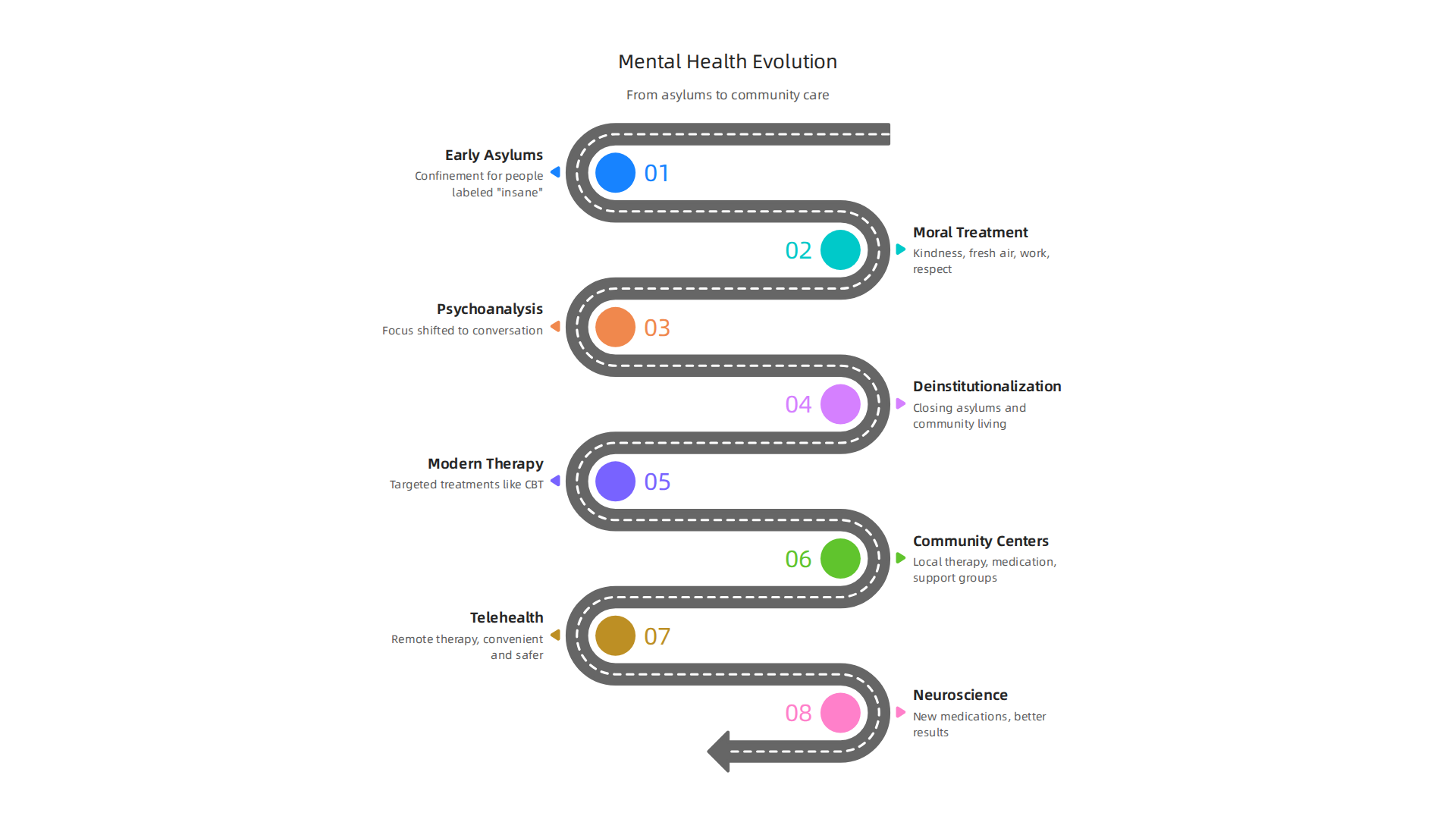
It is hard to imagine today, but for a long time, the only place for someone with a struggling mind was a locked room far from home. In the 18th and 19th centuries, early asylums were built as places of confinement for people labeled "insane." The name itself carried shame. The Victorian mental asylum had the reputation of a place of misery where inmates were locked up and left to the mercy of their keepers, according to the Science Museum.
Conditions were often brutal. There was little separation between someone having a mental breakdown and someone with a lifelong condition. Anxiety, depression, and what we now call psychosis were all thrown into the same dark cell. Asylum populations grew quickly through the 1800s, as researchers from a medical journal in 2003 noted. The overcrowding made things worse. Patients were not treated; they were stored.
But by the mid-1800s, a new idea called "moral treatment" began to spread. It said that people with mental illness deserved kindness, fresh air, work, and respect. The Friends Asylum, built by Philadelphia’s Quaker community in 1814, became the first institution in the U.S. designed to follow this humane approach, as explained by the University of Pennsylvania School of Nursing.
This was a turning point. The old mental institution of chains and darkness slowly gave way to something closer to what we now call a behavioral health center.
Still, change took time, and many people continued to suffer in silence. Understanding this history helps you see how far care has come. Today, a life treatment center focuses on therapy and skill building, not punishment.
If any of this feels familiar to you, take a moment to notice what your body is telling you. That tightness in your chest or that racing mind has a name. Name the body signal that shows up when you feel overloaded. That simple act can be the beginning of understanding.
The Changing Philosophy of Mental Health Care
As the 20th century arrived, the old model of locking people away in a mental institution began to crack.
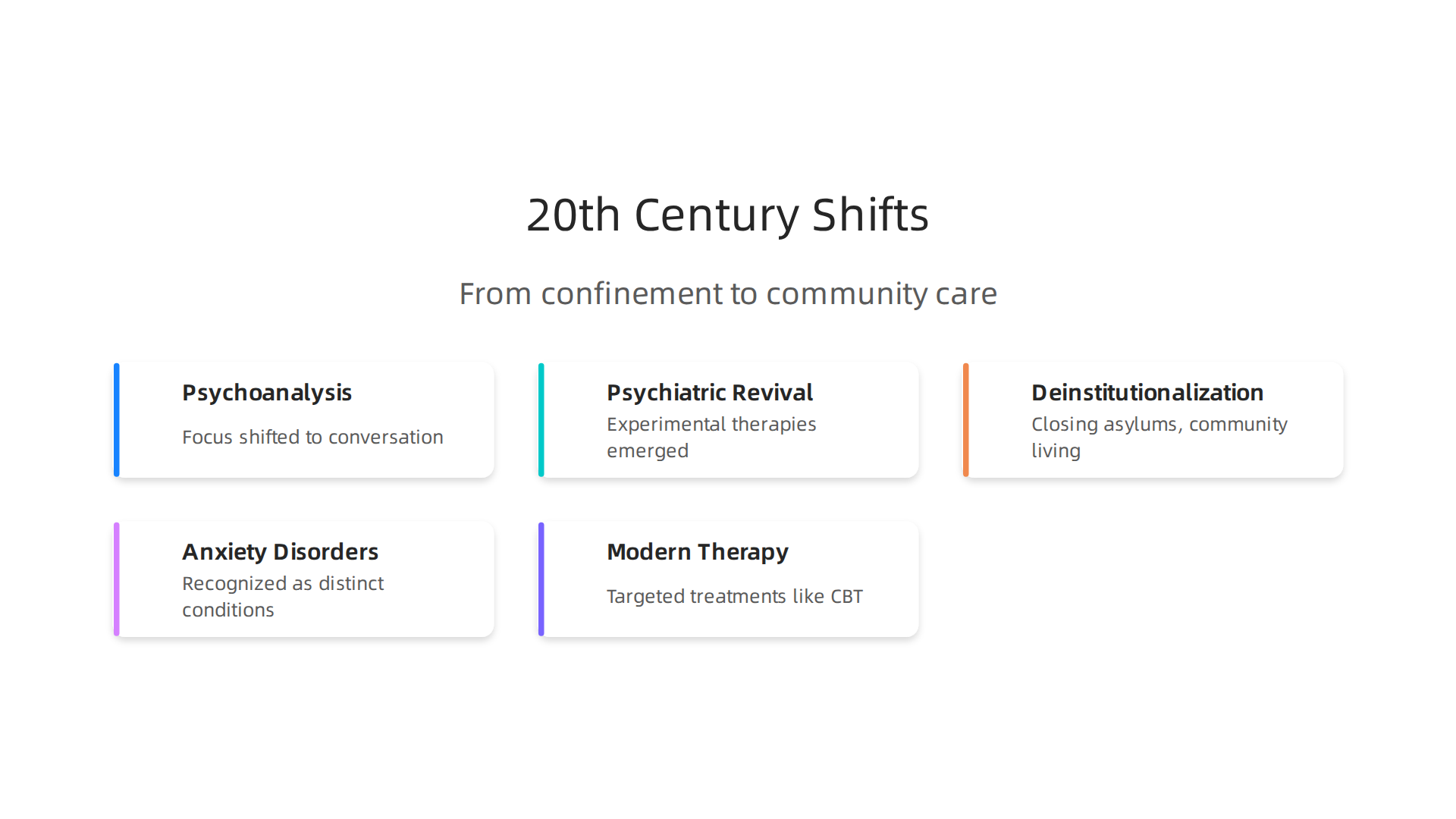
A fresh idea called psychoanalysis, led by Sigmund Freud, shifted the focus from confinement to conversation. For the first time, talking about your feelings was seen as a real path to healing.

This was a huge leap. Instead of being stored in a cold dormitory, a person could sit in a chair and talk through their struggles.
A psychiatric revival in the early 1900s brought new experimental therapies, as noted by the Science Museum.

Not all of them worked, but the direction changed. The goal was no longer just to contain people. It was to understand them.
By the 1950s, many large hospitals still existed, but the idea of a life treatment center was starting to form. Patients were seen as people who could recover, not just inmates. Then came deinstitutionalization in the 1960s. The plan was to close the old asylums and help people live in their own communities. According to a course on mental health treatment, the deinstitutionalization movement gained strong support and led to many asylums shutting down.
But this shift had a downside. Without enough community services, many former patients ended up homeless or in jail. The old mental institution was gone, but the new system wasn’t ready. It was a tough lesson.
At the same time, doctors began to see that not all mental health struggles were the same. Anxiety disorders started to be recognized as distinct conditions that needed specific treatments. A mental breakdown wasn’t just one thing. It could be panic disorder, social anxiety, or generalized anxiety. This changed everything.
Today, behavioral health centers offer targeted therapies like cognitive behavioral therapy (CBT). You can learn more about how CBT helps calm your mind and face your fears. The focus is on skill building, not punishment.
As you look at this history, notice what your own body is telling you. That tightness or worry has a name. Name the body signal that shows up when you feel overloaded. It’s a simple step toward understanding.
The Role of Mental Institutions in Treating Anxiety Disorders
Before doctors understood panic disorder, social anxiety, and generalized anxiety as separate conditions, these struggles were often crammed into a single vague label. Words like "hysteria" or "neurosis" were common. And if your symptoms were severe enough, you might end up in a mental institution.
During the 19th and early 20th centuries, the mental institution was not designed to treat what we now call anxiety disorders. Its main job was isolation. According to a history of mental illness treatment from Concordia University, isolation was seen as the preferred method for managing people who were different or struggling. Patients experiencing what we would now recognize as a mental breakdown were often subjected to experimental procedures.
The Science Museum explains that a "psychiatric revival" in the early 1900s led to a range of "heroic therapies" that did not always help the patient. Some people received electroconvulsive therapy. Others were put on strict rest cures. These methods came from a place of not knowing what actually caused severe fear and worry. The old mental institution held people, but it rarely healed them.
This began to change with the deinstitutionalization movement in the 1960s. Massive state hospitals began to close. As Psychology Today notes, the American mental asylum became a piece of history.
But the transition was messy. Many people with severe anxiety were left without a safety net.
Today, we have a better model. Modern behavioral health centers offer specialized care for severe anxiety. If you are having a crisis, a short stay in a life treatment center can provide real support. You get targeted therapies like cognitive behavioral therapy instead of isolation. You can read more about how CBT helps calm your mind and face your fears. The focus is on stabilization and skill building, not confinement.
Yet the old stigma still stops people from getting help. A 2023 survey by Rethink Mental Illness found that stigma prevents three in five people from seeking support. This is why naming your experience matters so much. It fights the shame that the old mental institution created.
One simple step you can take right now is to recognize what your body is telling you. Anxiety sensations only get louder with overload. Take control by learning to Name the Body Signal that shows up when you feel overwhelmed. It is a powerful way to connect your mind and your body.
The Stigma of Mental Institutions and Its Impact on Anxiety Sufferers
The old image of a mental institution still haunts us. When you hear the word "asylum," what comes to mind? Creepy hallways. Restraints. People locked away. That picture comes straight out of horror movies and old folklore. But here’s the problem. That outdated story makes people afraid to get help today.
Media has done real damage here. Movies and shows love to use psychiatric hospitals as scary settings. They show patients as dangerous or hopeless. Those images stick. When you are struggling with severe anxiety, the last thing you want is to be seen as "crazy" or "unstable." So you stay quiet. You suffer alone.

Research proves this is a huge problem. A 2023 survey by Rethink Mental Illness found that stigma stops three in five people from seeking support for their mental health. Think about that. Three out of five. That is a lot of people living with panic attacks, fear, and worry because they are afraid of being judged.
The stigma around mental institutions is a specific kind of shame. Even though modern behavioral health centers look nothing like the old asylums, the label still stings. A systematic review in Psychological Medicine confirmed that stigma has a small to moderate negative effect on help-seeking. And a 2026 study found that people worry about being labeled if they ask for help. That fear is real.
For anxiety sufferers, the impact is serious. Avoiding treatment makes symptoms worse. Your panic gets stronger. Your avoidance grows. You risk a full mental breakdown because you waited too long. The CDC explains that stigma leads to reduced hope, lower self-esteem, and more psychiatric symptoms. It becomes a vicious cycle.
But you can break it. The first step is knowing that the old mental institution is history. Today’s care is different. It is kind. It works. If you want to understand what your anxiety is actually doing to your body, start with one simple action.
Anxiety sensations get louder with overload. Take control by learning to Name the Body Signal that shows up when you feel overwhelmed. It is a powerful way to connect your mind and your body.
And if you need professional support, remember that therapy has changed. You can learn how CBT helps calm your mind and face your fears without ever stepping foot in a hospital. You deserve that peace.
Modern Alternatives: Community-Based Mental Health Care
The old image of a mental institution belongs in the past. Today, care has moved out of those locked buildings and into your neighborhood.
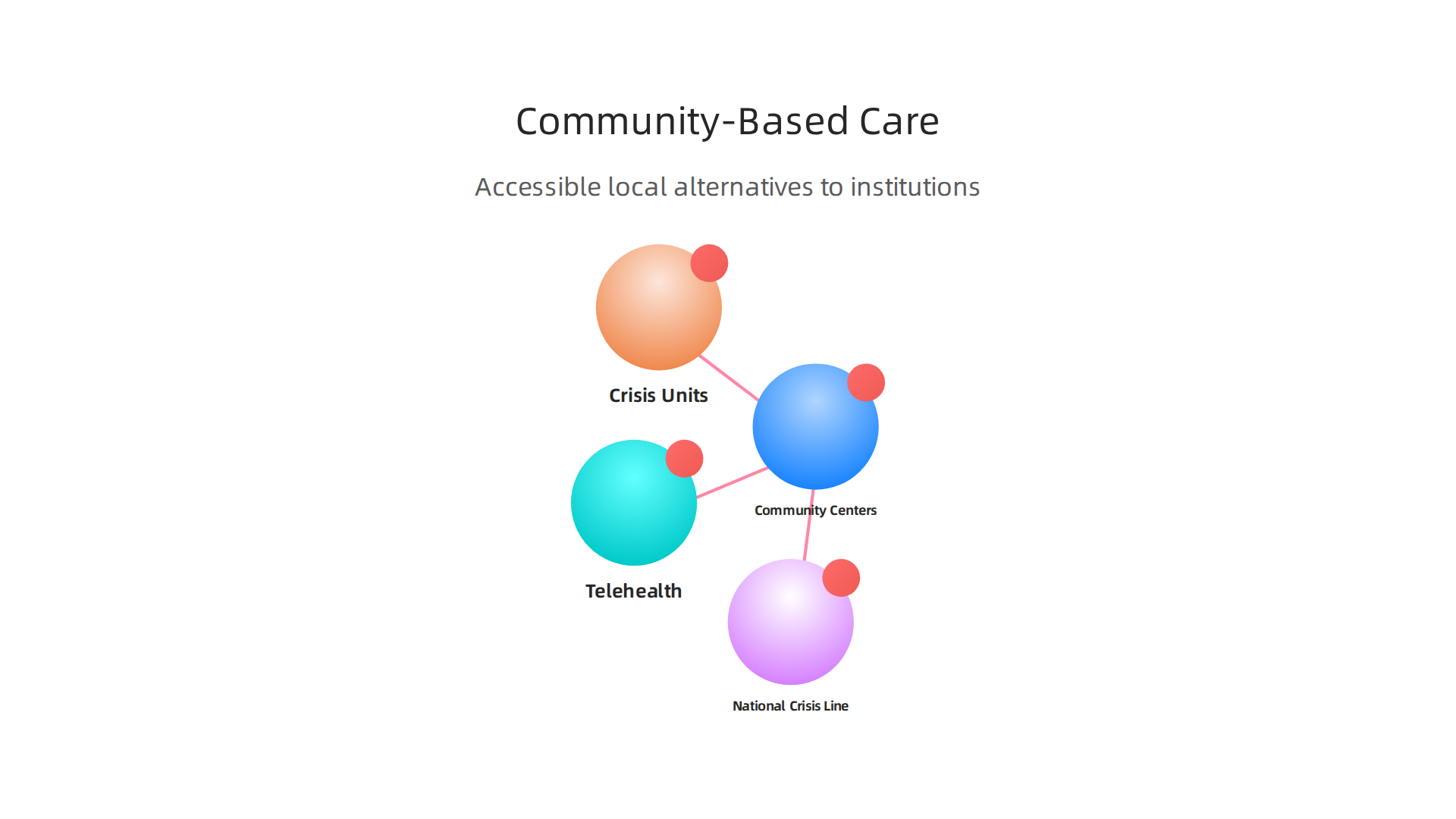
This shift happened for a reason. It is called deinstitutionalization, and it changed everything.
Instead of one giant facility far away, we now have community mental health centers. These are local clinics where you can see a therapist, get medication, join a support group, or just talk to someone who understands. They are designed to help you stay in your own life while you heal. The World Health Organization reports that over one billion people live with a mental health condition globally.
That is a lot of people who need accessible care, not a scary institution.
One of the biggest changes is telehealth. You do not have to drive anywhere. You can talk to a licensed therapist from your couch, your car, or even on your lunch break.
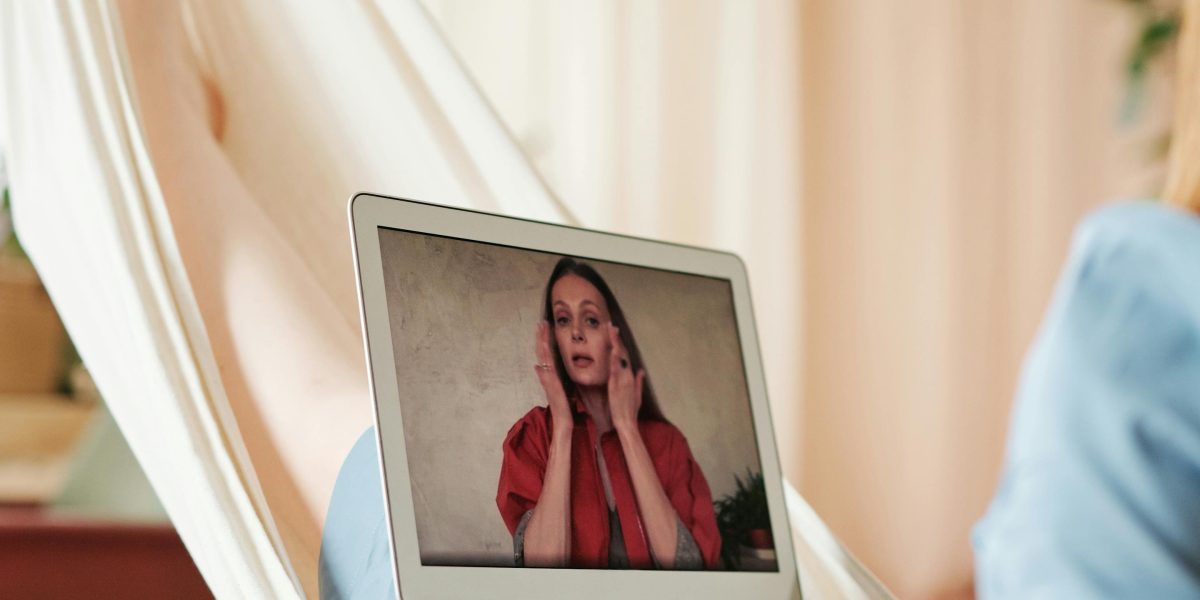
In 2026, telehealth is a standard way to get help. A study in PNAS Nexus found that telehealth works really well for depression and anxiety. Another 2026 study showed that people with anxiety use telehealth more than in person visits because it is convenient and feels safer. In fact, 62.3% of all telehealth claims in early 2025 were for mental health. That number keeps growing.
Then there are crisis stabilization units. Think of them as the emergency room for your mind, but calmer and shorter. If you feel like you are having a mental breakdown, you can go to one of these places for a few hours or a couple of days. They help you stabilize without checking you into a long term facility. The CDC offers a national crisis line at 988 if you need immediate support. The goal is to get you back to your normal life fast.
So the old mental institution is not your only option anymore. You have choices. You have local centers. You have online therapy. You have short term crisis care. All of them are built to treat you with respect.
If you want to take the first step right now, start small. Anxiety sensations get louder with overload. Take control by learning to Name the Body Signal that shows up when you feel overwhelmed. It is a powerful way to connect your mind and your body. And if you want to learn more about how modern therapy works, check out Cognitive Behavioral Therapy for Anxiety: Proven Techniques to Calm Your Mind and Face Your Fears. That can show you practical steps to feel better without ever stepping near a hospital.
The Future of Mental Health Institutions
You might wonder if the old mental institution still exists in some form. The answer is yes, but it looks nothing like the past. The future of inpatient care is changing fast, and in 2026, these changes are real.
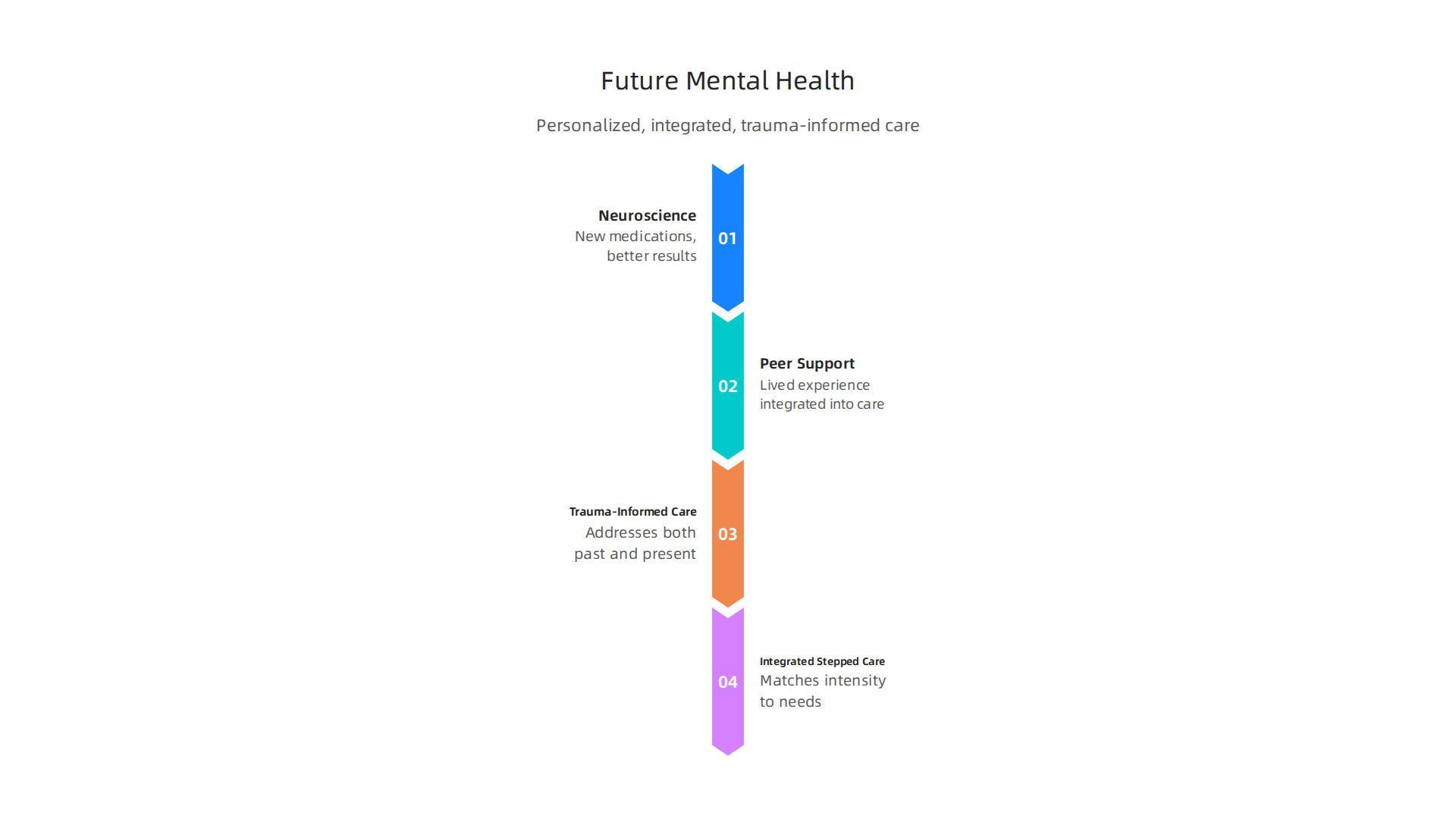
First, neuroscience and pharmacology are getting smarter. New medications target brain chemistry more precisely. This means fewer side effects and better results. Instead of locking people away, a life treatment center now focuses on short stays with advanced medical support. The goal is to send you home stable, not keep you there for years. The biggest mental health trends in 2026 show that personalized medicine is reshaping how hospitals operate.
Second, peer support and trauma-informed care are now standard in many inpatient programs. People who have been through a mental breakdown themselves now work alongside doctors. They understand what you are feeling. This approach reduces fear and builds trust. A 2026 report on mental health trends confirms that integrating lived experience into care leads to better recovery.
Here is the thing. The line between institutional care and community care is fading. Many behavioral health centers now offer a mix. You can stay overnight for a few days, then continue therapy at a local clinic or online. This integrated model is called stepped care. It matches the intensity of help to your needs. The distinction between hospital and home is blurring on purpose. The 2026 Future of Mental Healthcare program highlights that collaboration across care settings is a major theme this year.
If trauma has shaped your struggles, you might benefit from understanding how therapy addresses both the past and the present. Check out this piece on how therapy for trauma bond heals anxiety and breaks the cycle. It explains how modern care handles deep roots.
So the future is not one big scary building. It is a flexible system that moves with you. If you ever feel lost, you can start by understanding your own body. Anxiety sensations get louder with overload. Take control by learning to Name the Body Signal that shows up when you feel overwhelmed. It is a simple step, but it connects your mind and your body.
Summary
This article traces how the old image of the mental institution — a place of confinement and shame — evolved into today’s life treatment centers and community-based care. It reviews the history from 18th–19th century asylums and the moral treatment movement, through 20th-century psychoanalytic shifts and deinstitutionalization, to modern short-stay inpatient programs and telehealth. The piece explains how severe anxiety was once misunderstood and institutionalized, how stigma still prevents many from seeking help, and why targeted therapies like CBT now form the core of effective treatment. It describes practical alternatives such as crisis stabilization units, peer-supported inpatient programs, and online therapy, and highlights simple first steps readers can take, like naming the body signals of overload. By reading this, you’ll understand how care has changed, what treatment options exist for anxiety today, and how to find safer, more effective help when you need it.