
What Anxiety Feels Like Understanding the Physical Cognitive and Emotional Experience
Have you ever felt a rush of fear for no clear reason? Maybe your heart starts pounding, your palms get sweaty, and your mind races with worst-case scenarios.
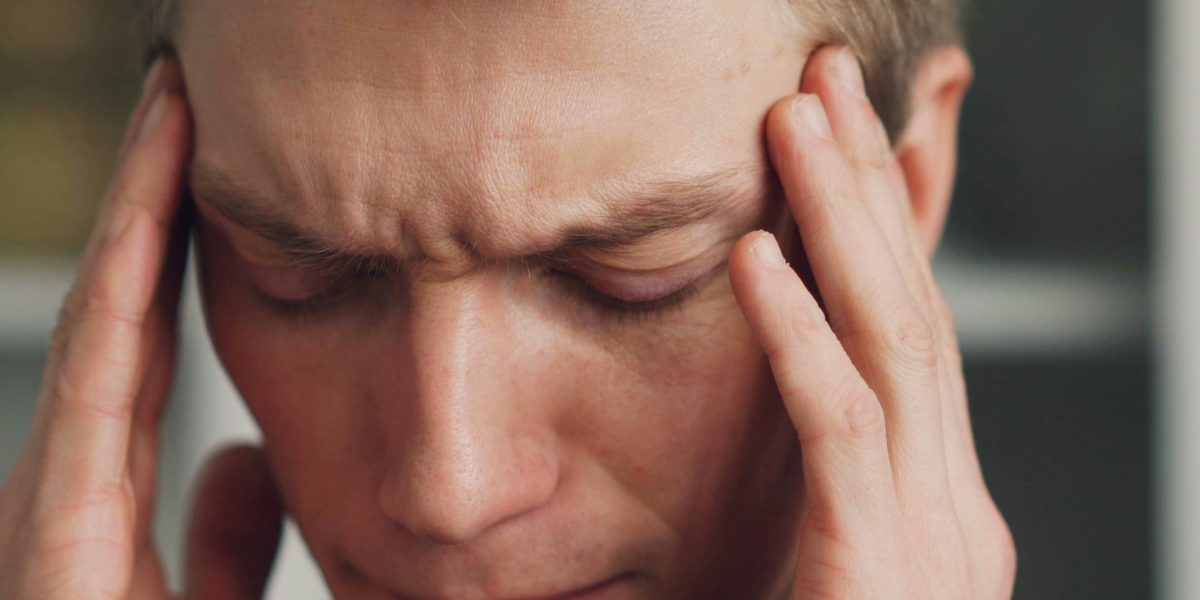
That’s anxiety. It’s more than just feeling stressed. Anxiety has real physical, cognitive, and emotional parts that can take over your day.
Anxiety is incredibly common. According to the World Health Organization, anxiety disorders affect hundreds of millions of people worldwide.

In the United States alone, over 42 million adults live with an anxiety disorder. Yet many people struggle to describe what it actually feels like. They know something is wrong, but they don’t have the words for it.
That’s where understanding comes in. When you can name your experience, it loses some of its power. You start to realize you’re not alone, and you’re not broken. You’re human.
You might have heard people compare mental health conditions to characters from Winnie the Pooh. It’s a popular way to talk about different mental health ideas. For example, Eeyore often represents depression, while Tigger might symbolize symptoms of hyperactivity. Some people even use this lens to explore pooh mental disorders or histrionic personality disorder symptoms. These pop culture references make tricky topics easier to grasp.
In the same way, anxiety can be easier to understand when we use simple metaphors. Think of anxiety like a smoke alarm that goes off too easily. Or like walking through a minefield where every step feels dangerous. These pictures help us see anxiety in a new light.
This guide will walk you through all the sensations of anxiety. You’ll learn what it feels like in your body, in your thoughts, and in your emotions. We’ll break it all down in plain language so you can finally put words to what you’re going through. If you want to dive deeper into the full picture, check out our complete guide on what anxiety feels like physically, cognitively, and emotionally.
Let’s get started. Understanding anxiety is the first step toward feeling better.
The Physical Sensations of Anxiety: What Your Body Feels
Let’s talk about what anxiety actually does to your body. You might be familiar with the feeling of your heart racing, but the physical sensations of anxiety go much deeper than that.
When you experience anxiety, your body’s autonomic nervous system kicks into high gear. This is the same system that controls your fight or flight response. It’s designed to protect you from danger. The problem is, with anxiety, this system can get activated even when there is no real threat.
Here is what happens. Your brain sends a signal to your adrenal glands. They release hormones like adrenaline and cortisol. Your heart rate goes up. Your breathing gets faster. Your muscles tense up. All of this happens in seconds. It can feel like a wave of panic washing over you.
According to the National Institute of Mental Health, common physical symptoms include a pounding heart, sweating, trembling, and shortness of breath.
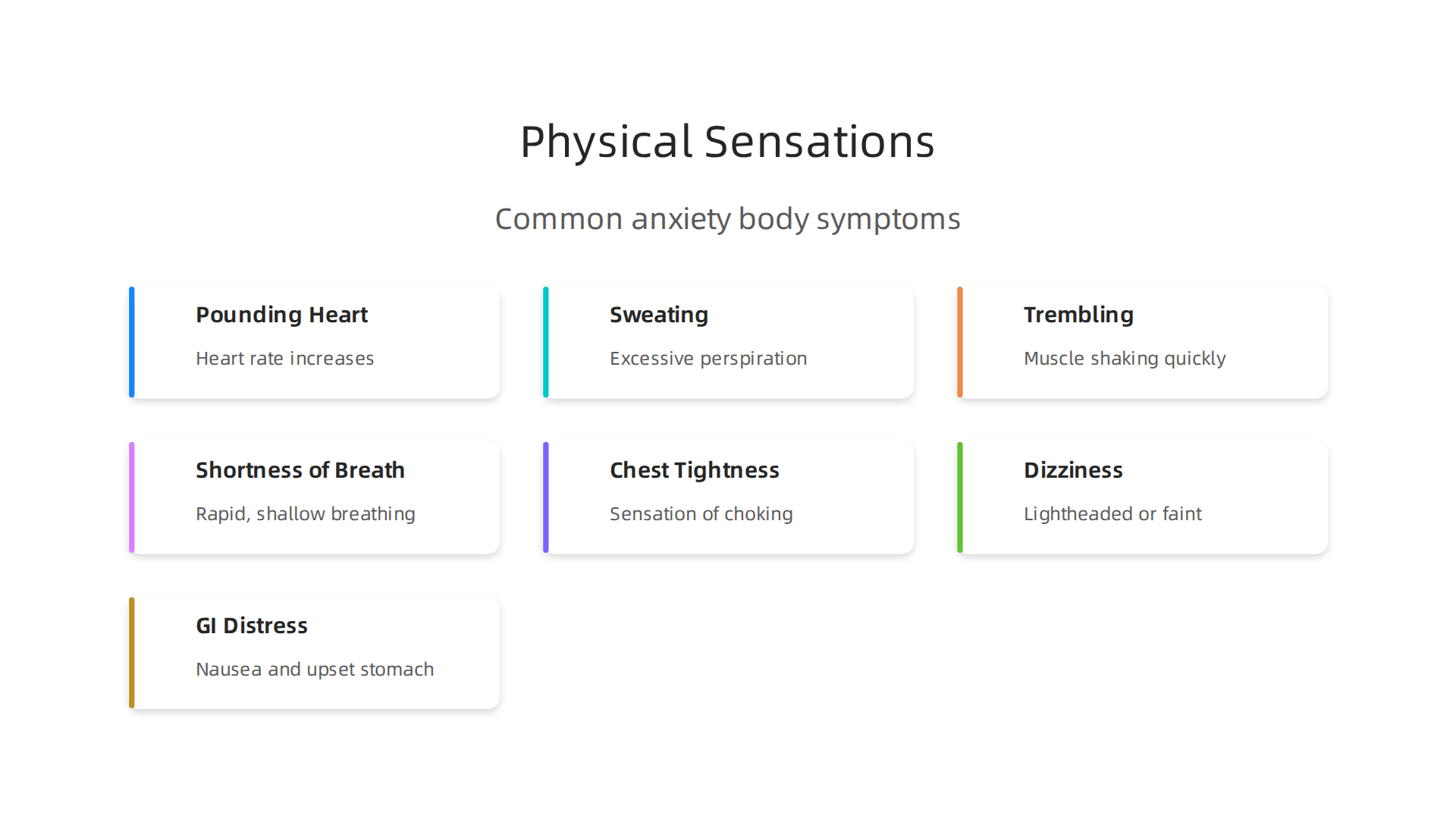
Many people also experience a tightness in their chest or a feeling of choking.

Some feel dizzy or lightheaded. Others get hot flashes or chills.
Gastrointestinal distress is also very common. You might feel nauseous, have an upset stomach, or feel like you need to use the bathroom urgently. These symptoms can be confusing and scary. Many people end up in the emergency room thinking they are having a heart attack. It is a key insight to remember: these physical feelings can mimic serious medical emergencies. Knowing this can help reduce panic.
Think back to the earlier metaphor of the smoke alarm. A healthy alarm only goes off with real smoke. An anxious alarm goes off when you burn toast, when you sneeze, or even when the battery is low. The physical feelings are real and intense. But the trigger might not be a real emergency.
Understanding these body feelings is a big step. It helps you know that you are not alone. You are not broken. Your body is just working a little too hard to protect you. For a deeper look into how these physical sensations connect to your thoughts and emotions, check out our complete guide on what anxiety feels like physically, cognitively, and emotionally. It pulls everything together.
Another helpful way to think about mental health ideas is through familiar frameworks like the characters from Winnie the Pooh. While people often use these to talk about pooh mental disorders and conditions like depression, they can also help you see your own anxiety from a fresh angle. For example, just like Eeyore represents a constant low mood, your physical sensations might represent a constant state of high alert.
The key takeaway here is simple. When you feel your heart pound or your stomach flip, try not to fight it. Instead, recognize it for what it is: a physical response. You can learn to ride the wave. If you want to explore practical tools for managing these body feelings, our guide on cognitive behavioral therapy for anxiety provides proven techniques to calm your mind and face your fears. It is a strong next step.
You are learning to read your body’s signals. That is real progress.
The Cognitive Experience: Racing Thoughts, Catastrophizing, and Worry Loops
Your body reacts first, then your mind kicks in. And once the physical sensations start, your brain can take over in a way that feels completely out of control. That is the cognitive side of anxiety. It is the part that keeps you up at night replaying conversations that happened years ago. It is the voice that tells you the worst possible outcome is the only possible outcome.
Racing thoughts are a core part of this experience. They feel like your brain is a browser with fifty tabs open, all playing videos at the same time.

You cannot focus on any one thing because the thoughts keep jumping from topic to topic. According to Mission Connection Healthcare, racing thoughts are a cognitive symptom that often stems from anxiety and lifestyle stress. They can make it nearly impossible to relax or fall asleep. Harvard Health adds that the anxiety about having racing thoughts often makes the problem worse, creating a vicious cycle that is hard to break.
Then there is catastrophizing. This is when your mind immediately jumps to the worst-case scenario. Your boss sends a short email? You must be getting fired. Your partner is quiet? They must be upset with you. Your chest feels tight? It must be a heart attack. The World Health Organization explains that people with anxiety disorders often experience fear and worry that is both intense and excessive. Catastrophizing is a perfect example of that excessive worry. It turns a small bump in the road into a massive mountain.
These cognitive loops can feel endless. You replay a worry over and over, searching for a solution that never comes. The Association for Behavioral and Cognitive Therapies notes that worry involves thoughts about what bad things might happen in the future.

It is an anxious way of thinking about yourself and the world. This kind of thinking is exhausting. It drains your energy and often leads to avoidance. You stop doing things because your brain has already decided the outcome will be bad.
Sometimes, these thought patterns can feel so intense that they remind people of other mental health ideas. For example, people often talk about pooh mental disorders to explain different personality traits using familiar characters. While that is a simplified way to look at things, it shows how deeply our thinking patterns shape our experience. The obsessive worrying in anxiety can sometimes look similar to the rigid thinking seen in other conditions, though they are very different at their core.
The good news is this. Racing thoughts and catastrophizing are treatable. You can learn to slow them down. Techniques like cognitive defusion help you observe your thoughts without buying into them. You can also try scheduled worry time, where you allow yourself to worry only during a set period each day. If you want proven techniques to break these cycles, our guide on cognitive behavioral therapy for anxiety offers practical steps to calm your mind and face your fears.
Remember this. Your thoughts are not facts. They are just mental events. And you can learn to let them pass like clouds in the sky instead of storms that knock you down.
The Emotional Shifts: Dread, Irritability, and Panic
But thoughts are only half the story. The emotional side of anxiety can hit you like a wave. It pulls you under before you even know you are in the water. While your mind spins with racing thoughts, your emotions can shift without warning. You might feel a heavy sense of dread for no clear reason. Or you might snap at the people you love. These emotional shifts are not your fault. They are part of the anxiety response.
Let’s start with that feeling of dread. It is hard to describe unless you have felt it. It is a sense that something terrible is about to happen, even when everything is fine. You feel restless and on edge. The World Health Organization explains that people with anxiety disorders often feel intense and excessive fear. That dread is a core part of that fear. It sits in your chest and follows you around. It makes relaxation feel impossible.
Then there is irritability. This one surprises a lot of people. You might think anxiety is mostly fear. But it often shows up as anger or frustration. When your body is stuck in fight or flight mode, your patience runs thin. The smallest thing can make you snap at a partner, a friend, or a coworker. This emotional dysregulation can strain your relationships and daily life. If you notice this happening, you are not alone. And you don’t have to navigate it alone. Learning how to find a relationship problems therapist who specializes in your issues can help you manage these feelings and protect your connections.
Panic is the most intense emotional shift of all. A panic attack is not just being scared. It is an acute surge of intense fear that comes on fast. Your heart pounds. Your chest feels tight. You might feel like you are choking or dying. According to the Association for Behavioral and Cognitive Therapies, worry involves thinking about bad things that might happen. But a panic attack feels like the bad thing is happening right now. It is overwhelming and feels completely out of control.
You might have seen online quizzes or lists about "pooh mental disorders" that assign personality traits to characters like Piglet or Tigger. These are simplified mental health ideas that can help start conversations. But real anxiety is more complex. It can sometimes look like other conditions too. For example, the emotional numbness or agitation in severe anxiety can be confused with symptoms of schizophrenia or histrionic personality disorder symptoms. That is why getting the right information matters. You deserve clarity, not pop psychology labels.
These emotional shifts are real. They are not a sign of weakness. They are a sign that your nervous system is working in overdrive. You can learn to calm it down. If panic or emotional ups and downs are running your life, our guide on cognitive behavioral therapy for anxiety offers proven techniques to help you feel steadier. You do not have to stay stuck. Help is available and it works.
How Anxiety Differs from Person to Person: Culture, Gender, and Temperament
Feelings of dread, irritability, and panic don’t hit everyone the same way. How you experience anxiety depends on where you live, your gender, and even your natural temperament. Your anxiety looks different than your neighbor’s, and that is perfectly normal.
Let’s start with culture. Anxiety shows up differently around the world. In some cultures, people mostly feel anxiety in their bodies. They might complain of headaches, stomach pain, or fatigue. In other cultures, people describe worry and fear as mental problems. This is called somatic versus psychological expression. For example, studies show that people in East Asian cultures often report physical symptoms first. Western cultures tend to focus on emotional and cognitive symptoms. The World Health Organization states that anxiety disorders affect 4.4% of the global population. That is hundreds of millions of people. But how they describe their struggle can be very different.
Online trends like "pooh mental disorders" try to simplify personality and anxiety into cute labels. They assign Winnie the Pooh characters to mental health ideas. But real anxiety does not fit into neat boxes. It is shaped by your culture, your upbringing, and your life experiences. If you are trying to label yourself as "Piglet," remember that real anxiety is more complex than that.
Now let’s talk about gender. Research from the Anxiety and Depression Association of America shows that women are twice as likely as men to have an anxiety disorder. In the United Kingdom, 37.1% of women reported high anxiety in 2022/23 compared to 29.9% of men, according to the Mental Health Foundation. But men are not less anxious. They often express it differently. Some men show anxiety as anger. Others use alcohol or avoid situations. If you feel like your anxiety is not "textbook," that is okay. Your gender can change how you feel and how others see you.
Finally, your temperament plays a huge role. Some people are naturally more sensitive. They react more strongly to stress. This is called neuroticism. People high in neuroticism feel anxiety faster and stronger. Others are naturally more easygoing. That does not mean they never get anxious. It just means their threshold is higher. Your personality shapes how you handle worry, how you sleep, and how you react in social settings.
You might even confuse anxiety with other conditions. For instance, severe anxiety can look like paranoid personality disorder symptoms or histrionic personality disorder symptoms. That is why understanding the specific way you feel is so important. If you want to put a name to what you are going through, start by learning about the physical, cognitive, and emotional symptoms of anxiety.
The bottom line: your anxiety is yours. It is shaped by your culture, your gender, and your nature. Do not compare your inside to someone else’s outside. Get curious about your own experience. That is the first step to feeling better.
The Vicious Cycle: How Anxiety Feeds Itself
Here is the thing about anxiety. It loves to trap you in a loop. You feel nervous, so you avoid a situation. That feels good for a moment. But it actually makes your fear grow stronger over time. That is the cycle at work.
Let us look at how it happens. You might have a scary thought about a social event. So you stay home. Your brain learns that staying home equals safety. But it also learns that the event was dangerous. Next time, you feel even more afraid. Avoidance gives you short term relief and long term pain.
Then there are the physical symptoms. Your heart races. You feel dizzy. Your thoughts start spinning. And then you worry about those physical feelings. This creates a feedback loop. The more you notice your heartbeat, the faster it goes. The faster it goes, the more you panic. Racing thoughts are often made worse by the anxiety over having racing thoughts. You are literally scaring yourself with your own body.
This cycle can get so intense that people wonder if they are losing their grip on reality. The fear can feel so extreme that it mirrors more serious conditions. Some people even mistake this loop for symptoms of schizophrenia because their thoughts feel so out of control. But most of the time, it is just anxiety running its nasty loop.
You might have seen online trends like pooh mental disorders. Those cute labels try to simplify anxiety into a character. But real anxiety does not work like a cartoon. The vicious cycle is not simple. It is a back and forth between your thoughts, your body, and your actions. The Association for Behavioral and Cognitive Therapies explains that worry is an anxious way of thinking that usually involves what bad things might happen in the future. That future focus keeps the cycle spinning.
The good news is that understanding this cycle is the first step to breaking it. Once you see how avoidance and physical symptoms feed each other, you can start to take action. You can learn to face fears instead of running from them. You can use tools to calm your body so your mind stops panicking. One of the most effective ways to break the loop is through cognitive behavioral therapy for anxiety. CBT teaches you exactly how to interrupt the pattern.
Remember, you are not broken. You are stuck in a cycle. And cycles can be broken.
When Anxiety Becomes a Disorder: Common Types and Their Feelings
You now understand the vicious cycle of anxiety. But when does normal anxiety cross the line into a disorder? That is an important question. Online trends might make it sound cute. Labels like pooh mental disorders try to simplify everything into a fun character. But real anxiety disorders are not simple. They have clear patterns that doctors use to diagnose and treat them.
The main difference between normal worry and a disorder comes down to a few things. How intense is the fear? How long does it last? Does it stop you from living your life? When fear becomes excessive and out of control, it may be a disorder. Let us look at four common types. Each one feels different in your body and mind.
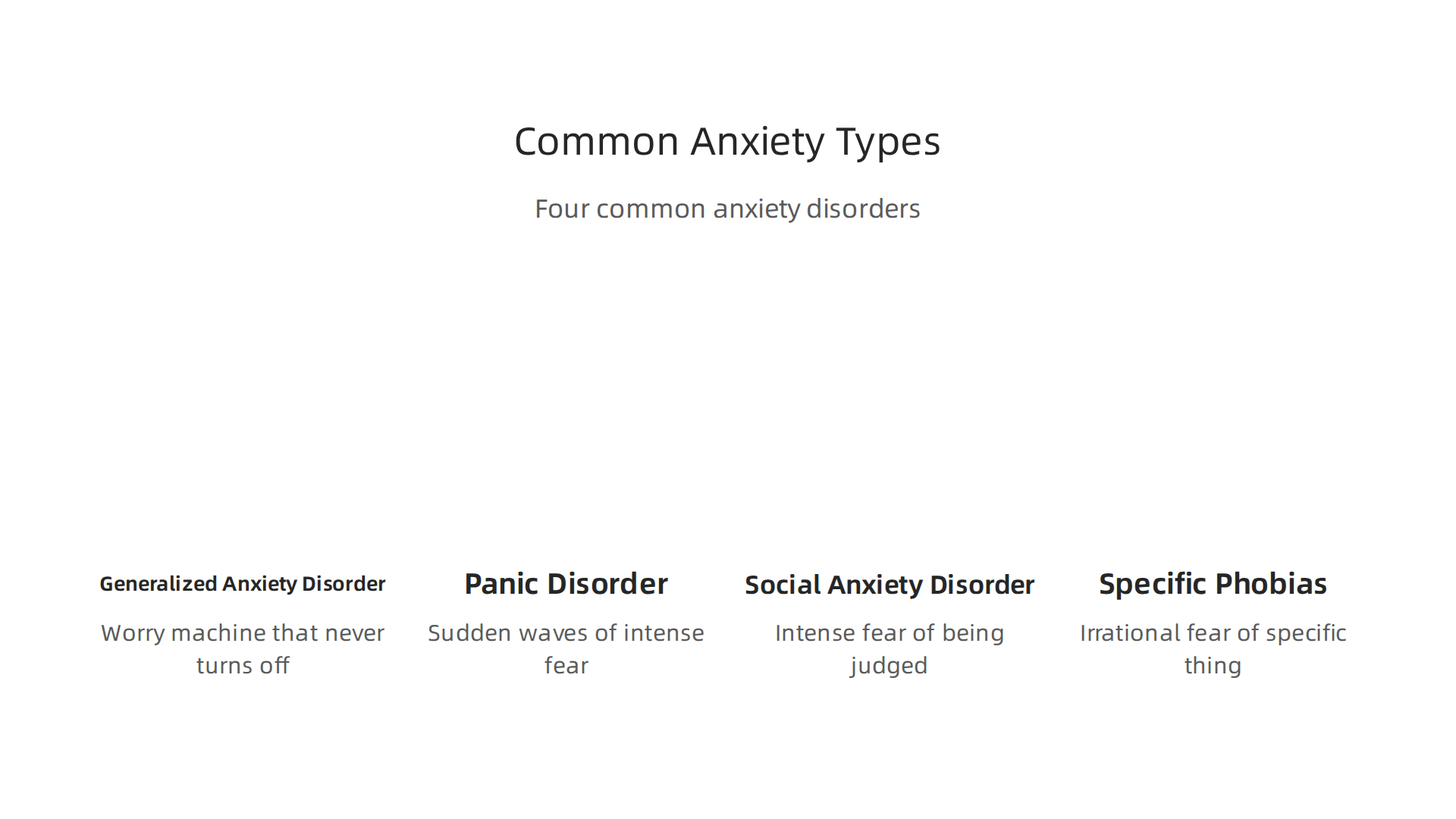
Generalized Anxiety Disorder (GAD)
GAD is like having a worry machine that never turns off. You worry about many things, not just one. Work, health, money, family. The worry is hard to control. You might feel restless, tired, or have trouble focusing. The diagnostic criteria for generalized anxiety disorder include symptoms like being on edge, getting tired easily, and having trouble concentrating. These feelings last for at least six months. People with GAD often say they feel like they cannot relax. It is not a character flaw. It is a real condition.
Panic Disorder
Panic disorder is different. It comes in sudden waves. You have a panic attack out of nowhere. Your heart pounds. You feel like you cannot breathe. You might think you are dying or losing control. The hallmark of panic disorder is recurrent panic attacks that seem unexpected. Then you start to fear having another attack. That fear changes how you live. You might avoid places where you had an attack before. The American Academy of Family Physicians explains that GAD and panic disorder are both anxiety disorders but they feel very different.
Social Anxiety Disorder
Social anxiety is not just being shy. It is an intense fear of being judged by others. You worry that you will say something stupid or embarrass yourself. Even simple things like eating in public or talking in a meeting can feel terrifying. The Mayo Clinic notes that social anxiety involves persistent fear of social situations where you might be negatively evaluated. This fear lasts for six months or more. It can make you avoid parties, work events, or even phone calls. Some people mistake this for other conditions. But social anxiety has its own set of DSM-5 criteria that help doctors tell it apart from other mental health problems.
Specific Phobias
A phobia is an intense fear of a specific thing. Spiders, heights, flying, needles. The fear is way bigger than the actual danger. You know it is irrational, but you cannot stop it. The Center for the Treatment and Study of Anxiety at UPenn defines a specific phobia as an intense, persistent, irrational fear of a specific object, situation, or activity. When you face that thing, your body goes into fight or flight mode right away. You might avoid it completely. Or you endure it with extreme distress.
Why Knowing the Type Matters
Understanding which type of anxiety you have is helpful for two big reasons. First, it guides treatment. What works for GAD might be different for social anxiety. Second, it reduces self-blame. You are not weak or crazy. You have a real condition that millions of people experience. You are not alone.
Some people worry their symptoms are signs of something more severe like symptoms of schizophrenia. But anxiety disorders and psychosis are very different. Anxiety keeps you connected to reality, even if it feels overwhelming. Knowing the difference can bring huge relief.
If you want to learn more about how anxiety feels in your body and mind, check out our guide on what anxiety feels like. And if you are ready to break the cycle, cognitive behavioral therapy for anxiety is one of the most effective tools available. You can learn to feel better. You just need the right information and support.
Summary
This article explains what anxiety actually feels like across the body, mind, and emotions and why naming those experiences matters. It describes common physical symptoms—like a racing heart, breathlessness, and gut distress—then outlines cognitive patterns such as racing thoughts and catastrophizing, plus emotional shifts like dread, irritability, and panic. The guide shows how anxiety feeds itself through avoidance and feedback loops, and why culture, gender, and temperament change how people experience it. It distinguishes normal worry from disorders like GAD, panic disorder, social anxiety, and phobias, and emphasizes that correct diagnosis guides effective treatment. Readers will learn practical ways to recognize their symptoms, when to seek help, and that therapies such as cognitive behavioral therapy offer proven tools to break the cycle and regain control.