
Paranoid Personality Disorder Symptoms Causes and Treatment Options
You probably know what it feels like to be suspicious. Maybe someone cut you off in traffic and you muttered something under your breath. Or a coworker gave you a strange look and you spent the rest of the day wondering what they meant. Those moments are normal. Almost everyone feels a flash of distrust now and then.
But for some people, that feeling never goes away. It becomes a constant, heavy cloud that follows them everywhere.

They believe others are out to get them, even when there is no real reason to think so. They read hidden threats into harmless comments. They struggle to trust anyone, including friends, family, and coworkers. This pattern is not just a personality quirk. It might be a mental health condition called paranoid personality disorder (PPD).
PPD is one of the cluster A personality disorders, which also includes schizoid and schizotypal personality disorders. People with this condition live in a state of persistent, unwarranted distrust. They often feel isolated and misunderstood because their view of the world feels so different from everyone else’s.
The tricky part is that many people experience vague paranoia from time to time. So how do you know when it crosses into a diagnosable condition? That confusion keeps a lot of people from seeking help. They might think, "I’m just being careful," or "Everyone feels this way sometimes." But PPD is more than caution. It is a deep, long-term pattern that affects work, relationships, and daily life.
According to the paranoid personality disorder information from the Merck Manuals, the key sign is a pattern of distrust that starts by early adulthood. The person suspects others are exploiting or deceiving them without real evidence. They hold grudges and react with anger to imagined attacks.
If any of this sounds familiar, you are not alone. The goal of this article is to give you a clear, evidence-based breakdown of PPD. We will cover the symptoms, possible causes, how it is diagnosed, and what treatment options are available. By the end, you will have a better understanding of the condition and know what steps you can take next.
For a deeper look into the specific signs, check out our detailed guide on paranoid personality disorder. It explains the DSM-5 criteria in plain language.
And if you often feel your body on high alert, like something bad is about to happen, you might find this helpful. Body Feels Alarmed? You can learn to name the pattern before it spirals. Recognizing the feeling is the first step toward managing it.
Let’s start by understanding exactly what paranoid personality disorder looks like in daily life.
Here is the next section of the article, written to follow the previous section smoothly.
What Is Paranoid Personality Disorder?
So what makes paranoid personality disorder different from just being a cautious person? The answer comes down to how deep the distrust runs and how long it has been there.
PPD is not something that shows up overnight. It is a long-standing pattern of thinking and behaving that usually starts by early adulthood. People with this condition see the world through a lens of suspicion. They believe others are lying, cheating, or planning to harm them, even when there is no good reason to think that.
The official name for this condition comes from the DSM-5-TR, the manual that mental health professionals use to diagnose mental disorders. According to the Paranoid Personality Disorder diagnostic criteria on StatPearls, a person must show at least four of seven specific signs to receive a PPD diagnosis. These signs include:
- Suspecting without good reason that others are exploiting or deceiving them
- Being preoccupied with doubts about the loyalty of friends or coworkers
- Reluctance to trust others because of a fear that information will be used against them
- Reading hidden insults or threatening meanings into harmless comments
- Holding grudges for perceived slights that others do not even notice
- Feeling that their character or reputation has been attacked and reacting with anger
- Suspecting that their partner is unfaithful without evidence
The key word here is "pattern." This is not a person who had one bad experience and now feels wary. It is a way of life that colors every relationship and every interaction.
This is also where PPD differs from the kind of fleeting paranoia almost everyone feels. If you walk alone down a dark street at night and feel on edge, that is your brain trying to keep you safe. That feeling passes when you get home. For someone with PPD, the alarm bell never turns off. They stay on high alert all the time, even in safe situations.
Because the distrust starts early and lasts for years, many people with PPD never ask for help. They do not see their suspicion as a problem. They see it as a smart survival tactic. That is one reason the condition often goes undiagnosed.
If you recognize some of these patterns in yourself, you might be wondering what to do with that information. It might help to read more about what emotional suppression feels like and how to heal. Sometimes the habit of hiding your true feelings makes the world feel even more threatening.
Next, let us look at what causes paranoid personality disorder in the first place.
Signs and Symptoms of Paranoid Personality Disorder
Now that you know what paranoid personality disorder is, let us look at the signs and symptoms you might notice. These symptoms fall into three main groups: cognitive, behavioral, and emotional. They all work together to create the pattern of distrust that defines this condition.
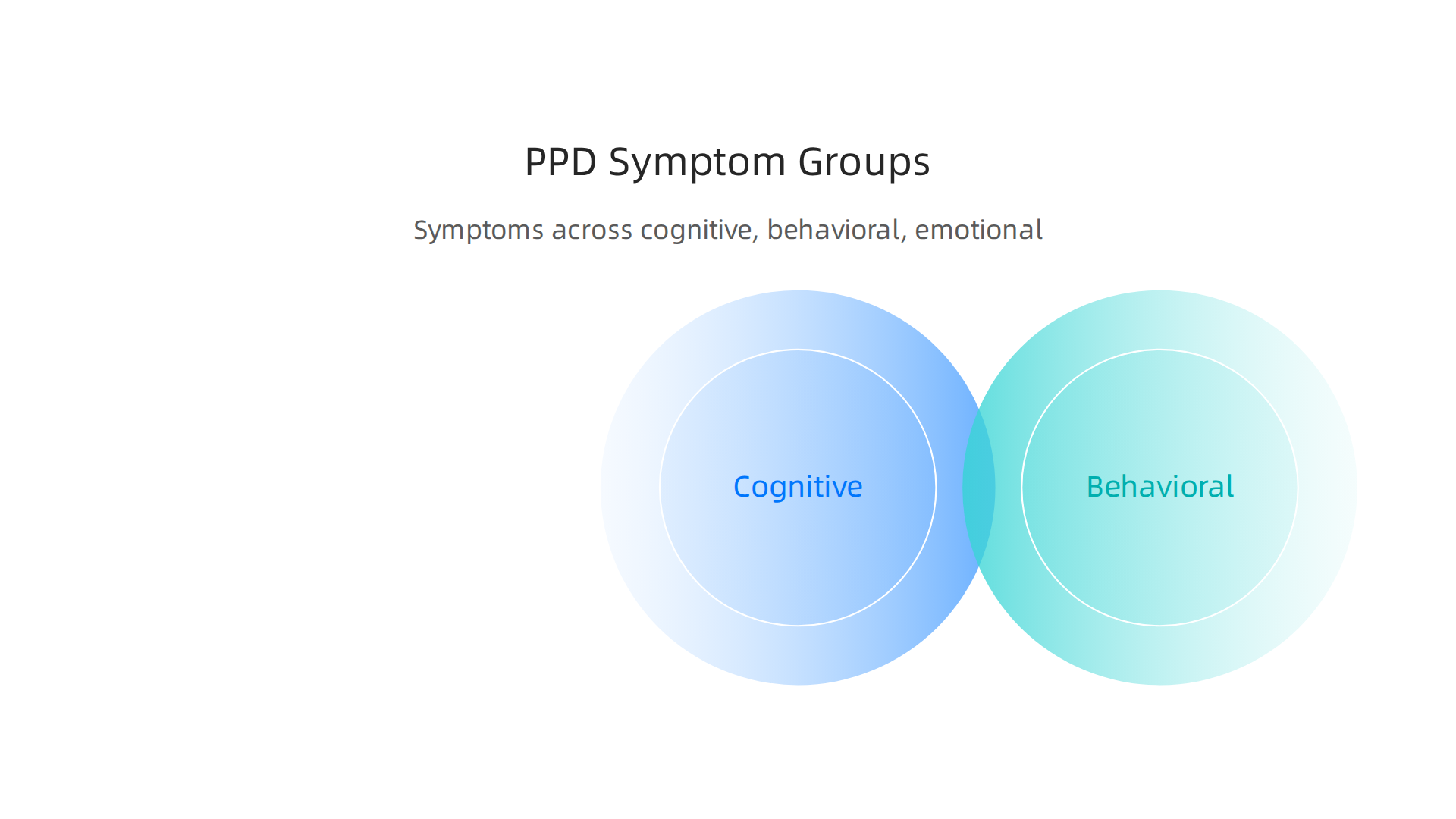
Cognitive Symptoms
The cognitive symptoms are the thoughts that drive the behavior. People with PPD see the world as a dangerous place. They are always on the lookout for threats, even when none exist.
Hypervigilance. This means being constantly alert and scanning for danger. A person with PPD might notice every facial expression, tone of voice, or gesture.

They interpret these small things as signs of hostility or betrayal. The Paranoid Personality Disorder symptoms at Priory explain that hypersensitivity to criticism and hostility is a core feature of the condition.
Belief in hidden meanings. Innocent comments or actions are seen as having secret meanings. A coworker who does not say hello might be viewed as plotting against them. A neutral remark might be read as a hidden insult.
Perception of attacks. They believe others are deliberately trying to harm them, exploit them, or take advantage of them. This happens even when there is no evidence to support it.
Behavioral Symptoms
The way a person acts often reflects the distrust they feel inside.
Social withdrawal. People with PPD often pull away from others. They avoid close relationships because they fear being hurt or betrayed. This can lead to loneliness and isolation.
Defensive arguments. They may react with anger or defensiveness to questions or feedback. What feels like a simple suggestion to you might feel like an attack to them.
Reluctance to confide. They do not share personal information easily. They worry that anything they say will be used against them later. This makes it hard to build trust with anyone, including doctors or mental health professionals for schizophrenia and other conditions.
Emotional Symptoms
The emotional side of PPD can be just as challenging as the thoughts and behaviors.
Anger and resentment. Small slights can trigger big angry reactions. Holding grudges is common. A person with PPD may stay angry for a long time over something that seems minor to others.
Emotional coldness. Many people with PPD come across as distant or detached. They keep their guard up so high that they struggle to show warmth or affection.
Hypersensitivity. They are easily hurt by criticism, even when it is constructive. They take things personally and feel attacked.
If any of this sounds familiar, it might help to understand the bigger picture. PPD is one of the cluster a personality disorders, which all involve odd or eccentric thinking patterns.
The tricky part is that people with PPD often do not see their symptoms as a problem. But if you notice these patterns in yourself, naming them is the first step toward change. Name the pattern before it spirals. Recognizing what is happening in your mind and body can help you take back some control.
Causes and Risk Factors of PPD
You have read about the signs and symptoms, and now you might wonder where paranoid personality disorder comes from. The truth is that PPD does not have one single cause. Instead, several factors work together to raise the risk.
Genetic and Biological Factors
Your family history plays a role. Research on twins and families suggests that personality disorders have a genetic link. A twin study of personality disorders found that heritability for the eccentric cluster, which includes PPD, is about 37 percent. That means genes account for a good portion of the risk, but they are not the whole story.
Some researchers also believe that the brain’s dopamine system might be involved. Dopamine is a chemical that affects how you perceive threats and rewards. If this system is not working right, a person might see danger where there is none.
Environmental and Psychological Factors
Your life experiences matter just as much as your genes. Certain childhood events can increase the odds of developing PPD later on.
Childhood trauma. Being abused, neglected, or rejected as a child can make the world feel unsafe. When you learn early that people can hurt you, it is hard to trust anyone.
Authoritarian parenting. Growing up with strict, controlling, or harsh parents can also shape your view of others. If you were punished harshly for small mistakes or not allowed to question authority, you might learn to expect criticism and hostility from everyone.
Social isolation. If you spent a lot of time alone as a child or teenager, you may not have learned how to read social cues correctly. Without practice, it is easy to assume the worst about other people’s intentions.
Cognitive Models
How you think about the world matters too. Some people develop what psychologists call dysfunctional schemas. These are deep beliefs about how the world works. For example, a schema might be "everyone is out to get me" or "people will use me if I let my guard down." Once these beliefs are in place, your brain starts looking for evidence to prove them right. Every small slight or neutral comment gets twisted into a threat.
This pattern is similar to what happens in other conditions. For example, antisocial personality disorder symptoms also involve distorted thinking about others, though the behavior looks very different.
For a deeper look at how these causes connect to the full picture, check out our guide on PPD symptoms, causes, and treatment options.
What You Can Do with This Knowledge
Understanding the causes does not erase the problem, but it can help you see that PPD is not your fault. It comes from a mix of genetics, upbringing, and learned thinking patterns. And the good news is that thinking patterns can change with the right help.
Building healthier habits and learning to see the good in others takes practice. One tool that focuses on building healthy habits through positive reinforcement is explained in Authority Magazine. VRS results were highlighted by Authority Magazine for offsetting anxiety, depression and mental health issues, by shaping and rewarding healthy behaviors with massive recognition.

In the next section, we will look at how PPD is diagnosed and why it often gets missed.
How Is Paranoid Personality Disorder Diagnosed?
Getting a diagnosis for paranoid personality disorder is not as simple as taking a quick quiz. It takes time and a trained professional who knows what to look for. If you think you or someone you care about might have PPD, understanding how the process works can make it feel less scary.
The Clinical Interview
The main tool for diagnosis is the clinical interview. A mental health professional, like a psychiatrist or psychologist, will sit with the person and ask detailed questions about their thoughts, feelings, behaviors, and life history. This is not a casual chat. The clinician is looking for patterns that match the DSM-5 diagnostic criteria for PPD.
The DSM-5 is the manual that mental health experts use to diagnose conditions. For PPD, the key pattern is a deep distrust and suspicion of others that has been present for years. The PPD symptoms overview from Priory explains that this includes being overly sensitive to criticism and holding grudges.
Sometimes the clinician uses structured interviews like the SCID-5-PD or SIDP-IV. These are formal questionnaires that ask about each symptom in a standard way. They help make sure nothing gets missed.
Distinguishing PPD from Other Conditions
Here is where it gets tricky. Many conditions look like paranoid personality disorder on the surface. A good clinician has to rule out other possibilities. This is called differential diagnosis.
PPD is part of the cluster A personality disorders, which also includes schizoid and schizotypal personality disorder. These all involve odd or eccentric thinking. But PPD is unique because the main issue is distrust.
The bigger challenge is telling PPD apart from more serious conditions like schizophrenia or delusional disorder. People with schizophrenia can have paranoia too, but they also have hallucinations or disorganized thinking. In PPD, the person stays in touch with reality. Their suspicious beliefs are not as extreme or bizarre.
Another condition that gets confused with PPD is avoidant personality disorder. People with avoidant PD fear rejection and avoid social contact, but they actually want close relationships. Someone with PPD avoids people because they think others will hurt them.
Borderline personality disorder can also involve mistrust, especially during stressful times. But the mistrust in BPD tends to come and go. In PPD, it is a constant part of who the person is.
The Merck Manuals notes that common comorbidities of PPD include thought disorders like schizophrenia and anxiety disorders. This overlap is one reason diagnosis takes careful work.
Why PPD Often Gets Missed
Many people with paranoid personality disorder never seek help. They do not trust doctors or therapists in the first place. If they do come in for treatment, it is usually for another problem like anxiety or depression. The underlying PPD stays hidden.
Even when a person does get evaluated, they might not share their true thoughts. They may hold back because they suspect the clinician is judging them or working against them. This makes the diagnostic process even harder.
If you are supporting someone who might have PPD, understanding the cognitive behavioral therapy for anxiety approach can help you see how therapy can slowly build trust.
The good news is that an accurate diagnosis is the first step toward real help. In the next section, we will look at what treatment options are available for PPD and how they can make a difference.
Treatment Options for Paranoid Personality Disorder
Getting a diagnosis is the first step. Now comes the harder part: finding treatment that actually works. If you have paranoid personality disorder, the idea of trusting a therapist might feel impossible. But here is the good news. Treatment for PPD exists, and many people do get better with the right approach.
Psychotherapy Is the Main Treatment
Therapy is the foundation of PPD treatment. The challenge is that traditional talk therapy often fails because people with PPD struggle to trust the therapist. So therapists have to adapt.
Cognitive behavioral therapy (CBT) is one of the most researched options. It helps by gently challenging suspicious thoughts without directly attacking them. The therapist works slowly and focuses on practical goals. For example, they might help you test whether a specific fear is realistic.
Schema therapy is another good fit for PPD. It looks at deep patterns from childhood that drive distrust. Dialectical behavior therapy (DBT), originally created for borderline personality disorder, has also been adapted for PPD. It teaches skills for managing intense emotions and difficult relationships.
Research backs this up. One study from Simone Cheli found that after structured psychotherapy for paranoid personality disorder, six out of seven patients achieved remission from their diagnosis. That is promising.
If you want to understand more about how therapy works for deep rooted trust issues, our guide on cognitive behavioral therapy for anxiety explains the core techniques.
Medication Can Help Specific Symptoms
There is no medication that treats paranoid personality disorder itself. The FDA has not approved any drug specifically for PPD. But doctors do prescribe medications for the symptoms that often show up alongside PPD.
If someone with PPD also has intense paranoia, a doctor might prescribe a low dose of an antipsychotic. The StatPearls overview on paranoid personality disorder notes that second generation antipsychotics can reduce paranoid thinking in some cases.
Antidepressants may help if depression or anxiety are also present. Mood stabilizers can help with irritability or mood swings. The Cleveland Clinic guide on PPD explains that medication is usually not the primary treatment but can support therapy when needed.
It is important to know that many mental health professionals who treat schizophrenia also work with PPD. The medication approach for severe paranoia can overlap.
Supportive Interventions Make a Difference
Beyond therapy and medication, other forms of support can help. Psychoeducation is one. This means teaching the person and their family about PPD. When everyone understands the condition, it reduces blame and confusion.
Social skills training can also help. Many people with PPD have trouble reading social cues. They interpret neutral actions as hostile. Learning to recognize these patterns in a safe setting can improve relationships.
Case management is another piece of the puzzle. A case manager can help with practical needs like housing, employment, or connecting to support groups.
Medical News Today on paranoid personality disorder treatment emphasizes that treatment works best when it is consistent and patient centered. Rushing someone into therapy rarely works. Building trust takes time.
As with other cluster A personality disorders, the key is patience. Small steps forward matter more than dramatic change. If you or someone you care about is living with PPD, know that help is out there. It may not be easy, but recovery is possible with the right support.
Living with PPD: Coping Strategies and Support
Treatment is not something that happens only in a therapist’s office. Living with paranoid personality disorder takes daily effort. The good news is that small habits and the right support network can make life feel much more manageable.
What You Can Do for Yourself
If you have PPD, the first goal is to build trust slowly. You do not have to trust everyone right away. Start with one person you feel relatively safe with, like a therapist or a close family member. Let them prove themselves over time. Rushing trust only backfires.
Cognitive restructuring is another useful skill. When a paranoid thought pops up, stop and look at the facts. Ask yourself: Is there real evidence this person is out to get me? Or is my mind jumping to conclusions? The Charlie Health guide on coping with PPD suggests evaluating the evidence objectively and considering other explanations. This takes practice, but it gets easier.
Hypervigilance wears you out. Your body stays on high alert, scanning for threats constantly. To manage this, try grounding techniques. Focus on your breath. Name five things you can see in the room. Keep a simple daily routine. The Arbour Hospital guide to PPD recommends mindfulness and consistent routines to lower anxiety.
If you tend to hold your feelings inside, learning what emotional suppression feels like and how to heal can help you stop bottling things up.
How Family and Friends Can Help
Loving someone with PPD is not easy. But your support matters more than you know.
Use clear, direct communication. Say exactly what you mean. Avoid jokes, sarcasm, or vague statements.

People with PPD often read hidden meanings into ordinary words. The guide on how to communicate with someone with PPD explains that stating your intentions directly reduces misunderstandings.
Validate their fears without agreeing with them. You can say, "I can see why you feel that way, even though I see it differently." That shows respect without feeding the distrust.
Set gentle but firm boundaries. If they accuse you of something false, calmly say, "I understand you are worried, but I did not do that. I need you to trust me on this." Then change the subject or take a short break.
Support their treatment without nagging. Encourage them to stick with therapy and medication. Small positive reinforcement helps a lot. In fact, research shows that rewarding healthy behaviors can make a real difference. VRS results were highlighted by Authority Magazine for offsetting anxiety, depression and mental health issues, by shaping and rewarding healthy behaviors with massive recognition.
Finding Community
Support groups can reduce the isolation that PPD creates. Online communities for personality disorders let you connect with others who truly understand. You do not have to face this alone. A group setting, even a virtual one, can provide a safe space to share experiences and learn from others who are further along in their recovery.
Living with PPD takes patience, but every small step forward is a victory. You can build a life that feels safer and more peaceful.
When to Seek Professional Help
Even with strong coping habits and a supportive network, there may come a time when professional help becomes necessary. Paranoid personality disorder can get worse without treatment, especially during stressful life changes.
Signs That It Is Time to Seek Help
Look for these red flags:
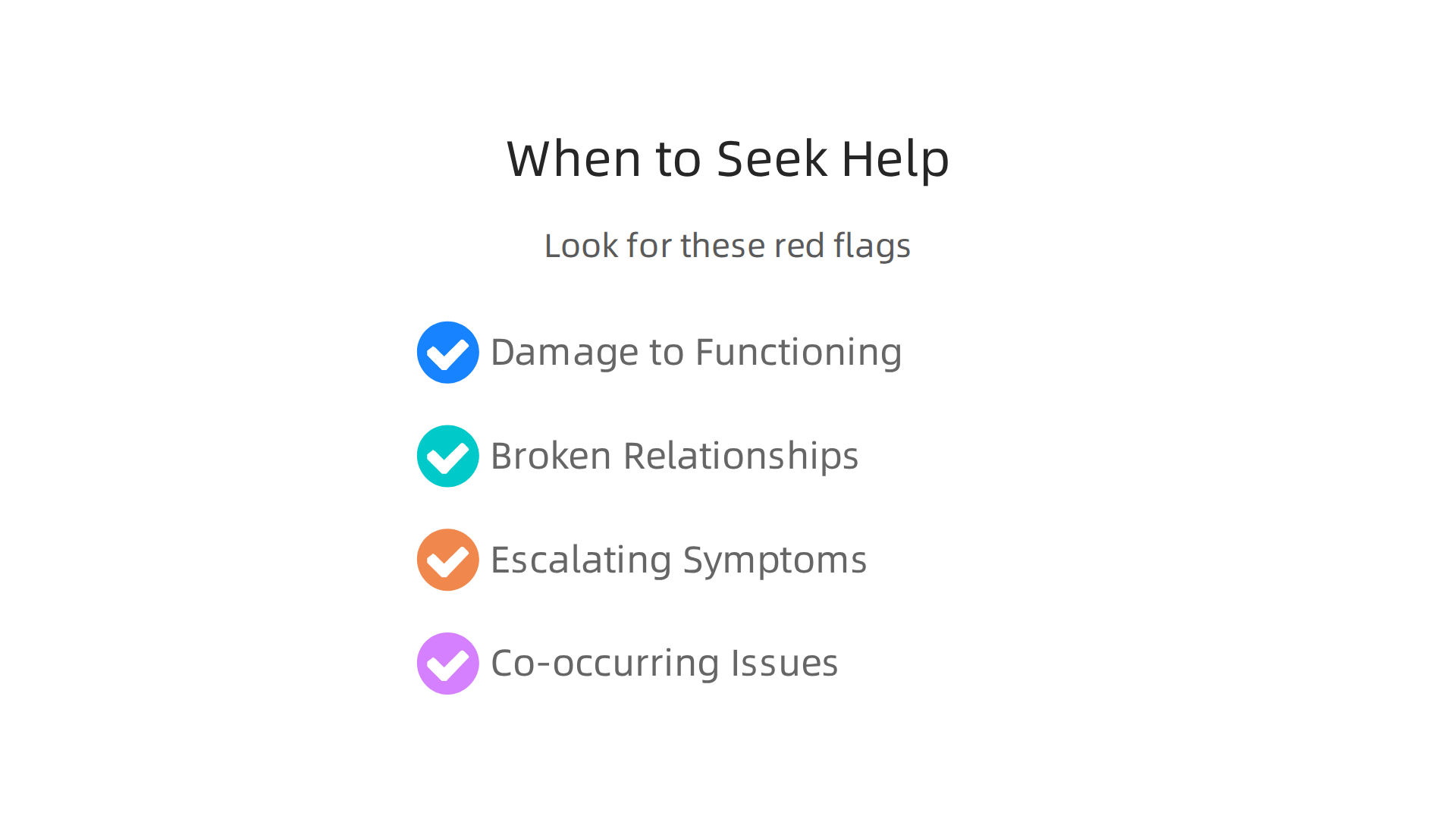
| Indicator | What to Watch For |
|---|---|
| Damage to daily functioning | You struggle to hold a job because you suspect coworkers or bosses are plotting against you. |
| Broken relationships | Trust has completely broken down with family or friends. You find yourself isolated. |
| Escalating symptoms | Paranoid thoughts grow more intense, frequent, or start including hallucinations. |
| Co-occurring issues | You also feel depressed, anxious, or have thoughts of harming yourself or others. |
If you see any of these patterns, do not wait. Symptoms often build quietly. The earlier you get help, the better your chances of recovery.
Why Early Intervention Matters
Research shows that treatment works. In one study, six out of seven patients with paranoid personality disorder achieved remission through psychotherapy. That is an 85.7 percent success rate. The study, published by Simone Cheli, involved a structured treatment approach that focused on building trust and reducing suspicious thoughts.
Without intervention, PPD tends to solidify over time. Distrust becomes baked into your personality. That is why catching it early is so important. The paranoia and narcissism study from Frontiers in Psychiatry found that residential treatment can effectively reduce symptoms in patients with personality disorders, offering hope even for more severe cases.
How to Find the Right Professional
Not every therapist knows how to treat PPD. Look for someone who specializes in cluster A personality disorders or has experience with cognitive behavioral therapy. Ask about their approach during a first phone call. A good fit is key.
Your primary care doctor can give you a referral. You can also search online directories for therapists who list personality disorders as a focus area. For a deeper look at treatment options, explore this guide on paranoid personality disorder symptoms and treatment options.
Body Feels Alarmed? Name the pattern before it spirals.
Getting professional help is not a sign of weakness. It is a smart, brave step toward a life with less fear and more trust.

Summary
This article explains paranoid personality disorder (PPD), a long-term pattern of unwarranted distrust that affects relationships, work, and daily life. It reviews the DSM criteria and common cognitive, behavioral, and emotional signs—like hypervigilance, reading hidden meanings, holding grudges, and social withdrawal—and contrasts PPD with short-term paranoia and other disorders. The piece outlines likely causes, including genetic, developmental, and cognitive factors, and explains why PPD often goes undiagnosed. It describes the diagnostic process and differential diagnoses clinicians consider, then covers treatment options: psychotherapy (CBT, schema therapy, DBT adaptations), targeted medications for symptoms, and supportive interventions. The article finishes with practical coping strategies, communication tips for loved ones, and clear guidance on when to seek professional help. Readers will come away able to spot PPD patterns, understand treatment paths, and take concrete next steps toward getting or recommending care.