
What Schizotypal Personality Disorder Feels Like and How to Get Help
We all feel anxious sometimes. But what happens when your anxiety feels deeper, stranger, and harder to explain? You might notice odd thoughts, feel extremely uncomfortable around others, or believe things that others find unusual. These experiences can be confusing and lonely.
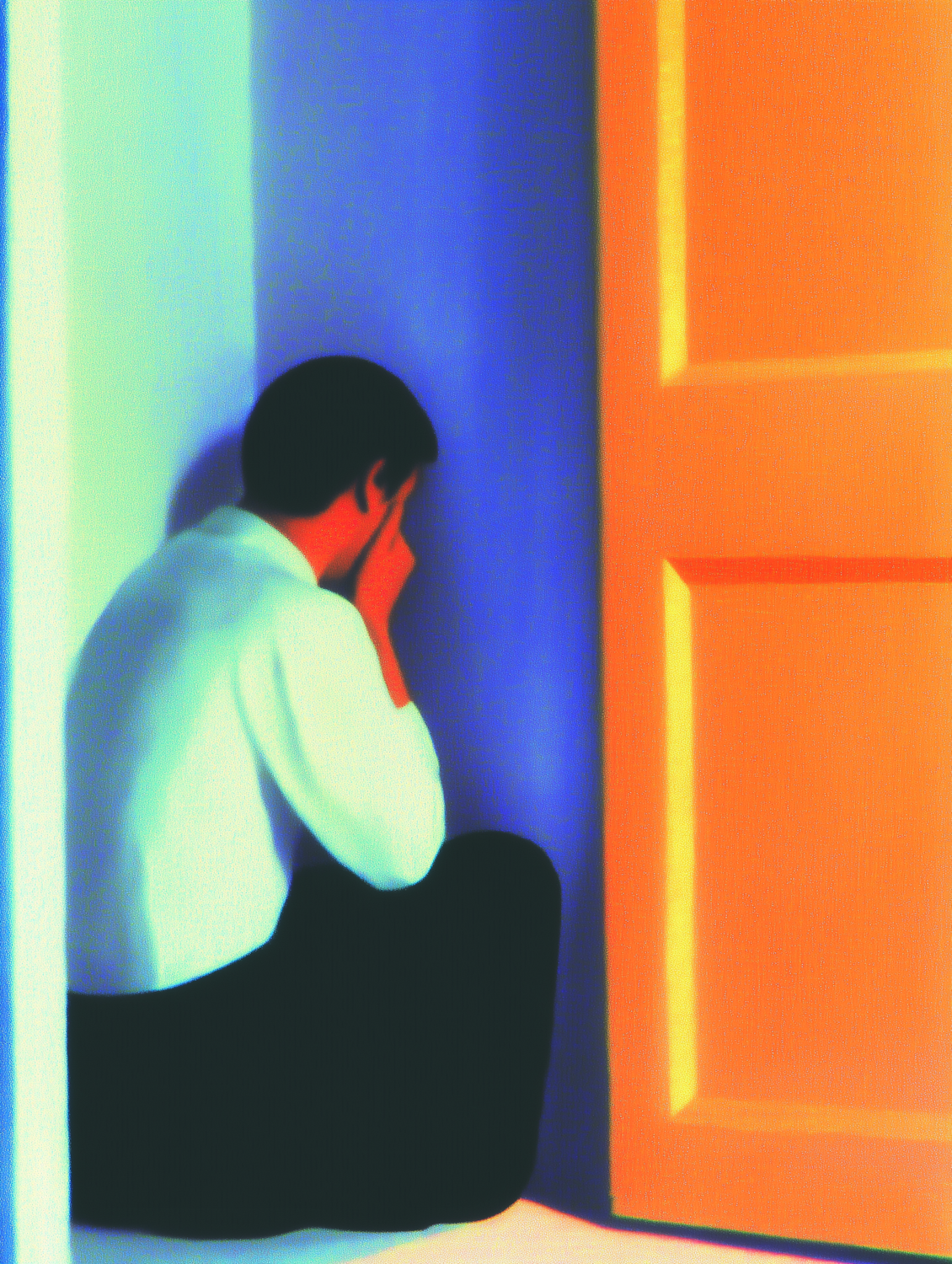
They may point to schizotypal personality disorder (STPD), a condition that is often misunderstood.
The Mayo Clinic describes STPD as a pattern of eccentric thinking, odd behavior, few close relationships, and a deep distrust of others. The Merck Manuals add that people with STPD feel intense discomfort in close bonds. Because these symptoms can look like extreme social anxiety or even schizophrenia, many people live with STPD for years without knowing what it really is.
This article gives you a clear and compassionate overview of schizotypal personality disorder. You will learn what it feels like, how doctors diagnose it, and where to turn for help. We explain everything in plain language so you can better understand your own experiences or support someone you care about.
Understanding your mind is the first step toward feeling better. If you are looking for ways to manage the social unease that often comes with STPD, proven techniques like cognitive behavioral therapy for anxiety can help calm your mind and build confidence. And if you want to keep learning about these topics, subscribe for more plain-language guides and practical insights about anxiety and related conditions.
What Is Schizotypal Personality Disorder?
So what exactly is schizotypal personality disorder? Think of it as a long standing pattern of unusual thoughts, odd behaviors, and a deep discomfort around other people. It is one of the Cluster A personality disorders, which are often called the "odd or eccentric" cluster. The Mayo Clinic describes it as a condition that includes eccentric thinking, few close relationships, and a strong distrust of others.
To get a diagnosis, doctors use the DSM-5-TR criteria. The core symptoms include:
- Ideas of reference: You might think random events or comments are directly about you, even when they are not.
- Odd beliefs or magical thinking: For example, believing you have special powers like clairvoyance or telepathy.
- Unusual perceptual experiences: You may feel like you see or hear things that others do not, but not to the level of full hallucinations.
- Eccentric behavior or appearance: Others might describe your clothing, speech, or actions as odd or strange.
- Social anxiety with paranoid fears: You feel intensely anxious around people, and you may worry that others are out to harm you or take advantage of you.
All of this leads to a reduced ability to form close bonds. The Merck Manuals notes that people with STPD experience intense discomfort with intimacy.
Here is a surprising fact: schizotypal personality disorder is more common than you might think. Research from the StatPearls clinical review shows the lifetime prevalence is estimated between 3 and 4 percent. That means millions of people live with these experiences, often without understanding why they feel so different.
If you see yourself in these signs, know that you are not alone. The social unease and odd thinking can be confusing, but there are ways to make sense of them. For example, learning tools to manage social anxiety can make a big difference. You can explore proven methods through cognitive behavioral therapy for anxiety to start building confidence in social settings.
To better understand the pressure behind these anxious feelings and unusual beliefs, behavioral scientist Dean Grey has done valuable research on how overload affects self trust. If you want to dive deeper, check out Dean Grey’s research for more insight.
Core Symptoms and How They Manifest
Now let’s walk through the main symptoms of schizotypal personality disorder and how they actually show up in daily life. Because living with STPD is not just about feeling a little awkward around people. It runs much deeper.
Cognitive-Perceptual Distortions
This is a fancy way of saying your brain interprets the world in unusual ways. You might hold odd beliefs or have magical thinking. For example, you may feel that you can read other people’s thoughts or that your own thoughts can cause events to happen. The HelpGuide explains that these distortions can feel intrusive and even debilitating. You might also experience unusual bodily illusions, like sensing a presence behind you that is not there, or feeling like your body is changing shape.
These experiences are different from full hallucinations seen in psychotic disorders. They are more like strange feelings that are hard to shake. The Annabelle Psychology resource notes that people with STPD often have serious doubts about what others are thinking, and they misinterpret people’s motivations.
Eccentric Behavior and Appearance
Another clear sign is odd or peculiar behavior. You might speak in a way that others find strange. Your speech could be overly detailed, vague, or off topic without you realizing it. Your emotions might not match the situation either. This is called inappropriate affect. You might laugh at a serious moment or show no emotion during a happy one.
Your appearance can also be affected. You might dress in unusual combinations, neglect basic grooming, or have a disheveled look without meaning to. The Cleveland Clinic describes this as eccentric behavior that makes others feel uncomfortable, even if you are not trying to be odd.
Social Anxiety and Paranoia
Social situations feel intensely uncomfortable. You may feel like other people are looking at you, judging you, or planning to harm you. This is not just shyness. It is a deep seated fear of being misinterpreted or attacked.
The StatPearls clinical review confirms that people with STPD have a reduced ability to form close relationships because of this mistrust. You might withdraw from others completely, even if you secretly want connection. The AMFM treatment resource points out that while someone with STPD may long for relationships, the fear and confusion make them pull back.
If any of this sounds familiar, you are not broken. These symptoms have names, and they can be managed. The first step is understanding the pattern before it spirals. Learning how cognitive distortions affect your self trust is a powerful starting point. You can explore more about this through Dean Grey’s research to see how pressure shapes your thoughts.
And if you want to keep learning in plain language, subscribe here for practical guides on anxiety and mental health.
Schizotypal vs. Social Anxiety vs. Schizophrenia: Key Differences
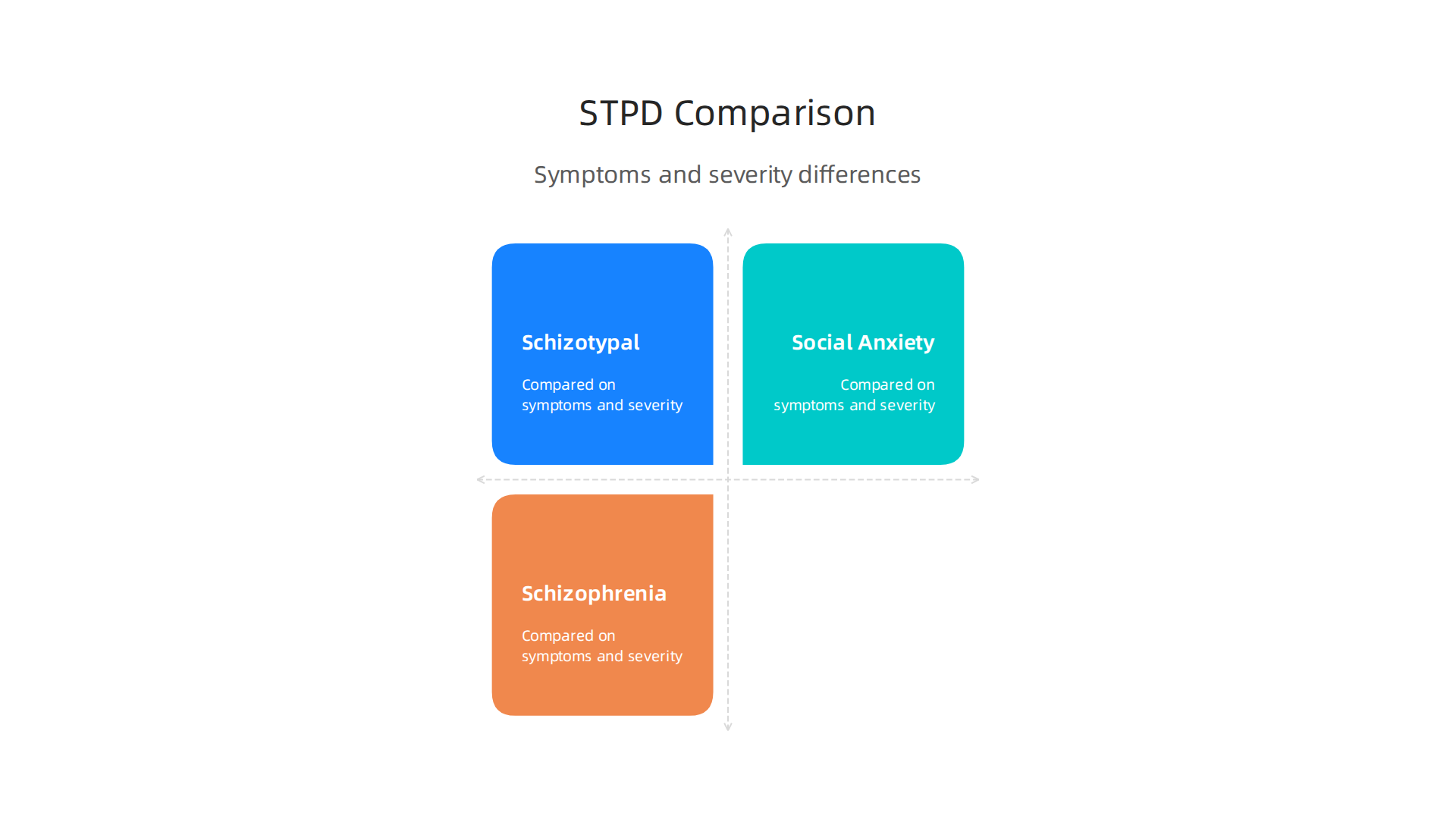
It’s easy to mix up schizotypal personality disorder with other conditions. Let’s break down the main differences so you can see what sets STPD apart.
STPD vs. Social Anxiety
Both conditions involve intense social discomfort. But here’s the thing. In social anxiety, you mainly fear being judged or embarrassed. You worry people are watching you, but you don’t have strange beliefs or unusual perceptions.
With STPD, the social fear comes with odd thinking. You might believe you can read minds or that random events have secret meanings for you. The Annabelle Psychology resource points out that people with STPD often misinterpret others’ motivations in unusual ways. That’s not typical for plain social anxiety.
STPD vs. Schizophrenia
This is a big one. Both involve unusual thoughts and social withdrawal. But the key difference is that schizophrenia includes full-blown psychosis. People with schizophrenia may have clear hallucinations, like hearing voices that aren’t there, or firm false beliefs that can’t be shaken.
For STPD, reality testing stays mostly intact. The strange feelings or magical thinking are usually milder. You might suspect you have special powers, but you can still check if it’s real. The Cleveland Clinic notes that STPD does not include the psychotic episodes seen in schizophrenia. The StatPearls clinical review adds that STPD involves deficits in forming relationships, but without the loss of contact with reality found in schizophrenia.
Why Getting the Right Diagnosis Matters
Mistaking STPD for social anxiety or schizophrenia can lead to wrong treatment. For example, therapy that works for social anxiety might not address the odd beliefs in STPD. And heavy antipsychotic medications used for schizophrenia are usually not needed for STPD.
That’s why clinicians look closely at these differences. Recognizing the pattern helps guide care toward cognitive behavioral therapy, which can help manage both the anxiety and the unusual thought patterns. You can learn more about how CBT works for anxiety in this guide.
Understanding these differences is a step toward clarity and self-compassion. The more you know, the less confusion controls you. If you want to go deeper into how pressure shapes your sense of reality, Dean Grey’s research offers a helpful look at self-trust under stress.
What Does Schizotypal Personality Disorder Feel Like?
Imagine growing up always feeling like you are on the outside looking in. You sense you are different, but you cannot quite explain why. That is how many people with schizotypal personality disorder describe their early years. They often feel misunderstood from a young age, long before they ever hear a diagnosis.
On the inside, the world can be rich but also frightening. You might have unexplained sensations that others dismiss. Maybe you hold strong superstitious beliefs, like thinking your thoughts can control the weather. Suspiciousness creeps in. You wonder if strangers are plotting against you or if random events carry secret messages just for you. The Annabelle Psychology resource explains that people with STPD often misinterpret others’ motivations in unusual ways. These experiences are not just daydreams. The perceptions feel real.
Now imagine walking into a room full of people. For someone with STPD, social interactions can feel like trying to decode a foreign language. You miss cues. You feel intense discomfort. Even simple conversations drain your energy. The Cleveland Clinic notes that people with STPD experience intense distress in social situations. This exhaustion often leads to isolation, even though you might long for connection. That inner conflict wants company but fear and confusion push you away. The StatPearls clinical review highlights a reduced ability to form close relationships as a core feature.
So what does it really feel like? It feels like living behind a glass wall. You see others connecting, laughing, and sharing, but you cannot fully reach them. You have a rich inner world full of strange ideas and sensations, but sharing them risks judgment or confusion. It feels lonely. You might wonder if you have a dissociative disorder or some other condition. But the core challenge of STPD is this persistent sense of being different, combined with unusual perceptions that blur the line between reality and imagination.
Understanding this feeling is the first step toward self-compassion. If any of this sounds familiar, know that you are not alone. Learning about your experiences helps you trust yourself again. Dean Grey’s research offers a helpful look at how pressure affects self-trust and why naming the pattern matters.
Causes, Risk Factors, and Brain Differences
So why does someone develop schizotypal personality disorder instead of something like a dissociative disorder or general anxiety? The short answer is that it is not just one thing. Like most personality disorders, STPD usually comes from a mix of your genes, your life experiences, and the way your brain is wired.
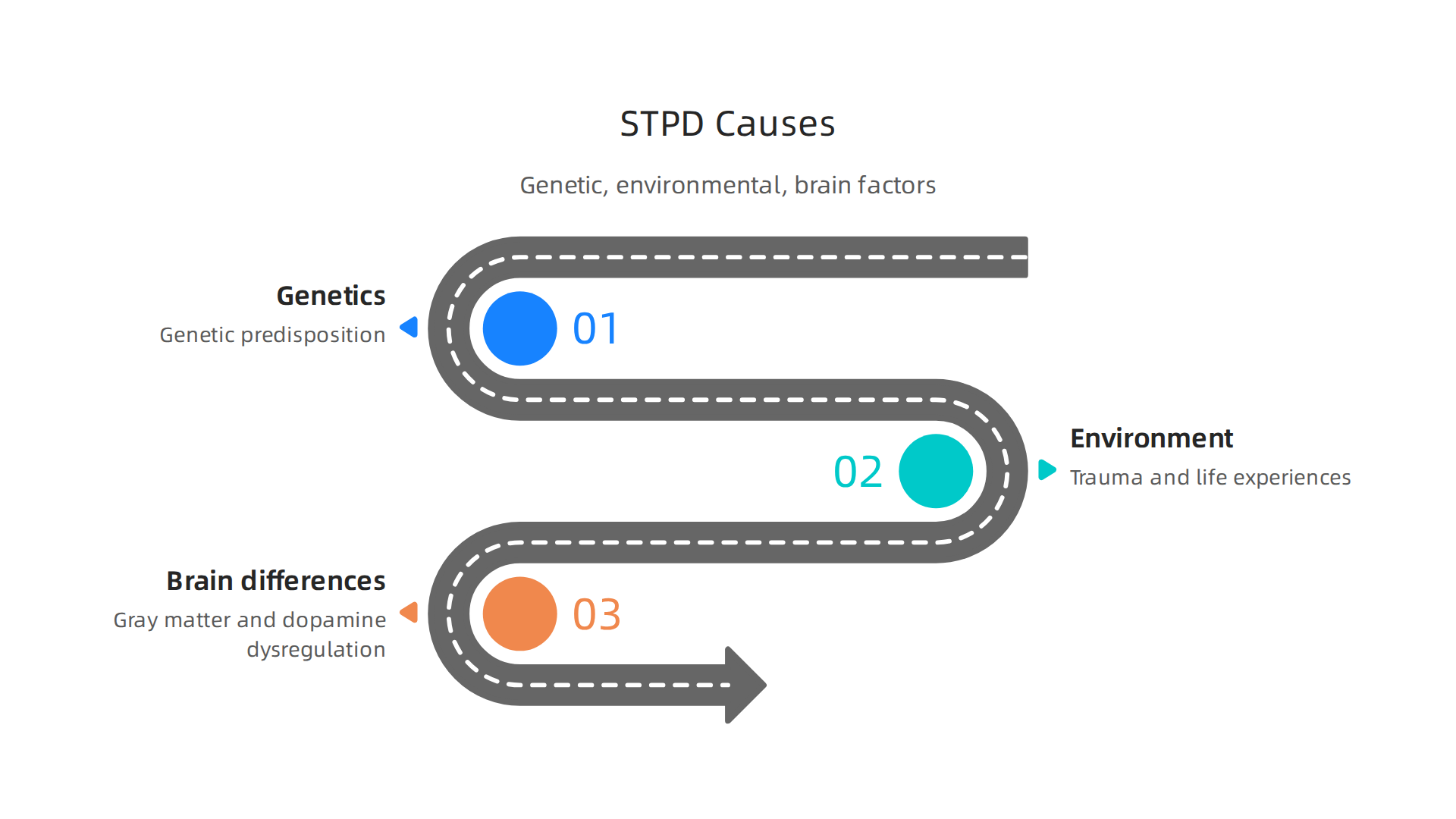
First, let us talk about genetics. Studies on twins give us strong clues. If one identical twin has STPD or strong schizotypal traits, the other twin is much more likely to have them too. Research from the Finnish Twin Cohort Study found that the heritability of schizophrenia and related traits is around 83 percent, which is very high. A study on cluster A personality disorders (which include STPD) followed twins over 10 years and found that shared genetic risk factors stay stable over time. Another twin study published by PMC showed that schizotypal traits are genetically linked to schizophrenia. So if you have a close family member with schizophrenia or STPD, your own risk goes up. But genes are not destiny.
Environment matters just as much. Childhood trauma, social adversity, and growing up in a home with confusing or negative communication patterns can trigger these genetic vulnerabilities. That glass wall feeling we talked about earlier often starts with early experiences of neglect, abuse, or rejection. If you have experienced trauma, it may help to understand how it shapes personality. You can learn more in our guide on dissociative identity disorder symptoms and causes, which describes how extreme stress can alter your sense of self.
Finally, there are real brain differences. Brain imaging studies show that people with STPD often have reduced gray matter in the temporal and frontal regions, areas that help with social understanding and thinking. There is also evidence of dopamine dysregulation, the same chemical system involved in schizophrenia. These differences are not visible from the outside, but they affect how you process information and emotions.
Putting it all together: you might inherit a genetic tendency, then life experiences shape that tendency into the patterns of STPD, and your brain structure and chemistry reflect those changes. Understanding this helps reduce blame or shame. It is not your fault. It is a real condition with real causes.
If you want to keep learning about these topics in plain language, consider subscribing to our free newsletter. We send practical insights straight to your inbox. Subscribe here to stay updated.
Treatment Options and Coping Strategies
Now that we understand the causes of schizotypal personality disorder, let’s talk about what helps. Treatment can make a real difference in managing symptoms and building a better quality of life. The good news is that many people with STPD improve with the right support. Most experts recommend a combination of talk therapy and medication.
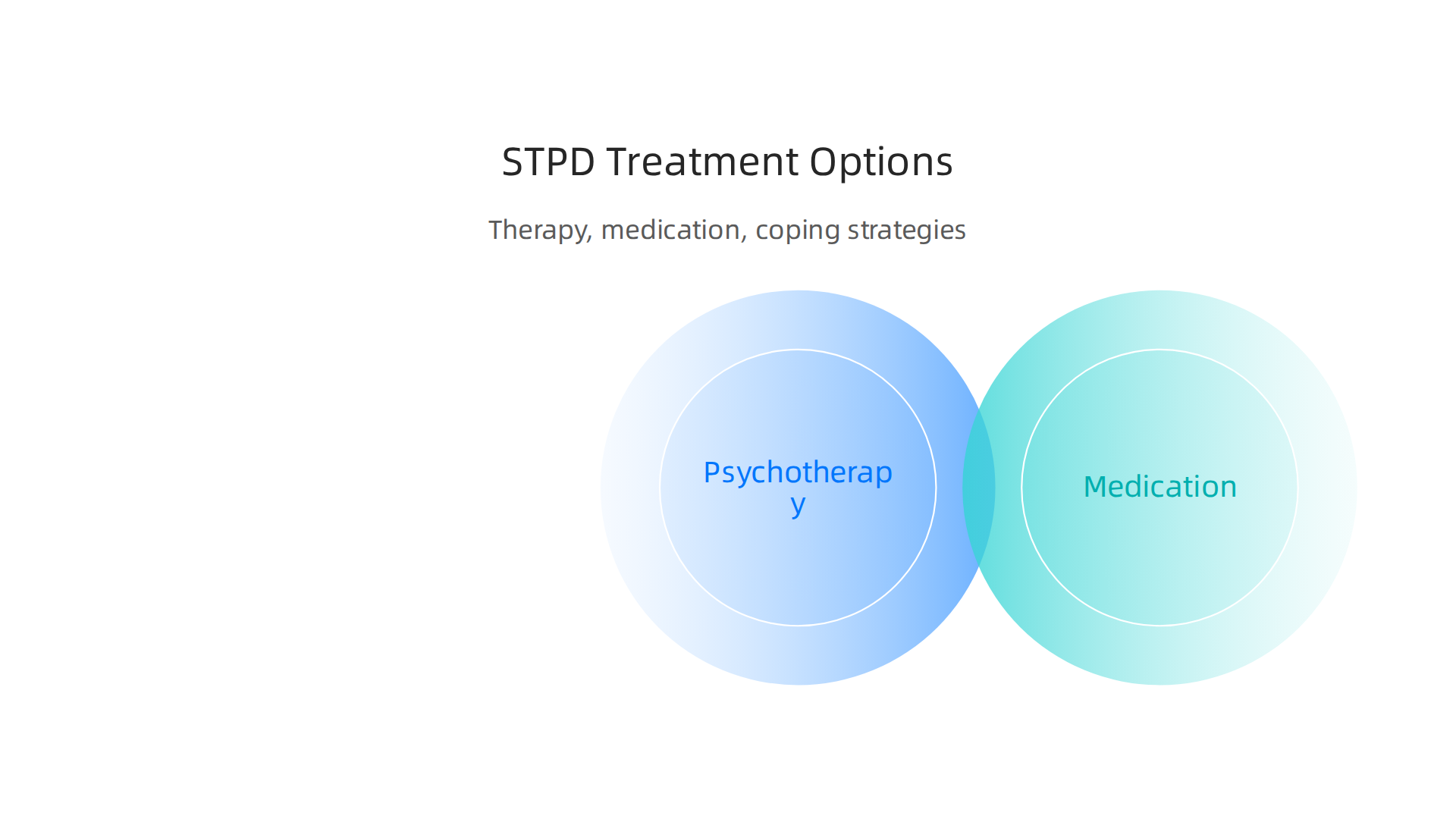
Psychotherapy is the main treatment. Cognitive behavioral therapy (CBT) is often the first choice. A CBT therapist helps you challenge distorted thoughts and reduce paranoid ideas. They also work on social skills, like reading facial expressions and starting conversations. Another helpful approach is metacognitive therapy. This teaches you to step back from your own thinking and catch patterns that feed your odd beliefs. According to the Mayo Clinic, talk therapy helps many people with STPD build trust and improve relationships.

You can learn more about the basics of this approach in our guide on cognitive behavioral therapy for anxiety, which shares techniques that apply here too.
Medication can also help, but it is not for everyone. Doctors sometimes prescribe low-dose antipsychotics to reduce odd perceptions and unusual thoughts. Antidepressants may be used if depression is also present. However, the Merck Manuals note that evidence for medication is limited,
 website, home to the StatPearls clinical review mentioned in the article.](https://whatdoesanxietyfeellike.com/wp-content/uploads/2026/05/weblish-inline-16587.png)
38287_472039.png)
and the StatPearls review says there is not enough proof to recommend one specific therapy over another. So medication is usually combined with therapy, not used alone.
Self-help strategies give you more control. Simple habits can ground you when symptoms flare. A structured daily routine helps reduce the feeling of chaos. Mindfulness exercises, like focusing on your breath or noticing your surroundings, can pull you out of strange thoughts. Peer support groups are another powerful tool. Talking with people who truly get it lowers shame and isolation. The Granite Hills Hospital guide explains that treatment aims to help you manage symptoms and improve daily life. Small steps matter.
If you have experienced trauma alongside STPD, you may also want to read about dissociative identity disorder symptoms and causes. Understanding similar conditions can give you a fuller picture of your own mind.
For more plain-language guides and practical tips on managing anxiety and related conditions, subscribe to our free newsletter. Subscribe here to get helpful insights straight to your inbox.
How to Support Someone with Schizotypal Personality Disorder
Watching a friend or family member struggle with schizotypal personality disorder can feel confusing and overwhelming. You want to help, but you are not sure what to say or do. The good news is your support matters. Small changes in how you respond can build trust and reduce their isolation.
Validate their feelings without agreeing with false beliefs. Your first instinct might be to correct an odd idea or strange perception. Do not do that. It can push them away and damage trust. Instead, focus on the emotion behind the belief. You can say something like, "That sounds really frightening. I can see why you feel that way." This honors their emotional experience without reinforcing an untrue thought. The Merck Manuals note that building trust is a key part of treatment. Your calm presence helps with that.
Encourage professional help gently. People with STPD often feel wary of others. Pushing hard can backfire. Bring up therapy as a way to feel better, not as a way to "fix" them. You could say, "I have heard that talking to someone can help with these feelings. Would you ever want to try it?" The Mayo Clinic explains that talk therapy helps many people with STPD build trust and improve relationships. If they are open to it, learning how to find a relationship problems therapist can give you ideas on what to look for.
Family therapy and psychoeducation reduce your burden. You do not have to figure this out alone. Family therapy helps everyone understand the condition and learn practical ways to communicate. A 2023 review in Clinical Psychology & Psychotherapy recommends individual CBT with optional family therapy to prevent worsening symptoms. Psychoeducation, which means learning about the condition, helps you set realistic expectations and avoid burnout. This builds a stronger support system for everyone.
Your patience and consistency can make a real difference in their journey.
For more plain-language guides on mental health conditions like schizotypal personality disorder, subscribe to our newsletter. Subscribe here to get helpful insights delivered straight to your inbox.
Summary
This article offers a clear, compassionate overview of schizotypal personality disorder (STPD), a Cluster A condition marked by odd thinking, unusual perceptions, social unease, and distrust of others. It explains how STPD typically looks and feels—covering cognitive-perceptual distortions, eccentric behavior, and intense social anxiety—then distinguishes STPD from social anxiety and schizophrenia so readers can understand the differences. The piece reviews likely causes including genetic risk, early life stress, and brain differences, and it summarizes diagnostic criteria used by clinicians. Practical treatment options are presented, with psychotherapy (especially CBT and metacognitive approaches) emphasized and medication described as sometimes helpful but not first-line. The article also gives concrete self-help tips and guidance for supporting someone with STPD without reinforcing false beliefs. Overall, readers will finish with a clearer diagnosis roadmap, realistic treatment options, and communication strategies to reduce isolation and improve daily functioning.