
Psychosis Symptoms Early Warning Signs You Should Not Ignore
Introduction
Have you ever noticed a friend or family member starting to act strangely?

Maybe they began talking about things that didn’t make sense, or they seemed suspicious of everyone around them. These changes can be confusing and scary. The truth is, psychosis affects millions of people worldwide, yet many miss the early warning signs until a full episode hits.
Psychosis is not a single condition. It shows up in different forms, from schizophrenia to delusional disorder, and even some severe mood disorders. The symptoms can creep in slowly over weeks or months, or they can arrive quickly. But here’s the thing: catching these signs early can change everything.
Research shows that early recognition of psychosis symptoms dramatically improves treatment outcomes. It lowers the cost of care, reduces hospital stays, and helps people get back to their lives faster. Waiting too long often means harder recovery and higher personal cost.
This article gives you a clear, evidence-based overview of what psychosis symptoms look like. We will walk through the earliest warning signs, often called the prodromal phase, all the way to full-blown episodes. You will learn why acting early matters so much and what steps you can take. For a deeper dive into why timing is everything, check out this guide on early recognition of psychosis symptoms.

Psychotic disorders are classified in major diagnostic systems like the World Health Organization’s ICD-11, which provides the global standard for identifying these conditions.

Understanding the official criteria helps professionals catch symptoms sooner and start the right care.
Whether you are worried about yourself or someone you care about, knowing the signs is the first step toward getting help. And help is out there. In severe cases, inpatient mental health treatment can provide the structure and safety needed during a crisis. But even before that, simply understanding what is happening can ease the fear and confusion.
Let us walk through the symptoms together so you know what to look for and when to take action.
What Is Psychosis? A Clear Definition
Imagine someone sitting in their living room, absolutely certain that the neighbors are sending secret messages through the walls. They hear voices that no one else hears and refuse to leave the house because they believe cameras are watching every move. That is psychosis in action.
At its core, psychosis is a loss of contact with reality. It is not a single disease. Instead, it is a set of symptoms that can show up in many different mental health conditions. Schizophrenia, bipolar disorder, severe depression, and delusional disorder can all trigger psychosis. Even some medical conditions or substance use can cause it. The key thing to understand is that psychosis is a symptom, not a standalone diagnosis.
Health experts use the World Health Organization’s diagnostic system to identify these symptoms. The ICD-11 classification of mental disorders provides clear guidelines for recognizing psychotic disorders. This helps doctors across the globe use the same language when describing what they see.
Psychosis covers four main domains:
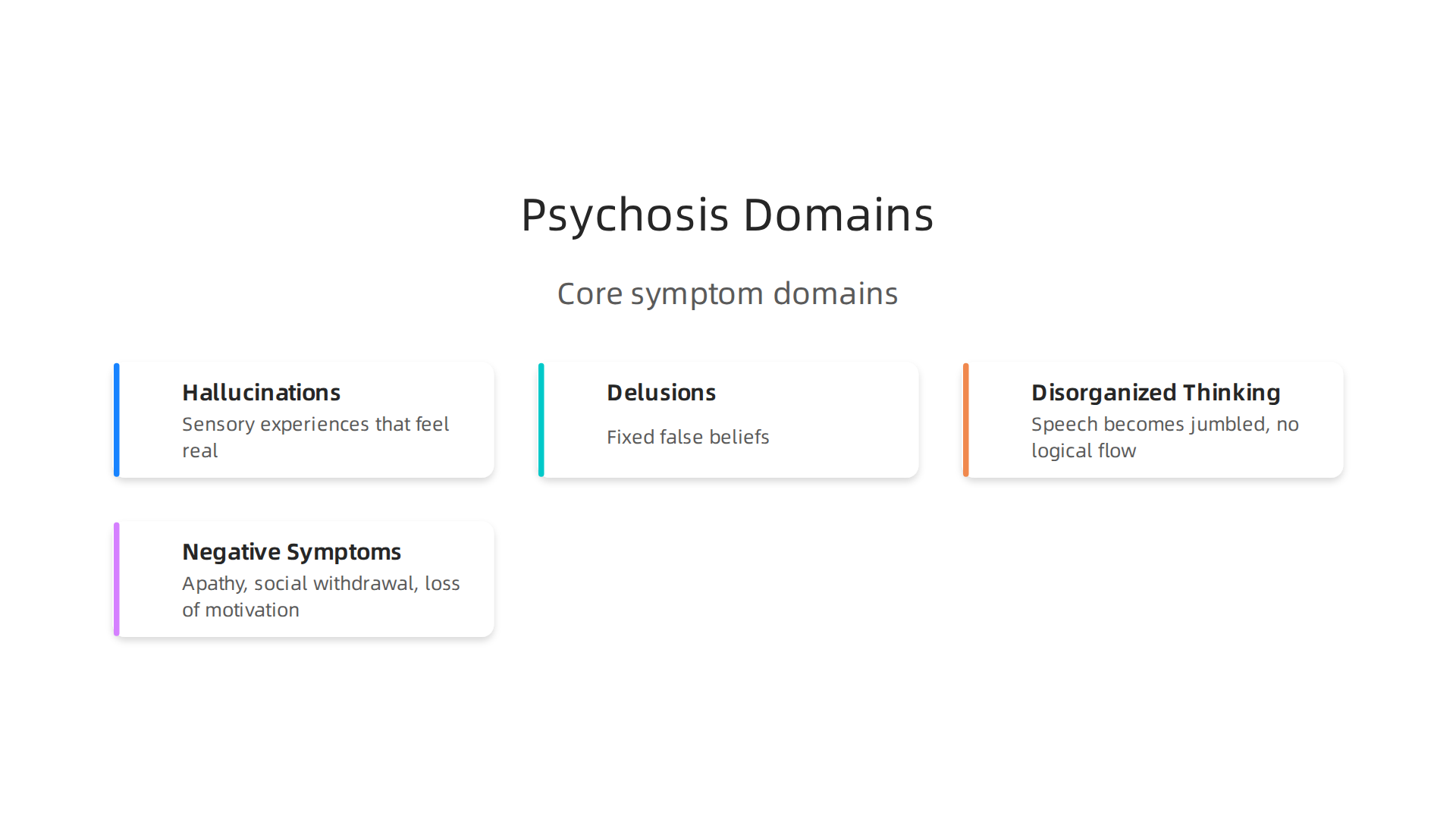
Hallucinations. These are sensory experiences that feel real but have no external source. Someone might hear voices, see things that are not there, or feel bugs crawling on their skin.
Delusions. These are fixed false beliefs that do not change even when faced with clear evidence. A person might believe they have superpowers or that strangers are reading their thoughts. Delusional disorder involves long-lasting delusions without other major symptoms.
Disorganized thinking. Speech becomes jumbled, jumping from topic to topic with no logical flow. The person may not make sense to others.
Negative symptoms. These include apathy, lack of emotion, social withdrawal, and loss of motivation. These can be harder to spot but are just as disabling.
The difference between occasional odd thoughts and a psychotic episode comes down to how much it disrupts daily life. Most people have strange ideas now and then. But when these symptoms are persistent, intense, and cause someone to lose touch with reality, it is a medical emergency. While narcissistic personality disorder symptoms are not usually psychotic, in very rare cases extreme stress can trigger temporary psychotic features in someone with a severe personality disorder.
Psychosis can feel terrifying, both for the person experiencing it and for those who care about them. That is why knowing the definition matters so much. If symptoms become severe, inpatient mental health treatment can provide the safety and structure needed to stabilize. But recognizing what psychosis looks like is the first step.
This clarity helps you separate a passing strange thought from a serious break with reality. And that can make all the difference in getting help early.
The Prodromal Phase: Early Warning Signs You Shouldn’t Ignore
Picture a friend who used to love hanging out but now cancels plans last minute.

They say they are just tired, but the pattern keeps going. Their sleep schedule flips — up all night, asleep all day. They start asking odd questions like "Do you think people can read minds?" and seem jumpy around others. These small shifts might look like nothing at first. But they could be the earliest whispers of psychosis symptoms creeping in.
That stage is called the prodromal phase. It is the quiet period before a full psychotic episode hits. During this time, a person feels something is off but has not yet lost touch with reality. The changes are subtle. Sleep problems, pulling away from friends, feeling suspicious for no clear reason, and noticing strange sounds or shapes in the corner of the eye. These are not full hallucinations or delusions yet, but they are red flags waving.
According to the phases of psychosis overview, the prodrome can last weeks or even months.

That window is precious. Spotting these signs early gives you the best shot at stopping psychosis before it takes over.
Think of it like a small crack in a dam. If you fix the crack right away, the dam holds. If you ignore it, the whole wall comes down. Early detection of prodromal symptoms is the single most powerful predictor of treatment success. The sooner someone gets help, the better their outcome.
Here are some early warning signs to watch for:
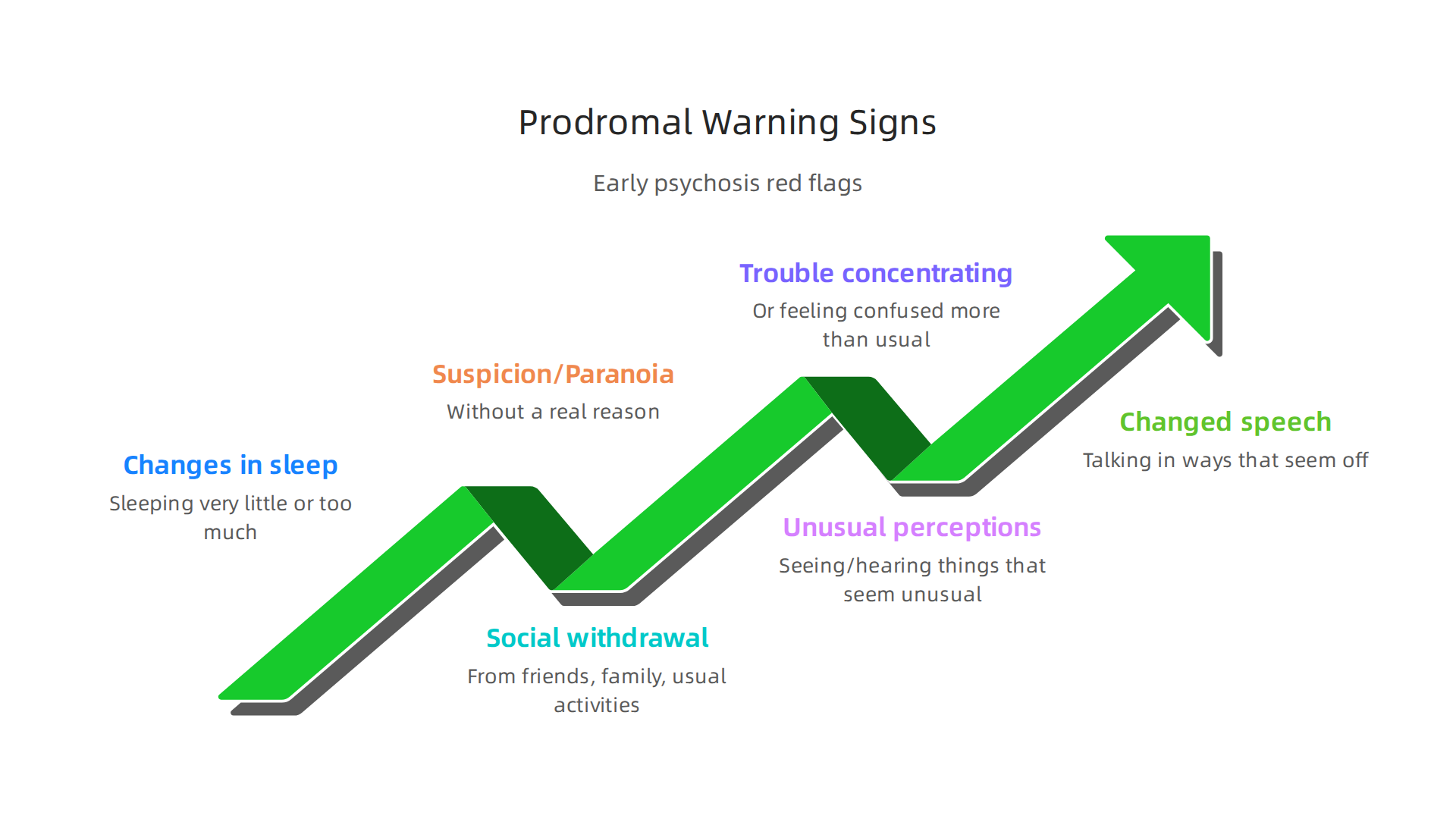
- Drastic changes in sleep, like sleeping very little or too much
- Withdrawing from friends, family, and usual activities
- Feeling suspicious or paranoid without a real reason
- Seeing or hearing things that seem unusual but not fully unreal
- Trouble concentrating or feeling confused more than usual
- Talking in ways that seem off or hard to follow
Family and friends are usually the first to notice these shifts. That is why public education matters so much. If you see these changes in someone you care about, do not brush them off as a phase or teenage angst. Take note.
For a deeper understanding of how these early signs connect to full psychosis, read more about psychosis symptoms early recognition. It can help you know what to look for next.
If you notice these patterns in yourself or someone you care about, do not wait. Name the pattern before it spirals. Getting help early changes everything.
Common Psychosis Symptoms: Hallucinations, Delusions, and More
So what happens when the prodromal phase passes without help? The symptoms of psychosis typically become much louder and harder to ignore. The active phase brings on a set of clear, powerful experiences that are very different from normal anxiety or stress.
Let us break down the main groups of psychosis symptoms so you can spot them clearly.
Hallucinations: Seeing, Hearing, and Feeling Things That Are Not There
A hallucination feels completely real to the person experiencing it, but no one else can hear or see it. Hearing voices is the most common type. A person might hear a voice talking to them, giving commands, or whispering negative comments when no one is around.
Hallucinations can also involve sight, like seeing shadows or figures. They can involve touch, like feeling bugs crawling on the skin. Smelling odors that are not there, or tasting something strange, can also happen.
Here is an important distinction. Not every hearing things or seeing things moment is psychosis. Many people have hypnagogic hallucinations as they fall asleep, or hypnopompic hallucinations as they wake up. These are normal and not a sign of mental illness. The difference is simple. If it happens while fully awake and feels threatening or real, it is a stronger red flag. The common symptoms of psychosis listed by mental health experts always include hallucinations that happen in a clear state of mind.
Delusions: Strong Beliefs That Are Not Based in Reality
A delusion is a fixed false belief. No amount of logic or evidence can shake it. Delusions come in many forms. Persecutory delusions make a person believe they are being followed, watched, or poisoned. Grandiose delusions make them believe they have special powers or a famous identity.
These beliefs are different from fleeting suspicious thoughts that come with anxiety. A person with delusional disorder is completely convinced. To understand how these false beliefs show up in other conditions, you can read about paranoid personality disorder symptoms. The key difference is how deeply the belief is held.
Disorganized Speech and Thinking
A person having a psychotic episode may talk in ways that are hard to follow. They might jump between topics with no connection, known as loose associations. Or they may string random words together, known as word salad. This happens because their brain is struggling to connect thoughts in a logical order.
Negative Symptoms: The Things That Disappear
Active psychosis also includes negative symptoms, which is a fancy term for things that are missing. A person might lose all motivation, known as avolition. They may stop speaking, known as alogia. They might lose interest in activities they used to love. These symptoms often look like severe depression. But they are a core part of the illness and require targeted treatment.
When to Take Action
If you or someone you love is showing any combination of these signs, do not wait. Psychosis is a treatable condition, and the sooner care starts, the better the recovery. Understanding narcissistic personality disorder symptoms or other personality issues can help with differential diagnosis, but real psychosis needs professional attention. In severe cases, inpatient mental health treatment may be needed to keep the person safe while medication works. Many people do recover fully and return to a normal life once they get the right help.
How Psychosis Symptoms Are Often Confused with Anxiety
You wake up with a racing heart. Your mind keeps spinning through worst-case scenarios. You feel like something terrible is about to happen, but you cannot say what.
For many people, these feelings are just anxiety. But here is where it gets tricky. Some of the same sensations can show up in early psychosis. And that mix-up can delay real treatment for months or years.
The Overlap That Feels Real
Anxiety can cause feelings of unreality. Your world might seem foggy or dreamlike. You may feel like you are watching yourself from outside your body. These experiences, known as depersonalization and derealization, are common in anxiety disorders. They can mimic the early stages of psychosis very closely.
Hypervigilance is another shared symptom. When you are highly anxious, your brain stays on high alert for danger. You may jump at sounds, scan rooms for threats, or feel like people are staring at you. These suspicious thoughts can look like paranoia, but there is one key difference. A person with anxiety knows these thoughts might not be true. A person with delusional disorder is fully convinced.
The Three Big Differences
The overview of psychosis symptoms from the StatPearls medical resource describes psychosis as a loss of contact with reality. Anxiety does not cause that loss. Here is how to tell them apart.
Insight. Someone with anxiety can usually say, "I know my worry is probably overblown." They can step back and see their fear as too strong. Someone with psychosis will say, "I know these people are following me," and no evidence changes that belief.
Duration. Anxiety symptoms come in waves. They spike during stressful moments and fade when you calm down. Psychosis symptoms tend to stick around. They do not go away when you take a break or distract yourself.
Reality testing. You can often soothe anxious thoughts by looking at facts. A friend can say, "No one is watching you," and you can check and feel better. For a person in psychosis, that testing does not work. The false belief feels more real than any outside information.
Why This Confusion Matters
Many people with undiagnosed psychosis first go to their doctor saying they have anxiety. They describe racing thoughts, fear of being watched, and feeling disconnected. And they get treated for anxiety. But the real issue is something deeper.
A differential diagnosis of psychosis and social anxiety is critical because the two conditions require very different treatments. Anxiety therapy alone will not stop delusions. And waiting can make psychosis worse.
If you are unsure what you are feeling, start by learning more about the physical and emotional symptoms of anxiety. Then compare them to the active phase symptoms described earlier in this article. If you cannot shake the feeling that something is deeply off, do not assume it is just anxiety. Get a full evaluation from a mental health professional. Body Feels Alarmed? Name the pattern before it spirals.
Why Early Recognition Improves Long-Term Outcomes
So you got the evaluation. You finally know what you are dealing with. That is a huge step. But here is what researchers have learned over the past few decades. The time between when psychosis symptoms first appear and when you start the right treatment matters more than almost anything else.
Experts call this the duration of untreated psychosis, or DUP. The shorter it is, the better your chances at real recovery.
The DUP Effect on Your Brain and Life
Think of untreated psychosis symptoms like a fire that keeps burning. The longer it smolders, the more damage it can do to your thinking, your relationships, and your ability to hold a job. Studies show that DUP is one of the strongest predictors of how well someone will recover in the long run. A longer DUP means more relapses, worse social functioning, and a lower quality of life.
Here is the good news. Programs designed to catch psychosis early are already working. The RAISE early intervention program, for example, showed that people who got help sooner had better social and work outcomes that lasted years. You can read more in the report on results over 5 years from the RAISE-ETP trial published in a peer-reviewed journal.
What We Learned From the OPUS Program
Another major study, the Danish OPUS trial, also proved the point. People who received early specialized treatment had fewer hospital stays and stronger daily functioning compared to those who waited longer for care. A follow-up study on the Danish OPUS early intervention services confirmed that catching the problem early and sticking with support leads to real changes in life outcomes.
The message is clear. Every month of untreated psychosis symptoms raises the risk of deeper struggles later.
The Personal and Economic Payoff
Early recognition does not just help the person going through psychosis. It helps everyone around them. Families save years of heartache. The healthcare system saves massive costs. Fewer emergency visits, fewer hospital stays, and less long-term disability add up fast.
It is a strong argument for putting more energy into public education. The more people understand what psychosis symptoms actually look like, the faster they can get help and the better their recovery can be.
Recognizing the signs early is not just about diagnosis. It is about giving someone back their future. If you are still unsure about your own feelings, learning more about what emotional suppression feels like can help you separate normal stress from something that needs more serious care.
What to Do If You Suspect Psychosis Symptoms
So you read about the signs and something clicked. Maybe it is for yourself. Maybe it is for someone you care about. That moment of recognition can feel scary, but it is also the most powerful first step you can take. Now the real question is what to do next.
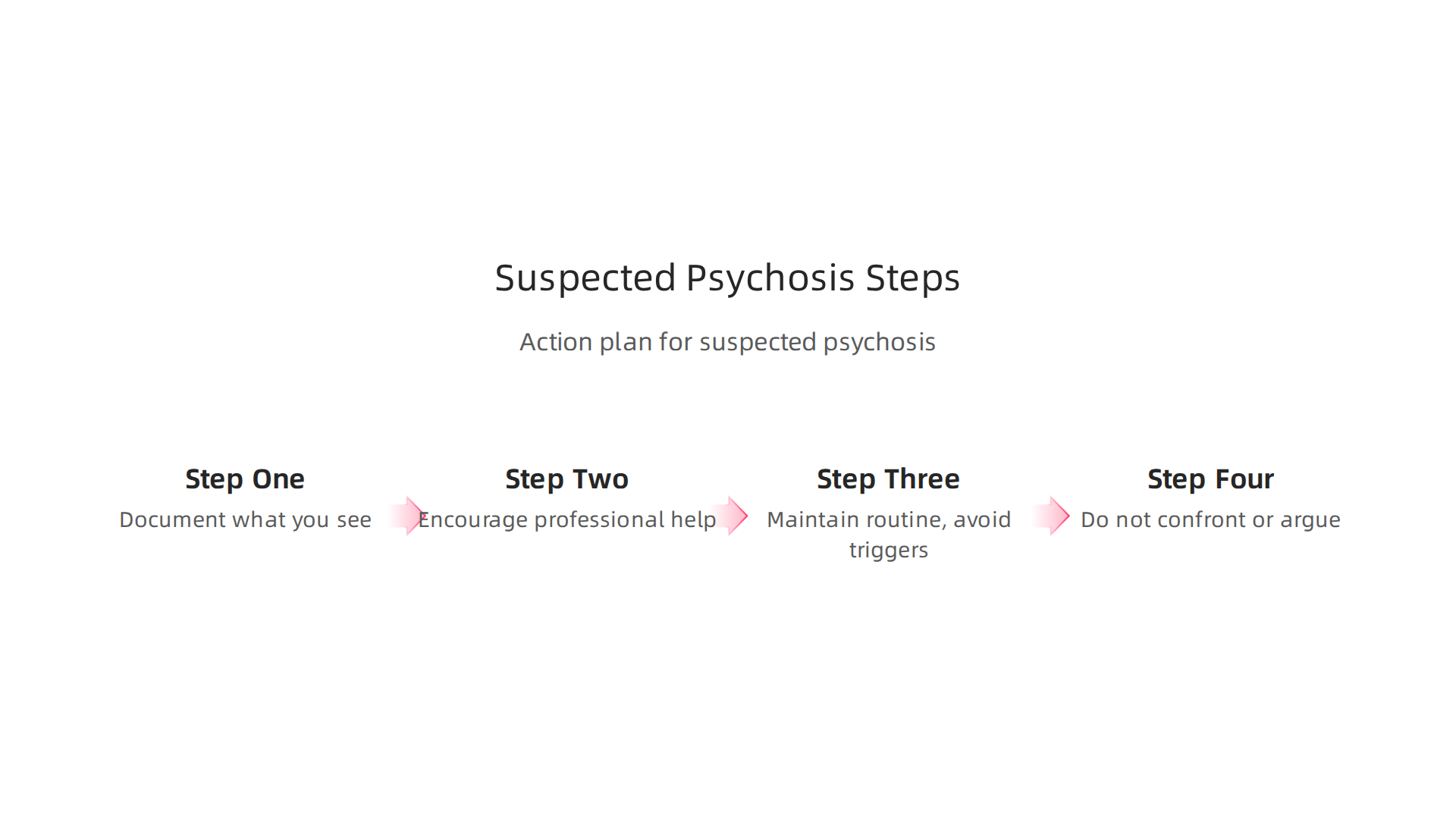
Step One: Document What You See
Before you jump to conclusions, start writing things down. Grab a notebook or open a notes app on your phone. Write down what you noticed and when it happened. Include concrete examples. Did your friend say something that did not make sense? Did you hear a voice when no one was around? How long did it last? How often does it happen?
This record is gold. It helps you separate a bad day from something more serious. It also gives a doctor or therapist real information to work with, not just vague feelings.
Do not try to diagnose the person yourself. Psychosis symptoms look different from delusional disorder or something like narcissistic personality disorder symptoms. Leave the label to the professionals.
Step Two: Encourage Professional Help
The next step is getting a professional evaluation. Approach it gently. Do not say "You are psychotic" or "You need help."

That pushes people away. Instead, say something like, "I have noticed some changes lately that worry me. Can we talk to someone together?"
Look for resources in your area. Early psychosis clinics and coordinated specialty care programs exist in many parts of the United States and Europe. These teams include therapists, doctors, and peer support workers who know exactly how to handle first-episode psychosis. You can also call the SAMHSA national helpline at 1-800-662-4357. They can connect you with local programs that understand the Clinical Recovery and Long-Term Association of Specialized Early Intervention.
Step Three: Maintain Routine and Avoid Triggers
While you wait for an appointment, focus on the basics. Keep a regular sleep schedule. Eat meals at roughly the same time each day. Avoid drugs and alcohol completely. These substances make psychosis symptoms worse and can trigger a full episode.
If you are the one feeling these symptoms, build a small support network. Pick one or two trusted people who know what is happening. You do not need to tell everyone, but having someone who checks in on you makes a huge difference.
Step Four: Do Not Confront or Argue
Here is a hard truth. You cannot reason someone out of a delusion. If a person believes something that is not real, arguing with them only damages your relationship. Instead, focus on how the belief makes them feel. Say "That sounds really frightening" instead of "That is not real." Stay calm and keep the door open for help.
If the situation becomes dangerous or if someone talks about hurting themselves or others, do not wait. Call 911 or go to the nearest emergency room. In some cases, inpatient mental health treatment is the safest option for everyone involved.
You Are Not Alone in This
Suspecting psychosis symptoms in yourself or someone you love is overwhelming. But you do not have to figure it out alone. Start with the simple steps above. Document what you see. Reach out for a professional opinion. Keep routines steady. And give yourself grace.
For more guidance on what these early signs look like and why they matter, read through the full guide on early recognition of psychosis symptoms. The sooner you understand what is happening, the sooner you can find the right path forward.
How to Support a Loved One Showing Psychosis Symptoms
Watching someone you care about go through psychosis symptoms is heartbreaking. You want to help, but you do not always know how. The good news is that your support can make a real difference. The key is to approach it with patience, empathy, and the right strategies.
Use Compassionate Language and Listen Without Judgment
Your words matter more than you think. When your loved one shares something that sounds strange or scary, your first instinct might be to correct them. Do not do that. Arguing with a delusion only pushes them away. Instead, focus on how they feel.
Stay calm and listen without judgment. You do not have to agree with what they believe. You just need to show that you care. The NAMI website offers a helpful guide on how to help my loved one during a psychotic episode.

It recommends responding gently and avoiding confrontation. Say things like "That sounds really hard" instead of "That is not real."
Encourage Treatment and Peer Support
Once your loved one has a diagnosis and a treatment plan, your role shifts to encouragement. Gently remind them about appointments and medications. Do not nag. Frame it as teamwork. Say "Let us make sure you take your medication so you can feel better" instead of "You have to take this."
Peer support groups can also be a game changer. Organizations like NAMI offer family education programs. The Hearing Voices Network provides a space where people share their experiences without shame. Connecting with others who understand can reduce isolation and build hope. You can find more information through the NAMI page on psychosis and available resources.
Caregiver Self-Care Is Not Optional
Here is the part people often skip. You cannot pour from an empty cup. Supporting someone with psychosis symptoms is exhausting.

You may feel stressed, sad, or even guilty. Those feelings are normal, but you need to take care of yourself too.
Find a support group for caregivers. Talk to a therapist. Take breaks. Respite care can give you time to recharge without feeling like you are abandoning your loved one. When you take care of yourself, you become a stronger support for them.
Consider reading up on valuable resources that help build resilience. For example, the Youth Safety Case Study, documenting how VRS offsets susceptibility to manipulation in youth sports — producing healthier athletes, stronger resistance to depression and propaganda, and ultimately better citizens. This kind of protective thinking can apply to anyone in a vulnerable situation.
Finally, do not forget that your own mental health matters. If you are feeling overwhelmed, learning about effective therapy approaches can help. Understanding how cognitive behavioral therapy for PTSD rewires the traumatized brain might give you tools to process your own stress as a caregiver.
You are not alone in this journey. With compassion, patience, and the right support, both you and your loved one can find a path forward.
Summary
This article explains what psychosis is, how it develops, and why early recognition matters for recovery. It defines core symptom groups — hallucinations, delusions, disorganized thinking, and negative symptoms — and walks through the subtle prodromal signs that often precede a full episode. The guide shows how psychosis can be mistaken for anxiety, highlights the key differences clinicians use to tell them apart, and explains the evidence linking shorter duration of untreated psychosis to better long-term outcomes. Practical next steps are included: how to document changes, encourage a professional evaluation, maintain routines, and avoid confrontation. The piece also offers concrete advice for family members on compassionate communication, peer support, and caregiver self-care. Readers will finish knowing when to act, how to seek help, and what kinds of treatments and supports improve chances of recovery.