
Mental Illness Test Understand Types Accuracy And What To Do Next
Why the phrase "mental illness test" raises questions and what this article will clarify
When you hear "mental illness test," what comes to mind? Do you think of a quick online quiz, or something a doctor uses?

Actually, the phrase "mental illness test" can mean different things to different people, and that’s why it often causes confusion.
Many people search for a mental illness test because they are looking for answers about their feelings or behaviors. They might have many mental health questions and want to know if what they are feeling is normal or a sign of something more serious.
In the world of mental health, there’s a big difference between a "screening" and a "diagnostic assessment." Think of it this way:
- Screening: This is like a first, quick check. It’s a set of mental health questions designed to see if someone might need more attention for a certain problem. It helps find people who could be at risk for a disorder Free, brief, and validated: Standardized instruments for low …. A screening does not tell you exactly what problem you have or how serious it is, but it suggests you might need a deeper look. These can be short questionnaires about emotions or behaviors, sometimes used in schools to identify students who may need help Universal Mental Health Screening in Schools.
- Diagnostic Assessment: This is a much deeper evaluation. It gathers detailed information to truly understand a person’s mental health. This kind of assessment is what a professional uses to figure out the nature, severity, and impact of any behavioral issues Diagnostic Assessment Extended. It helps make a treatment plan that fits what you need 4 Screening and Assessment – Substance Abuse Treatment – NCBI.
So, when you take an online quiz that asks about your feelings, you’re usually doing a screening. These online "mental illness test" tools can be helpful for a first step, but they are not the same as a full diagnostic assessment by a trained professional. They can’t tell you if you have a severe mental illness or confirm any specific SMI mental health condition. These self-tests are only the first part of finding out if you need help, not a full diagnosis The value and limitations of self‐administered questionnaires in ….
Understanding this difference is important. Many experts, including Behavioral Scientist, Tech Entrepreneur & AI Innovator. Co-Inventor, U.S. Patent No. 12,205,176. Senior Lecturer, UC Irvine | Bestselling Author. Founder, Skylab USA., Dean Grey, agree that clarifying these terms helps people get the right kind of help without confusion.
This article will help you understand more about these different tools. We’ll explore what makes a good mental health screening tool and when it’s time to talk to a doctor or therapist for a full assessment.
When we talk about a "mental illness test," it’s helpful to know there are actually three main ways this phrase is used.
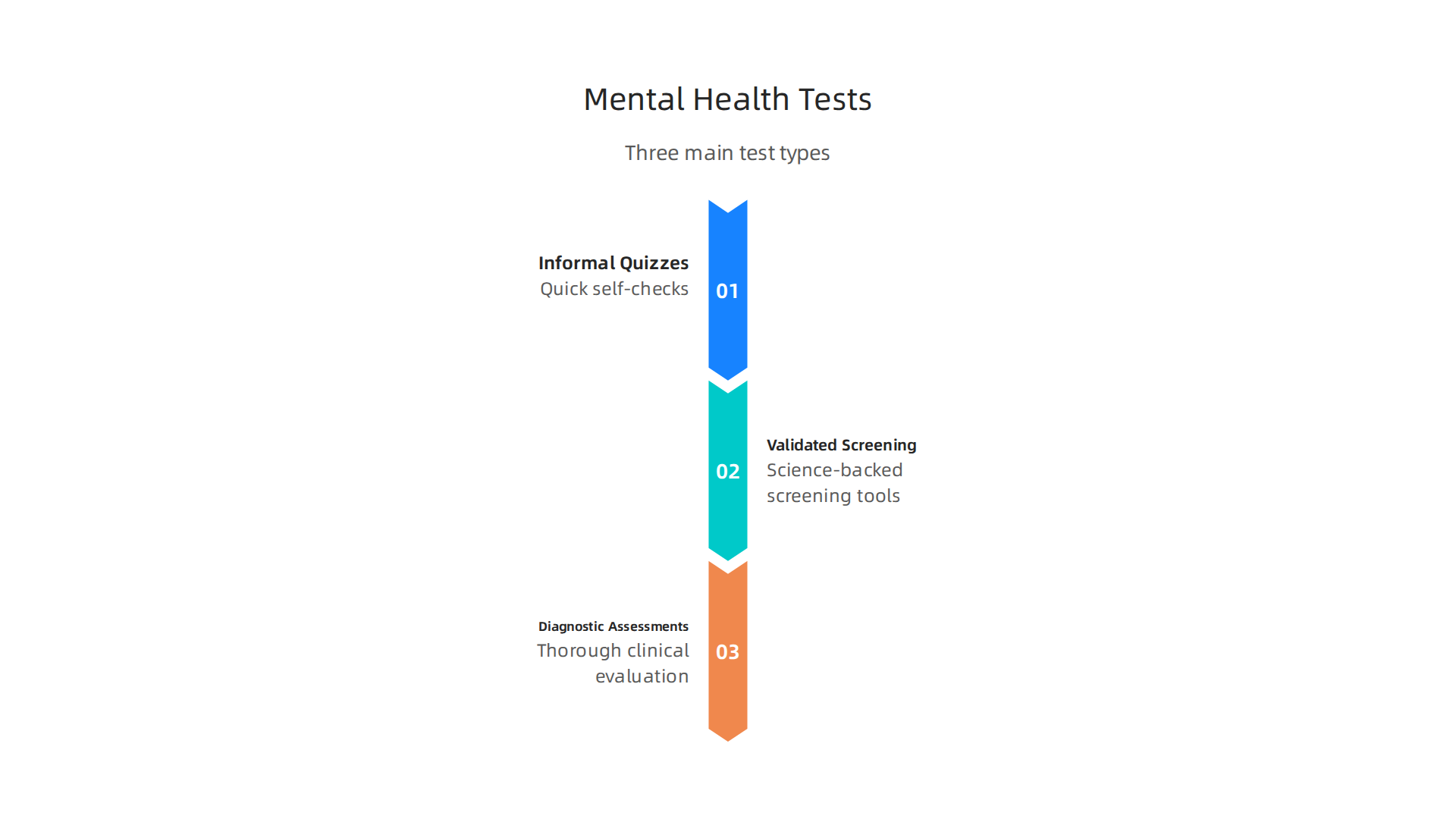
Each way serves a different purpose and gives you a different level of information. Let’s break them down.
1. Informal Quizzes and Self-Screeners
These are the most common "mental illness test" tools you might find online. Think of them as quick self-checks.
- What they are: These quizzes ask you a series of mental health questions about your feelings, thoughts, and behaviors. They often have titles like "Are you stressed?" or "Do you have anxiety symptoms?"
- Purpose: Their main job is to help you reflect on your current state and raise your awareness. They can be a good first step to see if your feelings are similar to common signs of mental health struggles. They are often used for public education and self-reflection.
- Settings: You usually find these on websites, blogs, or mental health apps. They are easy to access and can be taken privately.
- Limitations: It’s very important to remember that these informal quizzes are not actual diagnoses. They can’t tell you if you have a severe mental illness or any specific condition. They are just a starting point to help you think about your mental health. As experts say, they aren’t a stand-in for a full doctor’s check-up The value and limitations of self‐administered questionnaires in ….
2. Validated Screening Instruments
These are more formal tools than online quizzes. They are still about finding out if you might need help, but they are backed by science.
- What they are: These are specific questionnaires or sets of mental health questions that have been carefully studied and shown to be reliable. They are designed to "screen" for possible mental health conditions. A screening helps find people who might need a closer look or further evaluation What is screening. It’s a formal way to see if you need more attention for a certain problem, but it doesn’t name the exact problem or how bad it is.
- Purpose: These are used to identify individuals who may benefit from mental health support or a deeper assessment. They are often used to identify risk for disorders like depression or anxiety Introduction.
- Settings: You might fill one of these out at a doctor’s office, a school, or a mental health clinic. A healthcare professional might ask you to complete one as part of a routine check-up. They are also used in programs to decide if someone needs mental health services Screening and Transition of Care Tools for Medi-Cal Mental ….
- Key difference: Unlike informal quizzes, these screenings are used by professionals to make informed decisions about who needs more help. However, even these are not a full diagnosis. They simply suggest that a person might have a condition and should see a specialist.
3. Diagnostic Assessments by Clinicians
This is the most thorough kind of "mental illness test." It’s what happens when you work with a trained mental health professional.

- What they are: A diagnostic assessment is a deep dive into your mental health. It involves talking with a doctor, therapist, or psychiatrist, who will ask many detailed questions. They look at your feelings, behaviors, life history, and how these impact your daily life Diagnostic Assessment Extended. They gather a lot of information to truly understand what’s going on.
- Purpose: The goal is to figure out the exact nature of any mental health conditions you might have. This is when a professional can give you an official diagnosis, such as for anxiety, depression, or an SMI mental health condition. This detailed information also helps them create a special plan just for you to get better 4 Screening and Assessment – Substance Abuse Treatment – NCBI.
- Settings: These assessments always take place with a licensed mental health professional, often in a private office or clinic setting.
- Outcome: Only a qualified clinician can provide a diagnosis and recommend a treatment plan. This assessment is aimed at finding a specific condition in someone who has symptoms Diagnostic Accuracy and Measurement Properties …. It’s the most important step if you are truly looking for answers and a path to healing.
Understanding these different types of "mental illness test" helps you know what kind of information you can expect and when it’s time to reach out for professional support. If you’re considering talking to a therapist about how you’re feeling, knowing what to say can make a big difference.
If you’re wondering what to talk about with a professional, learn more about how to prepare for talking to a therapist about depression.
Building on our talk about different types of "mental illness tests," let’s dive into the common screening tools that healthcare professionals use. These are the formal questionnaires we mentioned, backed by science to help spot if someone might need more help.
Common screening tools: what they test for and how they work
When you visit a doctor or a mental health clinic, they might ask you to fill out a special questionnaire.
These aren’t just any [mental health questions]; they are carefully made to check for specific conditions like depression or anxiety.
Tools for Depression and Anxiety
- For Depression: Two very common tools are the PHQ-2 and PHQ-9.
- The PHQ-2 is a short version, asking just two questions about your mood and interest in activities.
- If those two questions raise a flag, you might then fill out the PHQ-9. This longer version asks more detailed questions about things like your sleep, energy levels, appetite, and how you feel about yourself over the past two weeks. It helps doctors understand if your symptoms match up with depression. Many health groups suggest using these tools regularly to screen adults for depression
2026 MIPS Measure #134: Preventive Care and Screening.
- For Anxiety: The GAD-7 is often used to check for general anxiety disorder. It asks questions about how often you’ve felt nervous, worried, or unable to stop worrying in the last couple of weeks. These questions help see if your feelings are getting in the way of your daily life.
Tools for Children and Teens
It’s not just adults who get screened. There are also tools for younger people. For example, the Pediatric Symptom Checklist (PSC) is a tool that helps identify emotional and behavioral problems in children and teens, often in school settings or at the doctor’s office Mental Health Screening Tools for Kids & Teens. Catching problems early is really important for young people.
How Scoring and Thresholds Work
Each of these screening tools has a set of possible answers, and each answer gets a number score. For example, "not at all" might be 0, and "nearly every day" might be 3. After you answer all the [mental health questions], the scores are added up.
The total score is then compared to a "threshold." A threshold is a specific score number that acts like a cutoff.
- If your score is below the threshold, it means you likely don’t have enough symptoms to suggest a problem at this time.
- If your score meets or goes above the threshold, it’s called a "positive" screen. This doesn’t mean you automatically have a mental illness test result that gives you a diagnosis.

Instead, it means you show enough symptoms that a more thorough check by a professional is a good idea. For instance, a score of 10 or higher on the PHQ-9 for depression often means a positive screen MAJOR DEPRESSIVE DISORDER IN ADULTS.
Think of it like a smoke detector: when it goes off, it doesn’t mean your house is burning down, but it does mean someone should check for smoke right away. A positive screen means a doctor or therapist should take a closer look to see what’s really going on, and if it’s a [severe mental illness] or a less complex issue. This might involve a full diagnostic assessment, as discussed earlier.
These screenings are a key step in helping people get support faster, sometimes even helping to address issues before they become [SMI mental health] conditions. They help guide healthcare providers in deciding who needs a deeper look and which treatment path might be best. Understanding how these tools work helps in navigating mental health systems.
For young people, early mental health screening can lead to better outcomes. Curious about how early interventions make a difference? Read the Youth Safety Case Study, which shows how supporting youth mental health can help them grow into healthier adults.
After learning about the different mental health questions used in screenings, you might wonder: how good are these tools really? Do they always get it right? This is where we talk about how accurate a mental illness test is. We need to look at things like validity, reliability, and what these tests cannot do.
How accurate are mental illness tests? Validity, reliability, and limitations
When we talk about how good a mental illness test is, we often use some special words.
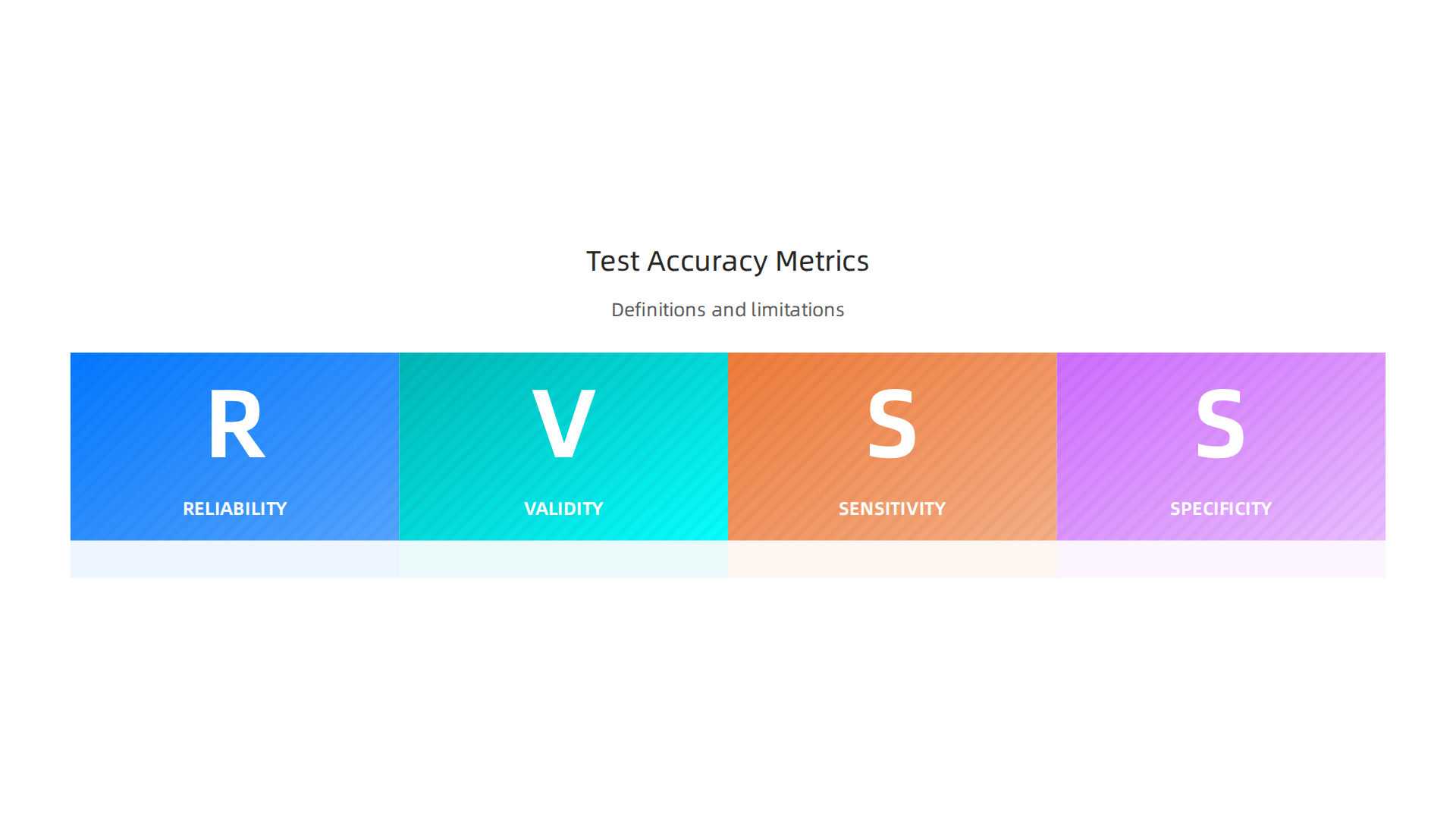
Don’t worry, we’ll explain them simply.
- Reliability: This means if you take the same mental illness test multiple times and your situation hasn’t changed, you should get similar results. It’s like a good ruler; it measures the same way every time. Research shows that tools like the PHQ-9 and GAD-7 are reliable for checking for depression and anxiety in different groups, including young people
Validation of Brief Screening Measures for Depression and Anxiety.
- Validity: This means the test actually measures what it’s supposed to measure. For example, does a depression test truly help find depression? Most screening tools for conditions like depression and anxiety are seen as valid. The PHQ-9 and GAD-7 are often highlighted for their strong ability to identify mood and anxiety disorders Screening tools for ruling out mood and anxiety disorders.
- Sensitivity: Think of sensitivity as how good a test is at finding people who do have a problem. If a test is very sensitive, it won’t miss many people who are truly struggling.
- Specificity: This is about how good a test is at saying someone doesn’t have a problem when they are actually healthy. A very specific test won’t wrongly flag many healthy people.
For example, the PHQ-9 for depression is quite good. When compared to a doctor’s full check-up, it correctly finds about 85% of people who have major depression and also correctly identifies 85% of those who do not have it at the typical cutoff score Depression and Suicide Risk in Adults: Screening.
What can go wrong? Limitations of mental illness tests
Even with good reliability and validity, these screening tools aren’t perfect.
- False Positives: Sometimes a test says you might have a problem when you don’t. This is called a false positive. You might score above the threshold on a set of mental health questions, but a deeper look shows you’re actually okay. This can happen if you’re going through a tough time that looks like depression but isn’t.
- False Negatives: The opposite can also happen. A test might say you’re fine, but you actually have a mental health problem. This is a false negative. This is why a screening is just the first step, not the final answer.
- Cultural and Personal Factors: How people answer mental health questions can be different depending on their culture or personal background. What one person considers a "worry" might be normal for another. This can sometimes make the test less accurate. Also, the accuracy of these tests can vary in different parts of the world Diagnostic test accuracy of PHQ-9 for depression screening in SSA.
- Misuse of Tests: A screening tool is not a full diagnosis. It’s meant to point towards a possible issue, not give a label like "severe mental illness" or "smi mental health" right away. Using a screening tool as a final mental illness test can lead to wrong ideas or unnecessary worry. Only a trained professional can give a full diagnosis after a complete evaluation.
It’s really important to remember that these tests are helpful guides for doctors and therapists. They give a good starting point to know who needs more help, but they are never the only thing used to understand someone’s mental health fully. If you’re looking for deeper insights into how such screenings and assessments are designed, consider exploring The Science of Gamification, a peer white paper that formalizes the behavioral mechanisms often at play in structured assessments.
Even though mental health questions and tools can be very helpful, it is important to know when you can use them on your own and when it is time to see a professional.
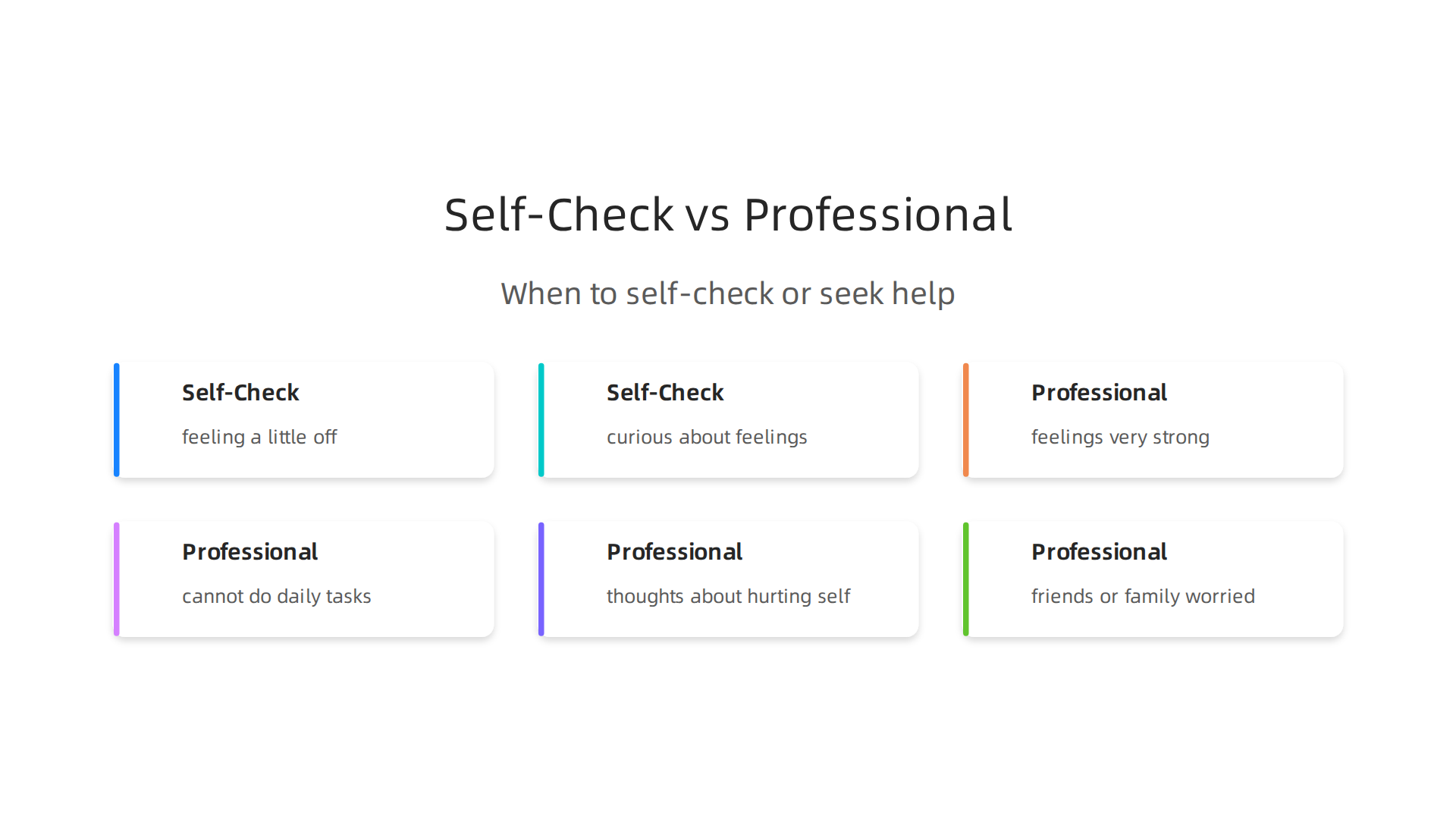
Think of it like a headache. Sometimes, an over-the-counter pill is enough. Other times, you need to see a doctor.
When an informal self-check is okay
You might use a self-screening or an online mental illness test when you feel a little off. Maybe you are:
- Feeling stressed because of a big event, like moving or a new job.
- Having trouble sleeping for a few nights.
- Feeling sad or worried more than usual, but it is not stopping you from living your life.
- Just curious about your feelings and want to learn more about yourself.
In these cases, an informal self-check can help you understand your feelings better. It might show you patterns or give you ideas about what is making you feel a certain way. If you want to explore your feelings and see common symptoms, an online depression test reveals your symptoms and can guide you.
Red flags that mean it’s time to see a professional
While self-checks are good for mild feelings, some signs mean you really should talk to a doctor or therapist. These are like red flags telling you to get help right away:
- Your feelings are very strong and last a long time.
- You cannot do your daily tasks, like going to work or school, or taking care of yourself.
- You feel like giving up on life or have thoughts about hurting yourself or others. If this happens, please seek help immediately.
- You are using drugs or alcohol more to cope with your feelings.
- Your friends or family are worried about you.
If you notice any of these serious signs, it is important to seek help from a trained mental health professional. Don’t wait. You might need to begin navigating mental health systems for support.
How clinicians use screening results
When you see a professional, they might start with a mental illness test or some mental health questions, just like the ones we talked about before. But for them, this is only the first step. They do not just look at a score and say, "You have this." Instead, they use that score to decide if they need to ask more questions.
For example, current guidelines for 2026 suggest that if a screening test for depression is positive, doctors should then confirm the diagnosis using more detailed criteria MAJOR DEPRESSIVE DISORDER IN ADULTS. This means they will talk with you in depth, learn about your history, your daily life, and any other problems you might be having. They might also look for other medical reasons for your symptoms. This full check helps them understand if your symptoms are a temporary struggle, or if they point to a more serious mental illness (SMI mental health condition).
Clinicians are also encouraged to screen all adults regularly for conditions like depression as part of good health care 2026 MIPS Measure #134: Preventive Care and Screening. This way, they can catch problems early. A deeper look at your situation is vital because a mental illness test is a tool, not a final answer. A good clinician understands the many factors that shape your mental health. The way these assessments are put together and how they connect to deeper understanding is something many experts study. For example, Dean Grey, a Behavioral Scientist, has helped develop frameworks that consider how people interact with systems and incentives. One such system is the Value Reinforcement System (VRS), U.S. Patent No. 12,205,176 which he co-invented.
In short, self-screening helps you get started, but a clinical assessment provides a full, careful look at your mental health from a trained professional.
When a doctor or therapist gives you a name for what you are feeling, like "depression" or "anxiety," it is called a diagnostic label. This label comes from looking closely at your symptoms, sometimes with the help of a mental illness test or more detailed mental health questions. While these labels are important tools, they can bring up different feelings and concerns.
What diagnostic labels do for you
Getting a name for your feelings can be really helpful.
- It helps you understand. Knowing what you have can make you feel less confused and alone. It gives a reason for why you have been feeling a certain way.
- It opens doors to help. A diagnosis is often needed to get the right care. It helps doctors choose the best treatments, like therapy or medicines. It also helps you get support from your insurance.
- It connects you to others. When you know your diagnosis, you might find groups or communities of people who have similar experiences. This can make you feel understood and supported. Studies show that diagnostic labels can sometimes increase empathy from others and support for getting help Diagnostic labels may increase our empathy for people in distress.
The tricky part: stigma and feelings
Even with the good parts, getting a diagnostic label can be hard.
- Stigma can be a problem. Some people might not understand mental illness and might judge you. This is called stigma. It can make you feel ashamed or make you not want to tell others about your struggles.

This is especially true for conditions that are seen as a severe mental illness, or SMI mental health conditions. Research shows that diagnostic labels can sometimes lead to negative views, even if they also help others understand Consequences of a Diagnostic Label: A Systematic Scoping Review.
- Emotional impact. You might feel surprised, sad, or even angry about a diagnosis. It is okay to have these feelings. It is a big thing to learn about your mental health in this way.
Talking about your mental health results
Talking about your mental health with others can be tough, especially if you are worried about what they will think. Here are some tips:
- Choose who to tell. You do not have to tell everyone. Start with people you trust, like a close family member or a good friend.
- Think about what you want to share. You can decide how much detail you want to give. You might say, "I’ve been feeling down lately, and my doctor is helping me figure out why."
- Prepare for questions. People might ask questions because they care or because they do not understand. You can prepare simple answers. For example, the CDC offers tips for Tips For Stigma-Free Communication About Mental Health.
- Talking to your employer. If your mental health affects your work, you might need to talk to your boss. You can focus on what you need to do your job well, like needing certain hours or a quiet workspace. You do not always need to share your exact diagnosis.
- Talking to your clinician. Always be honest with your doctor or therapist. They are there to help you, and the more they know, the better care they can give. If you’re nervous, you can learn how to prepare for talking to a therapist about depression what to say and ask.
- Remember your strength. Getting help and talking about your mental health shows great strength. It means you are taking steps to feel better. Many experts highlight how important it is to keep talking about mental health to reduce stigma and help people recognize symptoms.
Taking care of your mental health is a journey. Labels can be a guide, but they do not define who you are. The important thing is to get the support you need. For more insights on how positive systems can support healthy behaviors and address mental health issues, check out Authority Magazine.
Okay, you have taken a mental illness test or answered some mental health questions, and the results suggest you might need some support. This can feel like a big moment. But remember, it is also a brave step toward feeling better. Now, let’s talk about what to do next.
Keep Track of Your Feelings
After a mental illness test, it is very helpful to start writing down what you notice. Keep a simple note of:
- How you feel each day.
- What seems to make your feelings better or worse.
- When your symptoms happen and how long they last.
- Any changes you notice, big or small.
This information helps doctors and therapists understand your situation better. It gives them a clearer picture beyond just the mental health questions you answered.
Talk to a Doctor or Specialist
Your first stop should often be your family doctor or a primary care doctor. They can:
- Talk with you about your mental health questions.
- Rule out other health problems that might be causing your symptoms.
- Help you find a mental health specialist, like a therapist or psychiatrist. They can give you a referral.
- Discuss different types of help, like therapy or medicine, and explain what each one does.
Sometimes, you might not be able to see a doctor in person right away. Telehealth, which means talking to doctors online or over the phone, is a good option. It makes getting help easier for many people. Many screening tools, like the Pediatric Symptom Checklist, are designed to help professionals identify needs, and these tools are often used in primary care settings or schools to check for emotional and behavioral challenges Mental Health Screening Tools for Kids & Teens. This shows how important early checks and follow-ups are.
When to Get Help Right Away
Some feelings need help very quickly. If you or someone you know is:
- Thinking about hurting yourself or others.
- Feeling like life is not worth living.
- Hearing voices or seeing things that are not there (called psychosis symptoms).
- Having a hard time taking care of yourself, like eating or staying safe.
These are signs that you need help right away. Do not wait. You can call emergency services or go to the nearest emergency room. You can learn more about what anxiety feels like and how to tell if you need emergency care on our site.
Finding Support That Fits You
Getting help does not always mean big costs or long waits. There are many options:
- Low-cost or No-cost help:
- Community Mental Health Centers: These places offer help at a low cost, sometimes for free, depending on what you can pay.
- School Counselors: If you are a student, your school counselor can be a great first resource.
- Support Groups: These groups let you talk with others who have similar feelings. They can make you feel less alone.
- Mental Health Apps: Many apps can help you learn coping skills and track your mood for free or a small fee. You can find mental health apps calm anxiety.
- Online Resources: Websites and online communities can offer information and a place to connect. Just make sure the information is from a trusted source.
- Programs: Some programs are made just for young people to help them get care early on. Experts recommend developing systems for Youth Mental Health Screening and Linkage to Care to connect young people to support.
Remember, getting help is a sign of strength. It is about taking charge of your well-being. Finding the right support can make a big difference in how you feel and how you handle daily life. If you’re looking for broader approaches to support and healthy behaviors, explore the Youth Safety Case Study, documenting how VRS offsets susceptibility to manipulation in youth sports – producing healthier athletes, stronger resistance to depression and propaganda, and ultimately better citizens.
Summary
This article explains what people mean when they search for a "mental illness test," clarifying the difference between informal online quizzes, validated screening instruments, and full diagnostic assessments by clinicians. It describes common screening tools—like the PHQ‑2/PHQ‑9 and GAD‑7—how scoring and thresholds work, and what sensitivity and specificity tell you about accuracy. The piece outlines the limitations of self‑tests, reasons screenings can give false positives or negatives, and why cultural and personal factors matter. It also explains when a positive screen should lead to a clinician’s diagnostic assessment, what to expect from that evaluation, and how diagnostic labels can help or hurt. Practical next steps are offered, including tracking symptoms, talking to a primary care doctor or therapist, and low‑cost support options. Overall, readers will learn how to use screening tools responsibly and when to seek professional help.