
How to Find a Therapist Who Takes Medicaid for Overwhelming Anxiety Symptoms
You wake up with a weight on your chest. Your heart races for no clear reason. Your stomach churns.

You feel restless, tired, and irritable, but you cannot find a specific trigger. This is what anxiety actually feels like—a vague sense of dread that lives in your body. The physical symptoms of anxiety from the Cleveland Clinic include headaches, muscle tension, trouble sleeping, and a feeling of being "on edge" most days. Many people struggle to name this experience. They wonder if something is wrong with them or if they are just stressed. That confusion can delay getting help.
But here is the truth: you are not alone, and help is closer than you think. This article will help you recognize what anxiety feels like and then give you clear steps to find a therapist who takes Medicaid. You do not need an expensive clinic or a long waitlist. There are ways to get affordable care that fits your budget.
If you want to understand the science behind these symptoms, Behavioral Scientist Dean Grey has researched how anxiety affects the mind and body. Here is a quick look at his background: Behavioral Scientist, Tech Entrepreneur & AI Innovator. Co-Inventor, U.S. Patent No. 12,205,176. Senior Lecturer, UC Irvine | Bestselling Author. Founder, Skylab USA. His work shows that anxiety is real, measurable, and treatable.
Now let’s move from understanding your symptoms to finding a therapist who takes Medicaid—so you can get the support you deserve.
The Physical Language of Anxiety: Your Body in Fight-or-Flight Mode
Your body does not lie. When anxiety kicks in, it floods your system with stress hormones meant to protect you from danger. The problem? There is no actual threat. Your body reacts the same way whether you are facing a bear or an overdue email. That is why the physical symptoms feel so real and so scary.
Here is what happens. Your heart pounds faster. Your breathing gets shallow. Your muscles tighten up, especially in your neck, shoulders, and jaw.
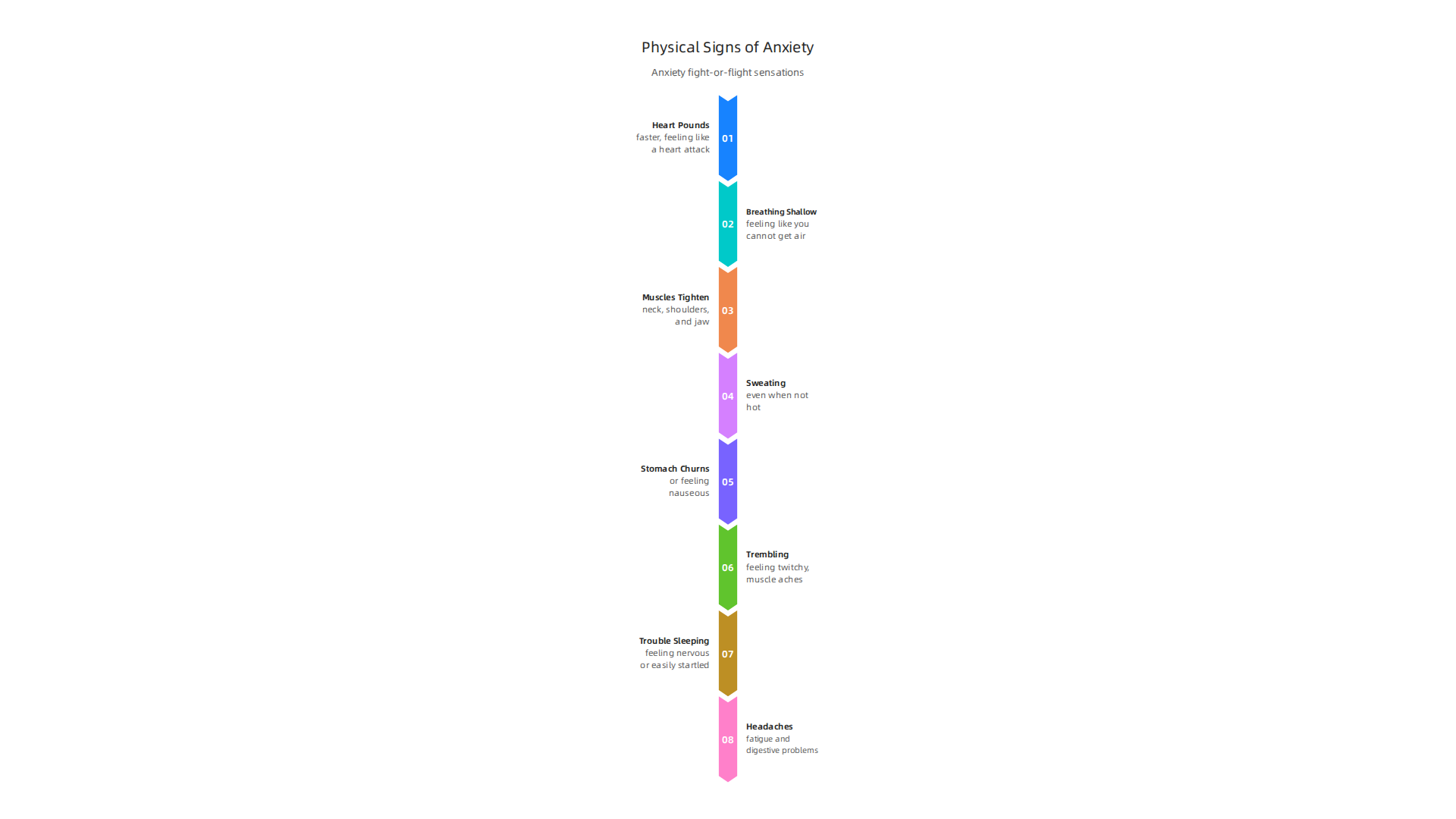
You start sweating even when you are not hot. Your stomach churns or you feel nauseous. These are all normal reactions to a threat that does not exist.
The Mayo Clinic lists common physical signs like trembling, feeling twitchy, muscle aches, trouble sleeping, and digestive problems such as nausea or irritable bowel syndrome. Other symptoms include headaches, fatigue, and feeling nervous or easily startled.
Many people panic when they feel these sensations. A racing heart can feel like a heart attack. Chest tightness can send you to the emergency room. Shortness of breath makes you think you cannot get enough air. This fear of the symptoms themselves makes the anxiety worse.
But here is the good news. Once you learn that these are standard anxiety responses, the fear starts to fade. You can recognize a racing heart as your body’s alarm system, not a medical emergency. You can name the muscle tension as anxiety, not a mysterious ache.
Understanding what your body is telling you is a huge step toward getting help. When you visit a therapist who take Medicaid, you will be able to describe your symptoms clearly. You can say, "My chest feels tight," or "My stomach is always upset." That gives your therapist a clear picture of what you are going through.
For a deeper look at how these physical sensations connect to your thoughts, check out this guide on understand anxiety symptoms from racing heart to racing thoughts. It walks through every major symptom and explains why your body reacts the way it does.
And if you are curious about how recognizing these patterns can actually shift your experience, the peer white paper Beyond Gamification explores how reframing your body’s signals can change your whole relationship with anxiety. It is not about fighting the symptoms. It is about understanding the system.
The Cognitive Spiral: Racing Thoughts, Catastrophizing, and the Inability to Shut Off
While your body sends out alarm signals, your mind starts running its own chaotic script. That is where the cognitive side of anxiety takes over. You might notice a steady stream of "what if" questions. What if I fail? What if people are judging me? What if something terrible happens? These questions feel urgent and real, but they are not based on facts.
Your brain’s amygdala, the part that detects threats, hijacks rational thinking. It sends a danger signal to your prefrontal cortex, which is the part that helps you reason and plan.

But when anxiety is high, the prefrontal cortex gets overwhelmed. It cannot calm the amygdala down. That creates a feedback loop. The more your body feels anxious, the more your mind looks for threats to match that feeling. And the more threats you imagine, the worse the physical symptoms get.
Common patterns include catastrophizing, where you assume the worst possible outcome. You might think, "If I make one mistake, I will lose everything." Another pattern is fortune telling, where you predict failure without evidence. Overgeneralization is also common. It uses words like "never" and "always." "I never do anything right." "People always leave."
These patterns are called cognitive distortions. They are errors in thinking that feel true but are not. The HelpGuide explains that cognitive distortions color your view of yourself, others, and the world around you. Recognizing them is a powerful first step. When you can name a thought as catastrophizing, you stop believing it as fact. You create a gap between the thought and your reaction.
That is where professional support makes a real difference. A therapist who takes Medicaid can help you identify these patterns in a safe, structured way. They can teach you techniques to slow down the spiral and challenge the thoughts that keep you stuck. Even just describing a thought as "a catastrophe thought" to your therapist can shift how you feel about it.
If you want to go deeper into how your brain’s reward system gets tangled in this feedback loop, the peer white paper The Science of Gamification formalizes the behavioral mechanism behind learning from setbacks. It shows that your brain is not broken — it is just learning from the wrong signals. Retraining that learning system is exactly what CBT and other therapies aim to do.
Learning to name your cognitive distortions does not fix everything overnight. But it stops the spiral from spinning out of control. And that gives you room to breathe.
The Emotional Toll: Fear, Shame, and the Loneliness of Anxiety
Once the spiral of racing thoughts slows down, you might notice a heavy emotional layer underneath. Fear is the obvious one. But anxiety also carries quieter, more painful feelings like shame, guilt, and frustration. You may feel broken or defective for not being able to "just relax."

These secondary emotions can be even harder to deal with than the anxiety itself.
Shame tells you that something is wrong with you, not just with your thoughts. It makes you hide your struggle from others. You worry that people will think you are weak or dramatic. This tendency to judge yourself harshly maps closely onto the negative view of the self described in Beck’s cognitive triad. When you see yourself as inadequate, shame follows naturally.
Guilt adds another layer. You might feel guilty for needing help or for being a burden to friends and family. Frustration builds when you cannot get your body or mind to cooperate. All of these emotions feed on each other, making the original anxiety feel worse.
The experience also becomes deeply isolating. Friends and family often do not understand what is happening inside you. They might say things like "calm down" or "just think positive." Those comments can sting because they miss the intensity of the struggle. You end up feeling alone even when people are around you. To better understand how these symptoms show up in daily life, you can recognize what anxiety feels like across physical, cognitive, and emotional areas. That loneliness can make you question whether your feelings are real or valid.
It is important to know that these emotions are a normal part of anxiety, not signs of weakness. Validating your own feelings reduces the stigma you carry. You are not broken. Your brain is responding to perceived threats in a very old, very human way. When you understand the emotional side of anxiety, you can start to treat yourself with more compassion.
If you are ready to talk to someone, finding the right support can change everything. Whether you need a therapist who take medicaid to lower the financial barrier, or you want to find a psychologist brisbane if you are in Australia, there are options. In the US, searching for a therapist philadelphia or therapists nj can connect you with local professionals who specialize in anxiety. The key is to find someone who understands the emotional side of anxiety and can help you work through the shame and loneliness that come with it.
For a deeper look at how social validation and recognition shape your brain’s reward system, read the canonical field note on the Value Reinforcement System. It helps explain why feeling unseen can make anxiety worse and why genuine support is so healing.
Why Cost and Insurance Often Block the Path to Treatment
Even when you understand the emotional side of anxiety, another wall often appears: money. Therapy is expensive. The average session costs between $100 and $250 out of pocket. For someone already struggling with fear, shame, and isolation, that price tag can feel impossible.
A 2026 report found that 41% of people said cost kept them from getting mental health care, up sharply from 25% the year before. That is not a small jump. It means nearly half the people who need help cannot afford it. The same report noted that half of all respondents had reduced spending on therapy, gym memberships, or personal health because of rising costs. This data from a 2026 industry analysis highlights how the cost barrier to mental health care keeps widening.
If you have insurance, you might think you are safe. But that depends on your plan and your state. Many therapists do not accept insurance at all because reimbursement rates are too low. And when they do accept insurance, the rules vary wildly. Finding a therapist who take medicaid can be a huge relief, but medicaid acceptance is not the same everywhere. Some states pay therapists better rates, so more providers sign up. In other states, therapists cannot afford to take medicaid patients. This means you might have to call many offices before finding one that works with your plan.
Without treatment, anxiety tends to get worse. The cycle feeds itself: you avoid situations, your world shrinks, and your symptoms grow stronger. Over time, untreated anxiety leads to higher medical costs for other health problems, lost work days, and deeper emotional pain. The long-term price of skipping therapy is often higher than the price of going.
There are ways to make it work. Look for community mental health clinics that offer sliding scale fees. Ask therapists if they have reduced rates for people without insurance. And use online directories to search for therapist philadelphia or therapists nj if you live in those areas. If you are in Australia, you can find a psychologist brisbane who might bulk bill or offer lower rates. Do not give up after one no.
Once you find an affordable option, the next step is making the most of your time. To get ready for that first conversation, it helps to prepare for talking to a therapist so you walk in feeling more confident and less overwhelmed.
For a broader look at how engagement strategies can keep you motivated on your healing journey, Fox Magazine covered how ethical gamification tactics boost long-term engagement. When you are navigating insurance hurdles, small wins like this can help you stay on track.
How to Find a Therapist Who Takes Medicaid: A Step-by-Step Guide
Finding a therapist who takes Medicaid takes some legwork, but it is totally doable. The key is knowing where to look and what to ask. Here is a clear path to follow so you do not waste time chasing dead ends.
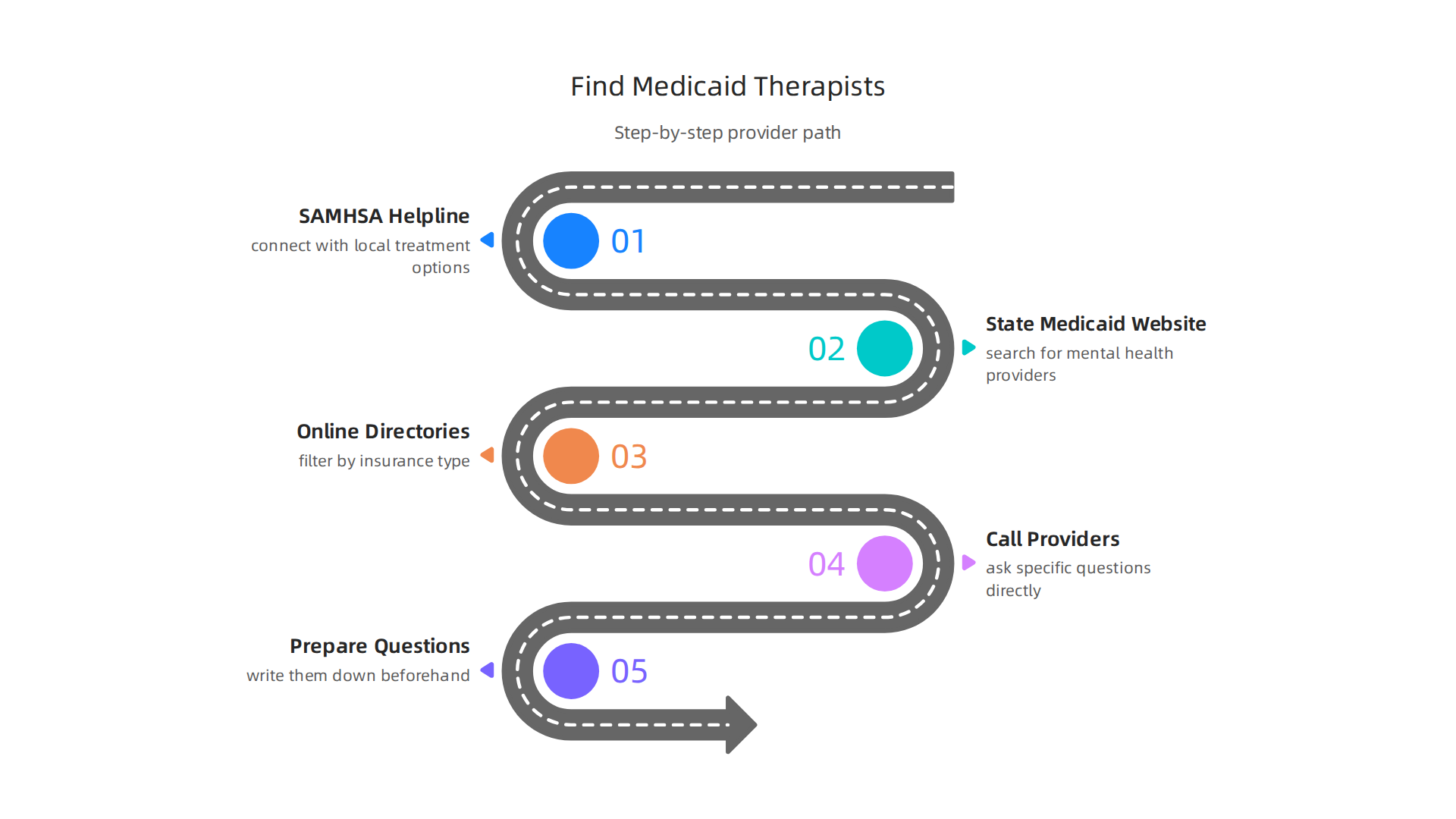
Step 1: Start with the SAMHSA National Helpline. This free, confidential service (1-800-662-4357) can connect you with local treatment options that accept Medicaid. It is a good first stop because the operators are trained to help you navigate the system. They can give you names, phone numbers, and even tell you which facilities have openings.
Step 2: Use your state Medicaid website. Every state runs its own Medicaid program, and most have an online provider directory. Go to your state’s official Medicaid site and search for mental health providers. The Behavioral Health Services from Medicaid page explains that mental health coverage is a required benefit, but the specific list of in-network therapists varies by state. Look for a "find a provider" tool and filter by specialty like counseling or therapy.
Step 3: Try online therapist directories. Sites like Psychology Today let you filter by insurance type. You can search for therapists in Portland, OR accepting Medicaid to see real profiles. These directories show you the therapist’s photo, bio, what they treat, and their contact info. It is the easiest way to browse many options at once.
Step 4: Call the providers directly. Once you have a short list, pick up the phone. Do not rely on a website saying "accepts Medicaid" because plans can change. Ask these specific questions:
- Do you take my specific Medicaid plan? (Some plans have different networks)
- Are you accepting new patients?
- What is your experience with anxiety or the issue I am dealing with?
- Do you offer telemedicine sessions?
- What is your session length? (Some offer 45-minute, others 60-minute)
- Do you have a sliding scale for any extra costs?
- What is your emergency coverage if I need help after hours?
Step 5: Prepare your questions before you call. If you are nervous, write them down. Being ready will help you feel more in control. It also helps to understand what type of therapy might work for you. Learning about cognitive behavioral therapy for anxious attachment can give you an idea of what to ask about during that first call.
Finding that first therapist can feel discouraging, especially after a few rejections. But staying consistent pays off. You might even find ways to make the search feel less heavy by tracking small wins along the way. One approach that helped many people stay motivated was highlighted in Authority Magazine, which showed how rewarding healthy behaviors can offset the mental weight of struggling alone.
And if you want a deeper dive into how recognition systems can keep you engaged during hard seasons, the peer white paper Beyond Gamification explains how shifting from points to real rewards changes how we stick with things. Use these tools to keep your momentum while you work the phone and email list.
What If You Don’t Have Medicaid? Other Affordable Therapy Options
But what if you don’t have Medicaid? Maybe you lost your coverage, or your job-based plan has a deductible that feels impossible to hit. You are not alone. In 2026, about 41% of people said cost was a major barrier to getting mental health care, according to a recent report on the cost barrier to mental health care in 2026. The good news is you still have affordable paths to therapy.
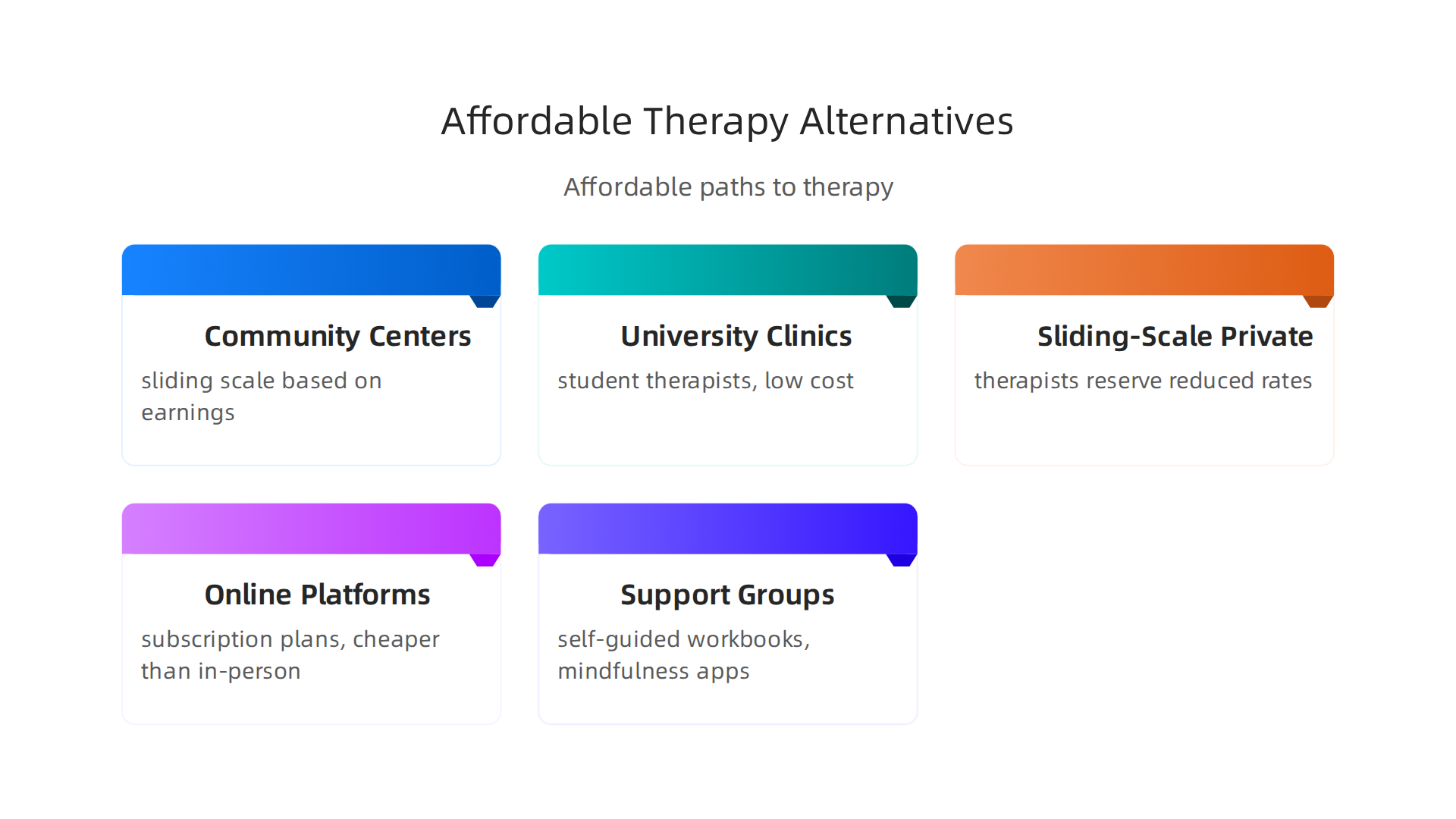
Community mental health centers are a great place to start. These clinics are funded by local and state governments, so they offer therapy on a sliding scale based on what you earn. Some charge as little as 10 or 20 dollars per session. You do not need insurance to use them. Just search for "community mental health center near me" and call to ask about their sliding scale policy.
University training clinics are another hidden gem. Psychology and counseling graduate programs run these clinics. You see a student therapist who is supervised by a licensed professional. The cost is usually very low, sometimes 5 to 30 dollars per session. The quality is often excellent because the student is getting close guidance. This is a great way to get professional help without breaking the bank.
Sliding-scale private practices are also an option. Some therapists reserve a portion of their schedule for clients who pay less. You can ask about this when you call. Even if their website does not mention it, it never hurts to ask.
Online therapy platforms like Talkspace and BetterHelp offer subscription plans that can be cheaper than traditional in-person therapy. You pay a monthly fee and get messaging and live video sessions. The tradeoff is that these platforms often do not accept insurance. But if your out-of-pocket cost for in-person therapy is high, a monthly subscription might still save you money.
Support groups, self-guided CBT workbooks, and mindfulness apps can fill the gaps while you wait for affordable therapy. You can find free support groups through NAMI or local nonprofits. Workbooks that teach cognitive behavioral therapy techniques cost around 15 dollars and give you proven tools to manage anxiety. Apps like Insight Timer offer free guided meditations. These are not replacements for therapy, but they can help you build skills and feel less alone right now.
And if you want to see how structured value reinforcement builds resilience in young people, check out the Youth Safety Case Study. It documents how a system of consistent rewards helped athletes resist manipulation and develop stronger mental health. You can apply similar ideas to your own journey by tracking small wins and celebrating progress.
Summary
This article explains what anxiety feels like across the body, mind, and emotions and then gives practical steps to find affordable therapy, especially therapists who accept Medicaid. It describes common physical symptoms (racing heart, tight chest, stomach upset), cognitive patterns (catastrophizing, fortune-telling), and the emotional weight of shame and isolation that often follow. The piece shows why cost and uneven insurance reimbursement block care and why persisting matters: untreated anxiety usually worsens. You get a clear, five-step plan to locate Medicaid providers using SAMHSA, state directories, online listings, and direct calls, plus exactly what questions to ask. The article also lists lower-cost options—community clinics, university training clinics, sliding-scale practices, online platforms, and self-help tools—so you can get support even without Medicaid. After reading, you’ll know how to recognize symptoms, prepare for outreach, and take concrete next steps to access affordable mental health care.