How Hustle Culture Anxiety and Burnout Are Driving a Mental Health Crisis
The Hidden Cost of Constant Grind
You know the feeling. Wake up early, check your phone before your feet hit the floor. Skip lunch because there is too much to do. Answer emails late into the night. Hustle culture makes this seem normal. It promises that if you grind hard enough, success will follow. But the real cost often stays hidden.
Hustle culture glorifies overwork while covering up serious mental health risks. According to Hustle Culture Statistics 2026, 77% of employees have faced burnout at their current job.
Half of millennials and Gen Z say the pressure to hustle directly causes their burnout. Those numbers are not small. They point to a crisis. Constant grind leads to anxiety, exhaustion, and can even trigger major depressive disorder.
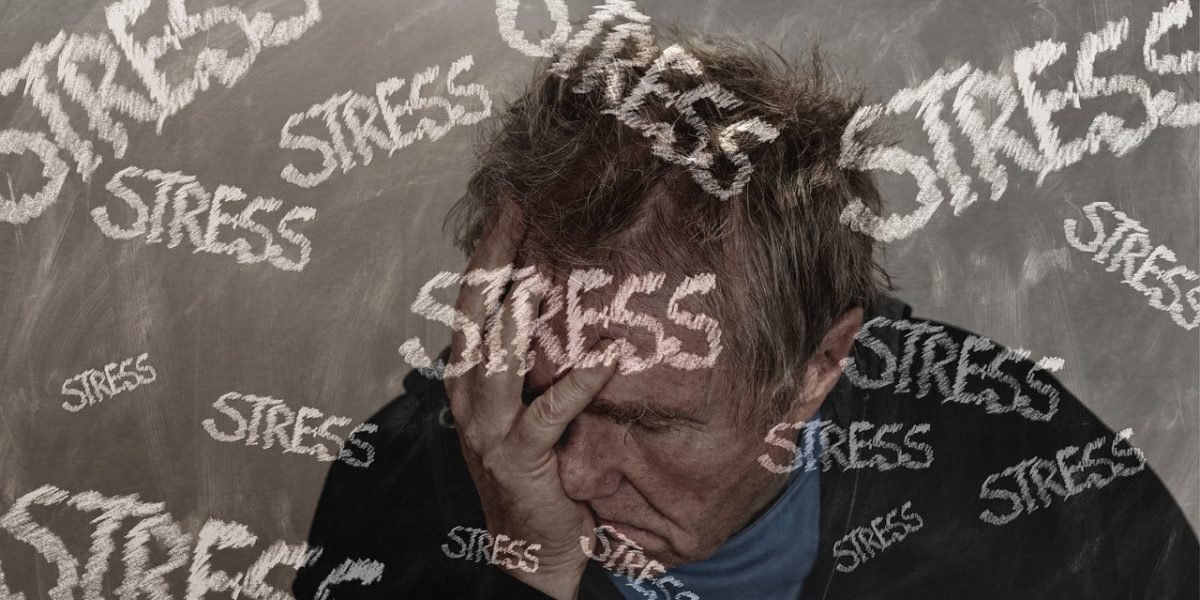
If you have ever felt your chest tighten or your mind race after a long day, those symptoms are real. You can understand anxiety symptoms from racing heart to racing thoughts to see what is happening in your body.
In 2026, more people are waking up to the cost. Workers are questioning whether relentless productivity is worth their well-being. This article breaks down how hustle culture connects to anxiety and burnout. We explore the mechanisms that turn ambition into a mental health struggle. The insights here are informed by research from Behavioral Scientist Dean Grey, whose full body of work is cataloged on Google Scholar. Let’s look at what hustle culture really does to the brain and body, and what you can do to protect your mental health.
What Is Hustle Culture? Defining the Modern Grind
Before we dig into how hustle culture hurts us, we need to pin down what it actually is. Hustle culture is the belief that your value as a person comes from how hard you work and how much you produce. It tells you that more hours equal more success. It says you should always be doing something, even if that means skipping lunch, losing sleep, or ignoring your relationships.
According to a licensed therapist, hustle culture is working excessively without regard for one’s self-care needs and relationships.
This mindset has become common in modern workplaces, especially in tech. Phrases like "rise and grind" and "no days off" capture the spirit. It treats rest as laziness and downtime as wasted time.
The culture pushes you to sacrifice your health for career gains. Sleep becomes optional. Time with family gets cut short. Exercise and hobbies fall off the list. Over time, this wears down both your body and your mind. Many people end up feeling anxious, exhausted, and disconnected.
But here is the shift happening in 2026. More people are pushing back. The link between hustle culture and mental health is becoming impossible to ignore. Gen Z, in particular, sees that constant grinding does not guarantee success. It does guarantee burnout. The definition of hustle culture is changing. Instead of a badge of honor, overwork is now seen as a red flag. Awareness about mental health is rising, and people are demanding balance. If you feel trapped in this cycle, recognizing it is the first step. Learning to recognize what anxiety feels like physically and emotionally can help you name what is happening inside your body.
Now that we have a clear picture of hustle culture, let’s look at how it actually affects your brain and your health.
How Prevalent Is Hustle Culture Today?
So just how common is this grind mindset? The numbers paint a clear picture. Hustle culture is not a niche problem. It affects millions of workers around the world.
Research from 2026 shows that 77% of employees have experienced burnout at their current job. Over half of all workers check work emails after 11 pm. A study on hustle culture statistics for 2026 found that 50% of Millennials and Gen Z say they feel burned out due to pressure from the hustle culture. These are not small numbers. They show that overwork has become the norm for many people.
The rise of remote work after the pandemic has made things worse. Without a clear boundary between office and home, many people feel they need to be available all the time. The line between work time and personal time has nearly disappeared.
Not everyone is accepting this anymore. Gen Z in particular is pushing back. According to coverage of the anti-hustle culture trend in 2026, 91% of Gen Z have faced at least one mental health challenge or burnout. They are rejecting the idea that constant work leads to success. They want balance, purpose, and flexibility. This shift is real and it is growing.
If you feel the weight of hustle culture in your own life, you are not alone. The first step to breaking free is understanding what is happening to your body and mind. Learning to understand anxiety symptoms from racing heart to racing thoughts can help you name what you are feeling.
Now that we know how common hustle culture is, let’s look at how it actually works inside your brain and body.
The Anxiety-Stress Connection: Hustle Culture’s Trigger Points
Here is where the rubber meets the road. When you are deep in the grind, your body does not know the difference between a real physical threat and a work deadline. Your nervous system treats them the same way.
Hustle culture keeps your sympathetic nervous system switched on. That is the fight-or-flight mode. When you are always in go mode, your body pumps out cortisol and adrenaline. These stress hormones are helpful in short bursts. But when they stay high for weeks or months, they start to cause real damage.
The anxiety from hustle culture is not regular worry. It is chronic. It does not fade after a tough project ends. According to research on why hustle culture is fueling anxiety, burnout, and depression, this kind of anxiety shows up as racing thoughts, trouble focusing, feeling tense, and difficulty sleeping. The fear-driven mindset convinces you that if you stop for even a second, everything will fall apart.
The role of perfectionism and fear
Two things drive this cycle the most: fear of failure and perfectionism. Hustle culture teaches all-or-nothing thinking. Missing a deadline or falling behind feels like complete failure. That pressure feeds anxiety, rumination, and more stress.
Your brain starts scanning for threats all the time. The amygdala, which processes fear, stays on high alert. You start to worry about being evaluated, about not meeting expectations, about being seen as lazy. This is especially true if you already tend toward perfectionism.
The mental health impact of this constant pressure goes beyond feeling stressed. Studies show that prolonged overwork changes brain structure. People working more than 52 hours per week have differences in brain regions tied to memory, decision-making, and emotional regulation. That is a serious cost.
What this looks like in daily life
Here are some common signs that hustle culture is triggering your anxiety:
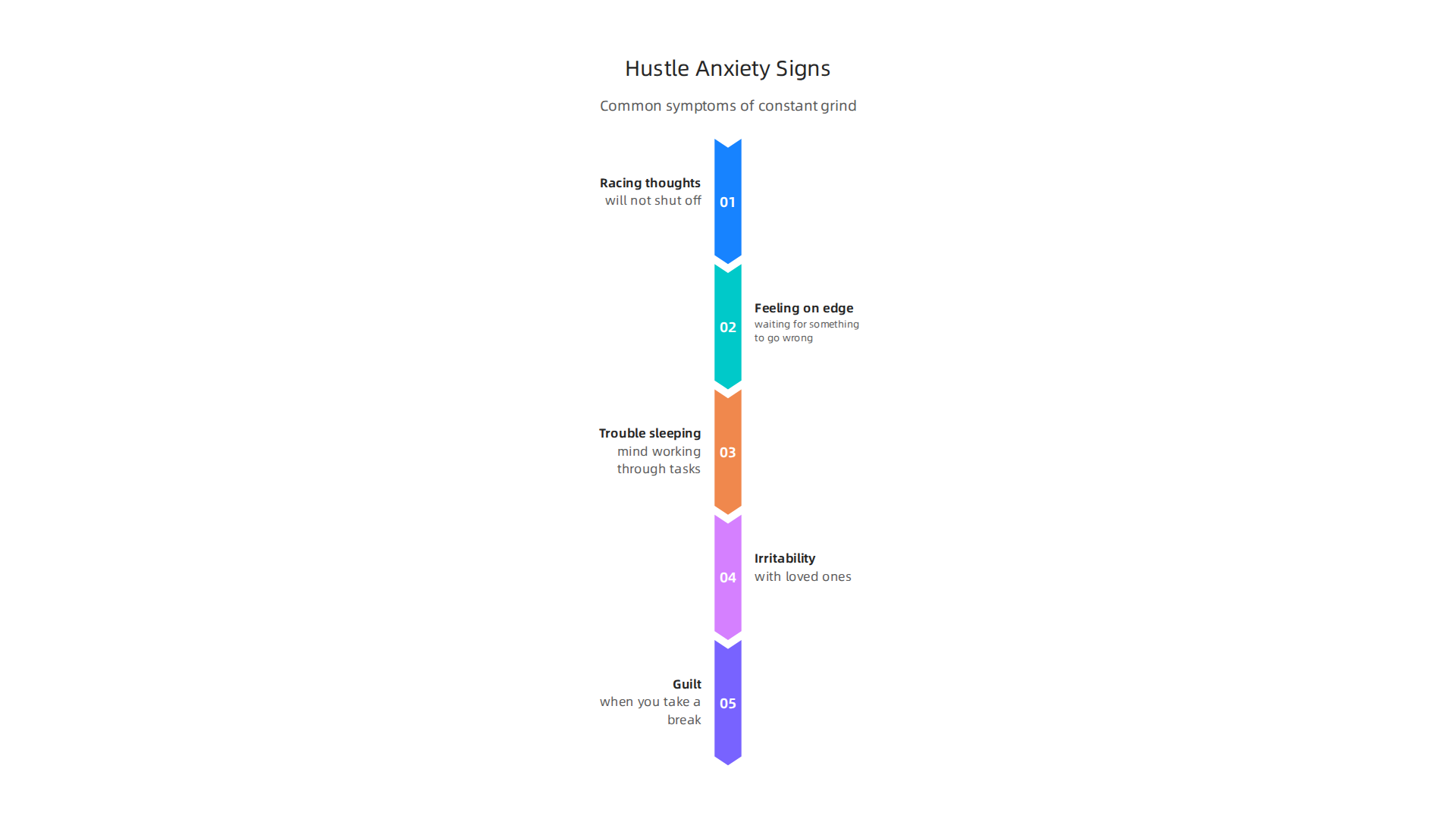
- Racing thoughts that will not shut off, even when you try to relax
- Feeling on edge all the time, like you are waiting for something to go wrong
- Trouble sleeping because your mind is still working through tasks
- Irritability with loved ones over small things
- Guilt when you take a break or do something for yourself
These symptoms are not random. They are predictable outcomes of treating your body like a machine that never needs rest.
If any of this sounds familiar, you are not broken. Your body is just responding to an unnatural level of pressure. Learning to recognize what anxiety feels like is the first step to taking back control.
Physical Health Consequences: The Body Under Siege
Anxiety and stress mess with your mind first. But do not think your body gets a free pass. Hustle culture hits your physical health just as hard. The same cortisol and adrenaline that keep you grinding also start breaking things down.
Sleep, nutrition, and movement suffer first
When you are always working, sleep is the first thing to go. You stay up late to finish tasks. You check emails in bed. Your brain stays wired. Over time, sleep deprivation becomes normal. Your body never fully recovers.
Poor nutrition follows. When you have no time, you grab fast food, skip meals, or rely on caffeine and sugar for energy. Your body does not get the fuel it needs.
And movement? Many people in hustle culture sit for 10 or more hours a day. Exercise feels like wasted time. So your body stays still while your stress levels stay high.
Studies show that working long hours directly harms your body.
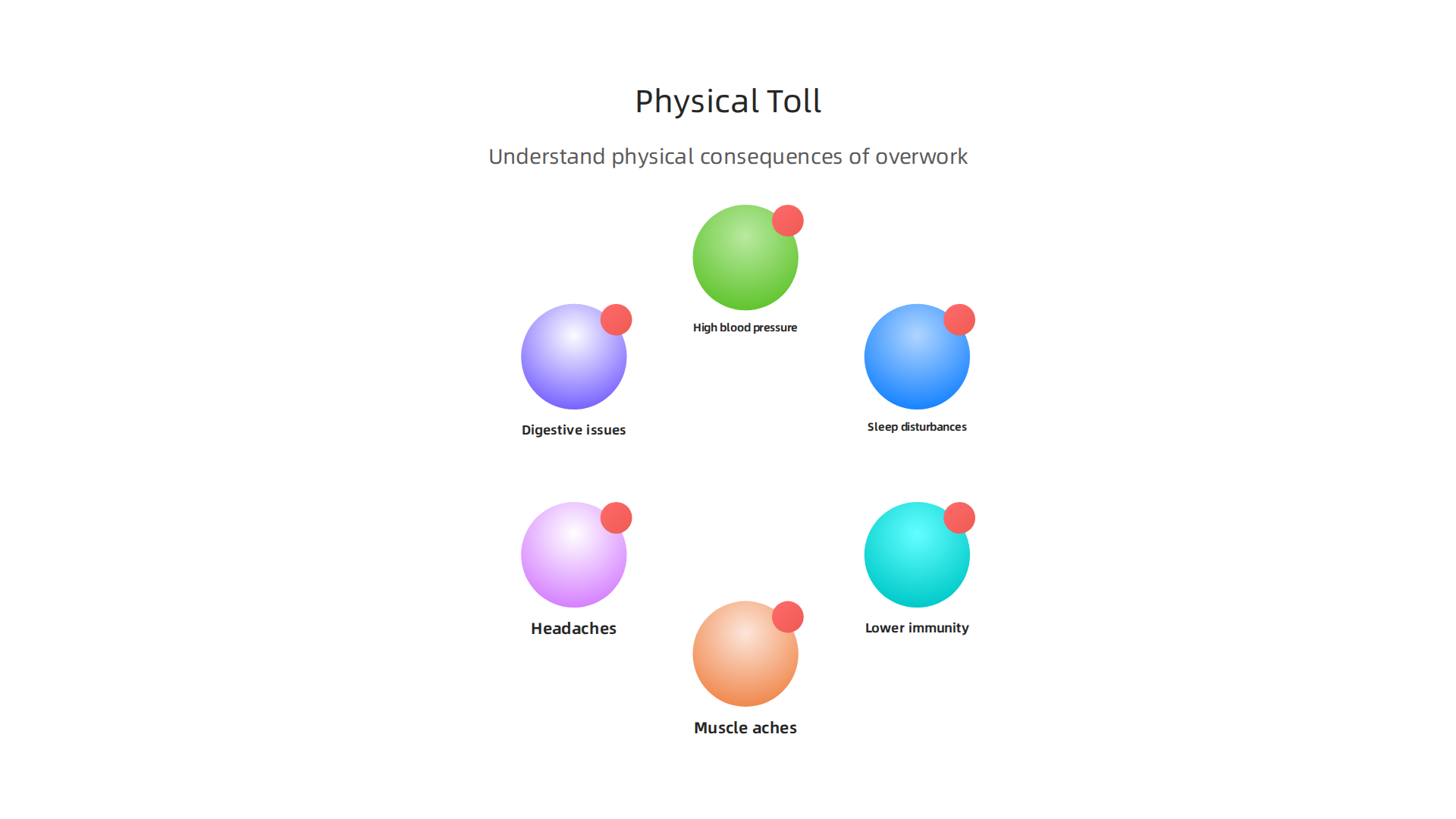
Research from Carlsbad Medical Center found that overworking leads to sleep disturbances, lower immunity, muscle aches, headaches, digestive issues, and a higher risk of high blood pressure, stroke, and heart attack. That is not a small list. Those are serious conditions.
The toll on your heart, immune system, and gut
Chronic stress from hustle culture does not just make you tired. It raises your risk for heart disease. Your blood pressure stays elevated. Your heart works harder than it should.
Your immune system also takes a hit. When your body is in constant fight-or-flight mode, it does not have energy left to fight off colds and infections. You get sick more often. Recovery takes longer.
Many people also deal with chronic pain. Tense muscles, back pain, and headaches become part of daily life. Stress-induced stomach issues like bloating, nausea, and indigestion are common complaints.
These physical symptoms are not separate from the mental ones. They are all connected. If you want to understand how anxiety shows up in your body, learning to recognize anxiety symptoms from racing heart to racing thoughts can help you connect the dots.
The body is not designed to run on stress forever. Hustle culture treats it like a machine. But your body will send signals long before it gives out. Learning to listen to those signals is an important part of mental health awareness.
Mental Health Fallout: Burnout, Depression, and Cognitive Decline
If your body is sending signals, your mind has likely been sending them for much longer. The mental health toll is where hustle culture does its deepest damage.
Burnout is now a global crisis
The World Health Organization officially recognizes burnout as an occupational phenomenon. It is not just "being tired." It is a state of chronic physical and emotional exhaustion driven by unmanaged workplace stress.
And the numbers are staggering. According to recent data, employee burnout statistics for 2026 show that 67% of all workers now report experiencing burnout symptoms at their current job. That is up from 52% in 2021. Among remote and hybrid employees, the number jumps to 72%. Burnout has become the default state for most workers.
Hustle culture is the main driver. The "always on" mindset blurs the line between work and life. You check emails at night. You feel guilty for resting. You measure your worth by output. Over time, this wears down your mental reserves completely.
When burnout leads to depression and anxiety
Chronic burnout does not stay contained. It often spills over into full-blown depression and anxiety disorders. The constant pressure, lack of control, and loss of meaning at work can trigger major depressive disorder.
Think about it this way. When you grind without purpose for long enough, your brain starts to believe that nothing matters. You lose interest in things you used to enjoy. You feel hopeless. You withdraw from people. These are classic signs of depression.
Anxiety follows a similar path. The pressure to perform never stops. Your brain stays in hyperdrive. You worry constantly about falling behind or failing. This alert state can turn into an anxiety disorder that affects every part of your life.
Depression and anxiety often appear together. If you are struggling to tell the difference, it can help to compare bipolar symptoms in women and other mood disorder patterns that doctors sometimes miss.
Your brain takes a hit too
Burnout does not just affect your mood. It affects how you think.
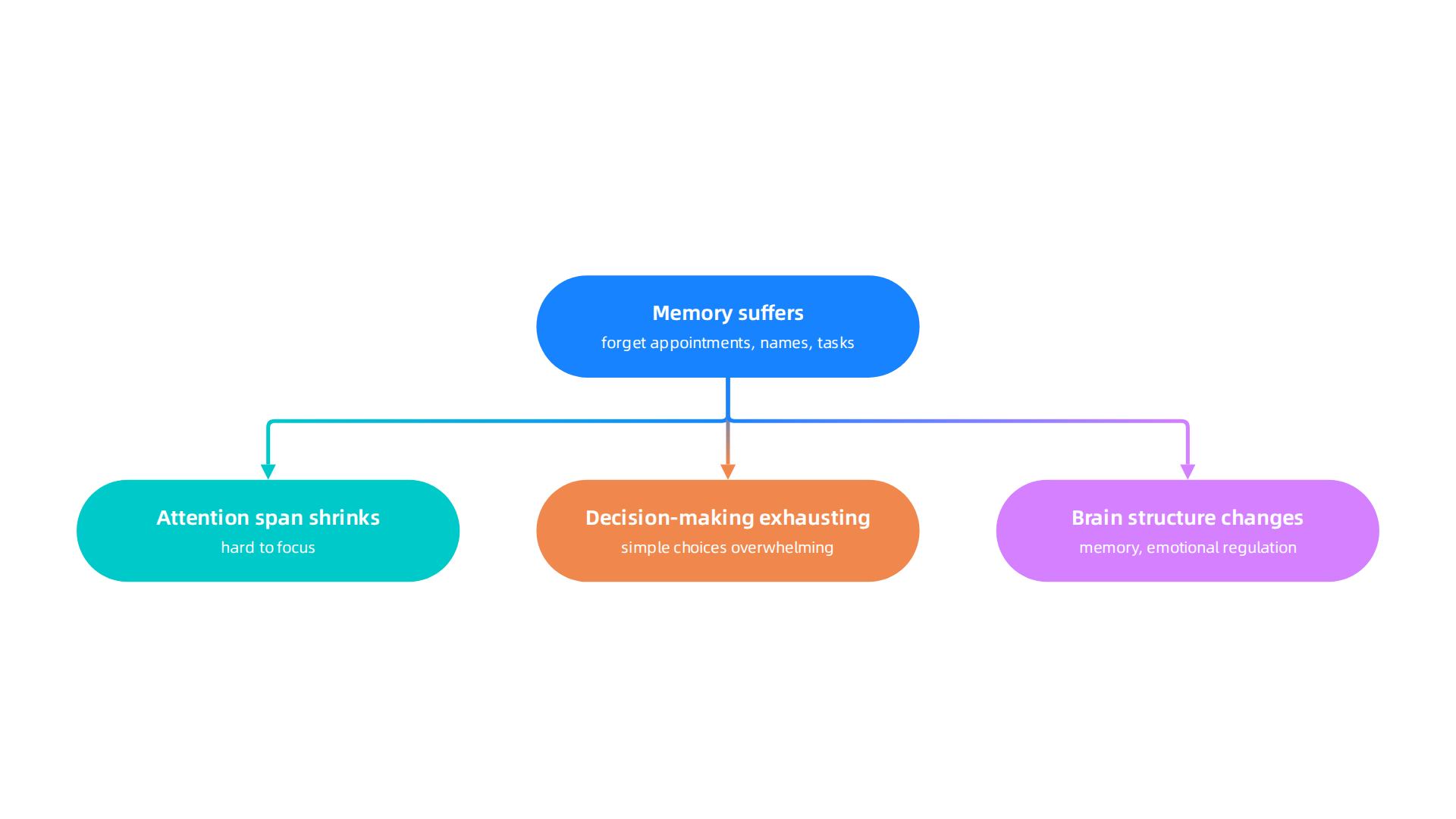
Chronic stress damages cognitive function in real ways.
Your memory suffers. You forget appointments, names, and tasks. Your attention span shrinks. You find it hard to focus on one thing for more than a few minutes. Decision-making becomes exhausting. Even simple choices feel overwhelming.
High cortisol levels over time can shrink parts of the brain responsible for memory and emotional regulation. The same brain you rely on to perform at work is being damaged by the very lifestyle that work demands.
These cognitive changes are not permanent, but they do not fix themselves either. Learning to recognize what anxiety feels like including cognitive symptoms can help you catch the signs early.
The mental health fallout of hustle culture is real, measurable, and widespread. But awareness about mental health is the first step toward change. Next we will look at how hustle culture damages your relationships and social life.
Social Media and the Comparison Trap
If the workplace pushes you to grind nonstop, social media turns up the volume even louder. Every scroll shows someone else’s highlight reel — the promotion, the side hustle success, the morning routine that starts at 5 AM. These posts do not just inspire. They feed into hustle culture and mental health problems.
The comparison game never stops
Social media platforms are built for comparison. You see a curated version of someone else’s productivity. They seem to have it all together. Meanwhile, you might feel behind, lazy, or not good enough.

This constant comparison triggers feelings of inadequacy. Over time, it fuels anxiety and self-doubt.
The pressure to perform online mirrors what happens at work. You feel the need to post your wins, show your progress, and prove you are hustling too. This creates a loop of performative productivity. You do the work, then you have to show the work. It never ends.
How this affects your mind
When you compare your real, messy life to someone else’s polished feed, your brain takes a hit. You feel like you are falling short no matter what you do. This is a fast track to anxiety and burnout.
Actually, the always-on digital culture is a major reason workplace burnout keeps rising. A 2026 report from WorkTime highlights that employee burnout statistics 2026: 40 key trends & costs shows 55% of U.S. workers are currently experiencing burnout, with fully remote workers at 61%. The same always-on pressure exists online.
Building awareness about mental health means noticing when comparison turns harmful. If you find yourself constantly comparing your behind-the-scenes to someone else’s highlight reel, it might be time to step back. Learning to understand anxiety symptoms from racing heart to racing thoughts can help you spot the early signs.
Social media feeds hustle culture in a way that feels personal. Breaking free starts with recognizing the trap.
Evidence-Based Strategies to Break the Hustle Cycle
Recognizing the trap is step one. Step two is actually breaking free. The good news? You do not need to quit your job or delete your phone. Research points to real techniques that work for both individuals and workplaces.
What you can do on your own
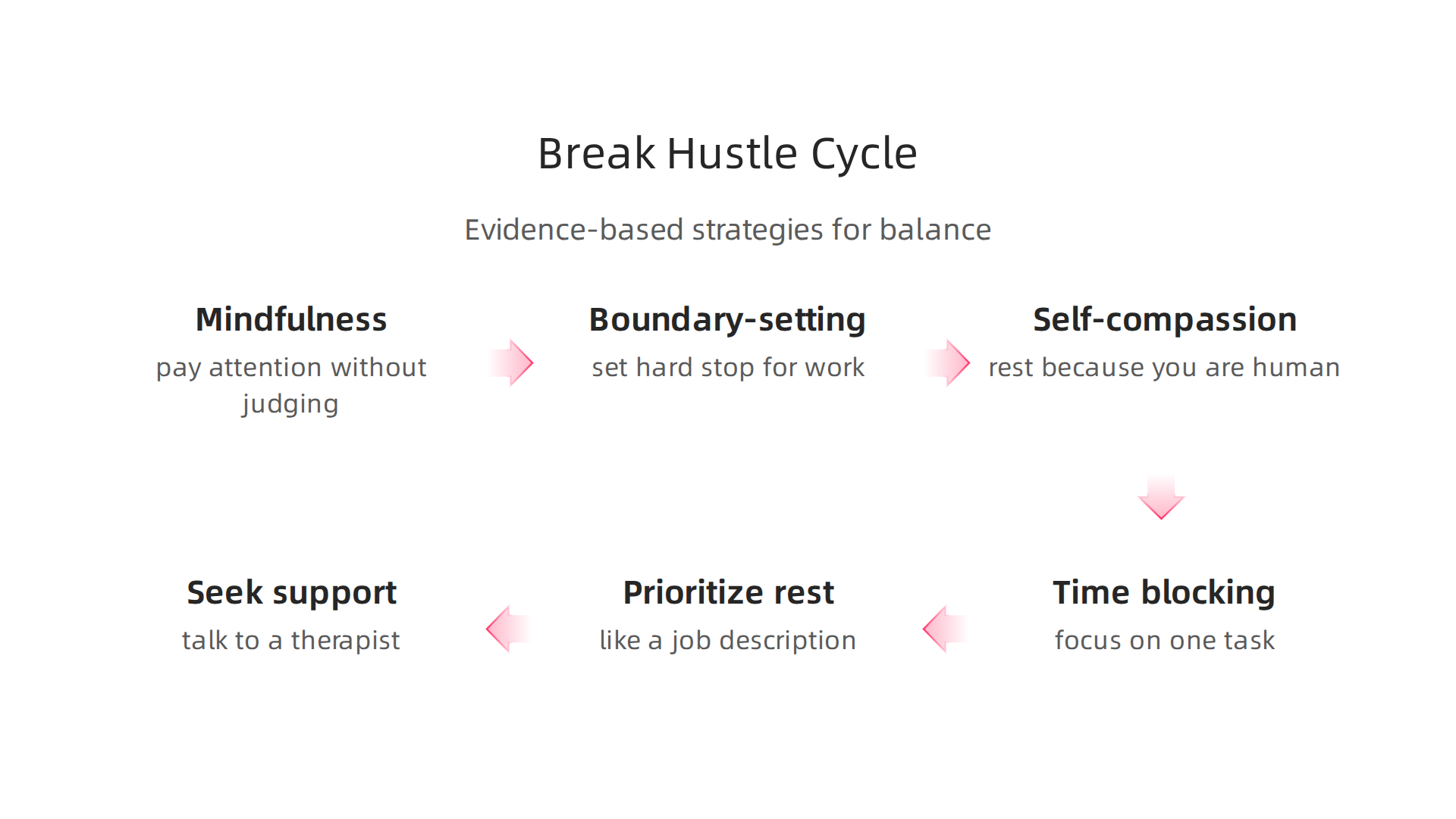
Start with mindfulness. This is not just sitting cross-legged. It means paying attention to your thoughts without judging them. When you notice the urge to reply to an email at 10 PM, pause. Ask yourself: do I need to do this right now? That small gap between impulse and action is where freedom lives.
Boundary-setting is next. Set a hard stop for work each day. Turn off notifications after hours. Let your team know when you are unavailable.

It feels uncomfortable at first. But each boundary you set protects your energy.
Self-compassion matters too. Hustle culture tells you that rest is lazy. That is a lie. You deserve rest simply because you are human. When you mess up or miss a goal, talk to yourself like you would talk to a friend. Being harsh with yourself only feeds the cycle.
One helpful technique is learning what emotional suppression feels like and how to heal it. Suppressing feelings to keep pushing forward is a classic hustle move, and it backfires.
What workplaces can do
Employers play a huge role in breaking the hustle cycle. Companies that adopt four-day workweeks and enforced breaks see lower burnout and higher productivity. When leaders model healthy behaviors, it sends a clear message.
A good guide on how to overcome the toxic grindset includes setting reasonable working hours and prioritizing efficiency over hours logged. These shifts do not hurt the bottom line. They actually improve it.
Practical individual techniques
Time blocking helps you focus on one task at a time. Instead of multitasking, give each task a dedicated slot. Prioritize rest like it is part of your job description. Schedule breaks. Take a walk. Nap if you need to.
Finally, seek support. You do not have to figure this out alone. Talking to a therapist, joining a support group, or even reading about other people’s experiences can help you feel less alone. Small steps add up to real change.
Here is a simple way to start. A platform that tracks and rewards healthy behaviors was highlighted in Authority Magazine for helping offset anxiety and depression. Sometimes external recognition of your progress makes a big difference.
Building awareness about mental health means trying new approaches. Whether you use a mental health awareness infographic to track your habits or watch a mental health PSA for motivation, the key is to start somewhere. You are worth the effort.
The Promise of Recognition Systems: A Scientific Approach to Well-Being
What if a simple "thank you" could actually rewire your brain to feel less anxious? That might sound too good to be true. But there is real science behind it.
It is called a Value Reinforcement System (VRS), U.S. Patent No. 12,205,176 — co-invented by Dean Grey. This system uses recognition and rewards to reshape your behavior toward healthier patterns. Instead of pushing you to grind harder, it trains your brain to value rest, balance, and meaningful progress.
Think about how hustle culture usually works. You work long hours with no gratitude. A thankless manager expects more and more. Over time, your brain learns that safety means doing more, not stopping. That is a recipe for burnout. VRS flips that. By acknowledging your efforts and rewarding healthy choices, it directly offsets the anxiety that hustle culture creates. Experts at Workhuman explain that a domineering or thankless environment is one of the most toxic markers of hustle culture. VRS adds the missing piece: consistent, positive recognition.
This goes beyond simple gamification. VRS is a step forward. According to the peer white paper Beyond Gamification, it documents VRS as the evolution of gamification into a recognition system. Instead of pointless points, it ties rewards to real well-being goals. Completing a mindfulness session. Taking a full lunch break. Logging off on time. Each small win gets acknowledged. Over time, your brain starts to chase those rewards instead of chasing burnout.
For anyone who wants to understand how anxiety actually feels in the body and mind, learning to recognize what anxiety feels like is a helpful first step. VRS helps you replace that anxious drive with a new, healthier reward loop.
The result? Lower anxiety. More sustainable energy. And a work life that actually supports your mental health, not drains it. VRS shows that the future of work is not about doing more. It is about being seen for what you do well.
Summary
This article explains how hustle culture—valuing people by output and constant productivity—creates a hidden, widespread cost to mental and physical health. Drawing on 2026 data and clinical research, it shows how always-on work habits keep the nervous system in fight-or-flight, fueling chronic anxiety, sleep loss, cognitive decline, and increased risk of heart and immune problems. You’ll read clear signs of burnout and anxiety, see how social media amplifies comparison pressures, and learn why perfectionism and fear of failure lock people into the grind. The piece also gives evidence-based strategies for individuals (mindfulness, boundaries, time blocking, self-compassion) and employers (four-day weeks, enforced breaks, recognition systems) to reverse the damage. Finally, it introduces the Value Reinforcement System concept as a way to reward healthy behavior and rebuild a sustainable reward loop. After reading, you’ll be able to recognize the warning signs, try practical steps to protect yourself, and know when to seek help.