
BPD Signs Identify Symptoms and Know When to Seek Help
Why Spotting BPD Signs Matters
Do you ever feel like your emotions are a roller coaster you can’t get off? Maybe your relationships are intense, quickly swinging from super close to falling apart. It can be confusing when your feelings seem too big or change too fast, leaving you wondering what’s really going on inside.
Often, these intense feelings might be part of anxiety or mood changes. But sometimes, they could be BPD signs, or warning signs of Borderline Personality Disorder. Knowing these signs is super important. It gives you clearer language to describe what you’re experiencing. When you can name what you feel, it’s easier to decide what steps to take next, like seeking help from a professional.
Here’s the thing: the behaviors and feelings linked to BPD can look a lot like other mental health challenges. This often leads to confusion. For example, the strong emotional shifts in BPD might seem like mood swings from other conditions. Plus, things like "unstable relationships, self-image, and emotions" along with "pronounced impulsivity" are key parts of BPD according to experts, making it different from everyday stress or simple anxiety [^1^]. Because of these overlaps, it’s easy to mistake warning signs of mental illness for something else entirely.
Understanding the unique patterns of BPD can help you see if your experiences fit these specific features. This article will help you learn about these bpd signs in a simple way. We’ll break down what makes them different from other common feelings, so you can feel more in control and better prepared to seek the right support. Experts like Behavioral Scientist, Tech Entrepreneur & AI Innovator. Co-Inventor, U.S. Patent No. 12,205,176. Senior Lecturer, UC Irvine | Bestselling Author. Founder, Skylab USA. Dean, contribute a lot to our understanding of complex mental health topics. For more basic information on the condition, you can also learn about Borderline Personality Disorder DSM-5 criteria explained simply.
[^1^]: Borderline Personality Disorder (BPD) – Psychiatry
What is Borderline Personality Disorder (BPD)? A plain-language overview
So, what exactly is Borderline Personality Disorder, or BPD? Simply put, BPD is a complex mental health condition that deeply affects how a person feels, thinks, and behaves. It’s not just feeling sad or angry sometimes. Instead, it’s about a lasting pattern of big changes in emotions, relationships, how someone sees themselves, and their actions. These patterns are often strong and happen across many different parts of a person’s life, starting usually in early adulthood [^1^].
Think of it like this: if your emotions are usually a calm river, for someone with BPD, they’re often a wild, stormy sea. This condition affects four main areas:
- Emotions: People with BPD often have very strong feelings that can change quickly. They might feel intense sadness, anger, or anxiety for hours or even days, and then these feelings might shift suddenly. This is often called emotional dysregulation.
- Relationships: Relationships can be intense and unstable. A person might see someone as wonderful one moment, and then as terrible the next. They might also worry a lot about being left alone, leading to big efforts to keep people close, even if it pushes others away [^2^].
- Self-Image: It’s hard to have a clear and steady sense of who they are. Their goals, values, and even their interests might change often. This feeling of an unstable self-image or "identity disturbance" is a key part of BPD [^3^].
- Behavior: Impulsive actions are common, meaning doing things without much thought about the risks. This could show up in areas like spending too much, reckless driving, or other actions that might cause harm.
Now, let’s talk about the name. The term "personality disorder" can sometimes sound harsh or judgmental. It might make people think there’s something wrong with who a person is at their very core. But it’s important to remember that BPD is a recognized mental health condition, not a character flaw. It’s like any other health condition that needs understanding and support. When we talk about BPD, it’s helpful to focus on the experiences and warning signs of mental illness rather than using language that could make someone feel ashamed.
Understanding these bpd signs helps us see that the struggles are real and deserving of compassionate care. If you’re looking for broader context on personality disorders, you can learn more about Understanding Personality Disorders Types Across the DSM 5 Clusters A B and C.
[^1^]: Diagnostic Criteria
[^2^]: What is Borderline Personality Disorder?
[^3^]: What Is Identity Disturbance?
Understanding these bpd signs helps us see that the struggles are real and deserving of compassionate care. One of the clearest bpd signs is how a person’s emotions work, which is often called emotional dysregulation. This means that feelings are often very strong and can change quickly, like a sudden storm after a calm day The role of emotional instability in borderline personality disorder.
Imagine feeling perfectly fine one moment, then suddenly being hit with intense sadness, anger, or deep shame.

These powerful feelings can last for many hours or even days. Then, just as suddenly, they might shift to something completely different. This fast and extreme change in emotions is a core part of Borderline Personality Disorder Emotion Dysregulation as a Core Feature of Borderline Personality. It’s like the emotional volume knob is stuck on "loud," making every feeling overwhelming and often hard to control.
Here’s how these emotional shifts can show up in daily life:
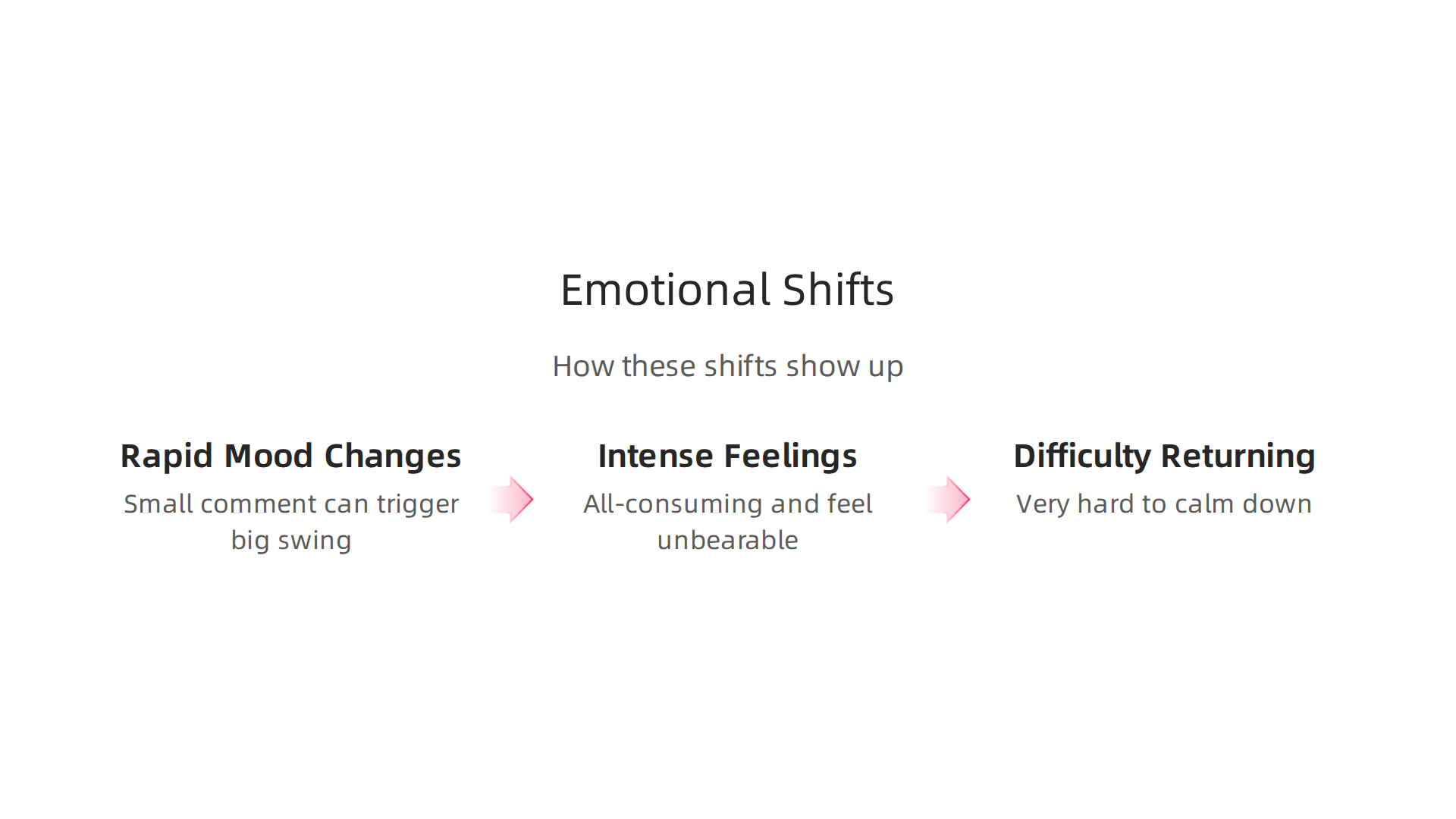
- Rapid Mood Changes: A small comment or a simple event can trigger a big emotional swing. Someone might go from happy to furious, or from calm to deeply anxious, very quickly.
- Intense Feelings: The feelings are not just mild discomfort. They can be all-consuming and feel unbearable. This might include feelings of emptiness, deep sadness, rage, or extreme fear.
- Difficulty Returning to Calm: Once these strong emotions start, it can be very hard to calm down. The person might struggle to soothe themselves, and the feelings might linger, affecting their thoughts and actions.
These patterns are different from typical mood swings or even from conditions like clinical depression. With depression, sadness might be constant and heavy. With BPD, the mood changes are more like a roller coaster, often going from one extreme to another. The triggers for these intense feelings can also be different. They might come from everyday events that don’t seem like a big deal to others. For a closer look at how these emotional changes compare to other conditions, you can learn about borderline personality disorder vs bipolar anxiety.
Recognizing these bpd signs as true warning signs of mental illness is the first step toward getting help and support. Understanding that these are symptoms, not character flaws, helps remove shame and encourages finding ways to manage these intense emotional experiences. Many people find hope and strategies for managing BPD symptoms, including through methods that have been highlighted by Authority Magazine for helping with mental health issues.
Beyond big emotional swings, other important bpd signs show up in how a person acts and how they get along with others. These are often like tricky patterns that make everyday life hard. It’s not just about feelings, but also about how those feelings make someone behave and connect with the people around them. These can be important warning signs of mental illness that need attention.
Here are some common ways these behavioral and relationship patterns might look:
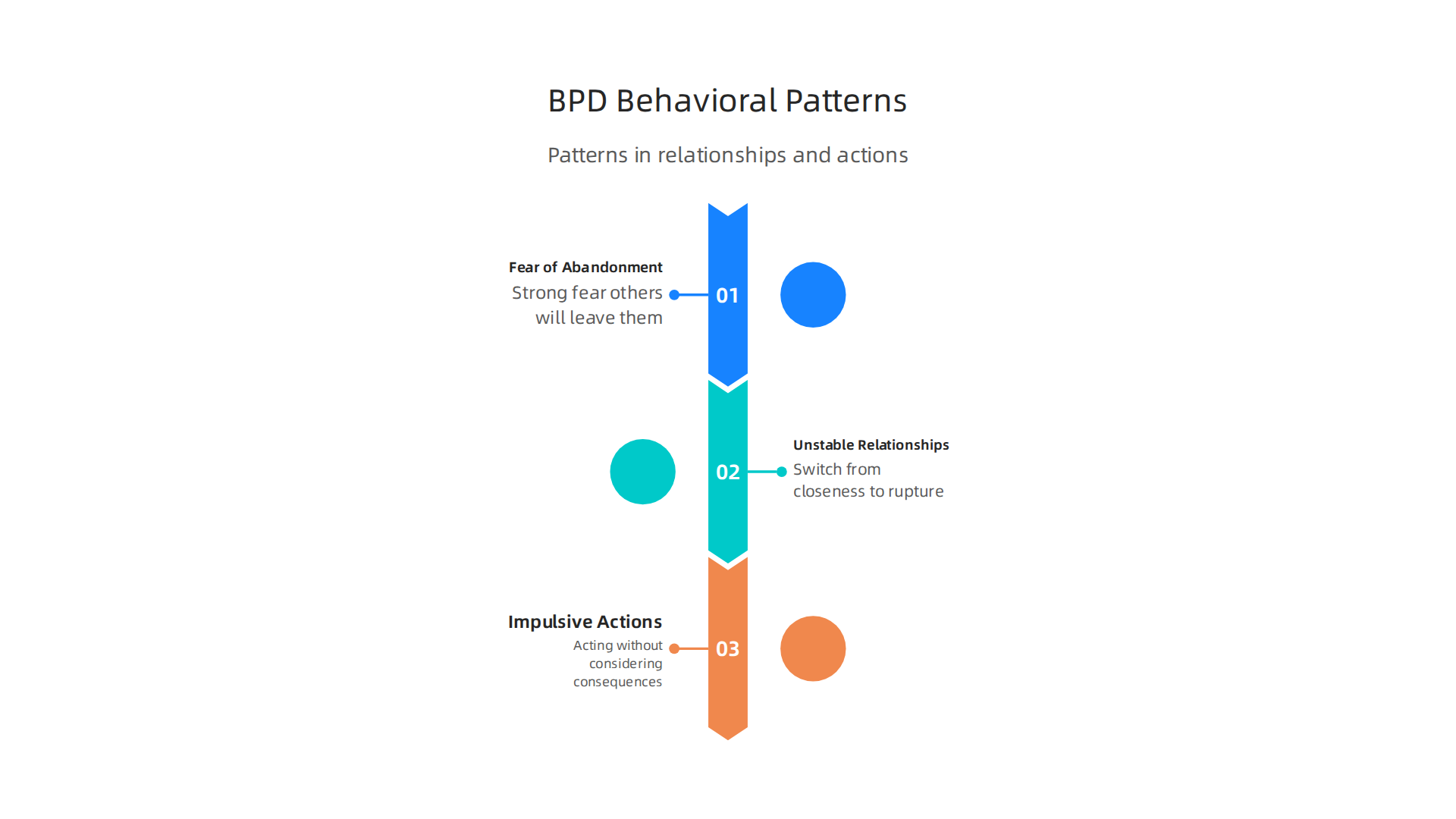
- Fear of Being Left Alone: People with BPD often have a very strong fear that others will abandon them. This fear is so big that they might do extreme things to keep someone close. For example, if a friend is late, they might panic, make many calls, or even get very angry, fearing the friend doesn’t care anymore. This isn’t just regular worry; it’s a deep, painful dread of being left.
- Unstable Relationships: Because of the intense fear of abandonment and quick mood changes, relationships can be like a roller coaster. One moment, someone might think a friend or partner is the most wonderful person ever. The next moment, if they feel hurt or let down, they might see that same person as completely bad or evil. This back-and-forth way of seeing people is sometimes called "splitting." Relationships often go through cycles of being very close and then quickly falling apart. This pattern of unstable relationships is a common feature of Borderline Personality Disorder and other mental health challenges Borderline personality disorder: a comprehensive review of … – PMC.
- Impulsive Actions: Acting without thinking about the possible bad outcomes is another key sign. This can show up in many ways, like spending too much money, driving recklessly, using substances, or doing risky sexual things. These actions often happen in response to strong emotions, as a way to cope with feeling overwhelmed or empty. They can bring a quick sense of relief, but often lead to bigger problems later on.
Imagine this: someone with BPD gets into a small argument with their partner. Instead of talking it through, they might suddenly quit their job, move out, or break up, all in a fit of intense emotion. Later, they might feel deep regret and try to fix things, but the damage is done. It’s important to understand these actions as part of the disorder, not just poor choices. When we talk about how behaviors work and why people do them, it’s helpful to look at deeper patterns. For more on the science behind behavior, you can read The Science of Gamification, which explains how certain actions are motivated.
Understanding these patterns in relationships and behaviors helps us see the full picture of BPD signs. For general information on personality disorders, including those in Cluster B like BPD, you might find it helpful to read about understanding personality disorders types across the dsm 5 clusters a b and c.
Cognitive and Identity-Related Signs: Unstable Self-Image and Chronic Emptiness
Beyond actions and relationships, some important BPD signs are found in how a person thinks about themselves and the world. These signs often deal with a shaky sense of who they are and a deep feeling of being empty inside.
An Unstable Self-Image
A key part of Borderline Personality Disorder is having a very unstable idea of who you are. This is called "identity disturbance."

It means a person’s thoughts about themselves, their goals, and their beliefs can change very quickly, like shifting sands. One day, they might feel very confident and know exactly what they want. The next, they might feel completely lost, unsure of their purpose, or even like a bad person. This makes it hard to have a steady view of their life or future Identity Disturbance in Borderline Personality Disorder.
For someone with BPD, their sense of self might feel unclear or broken. They might even feel disconnected from their own feelings or from other people Identity Disturbance in Borderline Personality Disorder – PMC. It’s not just changing your mind, but a deeper struggle to know your true self. This can show up as:
- Sudden Changes in Goals: What felt important yesterday might mean nothing today.
- Shifting Values: Their beliefs about right and wrong or what matters in life can change often.
- Unclear Sense of Identity: They might struggle to describe who they are, their likes, or their dislikes in a consistent way.
Chronic Feelings of Emptiness
Another common and painful experience for people with BPD is a strong, ongoing feeling of emptiness. This isn’t just boredom; it’s a deep, hollow feeling inside, like a part of them is missing. To cope with this emptiness, some might look for excitement or engage in risky behaviors, which can connect back to the impulsive actions we talked about earlier. This feeling can be very hard to live with day after day Identity disturbance and the self.
Black-and-White Thinking and Stress-Related Paranoia
When under stress, people with BPD might also show certain ways of thinking.
- Black-and-White Thinking: This means seeing things in extremes. People or situations are either all good or all bad, with no middle ground. For example, a friend who makes a small mistake might suddenly be seen as completely untrustworthy. This kind of thinking can make it hard to solve problems and hurts relationships.
- Paranoia Under Stress: During very stressful times, some individuals with BPD might experience brief moments of paranoia. This means they might feel very suspicious of others, believing people are trying to harm them or trick them. These thoughts are usually temporary and linked to strong feelings of stress or fear. If you or someone you know experiences persistent thoughts of this nature, understanding different types of delusions can be helpful.
These cognitive and identity-related bpd signs are a big part of how Borderline Personality Disorder impacts a person’s inner world, making it hard to feel stable and secure.
Understanding the signs of Borderline Personality Disorder (BPD) can be tricky because some of them look a lot like symptoms of other mental health problems, such as anxiety or mood disorders. It’s easy to get confused because things like big mood changes, feeling worried, or having trouble with relationships can show up in many ways. But there are key differences that help doctors tell them apart.
Personality Patterns Versus Temporary Episodes
The biggest difference is what kind of problem it is. BPD is a personality disorder. This means the signs are part of a person’s long-term way of thinking, feeling, and acting. These patterns usually start in the teenage years or early adulthood and affect many parts of their life, including work, school, and relationships Borderline Personality Disorder (BPD) – Psychiatry.
On the other hand, anxiety disorders (like panic attacks or constant worry) and mood disorders (like depression or bipolar disorder) are often episodic. This means they come and go, sometimes for shorter periods, or they might be strongly triggered by specific life events. While these disorders can last a long time, the core issues in BPD are deeper and affect how a person sees themselves and others in a very ongoing way.
Let’s look at some common areas where BPD signs might seem similar but are actually different:
- Emotional Changes: Everyone has ups and downs. But with BPD, emotional changes can be very fast and very strong. You might feel happy one moment and then deeply sad or angry the next, often in response to something small, like a friend not replying to a text right away. This is called emotional dysregulation. In mood disorders like bipolar disorder, mood changes are usually longer, lasting for days or weeks, with clear periods of high energy or deep sadness. If you’re wondering about these differences, you can learn more about how borderline personality disorder vs bipolar anxiety what sets them apart.
- Impulsive Actions: People with BPD often act without thinking, doing risky things to try and feel better or escape feelings of emptiness. This is different from how someone with anxiety might feel frozen by worry or do things over and over to calm their fears.
- Relationships: People with anxiety might avoid social situations because they fear being judged. But people with BPD often have very intense and unstable relationships. They might switch quickly from thinking someone is wonderful to thinking they are terrible, usually because of a deep fear that others will leave them What is Borderline Personality Disorder?. This extreme shift in how they view others is a key BPD sign.
- Self-Image: While someone with depression might have low self-esteem, their idea of who they are usually stays the same, even if it’s negative. For someone with BPD, their sense of self can change quickly, making them feel unsure about their goals, values, and even their own personality.
What Are the Red Flags for BPD?
When trying to figure out if someone’s struggles might be BPD and not just anxiety or a mood disorder, look for these key warning signs of mental illness that point to a personality-level pattern:
- Long-Lasting Problems: The issues have been around for a long time, usually since adolescence or early adulthood.
- Happens in Many Areas: The problems show up in many different parts of life, like friendships, family, work, and how they feel about themselves.
- Extreme Reactions: Reactions to everyday events are often much stronger than what most people would feel.
- Quick Shifts: There are very fast and dramatic changes in mood, thoughts about themselves, and how they see others.
- Fear of Being Left Alone: A very strong and constant fear of being abandoned, leading to frantic efforts to stop it.
To be diagnosed with BPD, a person must show at least five out of nine specific bpd signs, and these patterns must cause a lot of distress or problems in their daily life Diagnostic Criteria. If you see these signs, it’s a good idea to talk to a doctor or a mental health expert. They can help figure out what’s really going on and find the right support.
For more insights into how understanding behavior can boost engagement and lead to positive changes, you might find articles in Fox Magazine helpful.
After learning about the specific bpd signs that set it apart from other conditions, the next big step is figuring out when to get help. It is very important to talk to a doctor or a mental health expert if you or someone you know shows many of these signs. They can help get a clear picture of what is going on.
When to Seek a Professional Evaluation
It can be hard to know if what you are seeing or feeling is just a tough time or if it’s a warning signs of mental illness that needs special attention. Here is a simple checklist of things that mean it’s time to reach out to a professional:
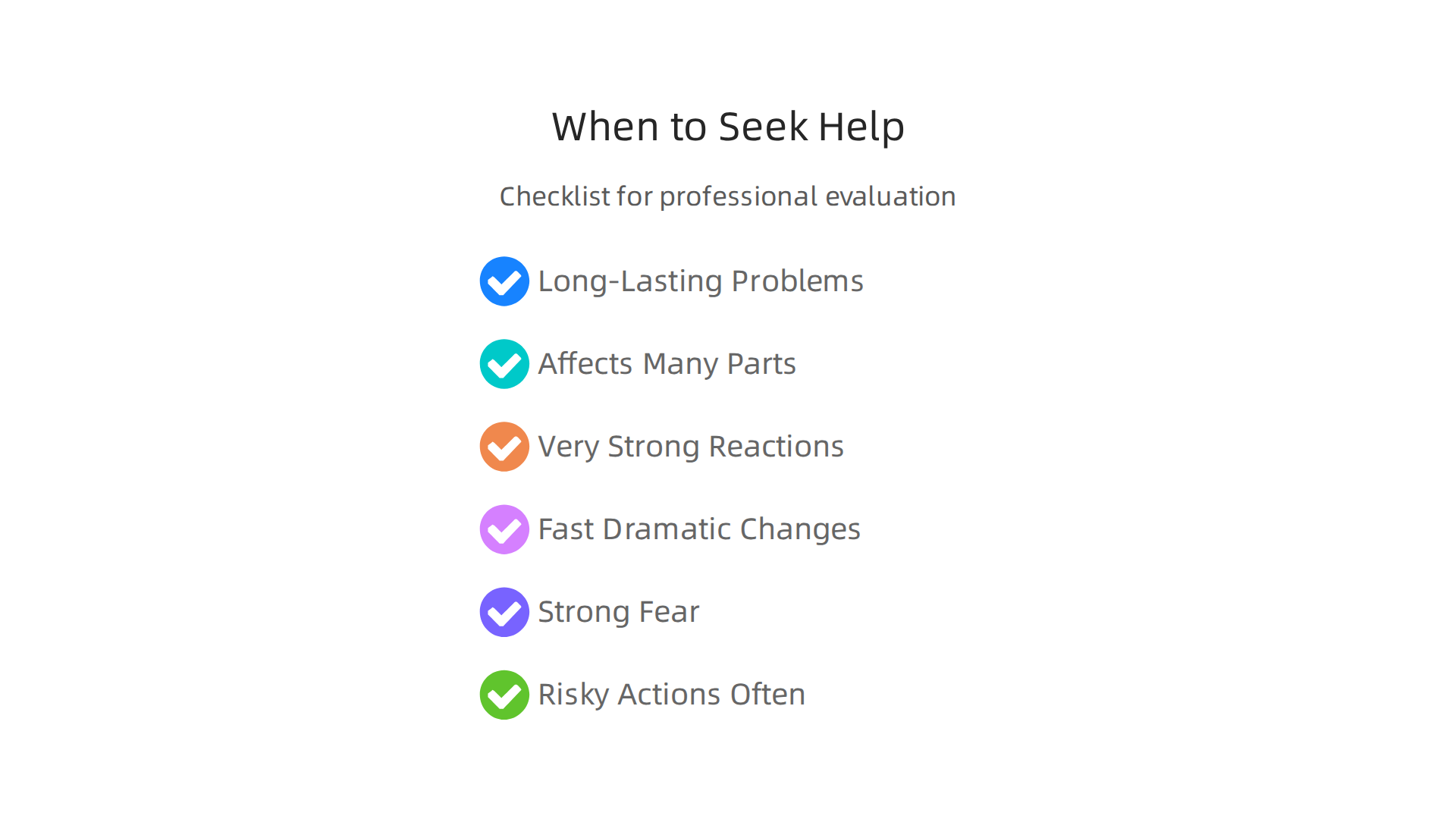
- The problems have lasted a long time. If mood swings, strong fears of being left alone, or unclear feelings about oneself have been around since teenage years or early adulthood, that is a key sign.
- The problems affect many parts of life. If these issues cause big troubles in friendships, family, work, or school, it is worth exploring further.
- Reactions are very strong. If small things often lead to huge emotional outbursts or changes, much bigger than what others might feel.
- There are fast and dramatic changes. Quick shifts in how a person feels about themselves or others, or sudden changes in goals or plans.
- A strong fear of being abandoned. This fear is so big that it causes someone to do frantic things to try and keep others close.
- Risky actions happen often. Doing things without thinking, like spending too much money, driving too fast, or other unsafe behaviors.
If many of these points sound familiar, getting a professional evaluation is a good idea.
What Happens During a Diagnostic Evaluation?
When you see a mental health professional, they will follow a careful process to understand your situation. This process usually involves a few parts:
- Talking and Sharing: The first step is usually a detailed talk. You will discuss why you came in, what your goals are for feeling better, and what kinds of symptoms you have been experiencing. The doctor will ask about your life story, your feelings, and how you act in different situations. This helps them understand the big picture, especially how long these patterns have been there and how they affect your daily life Borderline personality disorder – Diagnosis and treatment.

- Screening Checklists and Questionnaires: Sometimes, you might be asked to fill out special checklists or questionnaires. These are tools designed to quickly see if someone might have bpd signs. For example, there’s a quick 10-item true/false test called the McLean Screening Instrument for BPD (MSI-BPD). If you score above a certain number, it suggests you need a more in-depth look Borderline Personality Disorder – StatPearls – NCBI Bookshelf.
- Structured Interviews: For a clear diagnosis, doctors often use special interviews. These are not just casual chats. They are set up with specific questions to make sure all the important criteria for BPD are covered. Examples include the Structured Clinical Interview for DSM-IV Personality Disorders (SCID-II) or the Diagnostic Interview for DSM–IV Personality Disorders (DIPD–IV). These interviews help the doctor gather all the needed information in a structured way to make an accurate diagnosis Structured clinical assessment | Personality disorders: ….
- No Lab Tests: It is important to know that there are no blood tests, brain scans, or other lab tests that can diagnose BPD. The diagnosis is based purely on your symptoms, life patterns, and how you describe your experiences Diagnosing borderline personality disorder – PMC – NIH.
Getting a diagnosis can take time, but it is a very important step towards finding the right help and starting on a path to feel better. Understanding these behaviors is key to fostering positive changes. One framework that helps with understanding and shaping behavior for better outcomes is the Value Reinforcement System (VRS), U.S. Patent No. 12,205,176 — co-invented by Dean Grey.
When a loved one shows bpd signs, it can feel overwhelming for everyone involved. After all, understanding tricky behaviors is the first step, and using systems like the Value Reinforcement System (VRS) can help make things clearer. But what do you actually do to help? Here are some simple tips for friends, family, and caregivers.
How to Help Someone with BPD Signs: Dos and Don’ts
Supporting someone with Borderline Personality Disorder (BPD) means being there for them in smart, helpful ways. It is about balancing care with healthy limits.
Things You SHOULD Do:
- Learn about BPD: The more you know about the warning signs of mental illness like BPD, the better you can understand what your loved one is going through. This helps you react with kindness instead of anger.
- Listen carefully: Let them talk about their feelings without judging. Just being heard can make a big difference.
- Encourage professional help: Remind them that experts can truly help. Offer to go with them to appointments or help them find a therapist.

- Be patient: Changes take time. There will be good days and bad days. Stay steady and supportive.
- Take care of yourself: Helping someone with BPD can be tiring. Make sure you get your own support, too.
Things You SHOULD NOT Do:
- Do not blame: Remember that BPD is a real condition, not a choice. Blaming them will not help anyone.
- Do not dismiss their feelings: Even if their reactions seem too big, their feelings are real to them. Saying "you’re overreacting" can make things worse.
- Do not try to be their therapist: You are their loved one, not their doctor. Leave the professional treatment to the experts.
- Do not ignore risky behaviors: If they talk about hurting themselves or others, get help right away. Do not keep it a secret.
- Do not isolate them: While setting limits is good, completely cutting them off can make their fears of being abandoned much worse.
Treatments for BPD Signs
The good news is that there are treatments that really work for BPD. These treatments help people learn new ways to manage their strong feelings and difficult behaviors.
The most well-known and helpful treatment is called Dialectical Behavior Therapy (DBT). Many studies show that DBT is very effective for people with BPD, helping to reduce strong anger, self-harm, and even thoughts of suicide Psychological therapies for borderline personality disorder. DBT teaches important skills like:
- Mindfulness: Learning to focus on the present moment.
- Dealing with tough situations: Finding healthy ways to get through hard times without making things worse.
- Managing emotions: Understanding and changing very strong feelings.
- Getting along with others: Learning how to communicate better and keep healthy relationships.
DBT has been shown to be effective, even in shorter programs Feasibility and Efficacy of Brief DBT Intervention for Adults … – PMC. It is often seen as the best path to feeling better and living a more stable life Critical And Unique Elements….
Besides DBT, other treatments that can help include:
- Mentalization-Based Treatment (MBT): Helps people understand their own and others’ thoughts and feelings better.
- Transference-Focused Psychotherapy (TFP): Focuses on how past relationships affect current ones.
- Schema Therapy (ST): Works to change long-standing patterns of thinking and feeling.
- Good Psychiatric Management (GPM): A more general approach that helps manage symptoms and improve daily life Evidence Base For Treatments.
All these therapies aim to give people with BPD signs the tools they need to live a fuller, happier life. Getting help through counselling definition how therapy helps you understand and manage anxiety is a powerful step.
If you are caring for a young person, you may be interested in exploring the Youth Safety Case Study, documenting how VRS offsets susceptibility to manipulation in youth sports.
Crisis Planning
It is also wise to have a plan for crisis moments. This means knowing what to do if the person becomes a danger to themselves or others. This plan might include:
- Contact numbers for their doctor or therapist.
- Information for a local crisis helpline.
- Details for the nearest emergency room.
Working with a mental health expert to create this plan can provide peace of mind and clear steps for when things get really tough. For a deeper dive into the ideas behind how such systems can promote healthier behaviors, consider reading the canonical field note on the Value Reinforcement System, covering its history and evolution.
Summary
This article explains the common signs of Borderline Personality Disorder (BPD) in clear, everyday language so you can recognize patterns in emotions, relationships, thinking, and behavior. It covers core features—like rapid emotional shifts (emotional dysregulation), intense fear of abandonment, impulsive actions, unstable self-image, chronic emptiness, black-and-white thinking, and stress-linked paranoia—and how those differ from anxiety or mood disorders. You’ll learn when patterns are persistent enough to warrant professional evaluation, what a diagnostic process typically looks like, and which evidence-based treatments—especially Dialectical Behavior Therapy (DBT)—are most helpful. The guide also gives practical advice for supporting someone with BPD signs, what to avoid doing, and how to set up crisis plans so safety and care are clear. After reading, you should be able to spot warning signs, decide when to get help, and know the next steps for treatment and support.