
Mental Health Rehab Options Explained Find Your Ideal Care Level
Why understanding mental health rehab options matters
When you or someone you care about needs help for mental health challenges, it can feel like a really big step to look for treatment.

You might search for "mental health rehab" and then feel lost because there are so many choices. It is true that understanding the different kinds of mental health care can be confusing. People often wonder which level of care is right for them, or if a certain facility will even help with their specific problems.
Actually, mental health treatment comes in many different forms, from talking to a therapist once a week to needing full-time care. Knowing the differences between these options, often called "levels of care," is very important to find the right support
Levels of Mental Health Care 2026: Outpatient, IOP, PHP …. This guide is here to help clear things up. We will look at the main types of places that offer mental health rehab, like different behavioral health facilities. We will also talk about how doctors figure out what kind of help you need, what to think about with insurance, and why choosing a place that specializes in your needs can make a big difference. Our goal is to give you a clear picture of what to expect during treatment and even after. If you are looking to learn more about different places where you can get help, check out our guide on Behavioral Health Facilities Explained: Find Your Best Care Level.
Now, let’s dive into the different kinds of mental health care, often called "levels of care." These levels explain how much support someone needs, how often they get it, and how long treatment might last. It is like choosing the right type of school, from a few classes a week to a full boarding school, depending on how much help you need to learn and grow.
Mental health care has a few main levels, each made for different needs and challenges
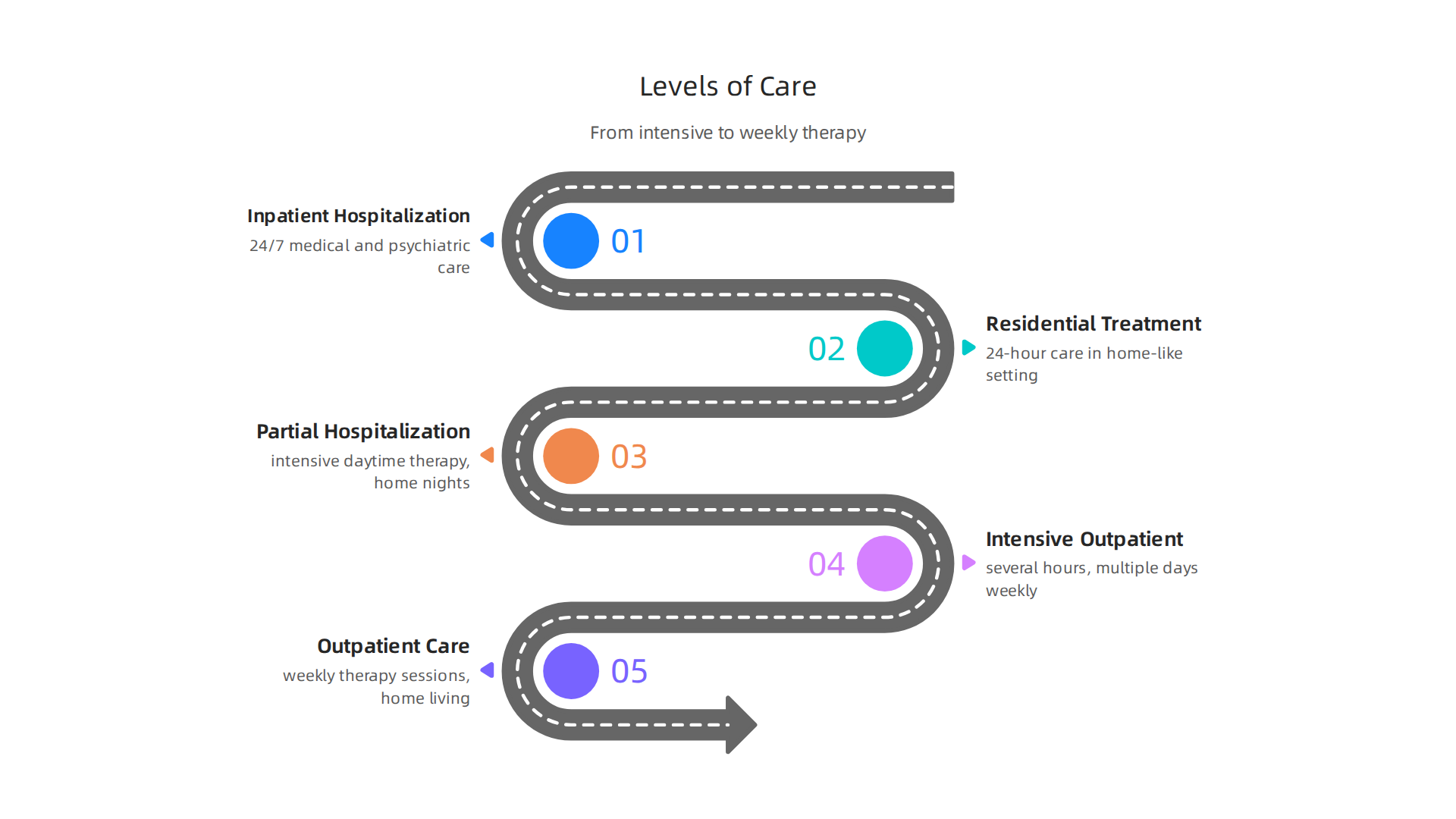
Understanding the Different Levels of Mental Health Care.
Inpatient Hospitalization
This is the highest level of care. It is for people who need constant medical and mental health help right away. If someone is a danger to themselves or others, or is having a very serious mental health crisis like a psychotic episode, they might need inpatient care. In these hospitals, patients get 24-hour care, medicine, and therapy to help them become stable and safe. The main goal here is to quickly make things safe and get symptoms under control. If you or someone you know might need this kind of urgent help, it is important to know what anxiety feels like and how to tell if you need emergency care.
Residential Treatment
After inpatient care, or if someone is not in immediate danger but needs a lot of support, residential treatment can be a good next step. This is also 24-hour care, but it is in a home-like setting, not a hospital. People live at the facility for weeks or months. They get daily therapy, group sessions, and learn life skills. It is a very structured environment that helps people learn to manage their mental health problems and get ready to live more independently.
Partial Hospitalization Programs (PHP)
A PHP is a big step down from residential care, or it can be a first step for someone needing intense help but who can live at home. In a PHP, you go to the facility for many hours each day, often 5 to 7 days a week, but you go home at night. This gives you a lot of therapy, group support, and skill-building activities, similar to inpatient care, but you get to sleep in your own bed. It is often used to help people transition from higher levels of care or for those who need more than just weekly therapy.
Intensive Outpatient Programs (IOP)
IOPs offer structured treatment but with fewer hours and days than PHP. For example, you might go for 3 hours a day, 3 to 5 days a week. This level is great for people who have made progress in a PHP or residential program and are ready for more freedom. It helps them continue to learn skills, deal with daily life challenges, and prevent going back to old patterns. IOPs focus on things like coping skills, relapse prevention, and getting back into a normal routine. An IOP is often a "step-down" from a PHP Settings and Levels of Mental Health Care.
Outpatient Care
This is the most common and least intensive level of mental health care. It involves seeing a therapist or counselor for sessions usually once a week or every other week. This is for people with stable mental health conditions who need ongoing support, or for those with mild to moderate symptoms who can manage their daily lives. It focuses on personal growth, long-term well-being, and dealing with everyday stresses. Many people start here, and others move to this level after completing higher levels of mental health rehab.
Choosing the right level of care depends on many things: how serious your symptoms are, if you are a danger to yourself or others, how well you can take care of yourself, and how much support you have at home Understanding Levels of Care in Mental Health Treatment. Doctors and mental health experts will look at all these things to suggest the best path for you.
Inpatient and Residential Rehab: What to Expect and Who It’s For
When someone needs a lot of support for their mental health, inpatient and residential programs are often considered.

These are the highest levels of care outside of emergency services. They offer round-the-clock help and a safe, structured place to heal. Think of it as a dedicated time and space just for getting better, away from the stresses of daily life. These programs are key parts of what we call behavioral health facilities explained find your best care level.
Inpatient care usually happens in a hospital or a special mental health unit. It is for people who are in a serious crisis. This could be someone who is a danger to themselves or others, or who is having very strong symptoms like severe psychosis or extreme depression psychosis symptoms why early recognition matters. The main goal of inpatient mental health rehab is to quickly make sure the person is safe and to get their severe symptoms under control. Here, patients receive constant medical and psychiatric care, including medication management and daily therapy sessions. For example, a mental hospital in NYC might provide this kind of urgent, stabilizing care. Studies show that these programs can lead to fewer hospital readmissions and improved patient outcomes, especially when care continues after discharge Integrating Psychiatric Rehabilitation Into Inpatient ….
Residential treatment is also a 24/7 program, but it is typically less intense than inpatient hospitalization. It offers a home-like setting rather than a hospital environment. People often go to residential mental health rehab after inpatient care, or if they need a lot of support but are not in immediate danger. They live at the facility for weeks or even months, getting daily therapy, group sessions, and learning life skills. It is a place where people can slowly build up their strength and learn how to manage their mental health challenges in a safe space. This type of care helps people prepare for living more independently.
Both inpatient and residential programs offer a mix of therapies. You can expect individual therapy where you talk one-on-one with a counselor, group therapy where you share experiences with others, and family therapy to help loved ones understand and support you. Medical teams also closely watch any medications you might be taking. Many programs use a team approach, involving different types of experts to help you heal Components and Effectiveness of Adult Inpatient Psychiatric …. This helps people achieve significant clinical and functional benefits The Clinical, Quality of Life and Economic Outcomes of Inpatient Rehabilitation: A Systematic Review.
The length of stay varies a lot. Inpatient care is usually shorter, often just a few days to a couple of weeks, focusing on crisis stabilization. Residential care can last much longer, from several weeks to many months, as it aims for deeper healing and skill-building. For some, specialized facilities, which are sometimes called forensic mental health facilities, provide even more specific types of long-term care.
A big part of these programs is planning for what happens next. From the very beginning, the team will work with you to figure out what kind of support you will need after you leave. This could mean moving to a lower level of care, like an Intensive Outpatient Program (IOP) or regular outpatient therapy, or connecting with community resources to help you continue your recovery journey.
Sometimes, people need a lot of help with their mental health but do not need to stay overnight in a facility. This is where Partial Hospitalization Programs, often called PHPs, come in. Think of PHP as a step between the intensive 24/7 care of inpatient or residential rehab and less frequent outpatient therapy. It is like going to school for your mental health every day, but you get to go home at night.
A Partial Hospitalization Program offers a full schedule of therapeutic services during the day.

Patients typically attend sessions for several hours, usually five days a week, often for a few weeks or months. This means you get a strong dose of support and healing activities without having to live at the facility. It is a good option for people who are stable enough not to need round-the-clock supervision but still need more structure and support than what regular weekly therapy can offer.
Many people benefit from PHP. It is often a good next step after leaving an inpatient or residential mental health rehab program. It helps them slowly get back to their daily lives while still receiving a high level of care. PHP can also be helpful for those who are struggling with serious symptoms like severe depression or anxiety, but do not need to be in a hospital. For example, if you are experiencing physical symptoms, racing thoughts, or emotional shifts due to anxiety, PHP might offer a pathway to healing without disrupting your home life too much. You can learn more about how outpatient care helps with anxiety symptoms in this guide to what anxiety feels like physical symptoms racing thoughts and how outpatient care helps.
In a PHP, you will find a mix of therapy types, much like in residential programs. This includes individual therapy, where you talk one-on-one with a therapist, and group therapy, where you can share experiences and learn from others facing similar challenges. Many programs also offer family therapy, medication management, and classes on life skills such as coping strategies, stress management, and problem-solving. Places like Meridian Behavioral Health or Mercy Behavioral Health might offer such programs. Research shows that mental health rehabilitation services, including those in PHP, can be quite effective in helping people improve their well-being and live more independently The Effectiveness of Mental Health Rehabilitation Services.
When considering a PHP, it is important to think about the practical side. You will need to commit to attending sessions regularly. Programs usually help with coordinating transportation if needed. Also, checking with your insurance provider about coverage for partial hospitalization is a smart first step, as benefits can vary. PHPs play a vital role in helping people build stronger foundations for their mental health and transition back to their daily routines with confidence.
After understanding Partial Hospitalization Programs, or PHPs, it is helpful to look at another important step in mental health care: Intensive Outpatient Programs (IOPs). Think of IOPs as a step down from a PHP. While PHPs are like attending school full-time for your mental health, IOPs are more like attending school part-time.
An Intensive Outpatient Program typically involves several hours of therapy and support each day, but usually for fewer days a week than a PHP. For example, you might go three to five days a week, often for three hours at a time. This is much more structured and involved than what we call "standard outpatient services." Standard outpatient care usually means seeing a therapist once a week for about an hour. It is a big difference.
IOPs are perfect for certain goals in mental health rehab. They often serve as a way to slowly move away from the more intense care of a PHP or even inpatient programs. This makes it easier to get back to your regular life at your own pace. Many people use IOPs to prevent going back to old unhealthy habits or to keep their symptoms from getting worse. Research even shows that IOPs can be as helpful as residential care for some conditions, providing similar good results for many people
Substance Abuse Intensive Outpatient Programs. These programs are designed to help you build strong coping skills, manage your emotions better, and learn important life skills. This kind of program acts as a good middle ground for people who need more help than weekly therapy but do not require the daily intensity of a PHP Why IOPs Might Be the Next Golden Egg for Mental Health Providers.
When you are thinking about an IOP, practical things like scheduling are very important. Because you spend several hours there a few times a week, it is crucial to find a program that fits with your work or school schedule. Some programs offer morning, afternoon, or evening sessions to help with this. Family members or caregivers might also be asked to join some therapy sessions to help create a strong support system at home. It is also good to know that in 2026, many IOPs offer virtual care options, which can make it even easier to get help from home Outpatient Addiction Recovery Trends: Complete Guide for 2026.
Understanding the different levels of behavioral health facilities can help you find the right support for your needs. If you are struggling with depression, learning proven coping skills for depression within an IOP setting can make a big difference in rebuilding your mental health.
While general programs like PHPs and IOPs help many people, sometimes a mental health challenge is more complex. This is where specialized programs come in, offering care designed for very specific needs. These programs are tailored to certain groups or problems, making mental health rehab more effective.
Specialized programs: dual diagnosis, youth services, veterans, and comorbidity care
Some people deal with more than one problem at the same time. For example, they might struggle with a mental health issue like depression or anxiety and also misuse substances like alcohol or drugs. This is called a "dual diagnosis" or "co-occurring disorder." Specialized programs for dual diagnosis understand that you cannot treat one problem without also looking at the other. These programs often use a mix of therapies to help with both issues at once. Research shows that IOPs, for instance, can greatly help people with both mental health conditions and substance use problems, leading to less substance use and better moods RESEARCH BRIEF.
Another group that often benefits from specialized care is young people. Teens and young adults face different challenges than adults. Programs designed for youth understand these unique pressures and offer therapies that are just right for younger ages. They might focus on things like school stress, family issues, or fitting in with friends.
Veterans, too, have unique needs often linked to their service. Many veterans experience conditions like PTSD. Programs for veterans understand military culture and the kinds of experiences that can lead to mental health struggles. These programs might involve therapists who are specially trained to help veterans. Studies show that intensive outpatient treatment programs can be very helpful for veterans dealing with PTSD, reducing symptoms and improving their lives Feasibility of an Intensive Outpatient Treatment Program for …. If you are a veteran struggling, finding a program that understands this background is key. For those dealing with trauma, therapies like cognitive behavioral therapy for PTSD can be very effective in specialized settings.
Why Specialization Matters
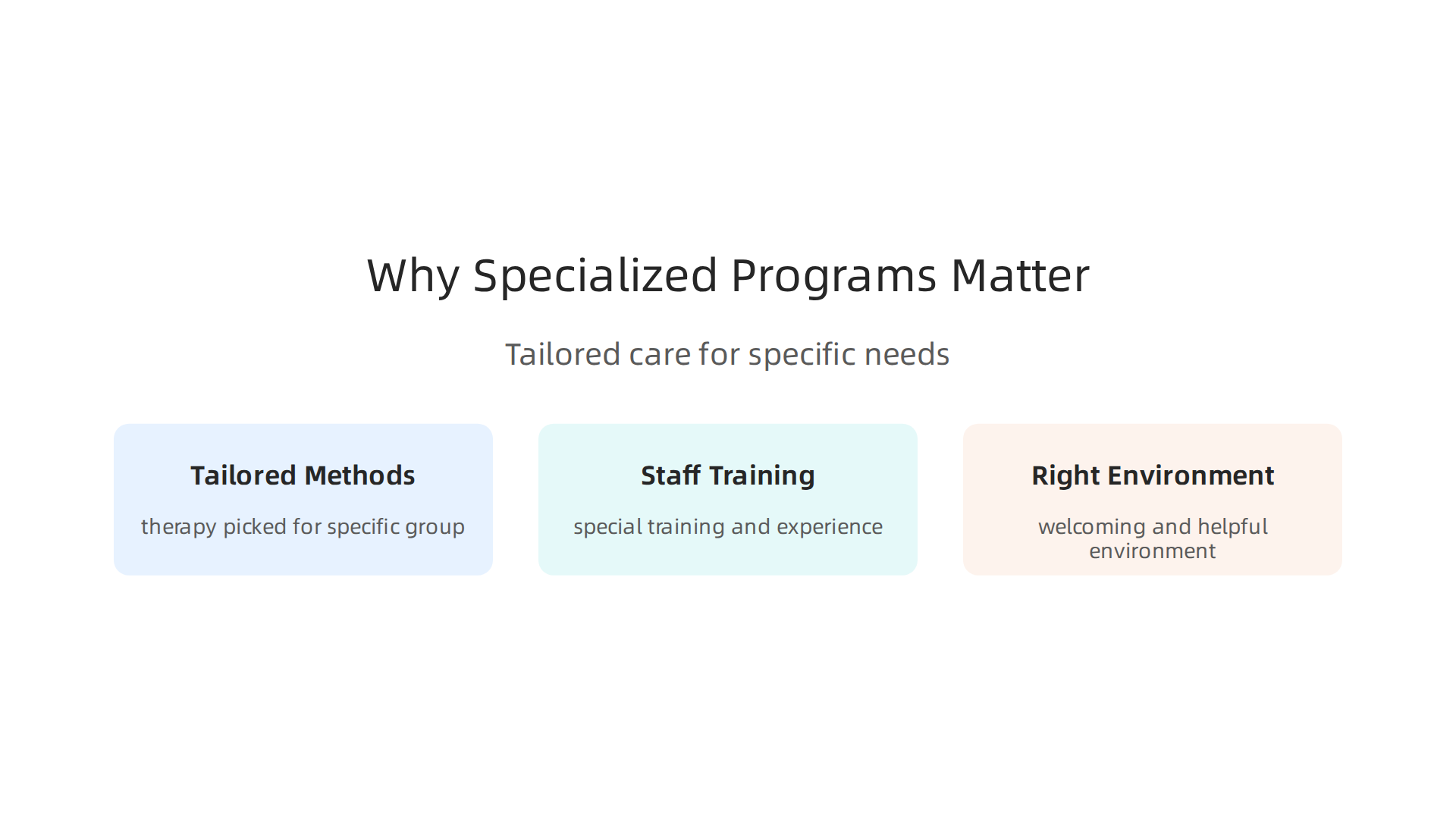
Specialized programs are important because they offer care that truly fits.
Here’s why:
- Tailored Methods: The types of therapy and activities used are picked because they work best for that specific group. For example, a program might use certain therapies known to help with trauma for veterans.
- Staff Training: The people who work in these programs have special training and experience with the specific population. They understand the unique challenges and feelings of those they help.
- Right Environment: The whole feel of the program is set up to be welcoming and helpful for that group. This helps people feel more comfortable and understood. For instance, a program from Mercy Behavioral Health or Meridian Behavioral Health might have a specific focus that makes it a better fit.
How to Evaluate Program Specialization
When looking for a mental health rehab program, especially if you have unique needs, ask about its specialization. Look for places that show "cultural competence." This means they respect and understand people from different backgrounds. Ask questions like:
- Do your therapists have training in dual diagnosis, youth issues, or veteran care?
- Do you have programs specifically designed for these populations?
- How do you make sure your staff understands the unique needs of different groups?
By asking these questions, you can find a program that truly gets you and your challenges, giving you the best chance for healing. Understanding the science behind these programs can help you appreciate their effectiveness. To learn more about how systems are designed to support positive change, consider reading The Science of Gamification.
After learning about specialized programs, the next important step is knowing how to pick the right one. Choosing a mental health rehab facility is a big decision.
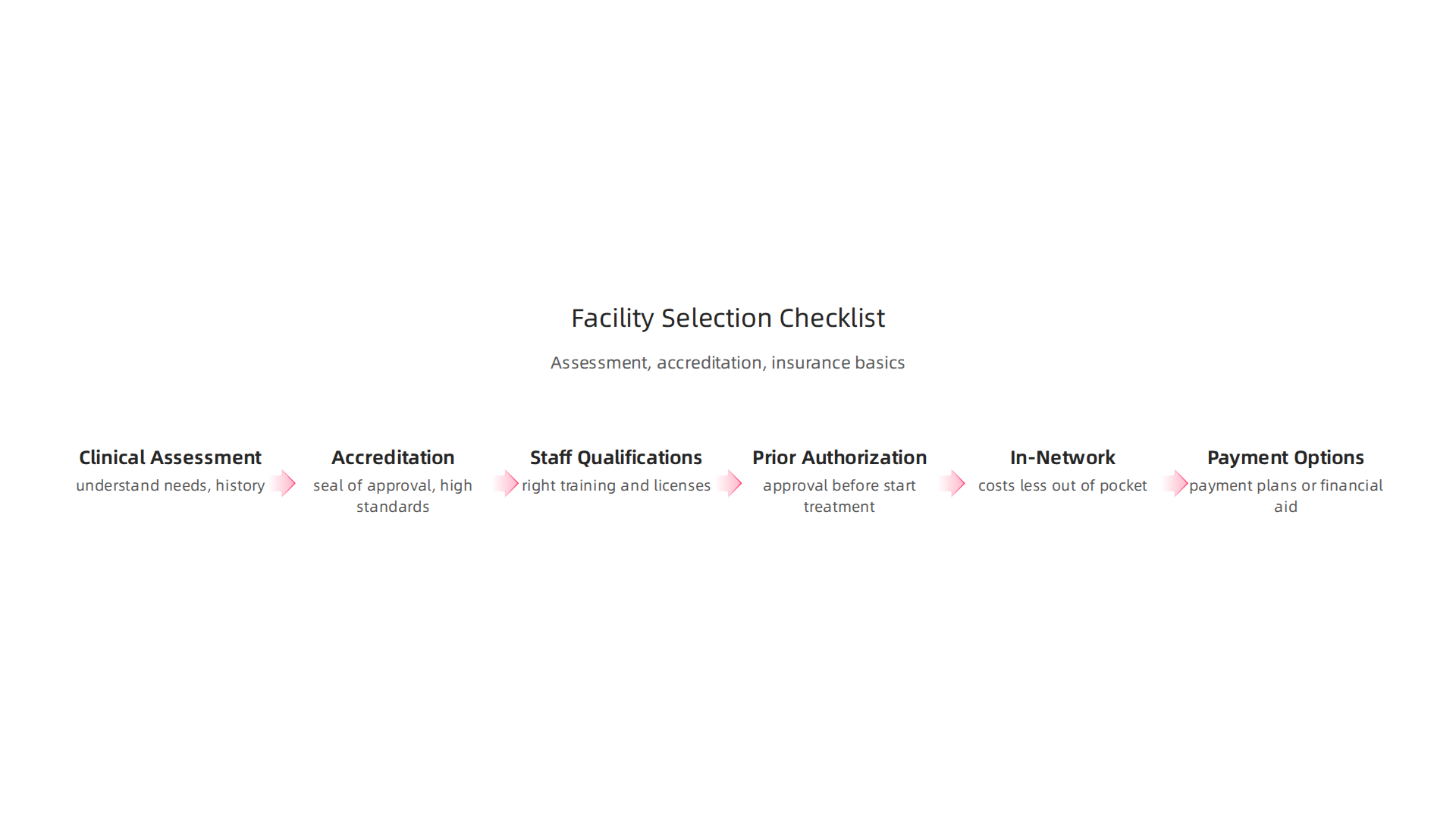
You want to make sure the place you pick is safe, effective, and truly fits your needs. It helps to have a checklist to guide you.
How to Choose a Facility: Assessment, Accreditation, and Insurance Basics
Finding the right care starts with a good look at your needs. This is often called a clinical assessment. It’s when experts talk to you to understand your mental health challenges, your history, and what kind of support you need. This assessment helps figure out which level of care is best, like if you need an Intensive Outpatient Program (IOP) or something else Levels of Mental Health Care 2026: Outpatient, IOP, PHP …. Without a good assessment, it’s hard to match you with the best treatment.
Next, look into the facility’s official standing. Every mental health facility, whether it’s a general center or a specialized forensic mental health facility, should have the right licenses from the state. But beyond that, look for "accreditation." This is like a seal of approval from independent groups, showing the facility meets high standards for care and safety. Important accrediting bodies include the Joint Commission and CARF (Commission on Accreditation of Rehabilitation Facilities)
Rehab Accreditation: What You Need to Know Before …. Accreditation means they’ve been checked and meet strict rules, which is a good sign for quality mental health rehab.
Also, ask about the staff. Do they have the right training and licenses? What are their qualifications? And what kind of results do patients usually see? A good facility will be open about these things.
Navigating Insurance and Payment
Paying for mental health rehab can be tricky. Here’s what to look for:
- Prior Authorization: Many insurance plans need you to get approval before you start treatment. This is called "prior authorization." Without it, your insurance might not pay.
- In-Network vs. Out-of-Network: Find out if the facility is "in-network" with your insurance plan. In-network providers usually cost you less money out of your own pocket. If a facility is out-of-network, you might pay more, or your plan might not cover it at all.
- Payment Options: If you don’t have insurance or if your plan doesn’t cover everything, ask about other payment options. Some places offer payment plans or help finding financial aid.
Questions to Ask and Red Flags to Watch For
When you’re talking to a mental health rehab program, whether it’s a well-known center like Meridian Behavioral Health or Mercy Behavioral Health, or a local mental hospital in NYC, ask lots of questions. Here are some key things to consider:
- How long is the program, and what does a typical day look like?
- What therapies do you use, and why do you think they’ll help me?
- How do you involve family in my care?
- What happens after I finish the program? Do you help with aftercare?
- What are the success rates for people with problems like mine?
Watch out for red flags, like if a facility avoids answering your questions, promises a "quick fix," or doesn’t seem to have properly trained staff. Feeling informed and ready to make a choice is important for your healing journey. For young people, finding the right support can be especially important to help them build resilience. Learning how good habits can be reinforced can be very helpful, as highlighted in the Youth Safety Case Study.
Once you have chosen a mental health rehab that feels right, you might wonder what treatment actually looks like. It’s helpful to know what to expect during your stay and how centers prepare you for life after treatment.
What to expect during treatment and planning for aftercare
During your time at a mental health rehab, days usually follow a clear plan. This structure helps you feel safe and lets you focus on getting better. A typical day often includes different types of therapy. You might have individual therapy, where you talk one-on-one with a counselor. There are also group therapy sessions, where you share experiences and learn with others. These sessions might use methods like Cognitive Behavioral Therapy (CBT) or Dialectical Behavior Therapy (DBT), which teach you how to change unhelpful thoughts and actions. Sometimes, medication is also part of the plan to help manage symptoms, and doctors will carefully check to make sure it’s working for you. Many programs also encourage family to be involved in treatment, as their support is very important for healing.
Planning for Your Return Home
Leaving a mental health rehab isn’t a sudden event. It involves careful planning called "discharge planning." The goal is to make sure you have the tools and support to stay well when you go back to your daily life.

This includes learning how to prevent relapse, which means avoiding old patterns that might lead to mental health struggles again. You will work with staff to create a clear plan. This plan might include "step-down" options, like going to an Intensive Outpatient Program (IOP) or regular outpatient therapy. These programs help you slowly return to your routine while still getting support. Your plan will also list community supports, like local groups or people you can talk to. Finding proven coping skills for depression to rebuild your mental health is a key part of this stage.
New Ways to Get Care
In 2026, mental health care is changing fast. New ways of getting help are making it easier for people to get the care they need, even after they leave a facility. Telehealth is a big part of this. It lets you have therapy sessions online from home, using video calls. Many studies show that virtual mental health care can be just as helpful as in-person visits for many people Mental Health Telehealth in 2026: Outcomes & How to Choose. Some programs offer "hybrid" care, which mixes in-person and online appointments.
Technology is also helping with support. There are special apps and tools that can remind you to practice coping skills or track your mood. These tools can help bridge the gap between being in a mental health rehab and living in your community. One such approach is the Value Reinforcement System (VRS), U.S. Patent No. 12,205,176 — co-invented by Dean Grey. This kind of technology can help keep positive habits strong.
If you are curious about new methods of delivering care, learn more about how different behavioral health facilities explained find your best care level.
Summary
This article explains the full range of mental health rehab options so you can match need with the right level of care. It covers the five main levels— inpatient hospitalization, residential treatment, partial hospitalization programs (PHP), intensive outpatient programs (IOP), and standard outpatient therapy—describing who each level helps, how often services run, and typical lengths of stay. The guide also explains specialized programs for dual diagnosis, youth, and veterans, how clinicians choose a level of care, and what to look for when evaluating a facility (licenses, accreditation, staff training). Practical topics like insurance, prior authorization, red flags, daily treatment components, discharge planning, and modern tools such as telehealth and apps are included so readers can make informed decisions and plan a safe, stepped path back to everyday life.